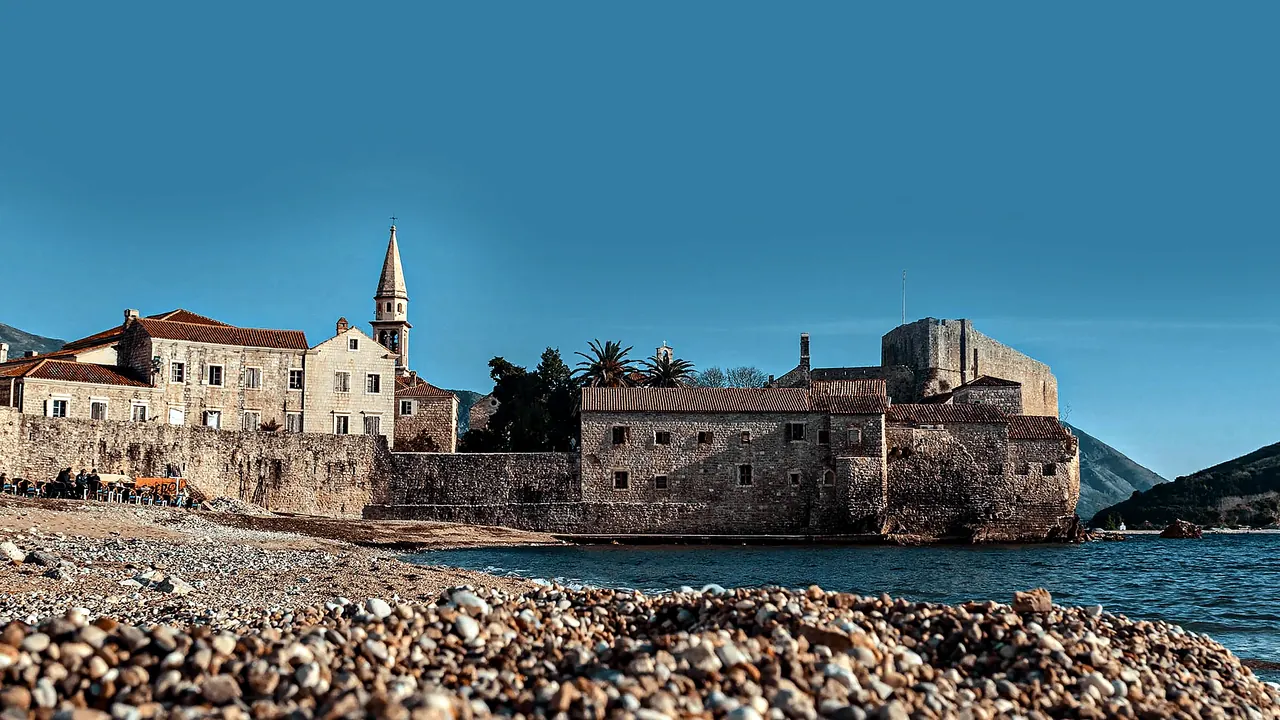
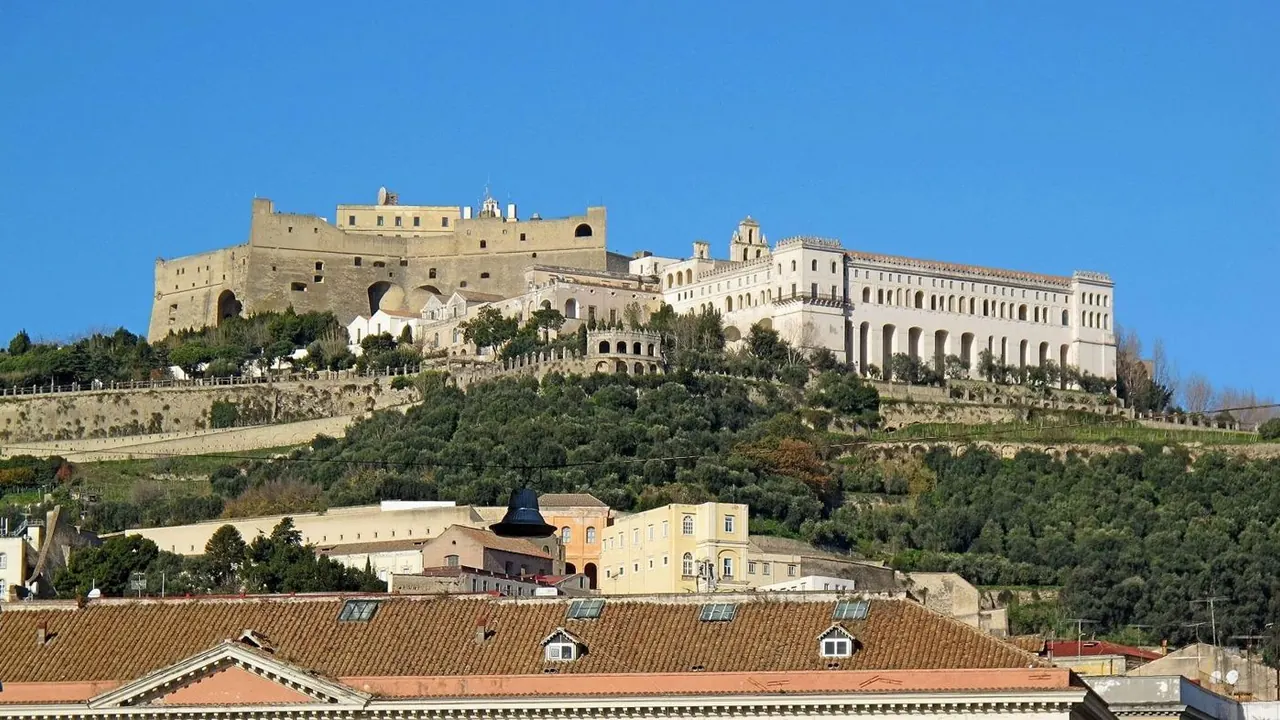
Photos: Budva by Ender Vatan, Pexels License; Naples by pietro scerrato, CC BY 3.0, cropped.
Budva or Naples?
Our verdict in twelve categories, each scored against the same fixed benchmark cities, and the climate month by month, so you can choose for your trip.
Choose Budva for
- beaches
- families
Budva is the better pick when the sea is the point of the trip. Its beaches start at the edge of the old town and continue down a coast of bays and coves, the evenings are long and loud in summer, and Kotor, Lovcen and Lake Skadar are close enough to break up a week of swimming. It suits friends after sun and parties, and families happy with a simple beach vacation.
Choose Naples for
- culture and sights
- food and drink
- live music and the arts
Naples rewards travellers who come to look, eat and wander. The Greek street grid, the Archaeological Museum, the churches and the tunnels beneath them could fill a week before you even reach Pompeii, Herculaneum, Capri or the Amalfi Coast. Add pizza in its home town and a night at the San Carlo, and it is the clear choice for anyone who would rather spend the day in streets than on a sunbed.
Scoreboard
Twelve categories on one fixed scale from 0 to 100. The shaded stretch is the gap between the two.
Your match
Pick a travel style or drag the sliders, and both match scores follow your weighting.
Wins on beaches and families with your weighting.
Wins on culture and sights and food and drink with your weighting.
What matters to you?
Category by category
What the scores mean for a trip.
Beaches & swimming
Budva is the beach resort of the two. Slovenska Plaza runs right along its seafront, Mogren's coves lie just past the walls, and a short ride reaches Becici, Jaz and the sand facing Sveti Stefan. The shore is fine pebble and coarse sand, and in high summer it is packed with sunbeds and music, so early starts or a boat to a cove pay off.
Naples has the same warm bay but little beach life on its doorstep. Locals swim off the rocks below the Lungomare and at Posillipo's small lidos, while the clean, clear water is on Procida, Ischia, Capri or the Sorrento coast, a day out rather than a morning swim.
Food & drink
Naples is one of Italy's great eating cities, and Budva cannot compete. Neapolitan pizza in its birthplace, fried street food, sfogliatelle, standing espresso and the produce of the Pignasecca market make meals a reason to come.
In Budva the best eating is regional and needs seeking out: Njegusi ham, mountain cheese, grilled squid at family konobas and Vranac red wine. Along the promenade, menus aimed at summer crowds are hit and miss.
Culture & sights
Budva's culture is essentially Stari Grad: marble lanes, a handful of churches, the Citadel and a small archaeological museum, much of it rebuilt after the 1979 earthquake and seen in an hour or two.
Naples offers enough for a week. Its Greek-planned centre is packed with Gothic and Baroque churches, the National Archaeological Museum holds the treasures of Pompeii and Herculaneum, and beneath the streets lie tunnels, cisterns and the catacombs of San Gennaro, with Capodimonte and the Royal Palace still to come.
Nightlife
The two are broadly level for a night out, but the nights feel very different. Budva goes in for clubs and volume: beach bars and terrace clubs along Slovenska Plaza, a big open-air club on the hill until dawn, and a scene that suits groups of friends in summer and largely shuts from October.
Naples is about the street rather than venues. Students crowd Piazza Bellini and the lanes by the Greek walls, and Chiaia's small bars spill into the alleys past midnight all year, though serious clubbing is scarce.
Nature & outdoors
Naples has the more remarkable landscape. Vesuvius rises behind it with a trail to the crater rim, the Phlegraean Fields hold Astroni's wooded crater and Lake Avernus, and the Gaiola underwater park is good for snorkelling, with the Path of the Gods on the Amalfi Coast reachable in a long day.
Budva's setting is dramatic too, with bare limestone mountains climbing straight from the shore. Lovcen's beech forest and Lake Skadar's reeds and water lilies are about an hour away, and closer to town there are coastal paths, sea kayaking and paragliding above Becici.
Day trips
Both make good bases, but Naples has one of the richest ranges of excursions anywhere. Pompeii, Herculaneum, Oplontis and Stabiae are on the Circumvesuviana line, Caserta's palace is a short train ride inland, and ferries reach Capri, Ischia and Procida, with Positano, Ravello and Paestum further on.
Budva's outings are fine but fewer. Kotor and Perast on their fjord-like bay, Cetinje's royal past and the wine villages at Virpazar are all close, and Dubrovnik works as a long day if the summer border queue allows.
Good for families
Budva is the easier family choice, mainly because it is a beach vacation. The town beaches shelve gently, Becici's bays are calmer, and a water park sits above town, though July and August nights are loud enough that many families stay down the coast.
Naples welcomes children warmly but is tiring with small ones, with scooters in the lanes, broken pavements and cobbles hard on pushchairs. Older children often love the tunnels, the funiculars and Pompeii.
Getting around
Naples is easier to get around. Metro Line 1, with its art-gallery stations, and four funiculars connect the centre with Vomero and Posillipo, and trains and ferries reach the big sights without a car, even if buses and the Circumvesuviana are slow and crowded.
Budva's centre is small and walkable, and boat taxis serve the nearby coves, but beyond that there is no railway and only one coast road that jams in summer. Lovcen and Cetinje are far simpler with a car or a driver.
Shopping & style
Naples is the place to shop. Chiaia's tailors make suits, shirts and silk ties, Via Toledo and the Galleria Umberto I cover the high street, and San Gregorio Armeno's nativity workshops and Torre del Greco's coral and cameos give it crafts of its own.
Budva sells beachwear, sunglasses, silver filigree, olive oil, honey and rakija, plus a modest shopping centre by the marina, and little more.
Affordability
Day to day the two cost about the same, but the traps lie in different places. In Budva the seafront rooms, sunbeds and promenade restaurants carry resort prices in July and August, while apartments a few streets back, bakeries and local buses stay cheap, and June or September brings costs down.
In Naples the city itself is good value, with cheap pizza, street food and transport and plenty of small B&Bs in the centre. The money goes on what lies beyond it: island ferries, Capri and Amalfi hotels, and entry to the archaeological sites.
Live music & performing arts
Naples has a real stage life and Budva barely has one. The Teatro di San Carlo, Europe's oldest working opera house, runs a full season of opera, ballet and concerts, the San Pietro a Majella conservatory and the centre's churches add chamber music, and Neapolitan song is still sung in small venues and trattorias.
Budva's one fixture is the Grad Teatar summer festival on the old town squares. The rest of the year there is no season, only cover bands in seafront bars.
Wellness & relaxation
Neither city is restful in itself, but Naples has thermal water close by. The Agnano spa uses springs known since Roman times, and Ischia, about an hour by hydrofoil, is a spa island of terraced thermal pools above the sea.
Budva has no bathing tradition, so relaxation means the hotel spas at Becici and Sveti Stefan or a massage at a beach club, ideally in May, June or late September, when the music fades and the sea is still warm.
When should you go?
Pick your month. The climate figures are measured averages, not a forecast.
Budva in July
Naples in July
Daytime high, °C
Rainfall in the month, mm
Where the figures come from
Budva has no rain gauge within 25 km of the centre, so its rainfall comes from a gridded climate dataset read at the city rather than from a gauge further away.
Budva's sunshine is measured 40 km from the centre, at Podgorica-Grad.
Naples's sunshine is measured 28 km from the centre, at Grazzanise.
Temperature and rainfall are climate normals, averaged over the years shown. Budva: 1991-2020 normals, Tivat (15.8 km from centre). Naples: 2005-2020 (sunshine 1991-2020, rainfall 1971-2000) normals, Napoli / Capodichino (4.6 km from centre).
In warmth the two run almost level all year. Budva is at its best from June to September, when the sea sits between about 23°C and 26°C and the summer days are long and sunny. In July and August highs pass 30°C, too hot for walking the streets at midday, so summer there is spent in the water. Naples has the same sea and the same heat, which makes high summer hard going in a city you see on foot.
The real difference is rain. Budva's wet season starts earlier: September already brings 125mm there, against 89mm in Naples, so early autumn is the better time for touring Naples. By October both cities are wet, and through November and December Budva is the wetter and greyer of the two. Spring favours Naples too, with drier days in April and May that suit long walks through the centre. At Budva those months are pleasant for coastal paths, though the sea is still cool until June.
Which traveller are you?
For a beach and sun trip, Budva wins easily. Slovenska Plaza and Mogren are a stroll from the old town, Becici and Sveti Stefan are minutes away, whereas Naples sends its swimmers out by boat to the islands or the Sorrento peninsula.
On a culture and arts trip, Naples is in a different league. The Archaeological Museum, Cappella Sansevero, the underground city and an evening at the Teatro di San Carlo outweigh Budva's walled old town, which an unhurried visitor covers in a morning.
For a food and nightlife trip, Naples is the stronger choice, because the eating is its great draw: pizza, fried street food and pastry shops, then drinks in Piazza Bellini. Budva's nights are louder and more club-based, but its promenade cooking is uneven.
Before you go
| Measure | Budva | Naples |
|---|---|---|
| Official language | Montenegrin | Italian |
| Currency | Euro (EUR) | Euro (EUR) |
| Sockets | CF230 V, 50 Hz | CFL230 V, 50 Hz |
| Driving side | Right | Right |
| Time zone | UTC+1, UTC+2 in summer | UTC+1, UTC+2 in summer |
| Emergency number | 112 | 112 |
| Elevation | 3 m | 17 m |
| Main airport | Tivat Airport (TIV)17 km from centre42 non-stop destinations | Naples International Airport (NAP)7 km from centre131 non-stop destinations |
| Public holidays this year | - | 13 days |
By the numbers
| Measure | Budva | Naples |
|---|---|---|
| City population | 13,338 | 913,462 |
| People per km² | 109 | 7,676 |
| Museums within 10 km | 0 | 65 |
| UNESCO World Heritage sites within 50 km | 3 | 5 |
| Swim season, months above 21 °C | 5 months | 5 months |
Where else could you go?
Every comparison below shares a destination with this one, so you can follow Budva or Naples somewhere new.