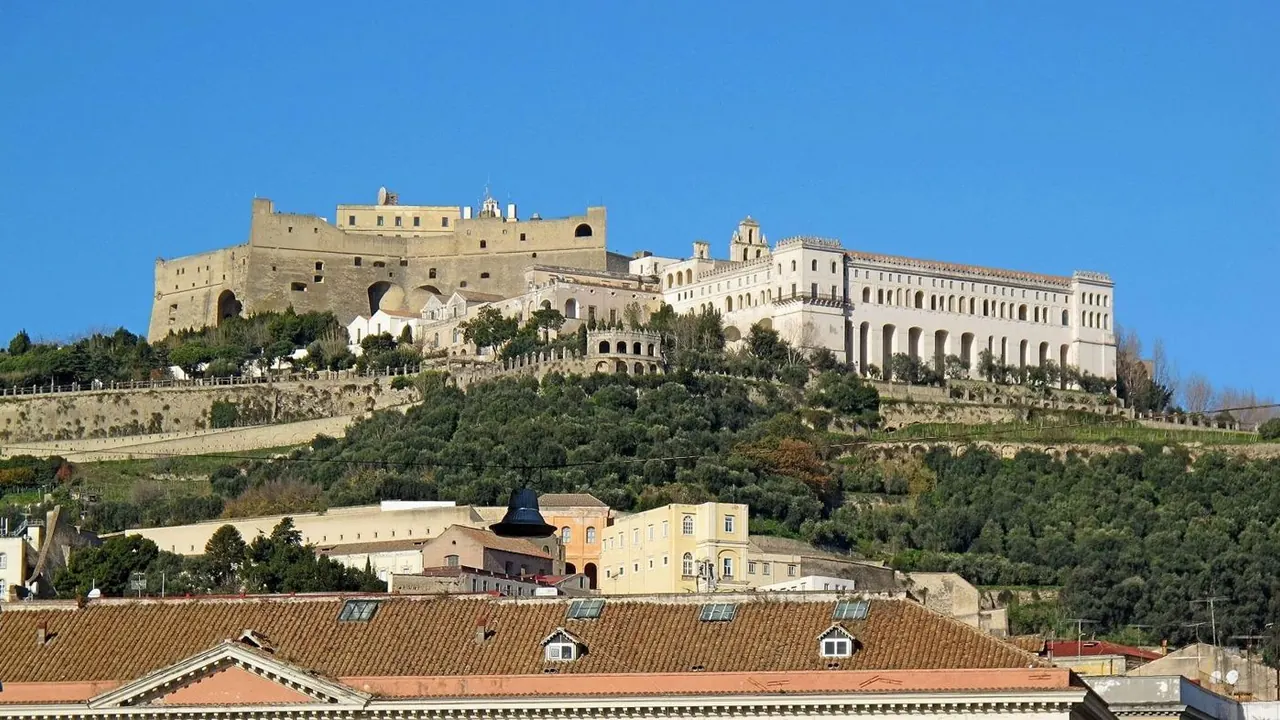
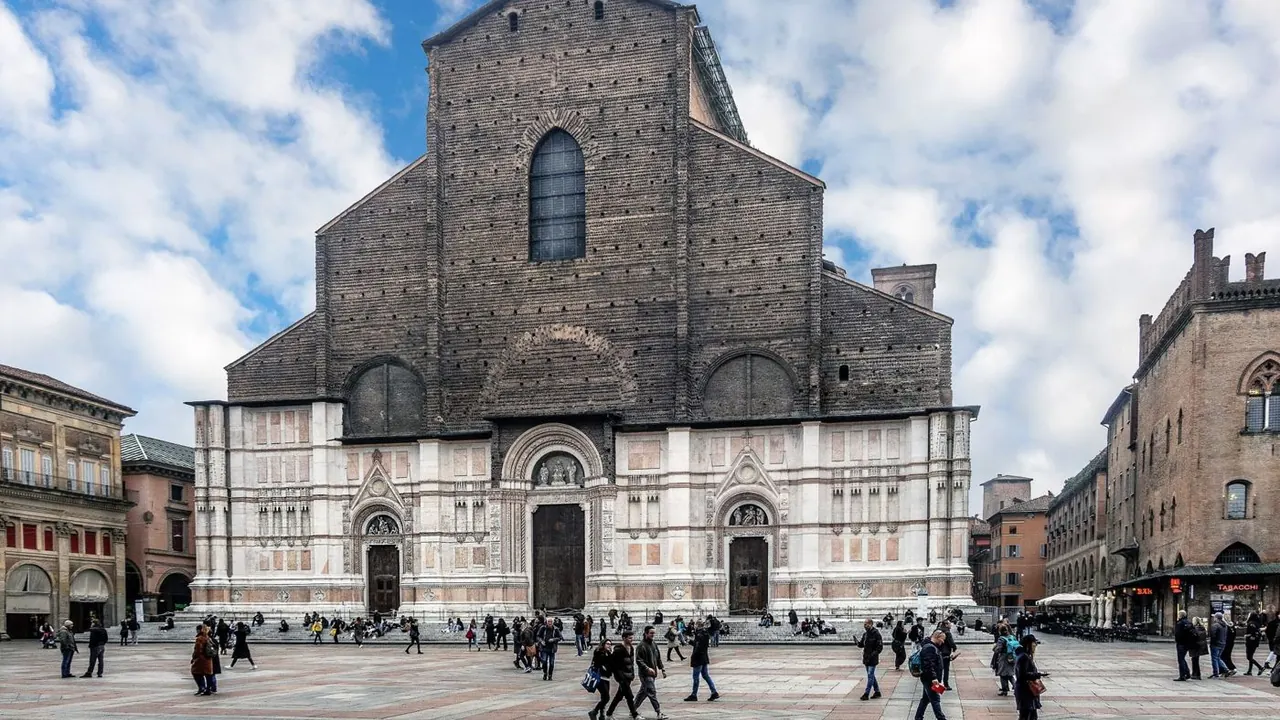
Photos: Naples by pietro scerrato, CC BY 3.0, cropped; Bologna by Vanni Lazzari, CC BY-SA 4.0, cropped.
Naples or Bologna?
Our verdict in twelve categories, each scored against the same fixed benchmark cities, and the climate month by month, so you can choose for your trip.
Choose Naples for
- nature and the outdoors
- beaches
- prices
Naples asks more of a visitor and gives more back. The sights are richer and packed closer together, from the Archaeological Museum to the city underground. The bay puts volcano walks, swimming off the islands and the Amalfi Coast within a day's reach, and everyday eating and sleeping cost less. Choose it if you can put up with scooters, slow buses and noise in return for depth and the sea.
Choose Bologna for
- getting around
- families
Bologna suits travellers who want an easy, orderly base. Its flat brick centre can be walked end to end under the porticoes, and the station puts Florence, Ravenna, Ferrara and the food towns of the Via Emilia within easy reach. Meals are built on fresh pasta, ragù and mortadella. It is the calmer choice for a first trip to Italy, a long weekend, or a family that cares more about short distances than about attractions made for children.
Scoreboard
Twelve categories on one fixed scale from 0 to 100. The shaded stretch is the gap between the two.
Your match
Pick a travel style or drag the sliders, and both match scores follow your weighting.
Wins on nature and the outdoors and beaches with your weighting.
Wins on getting around and families with your weighting.
What matters to you?
Category by category
What the scores mean for a trip.
Beaches & swimming
From Bologna the sea means a train of about an hour to Rimini or Cervia. The Adriatic there is shallow and warm but often greenish, and the shore is long rows of rented sunbeds, so it works as an escape from the August heat rather than as a reason to go.
Naples is not a beach city either, but it lives on the water. You can swim off the rocks below the Lungomare or at Posillipo, and the clear, rocky coves of Procida, Ischia, Capri and the Sorrento peninsula are a boat ride away.
Food & drink
These are two of Italy's great food cities, and they cook very differently. Bologna is about rich egg pasta and pork: tagliatelle al ragù, tortellini in brodo and mortadella, with Parmigiano and balsamic from the towns nearby and the lanes of the Quadrilatero still working as a market.
Naples eats faster and louder. Its food is pizza in plain rooms at shared tables, fried street food, sfogliatelle and seafood pasta, built on buffalo mozzarella, lemons and San Marzano tomatoes. Neither offers much beyond its own cooking. Bologna leans towards long sit-down trattoria meals, and Naples towards eating on your feet.
Culture & sights
Bologna's appeal is a whole medieval city in brick: the porticoes, Piazza Maggiore, the Two Towers, the Santo Stefano complex and the anatomical theatre in the Archiginnasio, all seen well in two or three days.
Naples goes deeper. Its Greek street grid is packed with Gothic and Baroque churches, the Archaeological Museum holds the frescoes and mosaics from Pompeii, the Veiled Christ lies in the Cappella Sansevero, and below it all is a second city of tunnels and catacombs. A week here still leaves things unseen.
Nightlife
Both cities go out late and cheaply, led by students, so the difference is in the setting. In Bologna the night moves through taverns on Via del Pratello and student bars around Piazza Verdi, with aperitivo and wine bars nearer the Quadrilatero, and the city goes very quiet in August.
Naples takes it into the open air, with crowds on the steps of Piazza Bellini and better-dressed drinkers in the alleys of Chiaia, while in summer the dancing moves out to the coast. Neither is a city for serious clubbing.
Nature & outdoors
Bologna offers easy green escapes: the arcaded climb to San Luca, the Colli Bolognesi, the gypsum caves of the Parco dei Gessi, and the Apennines further south for hiking or modest skiing. North of the city it is flat farmland.
Naples has a far more dramatic setting on a volcanic bay. Vesuvius, the craters and lakes of the Phlegraean Fields and the underwater park at Gaiola are all close, and the Amalfi Coast, Capri and Ischia add walks high above the sea. What Naples lacks is green space inside the city.
Day trips
Both are superb bases, for different kinds of outing. Fast trains from Bologna reach Florence in about half an hour, and with Ravenna's mosaics, Ferrara, Modena, Parma, Verona and Venice all close, it is a gateway to the art cities of the north.
From Naples the trips lead to the ancient world and the sea: Pompeii and Herculaneum on the Circumvesuviana, the palace at Caserta, ferries to Capri and Procida, and the Amalfi Coast beyond Sorrento. Bologna's trips are easier to make, and Naples's offer more varied landscape.
Good for families
Neither city has much built for children, but Bologna is gentler to move around with them. The centre is flat and mostly car-free, the porticoes give shade, and older children can climb a medieval tower, with Mirabilandia and the beach at Rimini to fill the gaps.
Naples welcomes children warmly but makes the days harder, with scooters, broken pavements and steps that defeat pushchairs. It does have a zoo, Edenlandia and a science museum, plus the funiculars, ferries and Pompeii, though many families stay in Sorrento or on an island instead.
Getting around
Bologna is much simpler. Its small, flat centre can be walked in shade under the arches, private cars are kept out of much of it, and the station sits at the edge of the old town, so you rarely need even the buses.
Naples has a metro and four funiculars, and the art-filled stations of Line 1 are worth seeing in their own right. Beyond them the buses crawl through traffic, the Circumvesuviana is packed and often late, and walking means sharing the lanes with scooters and crossing roads with some nerve.
Shopping & style
Neither city is a shopping destination, and what you take home differs. From Bologna it is mostly food: mortadella, aged Parmigiano and balsamic vinegar from the Quadrilatero delis. There is also a small luxury cluster on Via Farini, and antiques fill Piazza Santo Stefano on some weekends.
Naples has more character in its crafts and cloth. It offers tailored suits and silk ties from Chiaia, nativity figures from Via San Gregorio Armeno and coral and cameos from Torre del Greco, with Via Toledo and the Galleria Umberto I for everyday browsing.
Affordability
Bologna eats well for less than Italy's main tourist cities, and its churches and squares are mostly free. Rooms in the old town, though, are priced like the rest of prosperous northern Italy and become scarce during the big trade fairs.
Naples stretches money further from day to day. Pizza, street food, coffee at the bar, transport and the B&Bs in the historic centre all cost noticeably less. Spending rises mainly when you head for Capri, the Amalfi Coast or the big archaeological sites.
Live music & performing arts
Each city has a historic opera house at its centre, and Naples has the grander one. Bologna's Teatro Comunale runs a full season, and the city adds basement jazz clubs, student indie gigs and summer concerts in Piazza Maggiore.
The Teatro di San Carlo, the oldest opera house in Europe still in use, is worth planning an evening in Naples around. The city adds chamber music in its churches and Neapolitan song in small venues and trattorias. Bologna has more jazz and small gigs, while Naples has the bigger single draw.
Wellness & relaxation
Thermal water is where these two part ways. From Bologna, the spring-fed pools of Castel San Pietro Terme and the old valley spa at Porretta Terme make a quiet half day out, and in town rest means a long lunch under the porticoes, away from the noisy university quarter.
Naples, loud as it is, sits on volcanic ground with real springs. Agnano on the edge of the city has been used since Roman times, and Ischia, an hour away by hydrofoil, is a whole spa island of terraced pools above the sea. In the city itself, the Lungomare at dusk and the cloisters of Santa Chiara are the calm corners.
When should you go?
Pick your month. The climate figures are measured averages, not a forecast.
Naples in July
Bologna in July
Daytime high, °C
Rainfall in the month, mm
Where the figures come from
Naples's sunshine is measured 28 km from the centre, at Grazzanise.
Bologna has no rain gauge within 25 km of the centre, so its rainfall comes from a gridded climate dataset read at the city rather than from a gauge further away.
Bologna's sunshine is measured 82 km from the centre, at Cervia.
Temperature and rainfall are climate normals, averaged over the years shown. Naples: 2005-2020 (sunshine 1991-2020, rainfall 1971-2000) normals, Napoli / Capodichino (4.6 km from centre). Bologna: 1991-2020, 14 years observed normals, Bologna / Borgo Panigale (5.5 km from centre).
Bologna has the harder climate of the two. Winters on the Po plain are cold and grey, with January highs around 7°C. July and August reach about 32°C, and the heavy, humid air makes daytime sightseeing tiring. May and June, then September into early October, are the comfortable months for walking, though autumn brings the year's steadiest rain.
Naples is milder at both ends of the year. January days are still around 13°C and noticeably sunnier than Bologna's. Summer heat is similar, but the sea eases it, reaching about 26°C in August and staying warm enough to swim from June into early October. Summer is almost dry, then the rain arrives in autumn and peaks in November at about 148mm. Spring and late September are best for the streets, and June and September are the best months to combine sightseeing with swimming.
Which traveller are you?
For an outdoors trip, Naples is the clear choice. Bologna has gentle hill walks to San Luca and the start of the Via degli Dei, while from Naples the crater rim of Vesuvius, the Phlegraean Fields, snorkelling at Gaiola and the Path of the Gods all make day outings.
For a short city break, Bologna is easier to get right. Its flat centre is mostly closed to traffic, the main sights lie minutes apart under the porticoes, and two or three days cover them, without the funiculars and crowded local trains Naples needs.
On a trip on a tight budget, Naples goes further. Bologna is cheap by day, on foot with an aperitivo spread as supper, but its beds are not. In Naples, Spaccanapoli, a funicular up to Vomero and a swim off the Posillipo rocks fill a day for little.
Before you go
| Measure | Naples | Bologna |
|---|---|---|
| Official language | Italian | Italian |
| Currency | Euro (EUR) | Euro (EUR) |
| Sockets | CFL230 V, 50 Hz | CFL230 V, 50 Hz |
| Driving side | Right | Right |
| Time zone | UTC+1, UTC+2 in summer | UTC+1, UTC+2 in summer |
| Emergency number | 112 | 112 |
| Elevation | 17 m | 54 m |
| Main airport | Naples International Airport (NAP)7 km from centre131 non-stop destinations | Bologna Guglielmo Marconi Airport (BLQ)6 km from centre98 non-stop destinations |
| Public holidays this year | 13 days | 13 days |
By the numbers
| Measure | Naples | Bologna |
|---|---|---|
| City population | 913,462 | 387,971 |
| People per km² | 7,676 | 2,754 |
| Museums within 10 km | 65 | 68 |
| UNESCO World Heritage sites within 50 km | 5 | 3 |
| Swim season, months above 21 °C | 5 months | - |
Where else could you go?
Every comparison below shares a destination with this one, so you can follow Naples or Bologna somewhere new.