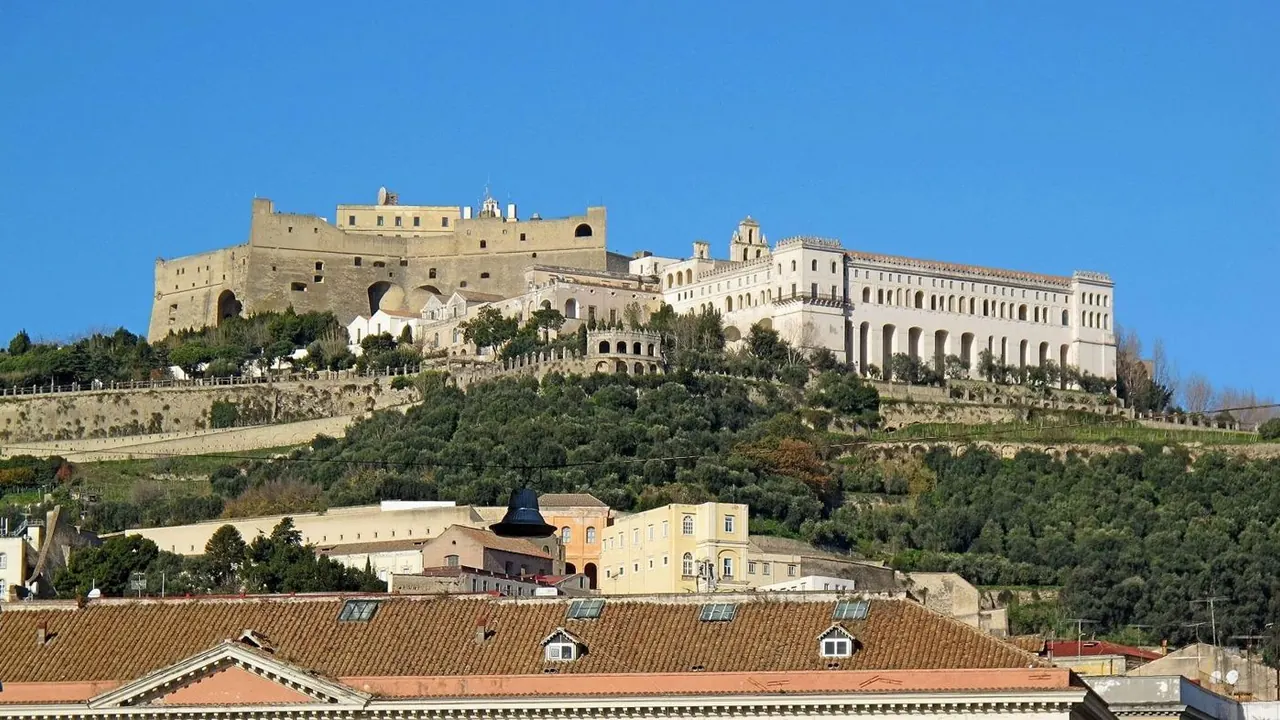
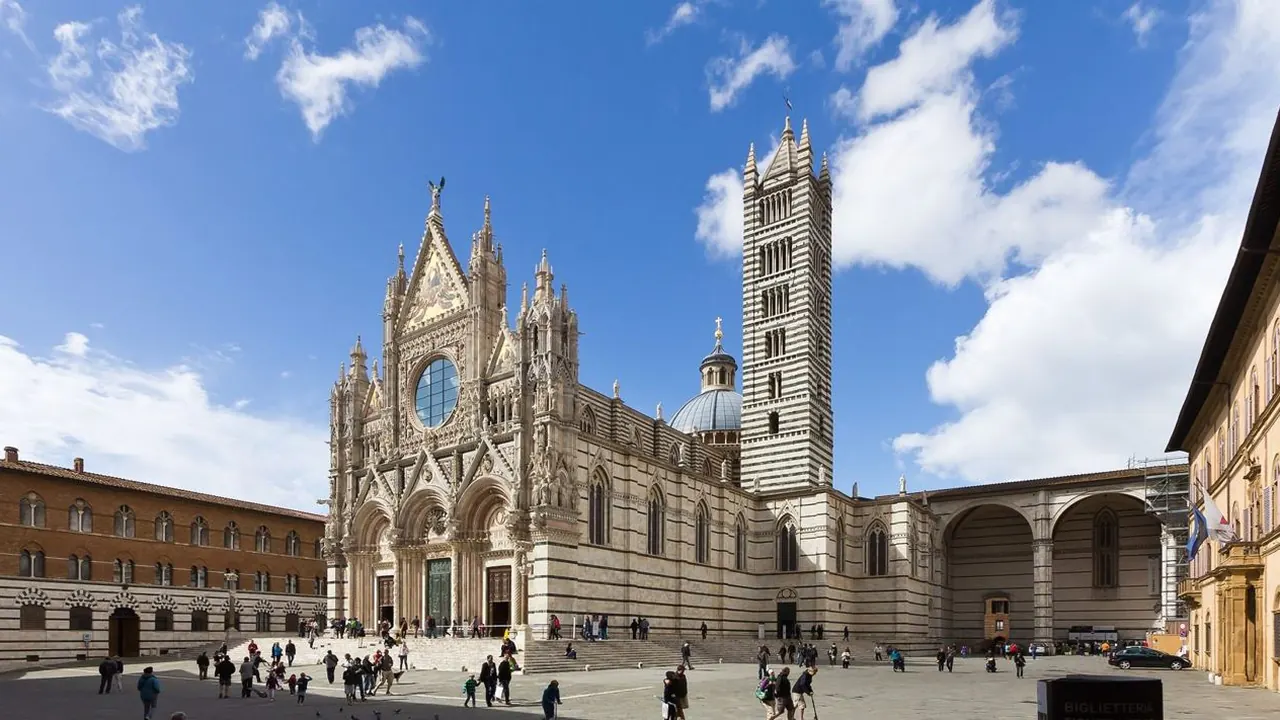
Photos: Naples by pietro scerrato, CC BY 3.0, cropped; Siena by Raimond Spekking, CC BY-SA 4.0, cropped.
Naples or Siena?
Our verdict in twelve categories, each scored against the same fixed benchmark cities, and the climate month by month, so you can choose for your trip.
Choose Naples for
- beaches
- nightlife
- live music and the arts
Naples is for travellers who want a big, loud, layered city with the sea in front of it. It has the stronger museums and underground sites, far better food and nights out, the opera house, and the islands and the volcano a train or boat ride away. It costs less day to day too. The price is more traffic, more noise and harder going with small children.
Choose Siena for
- wellness
- getting around
Siena suits a slower trip built around one perfect medieval town and the Tuscan countryside around it. The streets are mostly free of cars, the evenings are quiet, and the hot springs, wine villages and hill towns are close by. Pick it if you'd rather have calm and landscape than nightlife and the sea, and if you're happy to hire a car.
Scoreboard
Twelve categories on one fixed scale from 0 to 100. The shaded stretch is the gap between the two.
Your match
Pick a travel style or drag the sliders, and both match scores follow your weighting.
Wins on beaches and nightlife with your weighting.
Wins on wellness and getting around with your weighting.
What matters to you?
Category by category
What the scores mean for a trip.
Beaches & swimming
Naples at least has the sea at hand. You can swim off the rocks below the Lungomare and at small lidos in Posillipo. The clear, rocky coves of Capri, Ischia, Procida and the Sorrento peninsula are a ferry or train ride away, though the water near the port is not always clean.
Siena has no swimming beyond a hotel or agriturismo pool. The Maremma beaches around Castiglione della Pescaia are well over an hour's drive, so a swim takes a whole day.
Food & drink
The two kitchens are proud and local, but Naples puts food at the centre of a visit in a way Siena does not. In Naples you get blistered pizza in noisy shared rooms, fried pizza and seafood in paper cones, sfogliatelle and babà, and markets such as the Pignasecca piled with mozzarella and San Marzano tomatoes.
Siena's strengths are slower ones. There is hand-rolled pici, ribollita and wild boar in the osterie of the contrade, panforte and ricciarelli in the bakeries, and Chianti, Brunello and Vino Nobile by the glass. Neither city has much international food.
Culture & sights
Naples has more, and more varied, sights. There is the Greek street grid of Spaccanapoli crowded with churches, Pompeii's finds in the Archaeological Museum, the Veiled Christ, the tunnels and catacombs underground, and palaces and castles on the hills. That is enough for a week.
Siena gives you one complete medieval city rather than many layers. The Campo, the Palazzo Pubblico with Lorenzetti's Good and Bad Government, and the striped Duomo with Duccio's Maestà next door can be seen properly in two or three days.
Nightlife
Naples stays out late. Students drink on the steps of Piazza Bellini, and a smarter crowd fills the lanes behind Piazza dei Martiri until well after midnight, though neither city is a place for clubbing. Siena's evenings mean dinner, wine on the Campo and a quiet walk home, except for the Palio nights, when the contrade feast in the streets.
Nature & outdoors
The landscape around Naples is more dramatic. You can walk up to the crater rim of Vesuvius, explore the old craters of the Phlegraean Fields and Astroni, snorkel at Gaiola, and hike the Path of the Gods high above the Amalfi Coast.
Siena's countryside is gentler and suits cyclists best. There are the clay hills of the Crete Senesi, the Val d'Orcia, and the white gravel strade bianche starting at the edge of town. It has no coast or high mountains to match the bay.
Day trips
Both are superb bases, and the difference is in the kind of trip. From Naples the outings are archaeology and sea: Pompeii, Herculaneum and Oplontis by train, Caserta's palace, ferries to Capri and Procida, and the Amalfi Coast.
From Siena they are hill towns, wine and abbeys: San Gimignano, Montalcino, Pienza, San Galgano and Florence. Naples manages most of this without a car, while Siena's wineries and villages are far easier with one.
Good for families
Neither city is built around children, but Naples has a little more for them. There is Edenlandia, the zoo and the Bagnoli science museum, and older children love the funiculars, the ferries and the tunnels. Against that, you have scooters, missing pavements and summer crowds.
Siena is safer and calmer, but it has no attractions made for children, and its steep lanes are tiring with a pushchair. In both cases, families often do better staying outside, in Sorrento or on a farm with a pool.
Getting around
Siena is the easier town to move around on foot. The centre is largely closed to traffic, the Campo and the Duomo are minutes apart, and escalators climb from the station, though the ridges make for steep climbs.
Naples is bigger and messier. Its metro and four funiculars are useful, but buses get stuck in traffic and the Circumvesuviana is crowded. You never need a car there, whereas the Sienese countryside more or less demands one.
Shopping & style
Naples has the more interesting shopping. You'll find Chiaia's tailors and silk ties, the Galleria Umberto I and Via Toledo, nativity figures on Via San Gregorio Armeno, and coral and cameos from Torre del Greco. Siena's shopping is modest: majolica, contrada scarves, panforte and pecorino, plus a big weekly market by the Fortezza.
Affordability
Your money goes further in Naples. Pizza, street food, coffee at the bar and transport all cost little, and modest B&Bs fill the historic centre, as long as you stay in the city rather than on Capri or the Amalfi Coast.
Siena has few rooms inside its walls and they are in demand, especially in summer and around the Palio. Eating in an osteria away from the Campo, or staying at an agriturismo outside town, keeps costs down.
Live music & performing arts
Naples has a real stage in the Teatro di San Carlo, the oldest working opera house in Europe, with a full season of opera, ballet and concerts. Neapolitan song is still sung in small shows and trattorias.
Siena's music is serious but small in scale. It centres on the Accademia Chigiana's summer concerts and the students of Siena Jazz, with drama at the Rinnovati and the Rozzi. For opera, you go to Florence.
Wellness & relaxation
Siena is the calmer place to slow down, and its springs are close. There are the travertine pools of Rapolano, the steaming square of Bagno Vignoni and the free limestone pools of Bagni San Filippo, all easy to combine with a stay in the hills.
Naples itself is too intense to relax in. Its answer is Ischia's terraced thermal parks, an hour away by hydrofoil, or the old Agnano baths on the city's edge.
When should you go?
Pick your month. The climate figures are measured averages, not a forecast.
Naples in July
Siena in July
Daytime high, °C
Rainfall in the month, mm
Where the figures come from
Naples has no rain gauge within 25 km of the centre, so its rainfall comes from a gridded climate dataset read at the city rather than from a gauge further away.
Naples's sunshine is measured 28 km from the centre, at Grazzanise.
Siena's temperatures are measured 45 km from the centre, at Arezzo.
Siena has no rain gauge within 25 km of the centre, so its rainfall comes from a gridded climate dataset read at the city rather than from a gauge further away.
Temperature and rainfall are climate normals, averaged over the years shown. Naples: 2005-2020 (sunshine 1991-2020, rainfall 1991-2020) normals, Napoli / Capodichino (4.6 km from centre). Siena: 2006-2017 (rainfall 1991-2020) normals, Arezzo (45 km from centre).
Both cities reach about 30°C in July and August, which makes midday sightseeing hard work in either. The difference is what summer gives you. In Naples the bay is warm enough to swim from June to October, and the sea peaks at about 26°C in August. The sunniest, driest months are June to August. Siena has no sea, so its high summer is mainly for early mornings, pool afternoons and long evenings.
For walking the streets, aim for spring and autumn. In Naples, May, late September and October are mild. Siena is at its best in late April, May and late September. Siena's winters are noticeably colder, with highs around 9°C in January, while Naples stays mild. Both get their heaviest rain in November, and in Naples that is the wettest month by a clear margin, at about 148mm.
Which traveller are you?
A beach and sun trip works far better from Naples. You can spend the morning in the churches of the old town and be swimming in the bay by mid-afternoon, with island coves a boat ride away. In Siena, every day at the sea costs a whole day of sightseeing.
Food and nightlife lovers should head to Naples, where eating fills the whole day: espresso standing at the bar, fried snacks from street counters, pizza at shared tables, then hours of talk in the piazzas. In Siena, the evening is mostly over once dinner ends.
Anyone planning a relaxing and wellness trip will be happier in Siena. The days can run slowly, with a morning in warm spring water, lunch out among the hills and a quiet walk once the crowds thin. In Naples, resting usually means leaving the city altogether.
Before you go
| Measure | Naples | Siena |
|---|---|---|
| Official language | Italian | Italian |
| Currency | Euro (EUR) | Euro (EUR) |
| Sockets | CFL230 V, 50 Hz | CFL230 V, 50 Hz |
| Driving side | Right | Right |
| Time zone | UTC+1, UTC+2 in summer | UTC+1, UTC+2 in summer |
| Emergency number | 112 | 112 |
| Elevation | 17 m | 322 m |
| Main airport | Naples International Airport (NAP)7 km from centre131 non-stop destinations | Florence Airport, Peretola (FLR)55 km from centre46 non-stop destinations |
| Public holidays this year | 13 days | 13 days |
By the numbers
| Measure | Naples | Siena |
|---|---|---|
| City population | 913,462 | 52,812 |
| People per km² | 7,676 | 446 |
| Museums within 10 km | 65 | 30 |
| UNESCO World Heritage sites within 50 km | 5 | 5 |
| Swim season, months above 21 °C | 5 months | - |
Where else could you go?
Every comparison below shares a destination with this one, so you can follow Naples or Siena somewhere new.