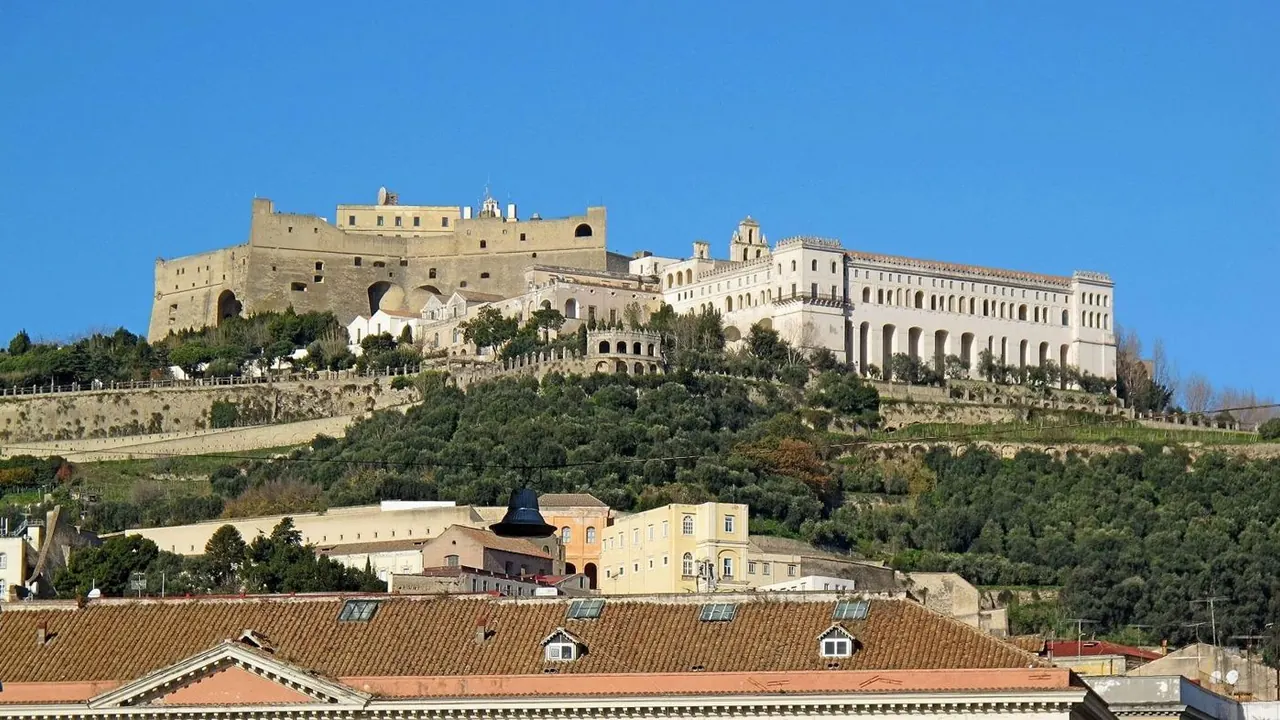
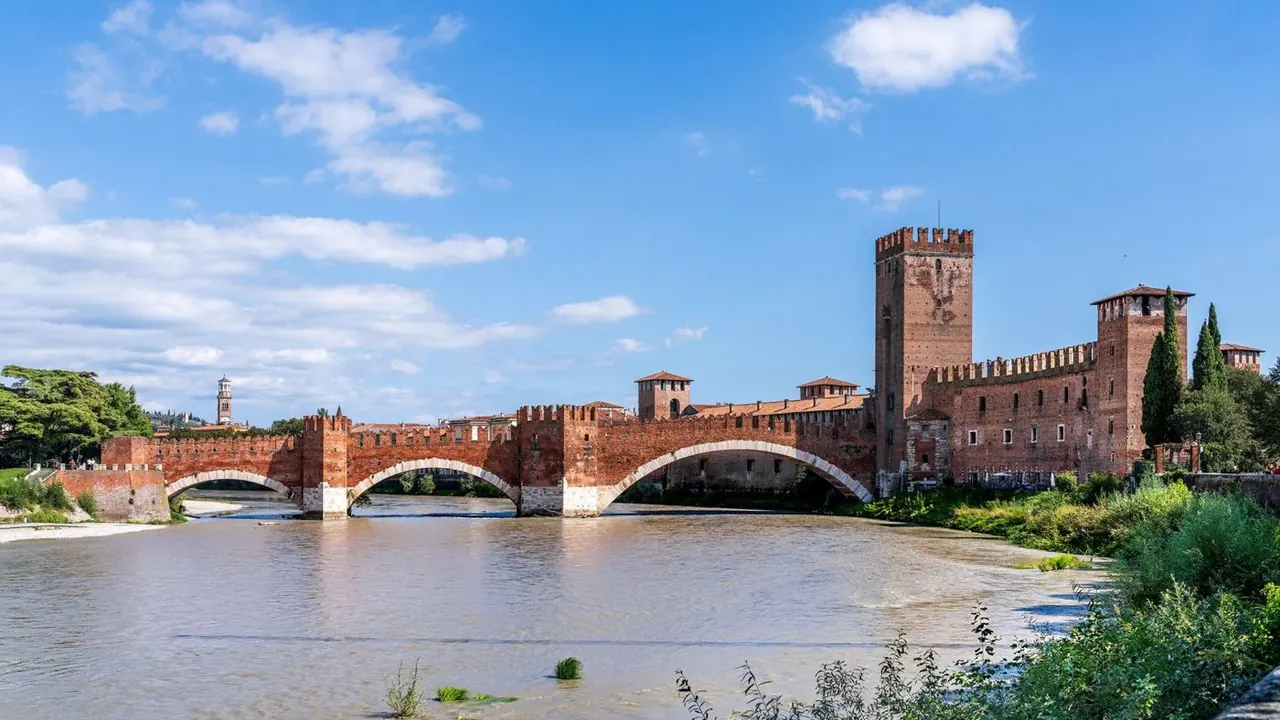
Photos: Naples by pietro scerrato, CC BY 3.0, cropped; Verona by NorbertNagel, CC BY-SA 4.0, cropped.
Naples or Verona?
Our verdict in twelve categories, each scored against the same fixed benchmark cities, and the climate month by month, so you can choose for your trip.
Choose Naples for
- nightlife
- food and drink
- prices
Naples is the stronger pick for travellers who want a city with appetite and noise. Its food is more rooted and more varied at street level, its historic centre and archaeological museum go deeper, its nights run later, and the volcanic coast and islands give more to swim and hike. Everyday costs are lower too. The price is a harder city to move through, with traffic, uneven pavements and a crowded summer.
Choose Verona for
- families
- getting around
- wellness
Verona suits a calmer, more ordered trip. The flat, largely traffic-free centre is easy on foot and with a pushchair, Lake Garda's theme parks and zoo make it the better choice for children, and the wine country starts at the edge of town. It asks for more money for a room and offers quieter evenings, but in return it is gentle, compact and simple to enjoy.
Scoreboard
Twelve categories on one fixed scale from 0 to 100. The shaded stretch is the gap between the two.
Your match
Pick a travel style or drag the sliders, and both match scores follow your weighting.
Wins on nightlife and food and drink with your weighting.
Wins on families and getting around with your weighting.
What matters to you?
Category by category
What the scores mean for a trip.
Beaches & swimming
Naples has the edge, because it sits on salt water. In the city you swim off the rocks below the Lungomare or at small lidos in Posillipo, though the water near the port is not always clean, and the clear rocky coves are a boat ride away on Procida, Ischia, Capri or the Sorrento peninsula.
Verona's swimming is lake swimming: calm, tideless water on Garda's southern shore at Peschiera, Lazise or Sirmione's limestone shelves, with lidos and lawns rather than sand. Neither city is a beach base, but Naples gives you sea and islands, Verona a gentle lake.
Food & drink
Naples eats with more force and more variety at street level. Pizza was born here, and fried pizza, seafood cones, frittatine, sfogliatelle and standing espresso fill the day, with the Pignasecca and Porta Nolana markets showing off mozzarella, lemons and San Marzano tomatoes.
Verona is quieter and more about the glass. Its osterie serve Amarone risotto, bigoli and bollito with pearà, and Valpolicella, Soave and Bardolino are made within a short drive. Both cities are thin on international food, but Verona also lacks the street food that makes Naples so easy to graze.
Culture & sights
Naples offers more depth. Its Greek street grid along Spaccanapoli and Via dei Tribunali is packed with churches, the National Archaeological Museum holds the treasures of Pompeii and Herculaneum, and beneath it lie tunnels, cisterns and catacombs, enough for a full week.
Verona is smaller and more legible: the Roman Arena on Piazza Bra, the Roman theatre, the Scaliger tombs, San Zeno's bronze doors and Castelvecchio in its Scarpa setting. It rewards two or three unhurried days rather than a week of digging.
Nightlife
Naples has the livelier nights. Students crowd the steps of Piazza Bellini beside the old Greek walls, and Chiaia's bars behind Piazza dei Martiri spill into the lanes well past midnight. Clubs are scarce, so it is a street scene rather than a dance scene.
Verona's evening is mostly aperitivo, a spritz or a Valpolicella in Piazza delle Erbe or by the river, with Veronetta's student bars staying up a little later. Most nights the centre is quiet before the small hours, except when the opera crowd leaves the Arena.
Nature & outdoors
Volcanoes shape the landscape around Naples and make it the more dramatic of the two. You can walk up to the crater rim of Vesuvius, explore the old craters of the Phlegraean Fields at Astroni and Lake Avernus, snorkel in the Gaiola underwater park and hike the Path of the Gods above the Amalfi Coast.
Verona's countryside is gentler. There are vineyard walks and cycling in the Valpolicella hills, the Adige cycle route, the pastures and gorges of the Lessinia, and Monte Baldo above Lake Garda, where the wind at the northern end draws sailors and windsurfers.
Day trips
Both are superb bases, and the difference is in the kind of outing. From Naples the trips are ancient and coastal: Pompeii and Herculaneum on the Circumvesuviana, the palace at Caserta, ferries to Capri and Procida, and the Amalfi Coast and Paestum beyond.
From Verona they are art cities and lakes: Venice, Padua's Scrovegni Chapel, Palladio's Vicenza and Mantua by fast, reliable trains, plus Sirmione, the Garda harbours and the wine towns of Soave and Valpolicella.
Good for families
Verona is the easier city with children. Gardaland, the Garda water parks and the safari zoo at Parco Natura Viva are about half an hour away, the lake offers shallow swimming, and the flat pedestrian centre is kind to a pushchair, though a car helps for the outer attractions.
Naples welcomes children in every pizzeria, but scooters in the lanes, broken pavements and steps make it tiring with small ones. Edenlandia, the zoo and the science museum are modest, and many families prefer to stay in Sorrento or on an island.
Getting around
Verona is simpler. Its centre inside the river loop is small, flat and mostly free of traffic, so walking covers nearly everything, and trains to Venice, Milan and the lake are excellent; only the Valpolicella and Lessinia call for a car.
Naples has more transport but less ease. Metro Line 1 and four funiculars help with the hills, yet buses crawl, the Circumvesuviana is crowded and unreliable, and you share the narrow lanes with scooters.
Shopping & style
Naples is the better place to shop, because much of what it sells is made there and nowhere else. A made-to-measure shirt or silk tie from one of Chiaia's old tailoring workshops, a nativity shepherd from the craft lane of San Gregorio Armeno, or a coral piece or shell cameo carved in Torre del Greco would be hard to find in any other Italian city. For mainstream fashion, Via Toledo and the iron-and-glass Galleria Umberto I are good enough, but the handmade goods are why you shop here.
Verona's shops are well kept but rarely surprising: one elegant street of Italian brands between Piazza Bra and Piazza delle Erbe, plus a few side lanes of boutiques and jewellers. Its best souvenirs come from the wine shop and the bakery, such as a case of Amarone, Garda olive oil or the Christmas pandoro. Keen fashion shoppers end up taking the train to Milan, while in Naples the purchases worth remembering are in the city itself.
Affordability
Naples is clearly kinder to the wallet. Pizza, street food, coffee and transport are cheap, and the centre has plenty of modest B&Bs; costs only climb once you head for the islands or the Amalfi Coast.
Verona's everyday eating is fair and its wine is good value, but central hotels are expensive for a city its size, especially on opera nights and during trade fairs. Staying near the station or in Veronetta helps.
Live music & performing arts
Both are opera cities, in different ways. Naples has the Teatro di San Carlo, the oldest working opera house in Europe, with a season of opera and ballet, plus conservatory and church concerts and Neapolitan song in trattorias.
Verona's great draw is summer opera in the Roman Arena, vast productions under the sky, with Shakespeare and jazz in the Roman theatre. In the cooler months the Teatro Filarmonico keeps a smaller season going, so Naples is steadier through the year and Verona peaks in summer.
Wellness & relaxation
Neither city is restful in itself, and both send you out for thermal water. From Naples that means Agnano's Roman-era springs or a hydrofoil to Ischia, a true spa island with terraced thermal parks above the sea, but the city itself is loud and crowded.
Verona is calmer day to day, with riverside walks and the Giardino Giusti, and its springs are at Sirmione's lakeside thermal centre, the spring-fed lake near Lazise and Caldiero.
When should you go?
Pick your month. The climate figures are measured averages, not a forecast.
Naples in July
Verona in July
Daytime high, °C
Rainfall in the month, mm
Where the figures come from
Naples has no rain gauge within 25 km of the centre, so its rainfall comes from a gridded climate dataset read at the city rather than from a gauge further away.
Naples's sunshine is measured 28 km from the centre, at Grazzanise.
Temperature and rainfall are climate normals, averaged over the years shown. Naples: 2005-2020 (sunshine 1991-2020, rainfall 1991-2020) normals, Napoli / Capodichino (4.6 km from centre). Verona: 1991-2020 normals, Verona / Villafranca (11.6 km from centre).
Naples has the longer warm season and the better swimming. June to August are hot, dry and very sunny, and the bay reaches about 26°C by August, though at 30°C in July and 31°C in August midday sightseeing is heavy going. September is the turning month: the sea is still warm enough for swimming, but the rain comes back and builds to a wet November of 148mm. May and early October are the most comfortable months for walking the old streets, and winters stay mild enough for sightseeing.
Verona has a sharper divide between the seasons. Winter is noticeably colder, around 7°C in January, with fewer sunny hours than Naples. Rain is spread fairly evenly through the year, so summer is not reliably dry, and September and the autumn months are the wettest. Late spring and early autumn are best for the centre and the vineyards. Summer is about as hot as in Naples, and swimming means the lake rather than the sea.
Which traveller are you?
For a food and nightlife trip, Naples is the clear choice. Pizza, fried street food and pastry shops anchor the days, and the evenings spill into Piazza Bellini and the Chiaia alleys until late, where Verona's streets empty early after aperitivo.
On a family trip with young children, Verona works better. Its flat, pedestrian centre suits pushchairs, and Gardaland, the water parks and the Parco Natura Viva safari zoo are all close by, while Naples has scooters, steps and few attractions built for children.
On a tight budget, Naples stretches money further. Pizza, coffee at the bar, funiculars and modest B&Bs in the centre all come cheap, whereas Verona's central hotels are dear for a provincial city and fill up on opera nights.
Before you go
| Measure | Naples | Verona |
|---|---|---|
| Official language | Italian | Italian |
| Currency | Euro (EUR) | Euro (EUR) |
| Sockets | CFL230 V, 50 Hz | CFL230 V, 50 Hz |
| Driving side | Right | Right |
| Time zone | UTC+1, UTC+2 in summer | UTC+1, UTC+2 in summer |
| Emergency number | 112 | 112 |
| Elevation | 17 m | 59 m |
| Main airport | Naples International Airport (NAP)7 km from centre131 non-stop destinations | Verona Villafranca Valerio Catullo Airport (VRN)10 km from centre96 non-stop destinations |
| Public holidays this year | 13 days | 13 days |
By the numbers
| Measure | Naples | Verona |
|---|---|---|
| City population | 913,462 | 255,588 |
| People per km² | 7,676 | 1,285 |
| Museums within 10 km | 65 | 18 |
| UNESCO World Heritage sites within 50 km | 5 | 5 |
| Swim season, months above 21 °C | 5 months | - |
Where else could you go?
Every comparison below shares a destination with this one, so you can follow Naples or Verona somewhere new.