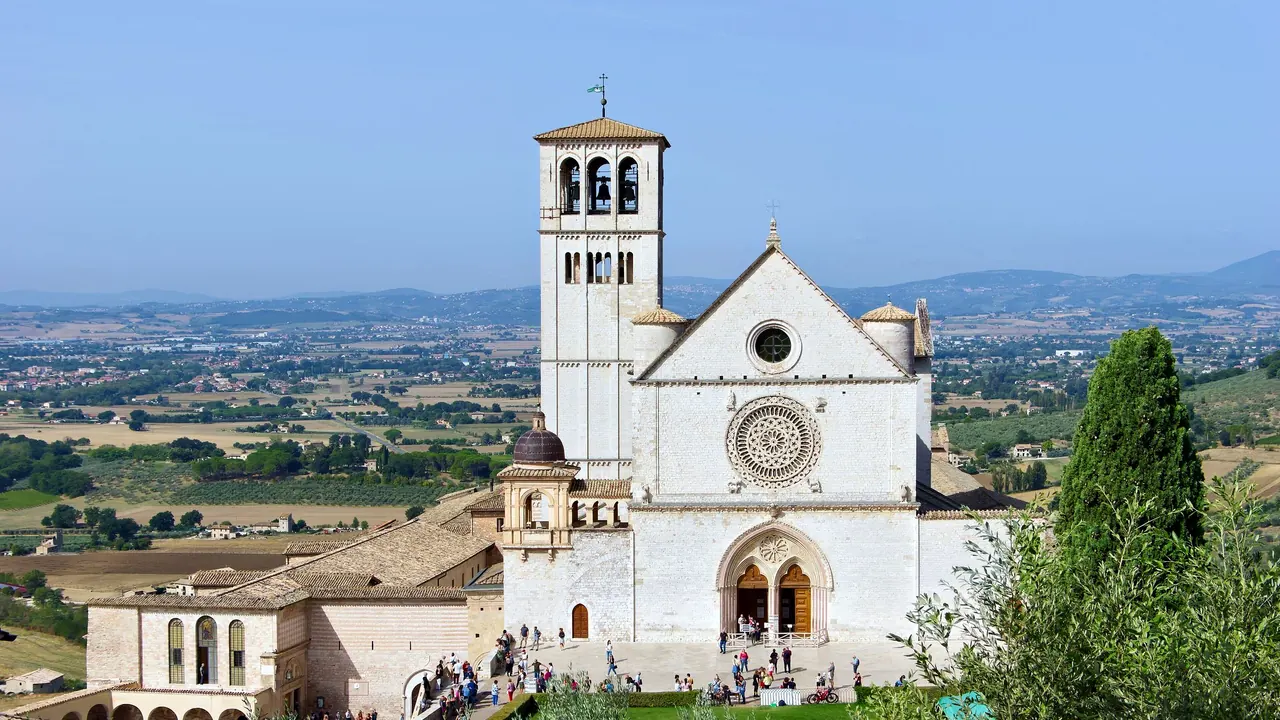
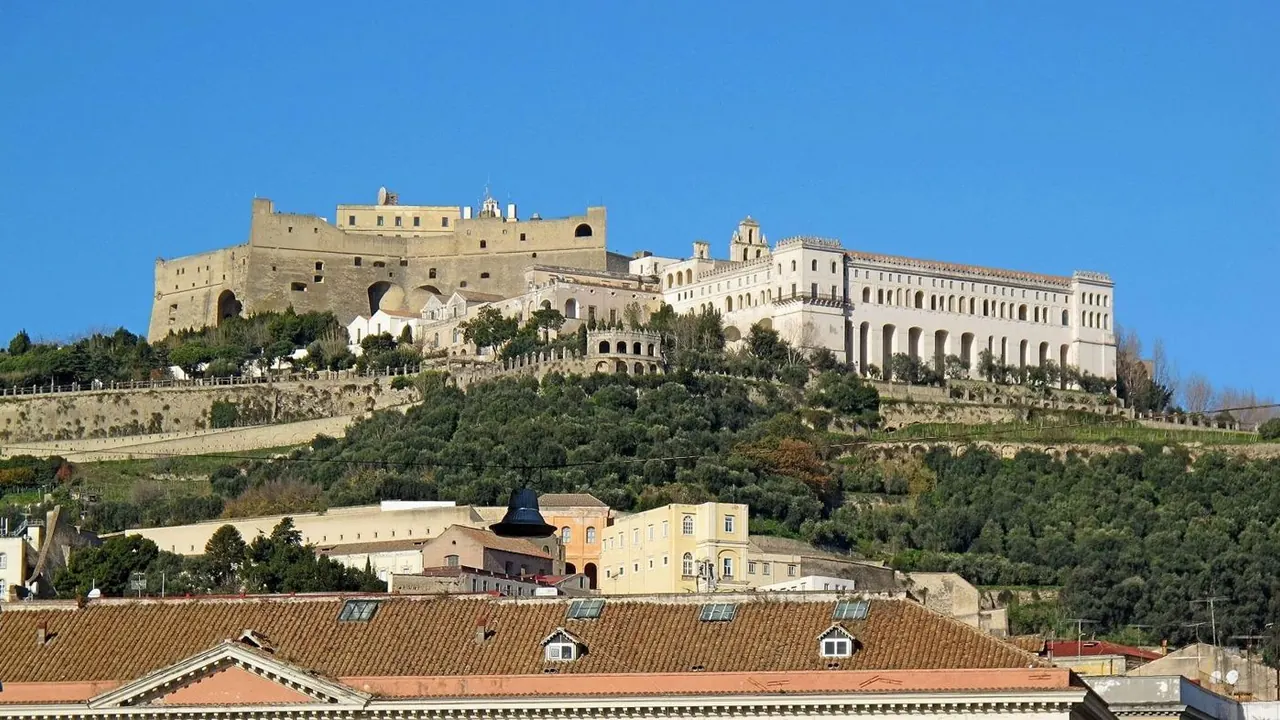
Photos: Assisi by Berthold Werner, CC BY-SA 4.0, cropped; Naples by pietro scerrato, CC BY 3.0, cropped.
Assisi or Naples?
Our verdict in twelve categories, each scored against the same fixed benchmark cities, and the climate month by month, so you can choose for your trip.
Choose Assisi for
- getting around
Assisi suits a slower, quieter trip. You spend a couple of days among the frescoes of the Basilica of San Francesco, walk through silent floodlit lanes in the evening, then use the town as a base for Umbrian hill towns, walks on Monte Subasio and long country lunches at an agriturismo. Choose it if peace matters more than variety and you don't mind hiring a car.
Choose Naples for
- nightlife
- live music and the arts
- food and drink
For almost everything else, Naples is the stronger choice. It has more to see, from the Archaeological Museum to the underground city, along with far better food, late nights out of doors, the San Carlo opera house and the sea. Pompeii, Capri and the Amalfi Coast are all within a day. In return you get noise, traffic and crowded streets.
Scoreboard
Twelve categories on one fixed scale from 0 to 100. The shaded stretch is the gap between the two.
Your match
Pick a travel style or drag the sliders, and both match scores follow your weighting.
Wins on getting around with your weighting.
Wins on nightlife and live music and the arts with your weighting.
What matters to you?
Category by category
What the scores mean for a trip.
Beaches & swimming
There is no real contest here. Assisi lies inland, and the nearest swimming is the shallow, slightly murky water of Lake Trasimeno. A pool at an agriturismo is the realistic plan.
Naples has the sea close by, though the best swimming is not in the city itself. Locals swim off the rocks below the Lungomare and at the small lidos of Posillipo. For clear water you take a boat to Procida, Ischia or Capri, or go down the Sorrento peninsula.
Food & drink
Assisi cooks honest Umbrian country food: strangozzi with truffle, Castelluccio lentils, torta al testo, olive oil from Monte Subasio and Sagrantino to drink. The choice is narrow, though, and the restaurants near the basilica rely on set menus for tour groups.
Naples is a much bigger place to eat. Pizza, fried street food, sfogliatelle and espresso drunk standing at the bar are part of daily life, and the Pignasecca and Porta Nolana markets add buffalo mozzarella and fresh fish. Neither city has much international food, but Naples gives you far more to try in a day.
Culture & sights
Assisi is one great monument and the town around it. The Basilica of San Francesco is two churches stacked on the hillside, with frescoes by Cimabue and Simone Martini and the cycle of Saint Francis's life traditionally given to Giotto. Santa Chiara and the Temple of Minerva complete a visit that is moving and unhurried, and two days cover it all.
Naples has more depth and more range. The Greek street grid around Spaccanapoli, the Pompeii finds in the Archaeological Museum, the Veiled Christ, the catacombs and tunnels underground and the Capodimonte gallery could easily fill a week.
Nightlife
An evening in Assisi means a long dinner, a glass of Sagrantino and a walk through empty, floodlit lanes, which is exactly what many visitors come for. Anyone wanting more goes to Perugia.
Naples has a real night out, though it happens in the street rather than in clubs. Students drink on the steps around Piazza Bellini, and a better-dressed crowd fills the alleys of Chiaia until well past midnight, especially in summer.
Nature & outdoors
Assisi's outdoors are gentle and close by. A path climbs Monte Subasio through holm-oak woods to the Eremo delle Carceri and on to the open summit meadows. Down in the valley, the cycling is easy among olive groves and vineyards.
Naples has the more dramatic setting. A short trail climbs Vesuvius to its crater rim, the Phlegraean Fields hold crater lakes and the woods of Astroni, and Gaiola is good for snorkelling. The Path of the Gods on the Amalfi Coast is within a long day. Green space inside the city is limited, though.
Day trips
Both make excellent bases, in different ways. From Assisi, the hill towns of Umbria lie all around: Spello, Perugia, Spoleto, Gubbio, Todi and Orvieto. A car opens up the smaller ones and the Tuscan towns just over the border.
Naples has even more famous places within reach, and you don't need a car for them. Pompeii and Herculaneum are on the Circumvesuviana line and Caserta is a short train ride away. Ferries run to Capri, Ischia and Procida, with the Amalfi Coast and Paestum further on.
Good for families
Neither city is built for children. Assisi is calm and safe, but its sights are churches that need silence and its lanes are steep and stepped. Older children enjoy the Rocca Maggiore and Monte Subasio, and families usually stay in the valley.
Naples is harder going on the street, with scooters and broken pavements, but it gives children more to do. There are the funiculars, the underground tunnels, Edenlandia and the zoo, a ferry ride and Pompeii. The usual answer is to base the family in Sorrento or on an island.
Getting around
Getting around takes about the same effort in both, for different reasons. Assisi is small but steep, with stairs between the basilica and Piazza del Comune. Its station is 4km below in the valley and buses are sparse beyond the railway line, so most visitors exploring Umbria hire a car.
Naples needs no car at all, thanks to Metro Line 1 and four funiculars. But its buses are unreliable, the Circumvesuviana is crowded and slow, and crossing the road takes nerve.
Shopping & style
Shopping in Assisi is mostly devotional souvenirs. A few local goods among them are worth buying: embroidered Assisi linen, Deruta ceramics, olive oil and Sagrantino.
Naples is a proper shopping city. The tailors of Chiaia make suits, shirts and silk ties, and Via Toledo and the Galleria Umberto I cover the high street. The nativity workshops of San Gregorio Armeno and the coral and cameos from Torre del Greco are crafts you won't find elsewhere.
Affordability
Overall costs are much the same in both. In Assisi the basilicas are free, convent guesthouses are cheap and the agriturismi are good value, though hotels inside the walls cost more around Easter and on big feast days.
Naples is cheap day to day, with pizza, coffee and transport all costing little. Ferries, island hotels, beach clubs and entry fees for the big sites push the bill up once you leave the city.
Live music & performing arts
Music in Assisi is sacred and seasonal: organ and choral concerts in the basilicas, and the medieval Calendimaggio festival in spring. For opera or jazz, visitors go to Perugia.
Naples has the Teatro di San Carlo, the oldest opera house in Europe still in use, with a full season of opera, ballet and concerts. There are also concerts at the conservatory and Neapolitan song in small shows and trattorias. Theatre is almost all in Italian or dialect, and jazz clubs are few.
Wellness & relaxation
The two offer different kinds of rest. In Assisi it is the quiet itself: still mornings, convent retreats and silent walks, with only a handful of spas in country hotels.
Naples is noisy and not restful in itself, but its volcanic ground gives real thermal water. There is a spa at Agnano on the edge of the city, and above all there is Ischia, where thermal parks are terraced through gardens above the sea.
When should you go?
Pick your month. The climate figures are measured averages, not a forecast.
Assisi in July
Naples in July
Daytime high, °C
Rainfall in the month, mm
Where the figures come from
Assisi's temperatures are measured 51 km from the centre, at Frontone.
Assisi has no rain gauge within 25 km of the centre, so its rainfall comes from a gridded climate dataset read at the city rather than from a gauge further away.
Naples's sunshine is measured 28 km from the centre, at Grazzanise.
Temperature and rainfall are climate normals, averaged over the years shown. Assisi: 1991-2020 normals, Frontone (50.5 km from centre). Naples: 2005-2020 (sunshine 1991-2020, rainfall 1971-2000) normals, Napoli / Capodichino (4.6 km from centre).
Assisi is a hill town with real seasons. Winter is cold and grey, around 7°C by day in January. The best walking comes in May, and again from late September into October, once the heat has gone. July and August reach about 30°C. That is fine for early starts and an afternoon by the pool, but tiring on the stepped lanes at midday. Rain builds through the autumn and is heaviest in November.
Naples is milder in winter but much wetter, with the heaviest rain in October and November, about 163mm in November. Summer is dry and very sunny, and it is as hot as Assisi in July. The sea is warm enough to swim in from June to September and reaches about 26°C in August. Late May, June and September give the best mix of sun, sea and streets that are comfortable to walk.
Which traveller are you?
On a food and nightlife trip, Naples wins easily. By day there is pizza from the city that invented it, fried street food and markets like the Pignasecca. At night people crowd the steps of Piazza Bellini and Chiaia's alleys until late, while Assisi is quiet by eleven.
For a beach and sun trip, Naples is the only real option of the two. You can swim off the rocks at Posillipo, find clear coves on Procida, Ischia and Capri, and enjoy a warm summer sea. Assisi lies inland, and its nearest swimming is at Lake Trasimeno.
On a relaxing and wellness trip, it depends on the kind of rest you want. Assisi offers stillness: convent guesthouses, silent walks to the Eremo delle Carceri and empty lanes in the evening. Naples offers thermal water instead, best enjoyed by staying on Ischia.
Before you go
| Measure | Assisi | Naples |
|---|---|---|
| Official language | Italian | Italian |
| Currency | Euro (EUR) | Euro (EUR) |
| Sockets | CFL230 V, 50 Hz | CFL230 V, 50 Hz |
| Driving side | Right | Right |
| Time zone | UTC+1, UTC+2 in summer | UTC+1, UTC+2 in summer |
| Emergency number | 112 | 112 |
| Elevation | 424 m | 17 m |
| Main airport | Perugia San Francesco d'Assisi – Umbria International Airport (PEG)9 km from centre17 non-stop destinations | Naples International Airport (NAP)7 km from centre131 non-stop destinations |
| Public holidays this year | 13 days | 13 days |
By the numbers
| Measure | Assisi | Naples |
|---|---|---|
| City population | 27,605 | 913,462 |
| People per km² | 147 | 7,676 |
| Museums within 10 km | 14 | 65 |
| UNESCO World Heritage sites within 50 km | 2 | 5 |
| Swim season, months above 21 °C | - | 5 months |
Where else could you go?
Every comparison below shares a destination with this one, so you can follow Assisi or Naples somewhere new.