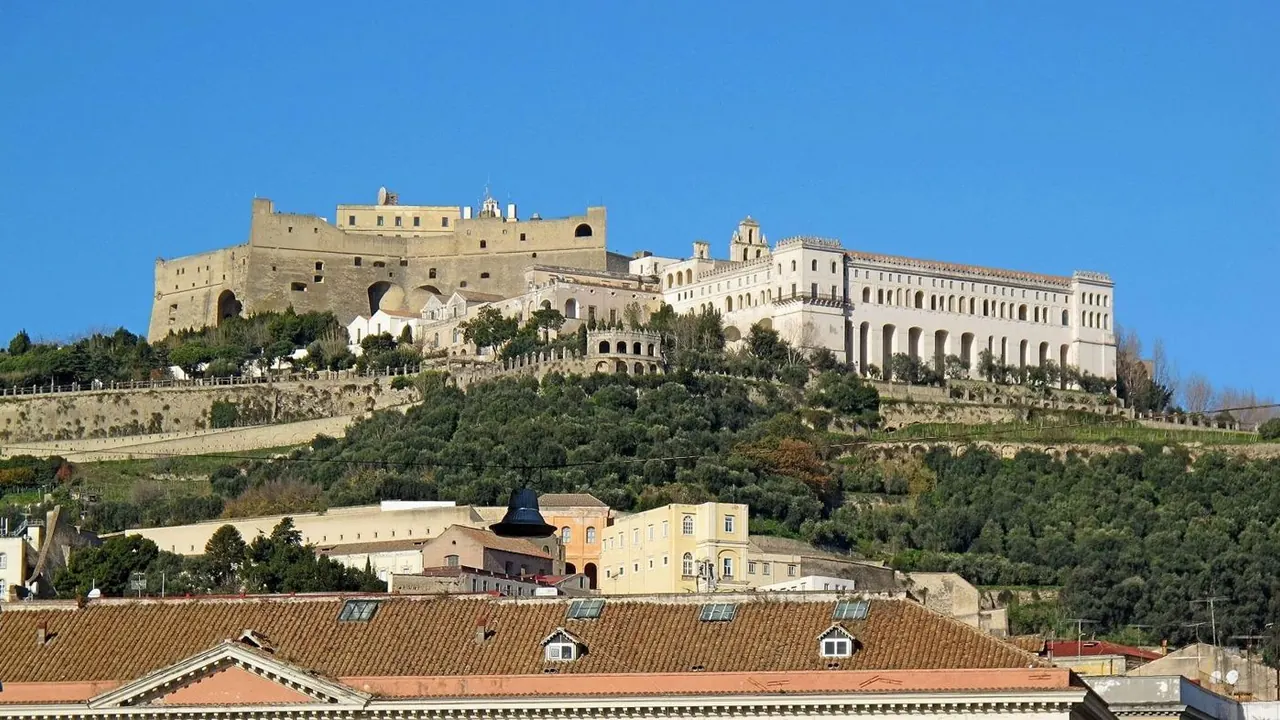
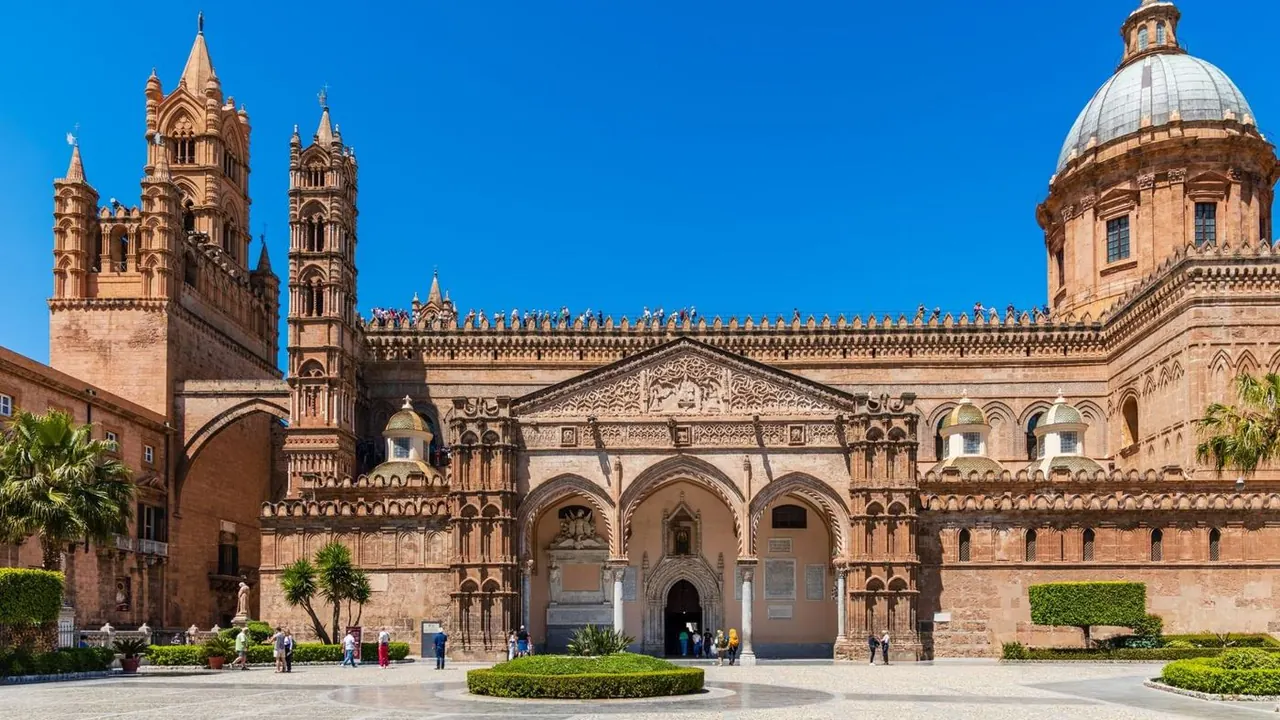
Photos: Naples by pietro scerrato, CC BY 3.0, cropped; Palermo by Antonino Giangrasso, Pexels License.
Naples or Palermo?
Our verdict in twelve categories, each scored against the same fixed benchmark cities, and the climate month by month, so you can choose for your trip.
Choose Naples for
- shopping
- wellness
- day trips
Naples suits the traveller who wants as much history as possible from one base. The old centre, the Archaeological Museum and the city underground could fill a week. Pompeii, Herculaneum, Caserta and the islands are all reachable by train or ferry, and Ischia's thermal parks offer a real place to rest. It also has the better shopping, from Chiaia tailoring to the nativity workshops.
Choose Palermo for
- beaches
Palermo is the better choice when you want proper swimming within reach of a city. Mondello's sandy bay is half an hour away, and the summers are drier and a little gentler. Its Arab-Norman churches and mosaics are unlike anything on the mainland, and its market street food makes every walk a meal. Expect to hire a car for the great Greek sites further out.
Scoreboard
Twelve categories on one fixed scale from 0 to 100. The shaded stretch is the gap between the two.
Your match
Pick a travel style or drag the sliders, and both match scores follow your weighting.
Wins on shopping and wellness with your weighting.
Wins on beaches with your weighting.
What matters to you?
Category by category
What the scores mean for a trip.
Beaches & swimming
Palermo has the beach that Naples lacks. Mondello's pale sand and shallow turquoise water are half an hour away by bus. There are flat rocks into deep water around Sferracavallo and Capo Gallo, and Cefalù's long beach is an hour away by train.
In Naples, swimming means the rocks below the Lungomare, small lidos at Posillipo or crowded paid beach clubs, and the water near the port is not always clean. The good sea is on Procida, Ischia, Capri or the Sorrento peninsula. Getting there takes a day trip, not a quick afternoon swim.
Food & drink
Both are serious food cities, and both have the same gap: little beyond local Italian cooking and not much fine dining. Naples is the place for pizza in its original form, fried street snacks, sfogliatelle and babà, with espresso drunk standing at the bar.
Palermo eats in its markets, Ballarò, the Capo and the Vucciria, with panelle, arancine and pani ca' meusa. Its cooking still shows its Arab past in saffron, raisins and sweet-and-sour sauces. For sweets, its cannoli and brioche with granita can match anything a Neapolitan pastry shop makes.
Culture & sights
Naples has more to see. Its Greek street grid is packed with Gothic and Baroque churches, and the Archaeological Museum holds the frescoes from Pompeii. There is the Veiled Christ, a network of tunnels and catacombs underground, and the palaces and Capodimonte gallery above, easily enough for a week.
Palermo's range is narrower but unusual. Its Arab-Norman buildings, such as the Palatine Chapel and La Martorana, have no real equal in Naples, and Serpotta's stucco oratories and the Salinas museum add to them. Its crumbling centre has atmosphere, but some streets feel neglected.
Nightlife
Neither city is for serious clubbing. In both, the night is spent outdoors with a drink, and in summer the dancing moves to the coast. Naples divides between students on the steps of Piazza Bellini and a smarter crowd in the alleys of Chiaia, while in Palermo the Vucciria market becomes an open-air bar with grills going and wine bars fill the Kalsa, though winter weeknights there can be quiet.
Nature & outdoors
Both cities sit between mountains and sea, but the landscapes differ. Around Naples the land is volcanic: a trail to the rim of Vesuvius, the craters of the Phlegraean Fields with the oak woods of Astroni, snorkelling in the Gaiola underwater park, and the Path of the Gods above the Amalfi Coast.
Palermo's setting is limestone. Monte Pellegrino can be climbed straight from town, and there are cliff paths and diving at Capo Gallo, the coastal trail through the Zingaro reserve and beech woods high in the Madonie. More of Palermo's outdoors needs a car, while much of what surrounds Naples can be reached by train or ferry.
Day trips
Naples is hard to beat for day trips. Pompeii and Herculaneum are under an hour away on the Circumvesuviana, Caserta's palace is a short train ride inland, and ferries run to Capri, Ischia and Procida, with the Amalfi Coast and Paestum further on. Almost all of it is easy without a car.
Palermo has good short trips, with Monreale's mosaics half an hour away and Cefalù an hour away by train. Its great ancient sites, Segesta, Selinunte and the temples of Agrigento, are further off and much easier to reach with a hire car.
Good for families
Both cities welcome children warmly, and both are hard work with them, with scooters in narrow lanes, uneven stone streets and hot summers. What makes a good day out differs: in Palermo it is Mondello's shallow sandy bay and the puppet shows, while in Naples it is the zoo and Edenlandia, the funiculars, the underground tunnels and the ferry rides. Both work better from a calmer base, such as Sorrento or the islands for Naples and a seaside villa for Palermo.
Getting around
Outside the centre, both cities are slow going, with buses stuck in traffic. Naples has the more useful rail network: Metro Line 1, with stations decorated like galleries, and four funiculars up to Vomero and Posillipo. The Circumvesuviana, though, is crowded and often late.
Palermo's centre is flatter, and its main sights run along Via Maqueda and Corso Vittorio Emanuele, an easy walk from end to end. Trains reach Cefalù and Bagheria, but Segesta, Erice and the interior call for a hire car, which you never need in Naples.
Shopping & style
Naples gives more reasons to shop. There are handmade suits, shirts and ties from the old tailoring workshops of Chiaia, the iron-and-glass Galleria Umberto I and the nativity workshops of Via San Gregorio Armeno, plus coral and cameos from Torre del Greco.
Palermo has fashion shops on Via Libertà, chains and souvenir shops in the centre, and food to take home from the markets, such as capers and pistachio pesto. Its painted ceramics, marionettes and the flea market near the cathedral are pleasant to browse, but they are not a reason to come.
Affordability
Everyday costs are much the same: street food, trattoria meals and guesthouses in the centre are cheap in both by Italian standards. Where the extra spending goes is different. In Naples it is ferries, island hotels and entry fees for the archaeological sites, while in Palermo it is a hire car for day trips and seaside rooms in July and August.
Live music & performing arts
Each city's music life centres on a grand opera house: in Naples the San Carlo, the oldest in Europe still in use, and in Palermo the vast neoclassical Teatro Massimo. Beyond the opera, Naples has Neapolitan song at small shows and in trattorias and chamber music in its churches. Palermo has the Opera dei Pupi puppet theatres, a long-standing jazz following and summer concerts in cloisters and squares.
Wellness & relaxation
Naples has the advantage thanks to its volcanic ground. The thermal spa at Agnano is on the edge of the city, and Ischia's terraced thermal parks are an hour away by hydrofoil, good enough to plan a restful stay around.
Palermo has no bathing culture of its own, only hotel spas in town and thermal water at Termini Imerese or, further away, at Sciacca. Its quiet places are the Orto Botanico, the cloisters and the seafront at the Foro Italico, but real rest usually means staying in a country house outside the city.
When should you go?
Pick your month. The climate figures are measured averages, not a forecast.
Naples in July
Palermo in July
Daytime high, °C
Rainfall in the month, mm
Where the figures come from
Naples has no rain gauge within 25 km of the centre, so its rainfall comes from a gridded climate dataset read at the city rather than from a gauge further away.
Naples's sunshine is measured 28 km from the centre, at Grazzanise.
Palermo has no rain gauge within 25 km of the centre, so its rainfall comes from a gridded climate dataset read at the city rather than from a gauge further away.
Palermo's sunshine is measured 67 km from the centre, at Ustica.
Temperature and rainfall are climate normals, averaged over the years shown. Naples: 2005-2020 (sunshine 1991-2020, rainfall 1991-2020) normals, Napoli / Capodichino (4.6 km from centre). Palermo: 1991-2020 (sunshine 1961-1990) normals, Palermo / Punta Raisi (24.1 km from centre).
Naples heats up more in summer, with highs around 31°C in July and August, so the hottest weeks are for early mornings and the sea rather than long walks. Its autumn is wet: rain returns in September and peaks in November at about 148mm, and winter stays damp. For walking the streets, May, June and late September to October work best. The sea is warm enough for swimming from June to October.
Palermo is milder and much drier for most of the year. Summer highs stay nearer 28°C, the sea reaches about 27°C in August, and it gets more sunshine than Naples in almost every month. Spring arrives dry, and May and October are pleasant for sightseeing. Its winters are about as cool as those in Naples but with less rain, which makes it the easier of the two out of season.
Which traveller are you?
On a beach and sun trip, Palermo is the clear pick. Mondello's shallow, clear bay is a short bus ride away, rocky swimming spots line the coast to the north, and summers are drier and sunnier. In Naples, clean water usually means taking a boat.
For a culture and arts trip, Naples goes deeper. The Archaeological Museum, the Veiled Christ, churches on almost every block and the San Carlo opera house are all in the city. Pompeii and Herculaneum are each under an hour away by train.
On a relaxing and wellness trip, Naples wins thanks to Ischia, a true spa island an hour away by hydrofoil, and the old springs at Agnano. Palermo has no thermal tradition of its own, and neither city centre is a place to unwind.
Before you go
| Measure | Naples | Palermo |
|---|---|---|
| Official language | Italian | Italian |
| Currency | Euro (EUR) | Euro (EUR) |
| Sockets | CFL230 V, 50 Hz | CFL230 V, 50 Hz |
| Driving side | Right | Right |
| Time zone | UTC+1, UTC+2 in summer | UTC+1, UTC+2 in summer |
| Emergency number | 112 | 112 |
| Elevation | 17 m | 14 m |
| Main airport | Naples International Airport (NAP)7 km from centre131 non-stop destinations | Falcone–Borsellino Airport (PMO)25 km from centre106 non-stop destinations |
| Public holidays this year | 13 days | 13 days |
By the numbers
| Measure | Naples | Palermo |
|---|---|---|
| City population | 913,462 | 630,167 |
| People per km² | 7,676 | 3,924 |
| Museums within 10 km | 65 | 42 |
| UNESCO World Heritage sites within 50 km | 5 | 1 |
| Swim season, months above 21 °C | 5 months | 5 months |
Where else could you go?
Every comparison below shares a destination with this one, so you can follow Naples or Palermo somewhere new.