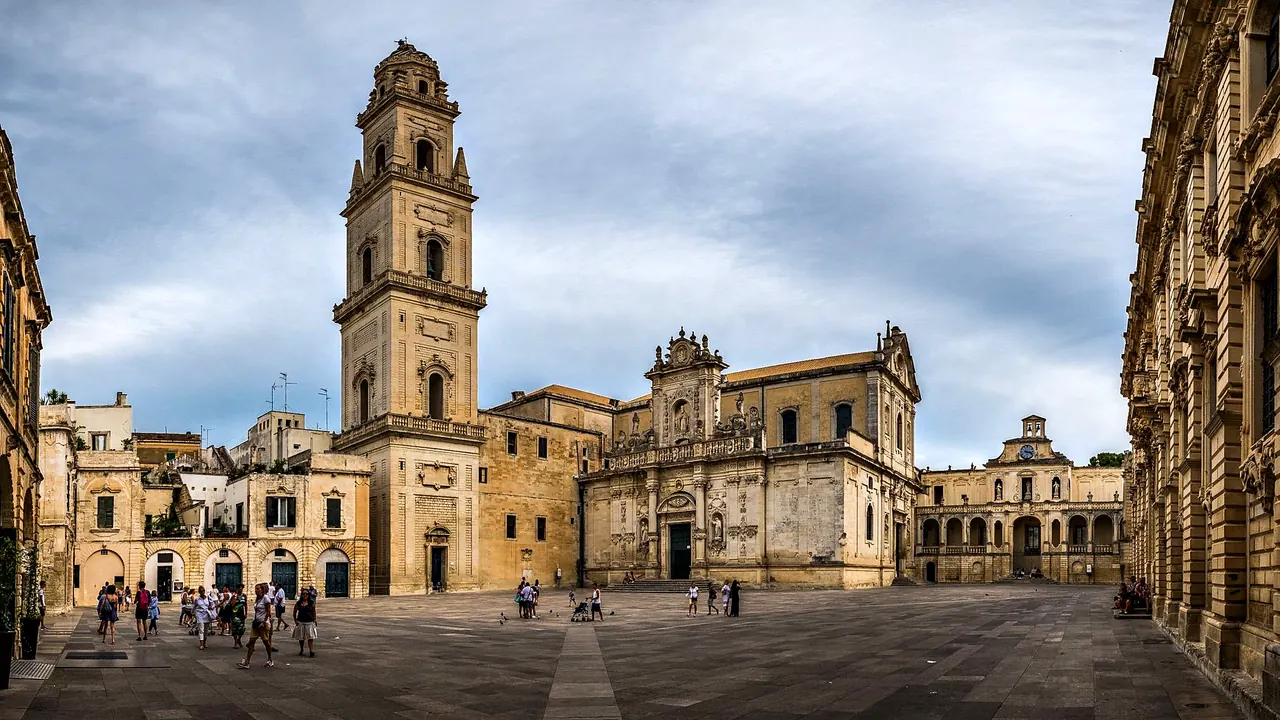
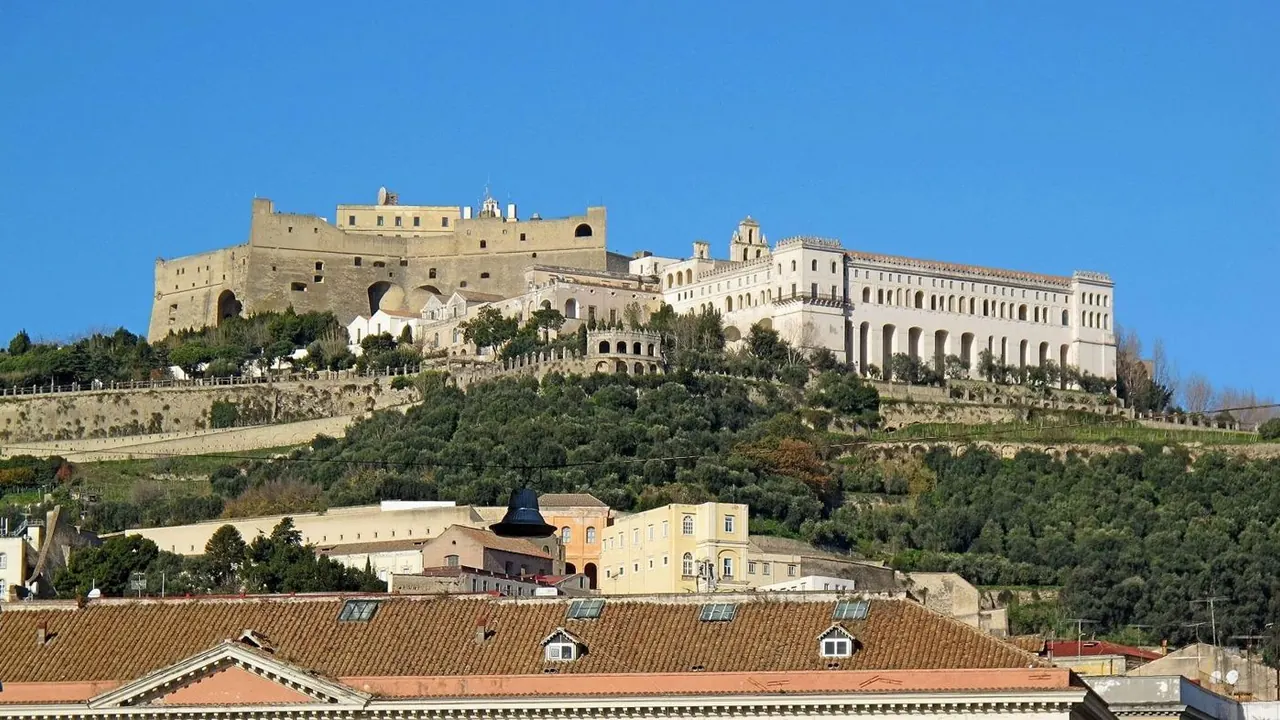
Photos: Lecce by Giuseppe Milo, CC BY 3.0, cropped; Naples by pietro scerrato, CC BY 3.0, cropped.
Lecce or Naples?
Our verdict in twelve categories, each scored against the same fixed benchmark cities, and the climate month by month, so you can choose for your trip.
Choose Lecce for
- beaches
- families
- wellness
Lecce suits a slower summer trip built around the sea. You get a compact Baroque town of honey-coloured stone to walk in the evening, and by day the sandy Salento beaches on both the Adriatic and the Ionian. It is the better pick if you want calm piazzas, easy days and swimming as the main event, and you are happy to hire a car to reach the coast.
Choose Naples for
- live music and the arts
- day trips
- shopping
Naples is for travellers who want a lot packed into each day. Its museums, churches and underground city could fill a week, Pompeii, Herculaneum and the islands are close by train or boat, and the pizza and street food are the best of the two. The city is louder and harder work, but for culture, food and day trips it gives you far more.
Scoreboard
Twelve categories on one fixed scale from 0 to 100. The shaded stretch is the gap between the two.
Your match
Pick a travel style or drag the sliders, and both match scores follow your weighting.
Wins on beaches and families with your weighting.
Wins on live music and the arts and day trips with your weighting.
What matters to you?
Category by category
What the scores mean for a trip.
Beaches & swimming
Lecce is the better choice for a beach trip. It sits inland, but the Salento gives it two coasts: pale coves and sea stacks on the Adriatic around Torre dell'Orso, and long, shallow beaches of fine sand on the Ionian at Porto Cesareo and Punta Prosciutto. You need a car or the summer buses to get there.
In Naples, swimming means the rocks below the Lungomare, small lidos in Posillipo or paid beach clubs, and the water near the port is not always clean. The clear, rocky coves of Capri, Ischia and the Sorrento peninsula are a boat trip away, good for a day out but not a beach vacation.
Food & drink
Naples has the stronger food scene. It is the home of pizza, the street food runs from fried seafood cones to frittatine, the pastry shops make sfogliatelle and babà, and the Pignasecca and Porta Nolana markets show off the produce of Campania.
Lecce's cooking is more modest and very much its own: pasticciotto with iced almond coffee for breakfast, ciceri e tria and fava purée in the osterie, and dark Negroamaro wine with dinner. Neither city has much international food, but Lecce has even fewer ambitious restaurants.
Culture & sights
Naples has far more to see. Its Greek-planned historic centre is crowded with churches along Spaccanapoli, the Archaeological Museum holds the treasures of Pompeii, and there are catacombs, tunnels, royal palaces and the Capodimonte gallery on top of that.
Lecce is about a single, harmonious townscape. You come for the carved facades of Santa Croce, Piazza del Duomo at dusk and the half-buried Roman amphitheatre. It makes a beautiful place for two or three days of walking, but its museums are modest.
Nightlife
Naples has the livelier nights. Crowds of students drink on the steps of Piazza Bellini, and a better-dressed crowd fills the alleys behind Piazza dei Martiri until long after midnight. It is a street scene rather than a club scene, though.
Lecce's evenings run from the passeggiata to an aperitivo, then to wine bars in the old town's lanes. There is little dancing in the city, and in summer you have to drive to the beach clubs around Gallipoli for that.
Nature & outdoors
The volcanic landscape gives Naples the edge. You can climb to the crater rim of Vesuvius, walk through the old craters of the Phlegraean Fields such as Astroni, snorkel at Gaiola and hike the Path of the Gods above the Amalfi Coast.
Lecce's surroundings are a flat plain of olive groves, good for easy cycling. Its outdoors is the coast: the cliffs and sea caves between Roca Vecchia and Otranto, the wetlands at Le Cesine and Alimini, and the pine woods of Porto Selvaggio.
Day trips
Few places match Naples for day trips. Pompeii, Herculaneum, Oplontis and the Caserta palace are all reachable by train, ferries go to Capri, Ischia and Procida, and Sorrento leads on to the Amalfi Coast and Paestum.
Lecce is a good base for its region rather than a world-famous one. Otranto's mosaic floor, Gallipoli's island old town and the frescoes at Galatina are close, and Ostuni and the trulli of Alberobello are further north. Most of these are much easier by car.
Good for families
Neither city has much built for children, so the difference is in the everyday feel. Lecce is the calmer of the two, with a largely traffic-free old town, piazzas full of families in the evening and shallow sandy beaches near Porto Cesareo that suit toddlers.
Naples is warmer in its welcome but tougher on the ground. Scooters, broken pavements and steps make pushchairs hard work. In return it has a zoo, an amusement park and a science museum, and older children usually love the tunnels, the funiculars and Pompeii.
Getting around
Naples is the easier place without a car. Metro Line 1, four funiculars, the Circumvesuviana and the ferries take you nearly everywhere, even if buses are slow and the train to Pompeii is crowded.
Lecce's flat old town is simple to walk, but once you leave it, slow local railways and summer-only beach buses push most visitors into hiring a car.
Shopping & style
Lecce's shopping comes down to its crafts. There is cartapesta, the papier-mâché saints made in old-town workshops, along with small limestone carvings and ceramics from Grottaglie. Beyond those it is mostly food shops, souvenirs and a few fashion stores.
A shopper gets much more to work with in Naples. Workshops in Chiaia make suits, shirts and silk ties, Via Toledo is a proper high street, and the Galleria Umberto I puts shops under an iron-and-glass roof. Coral and cameos come from Torre del Greco, and the nativity workshops of San Gregorio Armeno are worth a walk in their own right.
Affordability
Both are good value by Italian standards, and the cheap things are much the same: pastries, pizza and trattoria meals. In Lecce, prices jump in August when the Salento fills up, and a hire car adds to the cost.
In Naples, the city itself stays cheap, with inexpensive transport. The costs rise with ferries, island hotels and the entry fees at the big archaeological sites.
Live music & performing arts
The gap here is between one great opera house and a summer folk tradition. Lecce's Politeama Greco and Paisiello theatres put on a modest season. Its most distinctive music is pizzica, played at village festivals through the summer and at the huge Notte della Taranta in Melpignano in August, so outside summer there is less to hear.
In Naples, the Teatro di San Carlo, the oldest opera house in Europe still in use, has a full season of opera, ballet and concerts all year. There are also concerts at the conservatory, chamber music in the churches and Neapolitan song in small venues and trattorias.
Wellness & relaxation
They are about level, and in both the thermal water lies outside town. From Naples you can reach the Roman-era springs at Agnano or the terraced thermal parks of Ischia, while Lecce has the sulphur grottoes of Santa Cesarea Terme on the cliffs and quiet masseria spas.
The difference is the town itself: Lecce's long afternoon rest and still piazzas are restful, while Naples is loud and intense.
When should you go?
Pick your month. The climate figures are measured averages, not a forecast.
Lecce in July
Naples in July
Daytime high, °C
Rainfall in the month, mm
Where the figures come from
Lecce's temperatures are measured 38 km from the centre, at Brindisi.
Lecce has no rain gauge within 25 km of the centre, so its rainfall comes from a gridded climate dataset read at the city rather than from a gauge further away.
Naples's sunshine is measured 28 km from the centre, at Grazzanise.
Temperature and rainfall are climate normals, averaged over the years shown. Lecce: 1991-2020 (sunshine 1981-2010) normals, Brindisi (38 km from centre). Naples: 2005-2020 (sunshine 1991-2020, rainfall 1971-2000) normals, Napoli / Capodichino (4.6 km from centre).
In Lecce, the beach season runs from June into October. June to August are hot and nearly dry, with highs around 30°C in July and August, and the sea peaks at about 26°C. Middays then are too hot for sightseeing, so the old town is best walked in the morning and evening. Rain returns in September, although the sea stays warm and the days are still pleasant. It then builds through October to November, the wettest month. May is good for walking while the sea is still cool, and September is the best balance of streets and swimming.
Naples has almost the same temperatures and sea through the year, so its beach months are the same. The difference is rain and sun. Lecce gets more sunshine from May to July, and Naples is wetter in every month, with about 153mm in October and 163mm in November, against little more than 100mm in Lecce's wettest month. In Naples, aim for May or September, because from October the city turns wetter and greyer than the Salento.
Which traveller are you?
On a beach and sun trip, Lecce is the better base. Sandy coves at Torre dell'Orso and the long, shallow, clear beaches of Porto Cesareo are within an easy drive, while swimming around Naples mostly means rocks, beach clubs or a ferry.
For a culture and arts trip, Naples wins clearly. The National Archaeological Museum, the Veiled Christ, the underground city and opera at the San Carlo, with Pompeii and Herculaneum close by, add up to far more than Lecce's lovely but modest Baroque centre.
On a food and nightlife trip, Naples gives you more. You get pizza in its home city, fried street food and pastry shops by day, then late nights out in the open on Piazza Bellini and in the lanes of Chiaia. Lecce's evenings are gentler and its cooking more limited in range.
Before you go
| Measure | Lecce | Naples |
|---|---|---|
| Official language | Italian | Italian |
| Currency | Euro (EUR) | Euro (EUR) |
| Sockets | CFL230 V, 50 Hz | CFL230 V, 50 Hz |
| Driving side | Right | Right |
| Time zone | UTC+1, UTC+2 in summer | UTC+1, UTC+2 in summer |
| Emergency number | 112 | 112 |
| Elevation | 49 m | 17 m |
| Main airport | Brindisi Airport (BDS)39 km from centre49 non-stop destinations | Naples International Airport (NAP)7 km from centre131 non-stop destinations |
| Public holidays this year | 13 days | 13 days |
By the numbers
| Measure | Lecce | Naples |
|---|---|---|
| City population | 94,783 | 913,462 |
| People per km² | 393 | 7,676 |
| Museums within 10 km | 11 | 65 |
| UNESCO World Heritage sites within 50 km | 0 | 5 |
| Swim season, months above 21 °C | 4 months | 5 months |
Where else could you go?
Every comparison below shares a destination with this one, so you can follow Lecce or Naples somewhere new.