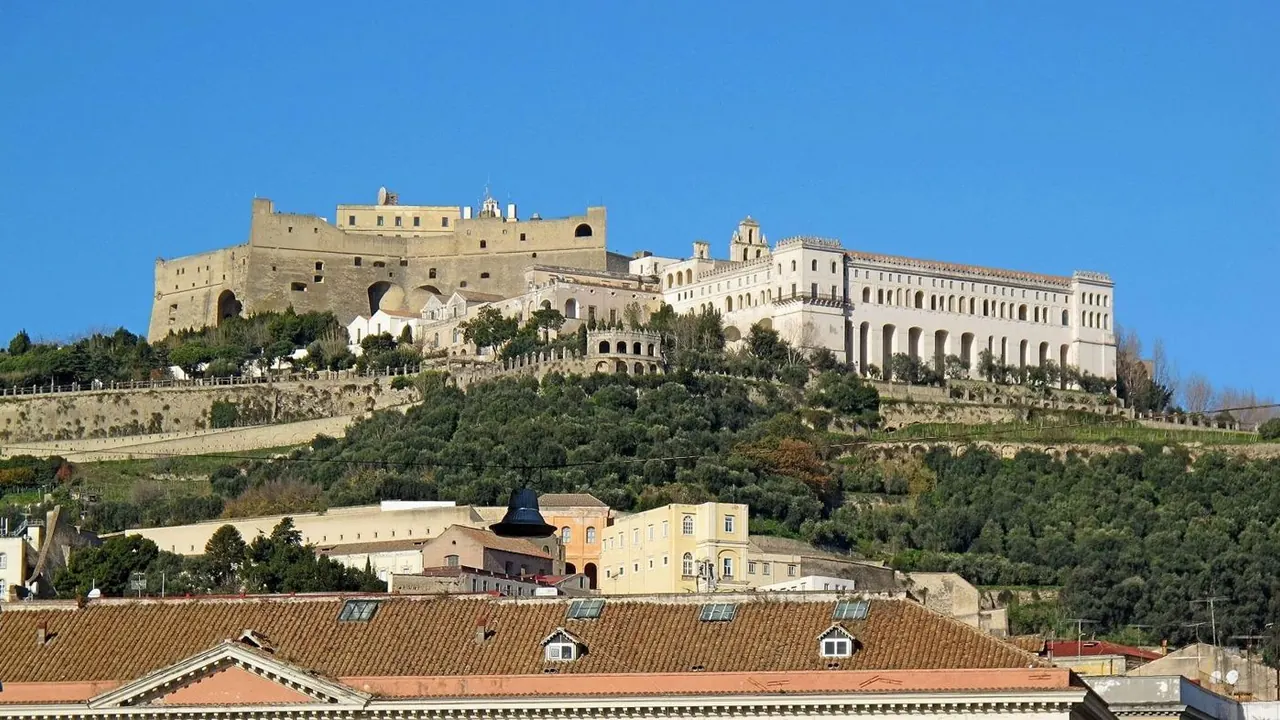
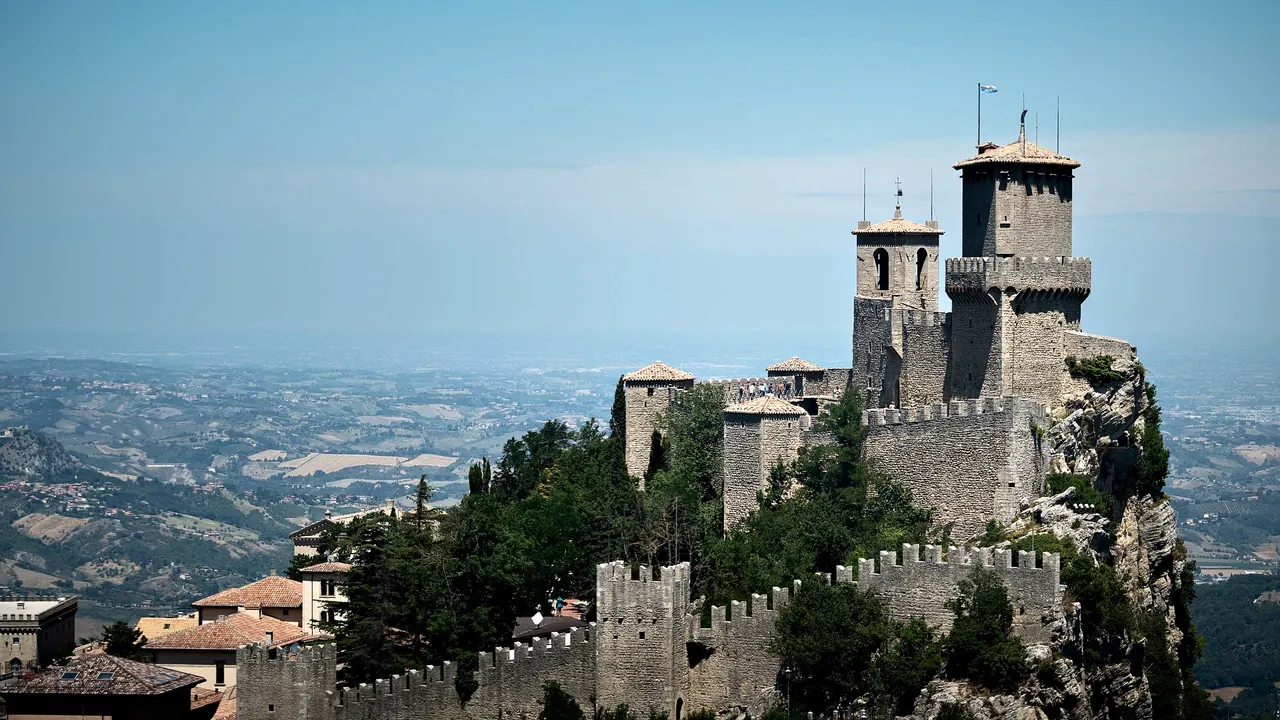
Photos: Naples by pietro scerrato, CC BY 3.0, cropped; San Marino by Tibor Szabo, Pexels License.
Naples or San Marino?
Our verdict in twelve categories, each scored against the same fixed benchmark cities, and the climate month by month, so you can choose for your trip.
Choose Naples for
- live music and the arts
- nightlife
- food and drink
Naples is the choice for a trip built on sights, food and plenty of outings. The Greek street grid, the Archaeological Museum and the catacombs could fill a week on their own, Pompeii and Capri are an easy ride away, and the pizza, pastry and street food alone justify the journey. You do need some patience with the noise, the traffic and the scooters in the lanes.
Choose San Marino for
- families
San Marino suits a shorter, quieter stop. It is a walled ridge-top town with three towers that you can see well in half a day, and its evenings on the walls are calm once the coaches have gone. It works best as part of a drive through Romagna and the Montefeltro, with a car for San Leo and Urbino and the sandy Rimini shore below for the afternoons.
Scoreboard
Twelve categories on one fixed scale from 0 to 100. The shaded stretch is the gap between the two.
Your match
Pick a travel style or drag the sliders, and both match scores follow your weighting.
Wins on live music and the arts and nightlife with your weighting.
Wins on families with your weighting.
What matters to you?
Category by category
What the scores mean for a trip.
Beaches & swimming
Neither city puts you on the sand, and both seas warm to about 25°C in late summer, so the difference lies in the kind of swimming. In Naples you swim off the rocks below the Lungomare or at small Posillipo lidos, and the clearer water and rocky coves are a boat ride away on Procida, Ischia and Capri.
From San Marino you drive or take the bus down to Rimini and Riccione, about half an hour away, for long sandy beaches with numbered umbrellas and shallow water that suits small children. San Marino is the easier choice for a sandy family day by the sea, and Naples the better one for clear water.
Food & drink
This is one of the widest gaps between the two. Naples is the home of pizza, and with its fried street food, pastry shops and the Pignasecca and Porta Nolana markets, eating becomes a main reason to go, even if there is little international food.
San Marino offers honest Romagna cooking, with piadina, passatelli and hand-rolled pasta, but the summit is geared to day visitors and many of its terraces trade on the view. For a good meal you need to go down to Borgo Maggiore or out into the countryside.
Culture & sights
Naples has one of Europe's largest historic centres, laid out on a Greek street plan. It also has the Roman treasures from Pompeii in the Archaeological Museum, the Veiled Christ and a whole city of tunnels and catacombs underneath. A week here is not too long.
San Marino's appeal is its setting and its story as one of the world's oldest surviving republics: three towers on the cliffs of Monte Titano, the Palazzo Pubblico and the basilica. It is memorable, but half a day covers it.
Nightlife
Naples has a real night out, mostly in the open air. Students sit on the steps of Piazza Bellini, a smarter crowd fills the bars behind Piazza dei Martiri, and both scenes run well past midnight. Clubs are few, though.
San Marino has almost nothing after dark beyond dinner and a glass of wine with the lights of the coast below. To stay out late you have to go down to the Riviera clubs at Rimini and Riccione.
Nature & outdoors
Naples sits in a volcanic landscape. You can walk to the crater rim of Vesuvius, explore Astroni and Lake Avernus in the Phlegraean Fields and snorkel at Gaiola, and the Path of the Gods on the Amalfi Coast is within reach for a long day.
San Marino's scenery is gentler: a limestone ridge of about 740m with cliff views over the Romagna plain, woodland paths down to Borgo Maggiore and quiet cycling roads in the Montefeltro hills. It is pleasant for a morning walk, but it lacks the drama and variety of the volcanic bay.
Day trips
Both make good bases, but Naples is exceptional. Pompeii, Herculaneum, Caserta and Sorrento are all reachable by train, and ferries from Molo Beverello go to Capri, Ischia and Procida, so you can spend a week of outings without a car.
San Marino's list is strong too, with the fortress of San Leo, Renaissance Urbino, Ravenna's mosaics and the castle at Gradara. Most of these need a car, though, and for Ravenna or Bologna you first take the bus down to Rimini for the train.
Good for families
Neither is easy with small children, and the problems are different. Naples welcomes children warmly in its pizzerias, and older ones enjoy the ferries, the funiculars and Pompeii, but scooters, broken pavements and summer heat wear families down, so many stay in Sorrento instead.
San Marino is small and safe, and children love its towers and cable car, though the steep steps are hard going with a pushchair. Its real family asset is the coast below, where Fiabilandia, the waterparks and the shallow beaches are easy to reach with a car.
Getting around
Naples gives you more ways to travel without a car. Metro Line 1 has stations decorated as art galleries, four funiculars climb to Vomero and Posillipo, and the centre is walkable if you keep an eye out for scooters. Buses and the Circumvesuviana are slow and unreliable, though.
San Marino's centre is car-free and you can walk across it in under half an hour, but almost every street climbs. The cable car and the bus from Rimini are the main links, and you really need a car for the villages and hill towns around it.
Shopping & style
The difference here is between things made in the city and goods sold for their tax advantage. In Naples you can order suits, shirts and silk ties from the old tailoring workshops of Chiaia, watch nativity figures being made all year on Via San Gregorio Armeno, and buy coral and cameos from nearby Torre del Greco. Via Toledo and the iron-and-glass Galleria Umberto I cover the high street. The choice is not deep, but you come home with things made nowhere else.
San Marino's shops rely on souvenirs and lower taxes: ceramics, decorative crossbows, perfume, watches and spirits, plus stamps and coins for collectors. The outlet centre on the valley floor adds fashion brands, but if you want something with real craft behind it, Naples is well ahead.
Affordability
Day to day, Naples is the cheaper of the two. Pizza, street food, coffee at the bar and public transport all cost little as long as you stay in the city, but ferries and hotels on Capri or the Amalfi Coast change that quickly.
San Marino sits in the middle, priced like provincial central Italy. The view terraces and summit hotels cost extra, and you get better value in the lower villages.
Live music & performing arts
For an evening of music or theatre, the two are not in the same league. The Teatro di San Carlo, the oldest opera house in Europe still in use, gives Naples a full season of opera, ballet and concerts in its red-and-gold auditorium. Concerts at the conservatory, chamber music in the churches and Neapolitan song in the trattorias fill in around it, although most spoken theatre is in Italian or dialect and jazz clubs are scarce.
On an ordinary night San Marino has nothing comparable, so a music lover staying there has to drive to Pesaro or Bologna for the kind of programme Naples has in its own centre. The exception is a summer visit timed for the Medieval Days festival, which is street pageantry with costumed musicians rather than a concert season.
Wellness & relaxation
Naples itself is too loud for unwinding, but real thermal water is close by. The springs at Agnano have been used since Roman times, and an hour away by hydrofoil, Ischia's terraced thermal parks draw many visitors who want to relax.
San Marino has no bathing culture, only a few hotel spas. What it offers is evening quiet: once the day visitors leave, you can walk the walls in calm with the plain spread out below.
When should you go?
Pick your month. The climate figures are measured averages, not a forecast.
Naples in July
San Marino in July
Daytime high, °C
Rainfall in the month, mm
Where the figures come from
Naples's sunshine is measured 28 km from the centre, at Grazzanise.
San Marino's temperatures are measured 52 km from the centre, at Frontone.
San Marino has no rain gauge within 25 km of the centre, so its rainfall comes from a gridded climate dataset read at the city rather than from a gauge further away.
Temperature and rainfall are climate normals, averaged over the years shown. Naples: 2005-2020 (sunshine 1991-2020, rainfall 1971-2000) normals, Napoli / Capodichino (4.6 km from centre). San Marino: 1991-2020 normals, Frontone (51.5 km from centre).
Naples has the milder year. Winter days reach about 13°C, against 7°C on Monte Titano, so January sightseeing is comfortable in Naples while San Marino feels cold. Both are warm enough for the sea from late June to mid-September, when the water on each side peaks at around 26°C. Both are also too hot for long walks in July and August, when Naples reaches 31°C under its sunniest skies of the year.
The rain falls differently in the two places. Naples is dry in summer but very wet from October to December, with about 163mm in November, so April to early June and late September are its best months for the streets. San Marino's rain is spread more evenly. It rises in autumn but never gets as heavy, and May, June and September are its best months, warm on the ridge without the July heat.
Which traveller are you?
On a culture and arts trip, Naples is far richer. The Archaeological Museum, the Veiled Christ, the underground city and the San Carlo opera house give you days of material, while San Marino's towers, Palazzo Pubblico and small museums fill a single morning.
For a food and nightlife trip, Naples wins easily. It has pizza in the historic centre, fried street food and late, sociable evenings around Piazza Bellini and Chiaia. San Marino's summit goes quiet once the coaches leave, and many of its terraces sell the view first.
On a family trip with children and a car, San Marino is the gentler fit, though neither is ideal. The towers and the cable car fill the mornings, and Rimini's shallow beaches and Italia in Miniatura are close for the afternoons, with no Neapolitan scooters to dodge.
Before you go
| Measure | Naples | San Marino |
|---|---|---|
| Official language | Italian | Italian |
| Currency | Euro (EUR) | Euro (EUR) |
| Sockets | CFL230 V, 50 Hz | CFL230 V, 50 Hz |
| Driving side | Right | Right |
| Time zone | UTC+1, UTC+2 in summer | UTC+1, UTC+2 in summer |
| Emergency number | 112 | 112 |
| Elevation | 17 m | 675 m |
| Main airport | Naples International Airport (NAP)7 km from centre131 non-stop destinations | Bologna Guglielmo Marconi Airport (BLQ)114 km from centre98 non-stop destinations |
| Public holidays this year | 13 days | 18 days |
By the numbers
| Measure | Naples | San Marino |
|---|---|---|
| City population | 913,462 | 4,040 |
| People per km² | 7,676 | 569 |
| Museums within 10 km | 65 | 19 |
| UNESCO World Heritage sites within 50 km | 5 | 2 |
| Swim season, months above 21 °C | 5 months | 4 months |
Where else could you go?
Every comparison below shares a destination with this one, so you can follow Naples or San Marino somewhere new.
- Sorrentovs Naples
- Positanovs Naples
- Amalfivs Naples
- Salernovs Naples
- Assisivs San Marino
- Florencevs San Marino