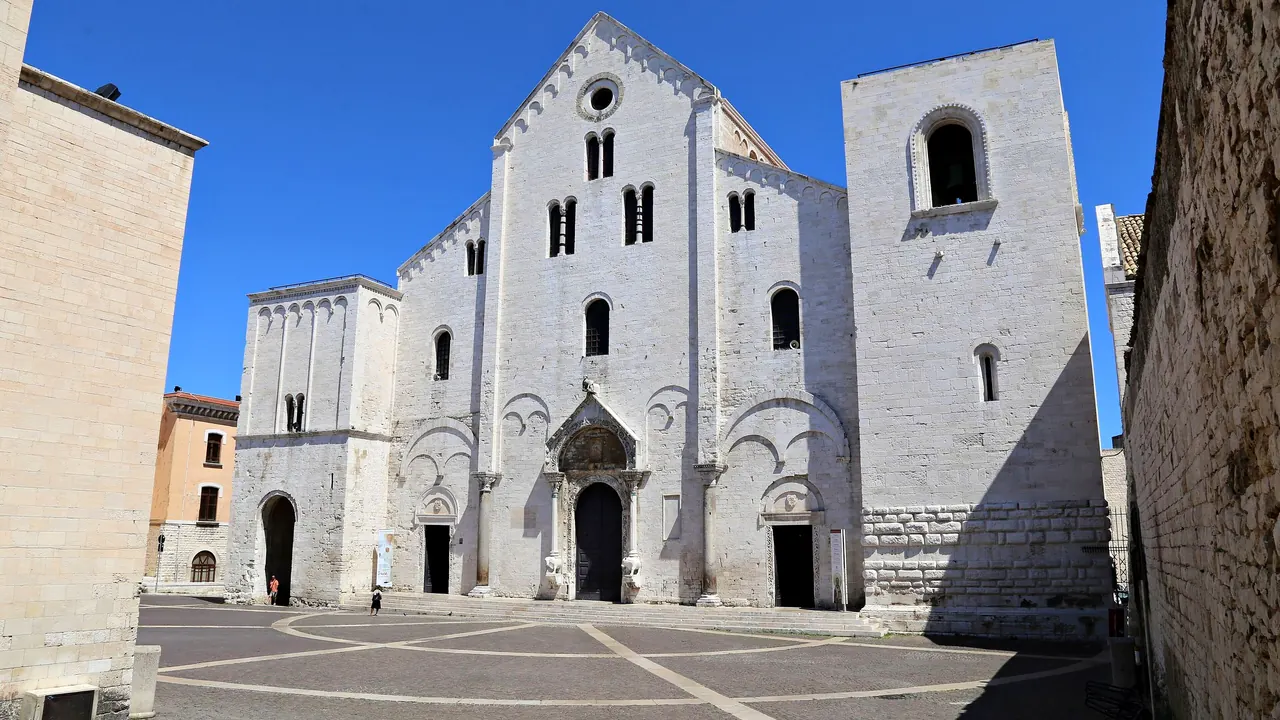
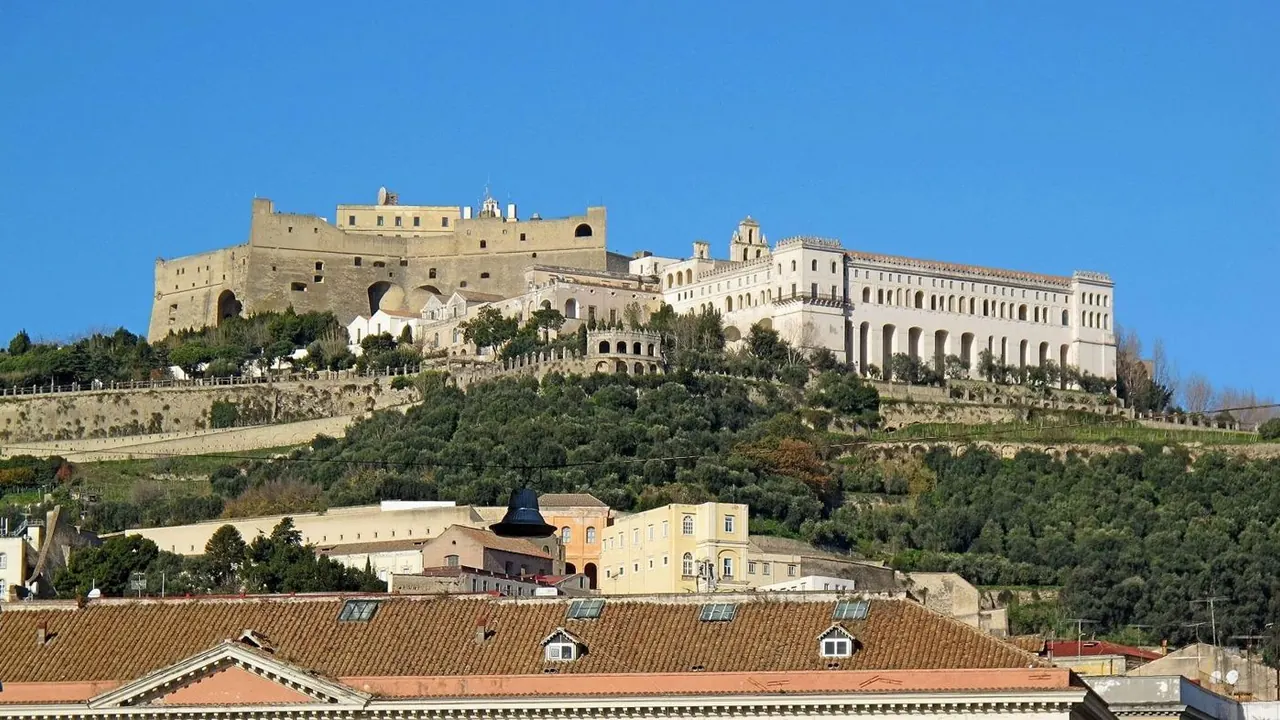
Photos: Bari by Sailko, CC BY-SA 4.0, cropped; Naples by pietro scerrato, CC BY 3.0, cropped.
Bari or Naples?
Our verdict in twelve categories, each scored against the same fixed benchmark cities, and the climate month by month, so you can choose for your trip.
Choose Bari for
- beaches
- getting around
- families
Bari suits an easy, unhurried trip and makes a strong base for exploring Puglia. Its centre is flat and small, it has a sandy beach in town with better coves a short train ride south, and the trulli of Alberobello, the white towns of the Valle d'Itria and the cave city of Matera are all within a day's reach. Families with younger children, and anyone who wants a gentle mix of beach, simple food and countryside, will find it the more manageable of the two.
Choose Naples for
- culture and sights
- nature and the outdoors
- live music and the arts
Choose Naples if you want a city that fills every day. The historic centre, the Archaeological Museum and the tunnels underneath could take a week on their own, and Pompeii, Herculaneum, Vesuvius, Capri and the Amalfi Coast are all close by train or boat. The pizza, the opera at San Carlo and the volcanic landscape outweigh the noise, the traffic and the poorer city swimming for travellers who put sights and food first.
Scoreboard
Twelve categories on one fixed scale from 0 to 100. The shaded stretch is the gap between the two.
Your match
Pick a travel style or drag the sliders, and both match scores follow your weighting.
Wins on beaches and getting around with your weighting.
Wins on culture and sights and nature and the outdoors with your weighting.
What matters to you?
Category by category
What the scores mean for a trip.
Beaches & swimming
Bari gives you a beach without any planning. Pane e Pomodoro is sandy and right by the centre, the rocks and lidos near Torre Quetta carry on along the shore, and the cove at Polignano and the inlets around Monopoli are a short regional train ride south. None of it is spectacular, but a swim can fit around an afternoon in town.
In Naples the sea is always in view but harder to use. Locals sunbathe on the rocks below the Lungomare and at small Posillipo lidos, the water near the port is not always clean, and the clear rocky coves are on Procida, Ischia, Capri or the Sorrento peninsula, which means a full day out by boat.
Food & drink
Naples has the stronger food culture. It is the home of pizza, and it adds fried street snacks, sfogliatelle and babà, standing espresso, and markets like Pignasecca piled with buffalo mozzarella and San Marzano tomatoes. Ragù, genovese and seafood pasta fill the trattorias.
Bari is humbler but just as rooted: orecchiette rolled in the doorways of Bari Vecchia, focaccia barese and sgagliozze, and raw sea urchins at the old fishermen's pier with Primitivo or Negroamaro. Neither city offers much beyond its own regional cooking, and in both the more ambitious restaurants are scarce.
Culture & sights
Here the gap is wide. Naples has one of Europe's largest historic centres, with churches crowded along Spaccanapoli and Via dei Tribunali, the finest Roman collection anywhere in the Archaeological Museum, catacombs and Greco-Roman tunnels below, and Capodimonte, the Royal Palace and San Martino above. A week will not use it all up.
Bari's sights are attractive but few. The Basilica di San Nicola, a model of Apulian Romanesque, the cathedral, the castle and the Murat quarter's palazzi make a satisfying day or two, and then most visitors head out to the towns around it.
Nightlife
Evenings are much alike: both cities drink outdoors, start late and have little club culture, and in summer both send their dancers to beach clubs on the coast. In Bari the action gathers in Piazza Mercantile and Piazza Ferrarese and the Umbertino streets, with a mostly local crowd and quiet winter weeknights.
Naples, being the bigger city, offers two different scenes: students on the steps around Piazza Bellini beside the old Greek walls, and a smarter crowd in the small bars on the Chiaia slopes, busy until well past midnight.
Nature & outdoors
Naples sits on a volcanic bay, and that gives it a far more dramatic landscape. You can walk up Vesuvius, explore the Astroni crater reserve and Lake Avernus in the Phlegraean Fields, kayak at Gaiola, and in a long day reach the Path of the Gods or the peaks of Capri and Ischia.
Bari's surroundings are gentler: olive groves and stone walls on a flat plain, the open karst grassland of Alta Murgia about an hour inland, the Grotte di Castellana and easy cycling in the Valle d'Itria. There are no mountains close by.
Day trips
Both cities are outstanding bases, but Naples has the more famous list and the easier logistics. Pompeii, Herculaneum, Oplontis and Sorrento are all on one train line, Caserta's palace is a short ride inland, ferries run to Capri, Ischia and Procida, and Paestum and the Amalfi Coast are reachable without a car.
From Bari you get an entirely different region: the cave dwellings of Matera, the trulli of Alberobello, Ostuni and the Valle d'Itria towns, Castel del Monte, Trani's seafront cathedral and Baroque Lecce. Slow regional lines mean a hire car makes the inland trips much easier.
Good for families
Bari is easier with young children. The old town lanes are free of traffic, the centre is flat and small, and the sandy city beach and evening seafront passeggiata keep little ones happy, though there is not much built just for them.
Naples welcomes children warmly but tests parents, with scooters in narrow lanes, broken pavements and steps that defeat pushchairs. Older children do get excited about the tunnels, funiculars, ferries and Pompeii, and many families stay in Sorrento or on an island and visit the city for the day.
Getting around
Bari is simpler to handle. Its old town, the Murat streets and the seafront sit side by side on level ground, and a train runs to the airport. The weak point is the regional railways, which are slow enough that many visitors hire a car for the countryside.
Naples has more transport, but it is less reliable: Metro Line 1 with its art-filled stations and four funiculars up to Vomero and Posillipo, plus unpredictable buses and a crowded Circumvesuviana. Traffic makes even crossing the street hard work, though you never need a car.
Shopping & style
Naples gives a shopper more to hunt for. There are generations-old tailors in Chiaia for suits, shirts and ties, nativity workshops along Via San Gregorio Armeno, coral and cameos from Torre del Greco, and the iron-and-glass Galleria Umberto I off Via Toledo.
In Bari shopping is practical, with fashion chains along Via Sparano. The best souvenirs are things to eat or drink: dried orecchiette, taralli, olive oil and wine, plus some Puglian ceramics.
Affordability
Both give good value by Italian standards, with cheap street food, coffee and trattoria meals. What differs is where the costs pile up. In Bari rooms get scarcer in July and August, and car hire for the inland towns adds to the bill.
In Naples the city itself is cheap, but the islands, the Amalfi Coast hotels and the entry fees at the big archaeological sites charge resort rates.
Live music & performing arts
Naples has the richer stage. The Teatro di San Carlo, the oldest opera house in Europe still in use, anchors a calendar that includes concerts at the San Pietro a Majella conservatory, chamber music in churches, and Neapolitan song played everywhere from theatres to trattoria tables.
Bari's Teatro Petruzzelli is one of Italy's largest opera houses and worth an evening out, and summer brings jazz and open-air concerts to the piazzas and castle. Beyond that there is little, and in both cities most theatre is in Italian.
Wellness & relaxation
Neither city is restful in itself, but Naples has real thermal water nearby. There is the ancient spa at Agnano on its edge, and Ischia, an hour away by hydrofoil, has dozens of terraced thermal parks above the sea, which makes a proper spa stay easy to arrange.
Bari has no bathing tradition and mostly hotel spas. Its appeal is a slower pace than Naples, with long lunches and a quiet seafront stroll, and serious pampering means a stay at a restored country estate outside the city.
When should you go?
Pick your month. The climate figures are measured averages, not a forecast.
Bari in July
Naples in July
Daytime high, °C
Rainfall in the month, mm
Where the figures come from
Bari has no rain gauge within 25 km of the centre, so its rainfall comes from a gridded climate dataset read at the city rather than from a gauge further away.
Bari's sunshine is measured 77 km from the centre, at Marina Di Ginosa.
Naples's sunshine is measured 28 km from the centre, at Grazzanise.
Temperature and rainfall are climate normals, averaged over the years shown. Bari: 1991-2020 (sunshine 1961-1990) normals, Bari / Palese Macchie (7 km from centre). Naples: 2005-2020 (sunshine 1991-2020, rainfall 1971-2000) normals, Napoli / Capodichino (4.6 km from centre).
Bari and Naples have almost the same temperatures, so their seasons fall at the same time. In Bari, May is warm and dry, good for walking the old town and for trips inland, though the sea is still too cool for most swimmers. The swimming season runs from June to September, with the water peaking around 26°C in August. July and August reach about 30°C, which is fine on the beach but heavy going for sightseeing at midday, so June and the second half of September are the best months to combine the streets with the sea. Naples follows the same pattern. Its sea stays a little warmer into October and November, and it has plenty of sunshine right through the summer.
Rain is where they differ. Bari is the drier of the two in every month. Naples gets properly wet from October through the winter, with about 163mm in November against roughly 83mm in Bari, and its spring is damper too. That makes Bari the safer choice for a spring or autumn trip. Winters are mild in both cities, cool but pleasant for walking, and too cold for the sea.
Which traveller are you?
On a culture and arts trip, Naples is the clear choice. Its Greek street plan packed with churches, the Pompeii finds in the Archaeological Museum, the Veiled Christ and an opera house at San Carlo go well beyond Bari's compact old town and basilica.
For an outdoors trip, Naples wins again. You can climb Vesuvius to the crater rim, walk through the old craters of the Phlegraean Fields, snorkel at Gaiola and hike the Path of the Gods, while Bari's flat plain offers mostly gentle walking and cycling.
On a beach and sun trip, Bari is the better fit. It has a sandy beach a short walk from the centre and clear coves at Polignano and Monopoli by train, whereas in Naples good swimming usually means taking a boat.
Before you go
| Measure | Bari | Naples |
|---|---|---|
| Official language | Italian | Italian |
| Currency | Euro (EUR) | Euro (EUR) |
| Sockets | CFL230 V, 50 Hz | CFL230 V, 50 Hz |
| Driving side | Right | Right |
| Time zone | UTC+1, UTC+2 in summer | UTC+1, UTC+2 in summer |
| Emergency number | 112 | 112 |
| Elevation | 5 m | 17 m |
| Main airport | Bari Karol Wojtyła International Airport (BRI)9 km from centre104 non-stop destinations | Naples International Airport (NAP)7 km from centre131 non-stop destinations |
| Public holidays this year | 13 days | 13 days |
By the numbers
| Measure | Bari | Naples |
|---|---|---|
| City population | 315,473 | 913,462 |
| People per km² | 2,687 | 7,676 |
| Museums within 10 km | 12 | 65 |
| UNESCO World Heritage sites within 50 km | 1 | 5 |
| Swim season, months above 21 °C | 4 months | 5 months |
Where else could you go?
Every comparison below shares a destination with this one, so you can follow Bari or Naples somewhere new.