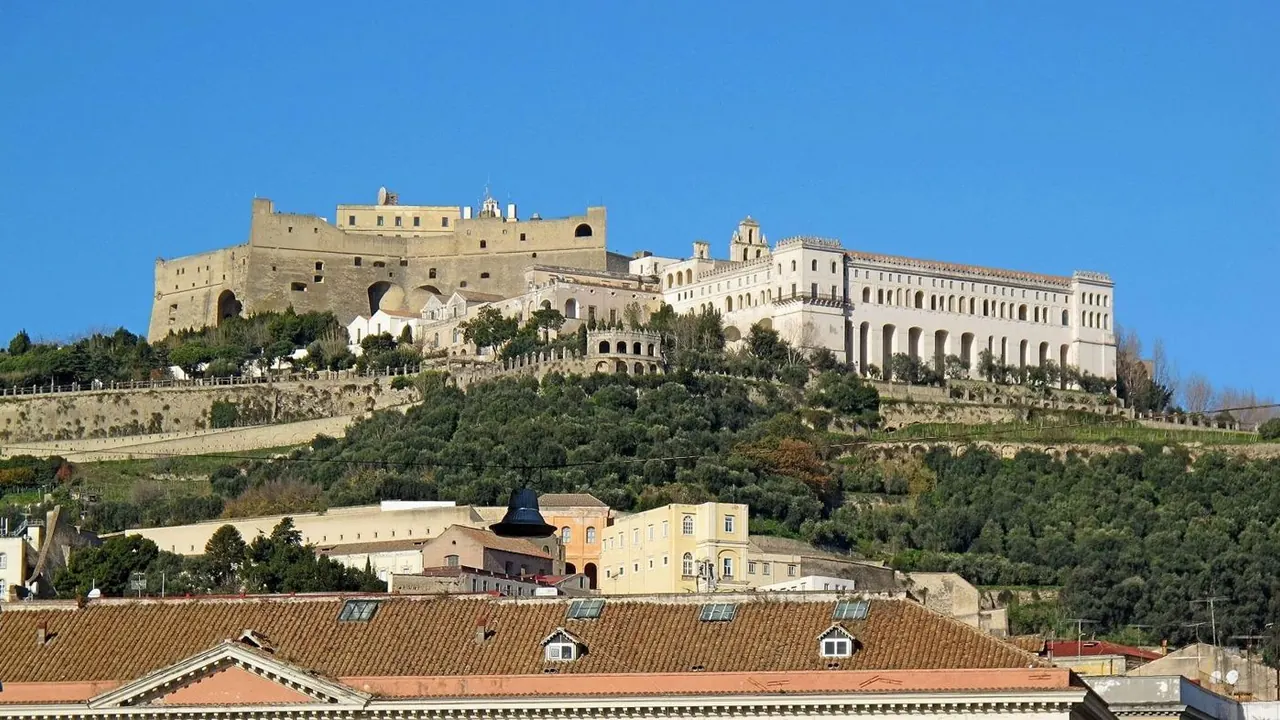
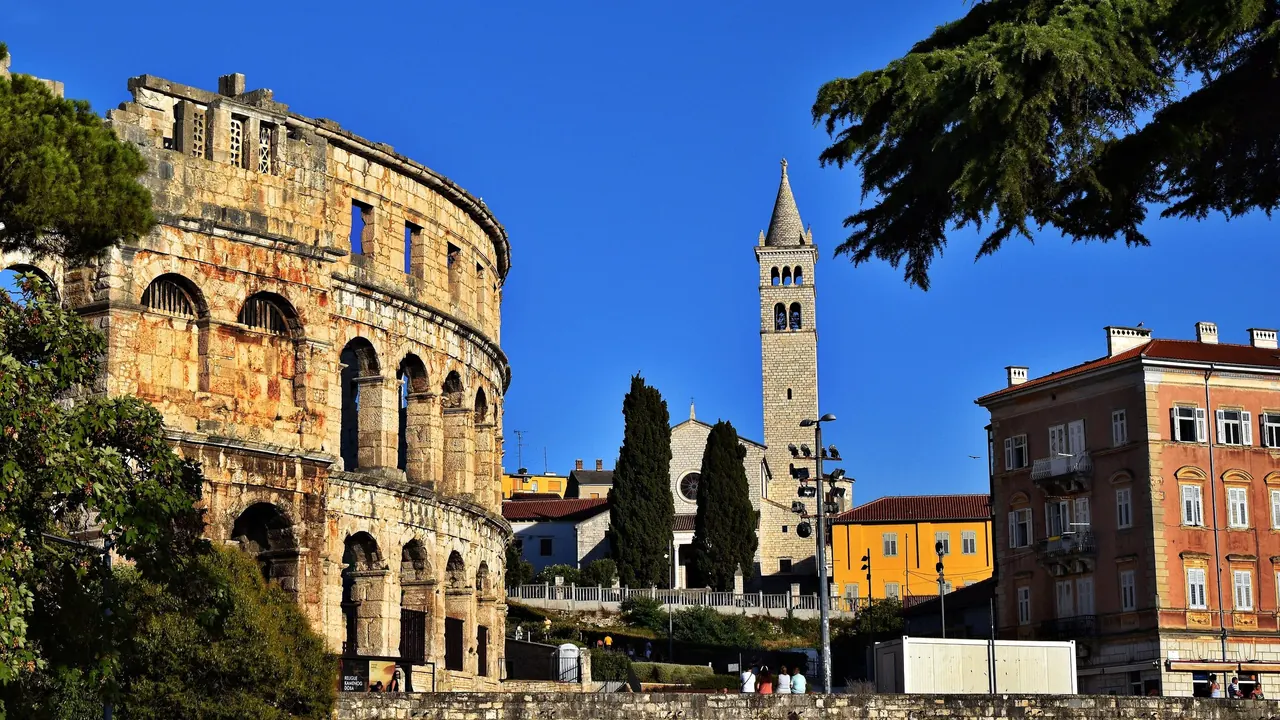
Photos: Naples by pietro scerrato, CC BY 3.0, cropped; Pula by Miroslav.vajdic, CC BY-SA 4.0, cropped.
Naples or Pula?
Our verdict in twelve categories, each scored against the same fixed benchmark cities, and the climate month by month, so you can choose for your trip.
Choose Naples for
- live music and the arts
- shopping
- food and drink
Naples is the better pick for a traveller who wants a city to get stuck into. It packs Greek street plans, Baroque churches, the great Roman collections and a whole underground city into its historic centre. Pizza and street food are made with real pride, the San Carlo opera house is on the doorstep, and Pompeii, Herculaneum, Capri and the Amalfi Coast are all easy outings. It is loud, crowded and tiring, and that intensity is the reason to go.
Choose Pula for
- beaches
- families
Pula suits a slower trip built around the sea. Its clear water, pine-shaded rocky coves and the wild headland at Kamenjak make swimming the main event, and a Roman arena and forum add a day or two of sightseeing without filling the whole week. It is calmer and easier with children, and with a car it opens up the hill towns, truffle country and wine estates of Istria.
Scoreboard
Twelve categories on one fixed scale from 0 to 100. The shaded stretch is the gap between the two.
Your match
Pick a travel style or drag the sliders, and both match scores follow your weighting.
Wins on live music and the arts and shopping with your weighting.
Wins on beaches and families with your weighting.
What matters to you?
Category by category
What the scores mean for a trip.
Beaches & swimming
Pula is the better place to swim. The water along the Verudela and Stoja peninsulas is very clear, pines grow almost to the shore, and Cape Kamenjak, about 10km south, has wild coves and cliff ledges to spread out on. There is no sand, so water shoes are needed, and the shallow bays at Medulin are the ones for small children.
In Naples the sea is part of the view more than part of the day. Locals swim off the rocks below the Lungomare and at small Posillipo lidos, but the water near the port is not always clean and the sandy stretches are paid beach clubs. The really good swimming means a boat to Procida, Ischia or Capri.
Food & drink
Naples is the stronger food city by a distance. Pizza was born here and is still made in loud, plain rooms across the historic centre, alongside fried pizza, cones of fried seafood, sfogliatelle and coffee drunk standing at the bar. The Pignasecca and Porta Nolana markets and the trattorias serving ragù and genovese make eating one of the main reasons to come, even if international food is scarce.
Pula has a good regional kitchen behind it, with truffle pasta, scampi buzara, pršut and Malvazija wine, but the city's own choice of restaurants is small and the tables around the Arena lean towards tourist menus. The best Istrian meals are mostly found by driving out to village taverns.
Culture & sights
Both cities have outstanding Roman remains, but on very different scales. Pula has one superb monument in the Arena, plus the Temple of Augustus, the Arch of the Sergii and a Venetian fortress, all seen comfortably in a day or two.
Naples asks for a week. Its Greek-planned centre is crowded with Gothic and Baroque churches, the Archaeological Museum holds the treasures of Pompeii and Herculaneum, and beneath the streets run tunnels, cisterns and the catacombs of San Gennaro. The Royal Palace, Capodimonte and the Certosa di San Martino add still more.
Nightlife
Naples has the livelier nights, though few clubs. Students crowd Piazza Bellini and its lanes, and the bars on the slopes of Chiaia spill into the alleys until well past midnight all year, so evenings are spent in noisy, sociable crowds in the street.
Pula's evenings are quiet and mostly seasonal: a drink on the Forum, a beach bar on Verudela, and a few small clubs on summer weekends. Out of season, most nights end early.
Nature & outdoors
Naples has the more dramatic setting. You can walk to the crater rim of Vesuvius, explore the old craters of the Phlegraean Fields at Astroni and Lake Avernus, and snorkel at Gaiola, with the Path of the Gods on the Amalfi Coast within a long day's reach. Green space inside the city itself is limited.
Pula's landscape is gentler: low stony coast, macchia and olive groves. Its best asset is car-free Kamenjak, good for walking, cycling and kayaking among the islets, and it suits divers interested in naval-era wrecks. The Učka range offers proper hiking, but about an hour and a half away.
Day trips
Naples has one of the richest sets of day trips in Europe. Pompeii and Herculaneum are each under an hour away by train, Caserta's palace is nearby, and ferries run to Capri, Ischia and Procida, with Sorrento, Positano, Amalfi and Paestum also within reach. Most of it can be done without a car.
Pula is a good base for Istria: Rovinj, the Euphrasian Basilica at Poreč, the hill towns of Motovun and Grožnjan, and the Brijuni islands. The list is shorter and more modest, and limited buses mean a hire car does most of the work.
Good for families
Pula is the easier city with children. Its sheltered bays around Medulin and Premantura are safe for small swimmers, the aquarium in an Austro-Hungarian fort fills half a day, and children can roam the Arena's stands and underground passages. Rocky shores and the need for a car still take some effort.
Naples welcomes children warmly in every pizzeria, but it is tiring with them, with scooters in narrow lanes, missing pavements and steps for pushchairs. Older children enjoy the tunnels, funiculars and Pompeii, and many families stay in Sorrento or on an island and come in for the day.
Getting around
Neither city is easy beyond its centre, but the problems differ. Naples has a real metro line, with art-filled stations, and four funiculars up to Vomero and Posillipo, but buses are slow, the Circumvesuviana is crowded, and the walkable centre is shared with scooters. You never need a car.
Pula's centre is small and flat, and everything from the Arena to the market is minutes apart on foot. Away from it, buses are infrequent and the train is of little use, so the coves at Kamenjak and the Istrian hill towns are far easier with a car or scooter.
Shopping & style
Naples is much the better place to shop. Its Chiaia workshops still make handmade suits, shirts and silk ties, Via Toledo and the Galleria Umberto I offer the main high street, and Via San Gregorio Armeno makes nativity figures all year. Coral and cameos from Torre del Greco add another craft to buy.
In Pula the best things to take home are things to eat and drink: olive oil, truffles, wine, rakija and pršut from the market hall or straight from producers. Fashion is limited to chain stores on the old-town street.
Affordability
Naples goes further on a modest budget. Pizza, street food, coffee at the bar and transport are all cheap, and there are plenty of simple B&Bs in the centre. Costs climb only when you head to the islands or the Amalfi Coast.
Pula is reasonable in spring and autumn, with private apartments and simple konobas, but in July and August rooms cost about as much as on the Western European coasts. Because you need a car to see the surrounding area, car hire and boat trips add up quickly.
Live music & performing arts
Naples has a far fuller programme. The Teatro di San Carlo, the oldest opera house in Europe still in use, stages opera, ballet and concerts through its season, the conservatory and the old churches add chamber music, and Neapolitan song is still sung in small theatres and trattorias.
Pula has one memorable stage: the Arena on a summer night, with concerts, galas and film festival screenings under the Roman arches. Outside that season it relies on Croatian-language drama at the Istrian National Theatre and the odd live band.
Wellness & relaxation
Naples has the better spa options, though not within the city itself. The volcanic ground feeds the old thermal springs at Agnano, and Ischia, about an hour away by hydrofoil, is a true spa island with terraced thermal gardens above the sea. Naples itself is too loud for rest.
Pula has no thermal tradition, only the spa areas of resort hotels in Verudela and Medulin. What it does offer is calm: outside high summer, slow coffees on the Forum and pine-shaded coastal walks come easily.
When should you go?
Pick your month. The climate figures are measured averages, not a forecast.
Naples in July
Pula in July
Daytime high, °C
Rainfall in the month, mm
Where the figures come from
Naples's sunshine is measured 28 km from the centre, at Grazzanise.
Pula's temperatures are measured 87 km from the centre, at Trieste.
Pula has no rain gauge within 25 km of the centre, so its rainfall comes from a gridded climate dataset read at the city rather than from a gauge further away.
Temperature and rainfall are climate normals, averaged over the years shown. Naples: 2005-2020 (sunshine 1991-2020, rainfall 1971-2000) normals, Napoli / Capodichino (4.6 km from centre). Pula: 1991-2020 normals, Trieste (87 km from centre).
Naples is the warmer and sunnier of the two all year. Its summer is hot, reaching about 31°C in August, which makes midday walking in the old streets hard work, while the sea is at its best for swimming from July to September. May, June, late September and early October are the most comfortable months for sightseeing. Rain arrives in earnest in autumn, and October and November are the wettest months, with around 163mm in November.
Pula is a few degrees cooler through the year and has a shorter warm season, with highs near 29°C in July and August and a sea warm enough for comfortable swimming from June to September. Its rain is spread more evenly and is lighter than in Naples, though autumn still brings the wettest weeks. Winters are noticeably colder and greyer in Pula, which makes Naples the better choice for a city trip between November and March.
Which traveller are you?
For a beach and sun trip, Pula is the clear choice. The water is cleaner and close at hand, Cape Kamenjak has dozens of wild coves, and pine shade reaches the rocks, whereas in Naples the better swimming means a ferry to the islands.
On a culture and arts trip, Naples wins easily. The Archaeological Museum, the Veiled Christ, the catacombs and a vast historic centre fill a week, and the San Carlo opera house gives the evenings a programme Pula cannot match outside summer.
On a family trip with young children, Pula is the easier base. Shallow bays around Medulin, an aquarium in an old fort and flat old-town streets suit small children, while Naples means scooters, broken pavements, steps and few sights built for families.
Before you go
| Measure | Naples | Pula |
|---|---|---|
| Official language | Italian | Croatian |
| Currency | Euro (EUR) | Euro (EUR) |
| Sockets | CFL230 V, 50 Hz | CF230 V, 50 Hz |
| Driving side | Right | Right |
| Time zone | UTC+1, UTC+2 in summer | UTC+1, UTC+2 in summer |
| Emergency number | 112 | 112 |
| Elevation | 17 m | 5 m |
| Main airport | Naples International Airport (NAP)7 km from centre131 non-stop destinations | Pula Airport (PUY)7 km from centre34 non-stop destinations |
| Public holidays this year | 13 days | 14 days |
By the numbers
| Measure | Naples | Pula |
|---|---|---|
| City population | 913,462 | 52,220 |
| People per km² | 7,676 | 971 |
| Museums within 10 km | 65 | 4 |
| UNESCO World Heritage sites within 50 km | 5 | 1 |
| Swim season, months above 21 °C | 5 months | 4 months |
Where else could you go?
Every comparison below shares a destination with this one, so you can follow Naples or Pula somewhere new.