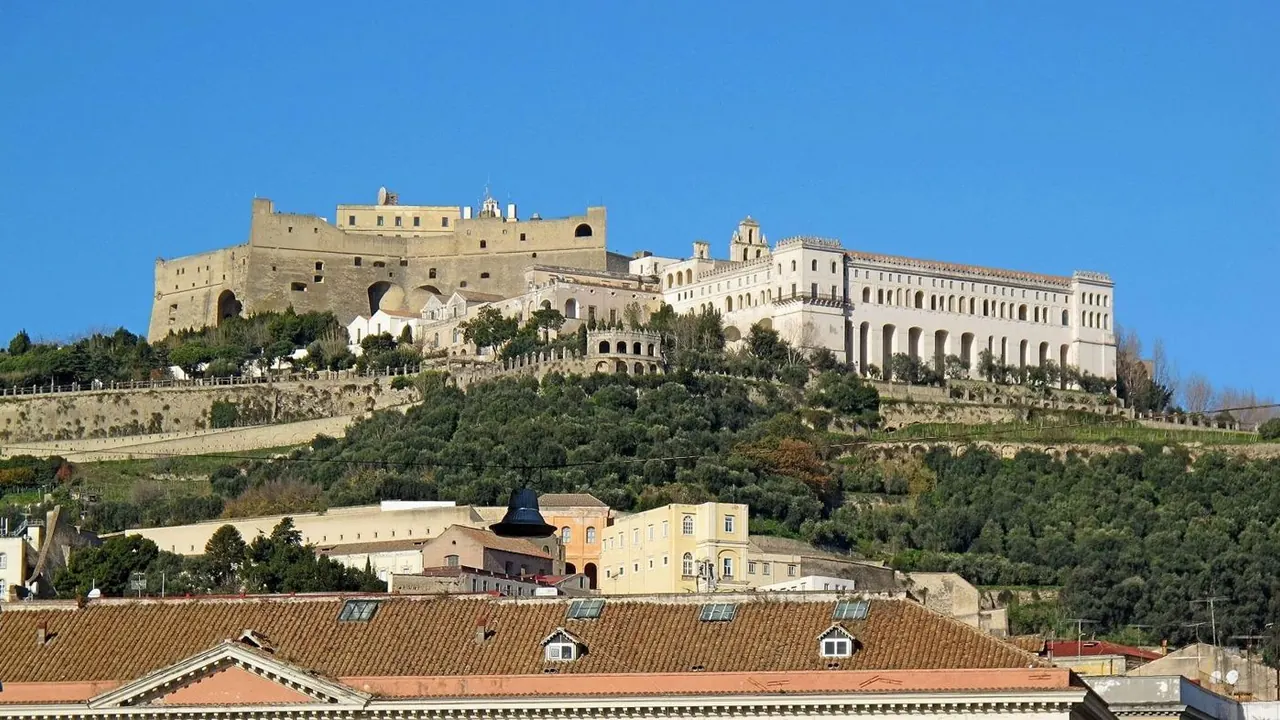
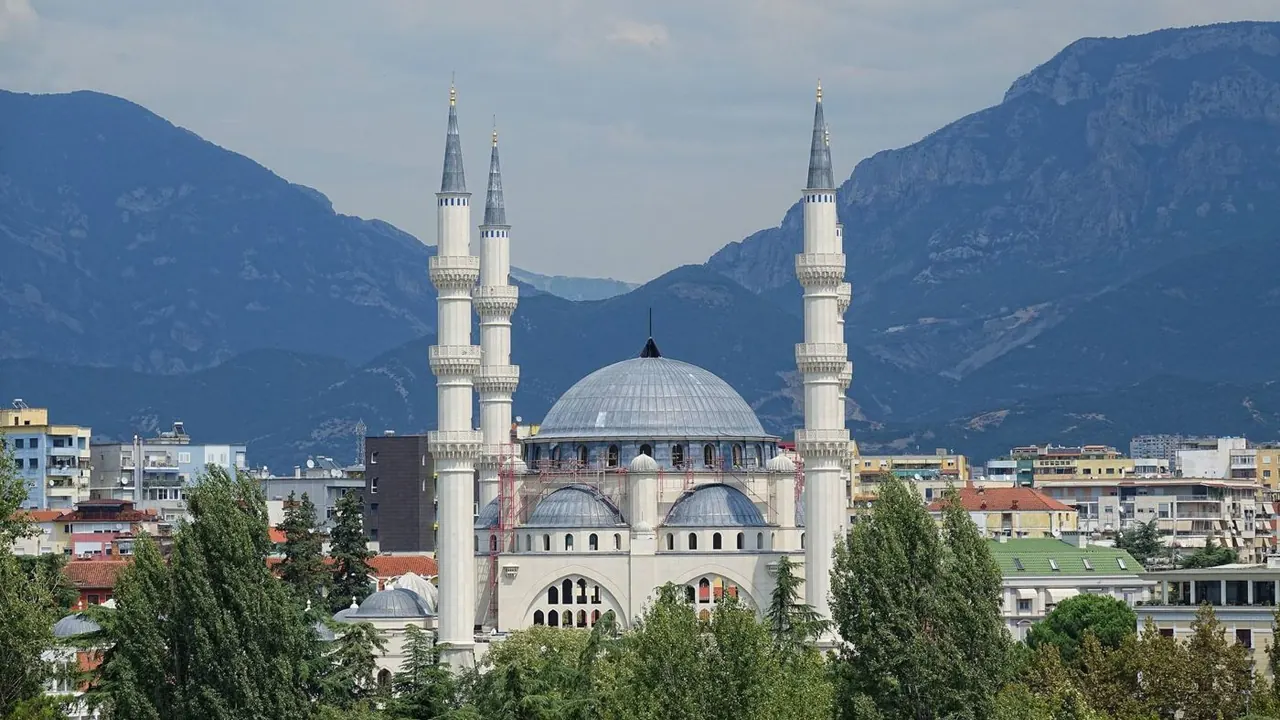
Photos: Naples by pietro scerrato, CC BY 3.0, cropped; Tirana by Bjørn Christian Tørrissen, CC BY-SA 4.0, cropped.
Naples or Tirana?
Our verdict in twelve categories, each scored against the same fixed benchmark cities, and the climate month by month, so you can choose for your trip.
Choose Naples for
- culture and sights
- live music and the arts
- day trips
Naples suits travellers who want a deep, old city and don't mind noise. The Greek street grid, the Archaeological Museum and the tunnels underneath could fill a week. Pompeii, Herculaneum and the island ferries are all close by train or boat, and the pizza and street food are among the best reasons to go anywhere in Italy. Choose it if you want history, food and famous excursions, and you can cope with scooters and crowds.
Choose Tirana for
- prices
Tirana is the better choice for a few cheap, easy days in a smaller capital. Its sights are about the 20th century: communist bunkers, the secret police archive and the painted facades of the centre. Evenings are spent on the bar terraces of Blloku, and the Dajti cable car rises straight from the edge of town. It also makes a good base for Kruja and Berat if you're interested in Albania beyond its capital.
Scoreboard
Twelve categories on one fixed scale from 0 to 100. The shaded stretch is the gap between the two.
Your match
Pick a travel style or drag the sliders, and both match scores follow your weighting.
Wins on culture and sights and live music and the arts with your weighting.
Wins on prices with your weighting.
What matters to you?
Category by category
What the scores mean for a trip.
Beaches & swimming
Neither city makes a beach vacation, and they come out roughly level, but the sea is part of life in Naples in a way it isn't in Tirana. In Naples the water is right below the city: locals swim off the rocks under the Lungomare and at the small Posillipo lidos, and a boat ride takes you to the clear, rocky coves of Procida, Ischia and Capri.
Tirana is inland, so a swim means going by road to Durrës. There you find long, sandy, shallow water that suits small children, though the beach is lined with hotels and very full on summer weekends.
Food & drink
Naples is clearly the better place to eat. It's where pizza comes from, and you can eat fried pizza, frittatine and sfogliatelle as you walk, then find buffalo mozzarella and San Marzano tomatoes at the Pignasecca market.
Tirana's food is good honest farm cooking: tavë kosi, fërgesë, morning byrek and grilled lamb, at its best in the hill farm restaurants outside town. It's pleasant but doesn't have the depth of Naples. Neither city offers much international food.
Culture & sights
This is where the two differ most. In Naples you walk through more than two thousand years of history: the Greek grid of Spaccanapoli, Pompeii's frescoes at the Archaeological Museum, the Veiled Christ in the Cappella Sansevero and the cisterns and catacombs below the streets.
Tirana's story is mostly 20th century. Bunk'Art and the House of Leaves are powerful visits about the communist years, and Skanderbeg Square with the Et'hem Bey Mosque is worth an afternoon. Two days covers it all.
Nightlife
The two are broadly level, but the evenings feel different. In Naples a night out happens in the street: students sit on the steps of Piazza Bellini, and in Chiaia people with drinks fill the alleys. There are hardly any clubs worth seeking out.
Tirana puts nearly everything in Blloku, with cocktail bars, lounge terraces and a crowd that dresses up. A few larger clubs near the Grand Park lake stay open until the early hours, so Tirana is the better choice if you want to dance.
Nature & outdoors
Naples has the more remarkable landscape. You can walk up to Vesuvius's crater rim, explore the craters of the Phlegraean Fields, such as the oak-wooded Astroni, snorkel in the Gaiola underwater park, and take a long day out on the Path of the Gods above Amalfi.
Tirana's great advantage is how close the mountains are. The Dajti cable car lifts you to beech and pine forest at 1,000m in a quarter of an hour, and the Bovilla gorge and Gamti's trails are about an hour away. The Albanian Alps, though, need more than a day.
Day trips
Naples is far ahead. Pompeii and Herculaneum are each under an hour away on a local train, and so are the villas at Oplontis. The palace at Caserta, the ferries to Capri and Procida, the Amalfi Coast and Paestum add up to more famous places than most visitors have time to see.
Tirana has good day trips too: Skanderbeg's castle at Kruja, the Roman amphitheatre at Durrës, and Berat's white Ottoman houses about two hours south. They are mostly by car or minibus on slow roads, though, so each one takes a full day.
Good for families
Neither city is easy with small children, and both have the same problems: assertive traffic, poor pavements and summer heat. Tirana offers more open space, with the Grand Park's playgrounds, the pedestrian Skanderbeg Square and the gentle sandy shallows at Durrës.
Naples suits older children better. The underground tunnels, the funicular rides, a ferry to an island and the ruins of Pompeii hold their attention. Many families stay in Sorrento and visit the city for the day.
Getting around
The two are equally easy to get around, in different ways. Naples has Metro Line 1, with stations decorated as art galleries, and four funiculars up to Vomero and Posillipo, but its buses crawl in traffic and the Circumvesuviana is crowded and often late.
Tirana is flat and small enough to walk, with almost everything within twenty minutes. There's no metro or tram, and cheap taxis cover Bunk'Art and the Dajti cable car. Day trips need a minibus or a hire car, whereas from Naples you can reach most of them by train or ferry.
Shopping & style
Naples gives you far more reasons to shop. Chiaia's tailoring workshops make suits and silk ties, the Galleria Umberto I is a grand iron-and-glass arcade, nativity figures are carved year-round on Via San Gregorio Armeno, and coral cameos come from Torre del Greco.
Tirana's best shopping is the Pazari i Ri: cheese, honey, raki and dried herbs, with felt hats and filigree silver on the side. Its fashion is mostly high-street chains in malls on the edge of the centre.
Affordability
Tirana is noticeably kinder to your budget. A meal of grilled meat and salad, a glass of raki, a taxi across town and a museum ticket all cost little, and comfortable mid-range hotels in the centre are good value.
Naples is cheap for a Western European city as long as you stay in town and eat pizza and street food. Once you add island ferries, an Amalfi hotel or the entry fees at Pompeii and Herculaneum, the costs rise quickly.
Live music & performing arts
For an evening of music, Naples offers far more. Its opera house is one of the great historic stages of Europe, worth a visit for the room alone, and over a few nights you can usually choose between opera, ballet, a recital by conservatory students or chamber music in a Baroque church. The city's own song tradition is still part of everyday life, so you may hear it over dinner even without buying a ticket.
In Tirana, the opera and ballet house on Skanderbeg Square is an easy evening that you can often arrange on the day, but there is little else on a formal stage, and live music beyond it means a few bars with jazz or bands. In both cities most visitors will struggle with the theatre, which is in Italian or Neapolitan dialect in one and Albanian in the other. The biggest difference is in folk music: Albania's iso-polyphonic singing is rarely performed in the capital, while in Naples Neapolitan song is easy to find.
Wellness & relaxation
Naples has proper thermal water nearby. The springs at Agnano have been used since Roman times, and Ischia's terraced pools above the sea are an hour away by hydrofoil, though the city itself is anything but calm.
Tirana has no bathing tradition of its own. Beyond hotel spas, the nearest springs are the plain sulphur baths at Llixha. Rest there means slow hours over coffee, the evening xhiro along the boulevards and a cable car ride up to the quiet of Dajti.
When should you go?
Pick your month. The climate figures are measured averages, not a forecast.
Naples in July
Tirana in July
Daytime high, °C
Rainfall in the month, mm
Where the figures come from
Naples has no rain gauge within 25 km of the centre, so its rainfall comes from a gridded climate dataset read at the city rather than from a gauge further away.
Naples's sunshine is measured 28 km from the centre, at Grazzanise.
Temperature and rainfall are climate normals, averaged over the years shown. Naples: 2005-2020 (sunshine 1991-2020, rainfall 1991-2020) normals, Napoli / Capodichino (4.6 km from centre). Tirana: 1961-1990 normals, Tirana (3 km from centre).
The two cities have almost the same temperatures all year. Both are pleasant in spring and reach about 30°C in July and August, when the middle of the day is too hot for long walks. Both then cool steadily through autumn into mild, damp winters. The real difference is rain. Naples has a very dry summer, with only about 23mm in July. It turns wet from September and is wettest in November, at 148mm. Tirana gets more rain than Naples in every month except September, when the two are level. It has some showers even in summer and an even wetter November, at 148mm.
The bay at Naples is warm enough for swimming from June to September and is warmest in August, at about 26°C. The Adriatic at Durrës, Tirana's nearest coast, is as warm as the bay in June and September and a degree cooler in July and August. Tirana gets a little more sunshine from May to October but has very dull winters, and December there is the greyest month in either city. Late May, early June and late September suit both cities best, and Naples is the safer choice if you want dry days.
Which traveller are you?
For a culture and arts trip, Naples is clearly the better choice. It has Roman treasures from Pompeii in its Archaeological Museum, Baroque churches on every block and opera at the San Carlo. In Tirana the city's own sights take about two days, and its stage offers much less.
On a trip on a tight budget, Tirana goes further. Meals, coffee, raki, taxis and museum tickets all cost very little, and even the smarter Blloku bars are cheap by European standards. Naples is cheap within the city, but the islands and the coast cost resort prices.
On a relaxing and wellness trip, Naples has the advantage of Ischia's thermal gardens, an hour away by hydrofoil, and the old springs at Agnano. Tirana's only real spa town is Llixha, which is simple and old-fashioned, so its slow terrace coffees are the main way to relax there.
Before you go
| Measure | Naples | Tirana |
|---|---|---|
| Official language | Italian | Albanian |
| Currency | Euro (EUR) | Lek (ALL) |
| Sockets | CFL230 V, 50 Hz | CF220 V, 50 Hz |
| Driving side | Right | Right |
| Time zone | UTC+1, UTC+2 in summer | UTC+1, UTC+2 in summer |
| Emergency number | 112 | 112 |
| Elevation | 17 m | 110 m |
| Main airport | Naples International Airport (NAP)7 km from centre131 non-stop destinations | Tirana International Airport Mother Teresa (TIA)13 km from centre121 non-stop destinations |
| Public holidays this year | 13 days | 14 days |
By the numbers
| Measure | Naples | Tirana |
|---|---|---|
| City population | 913,462 | 389,323 |
| People per km² | 7,676 | 9,314 |
| Museums within 10 km | 65 | 11 |
| UNESCO World Heritage sites within 50 km | 5 | 0 |
| Swim season, months above 21 °C | 5 months | 5 months |
Where else could you go?
Every comparison below shares a destination with this one, so you can follow Naples or Tirana somewhere new.