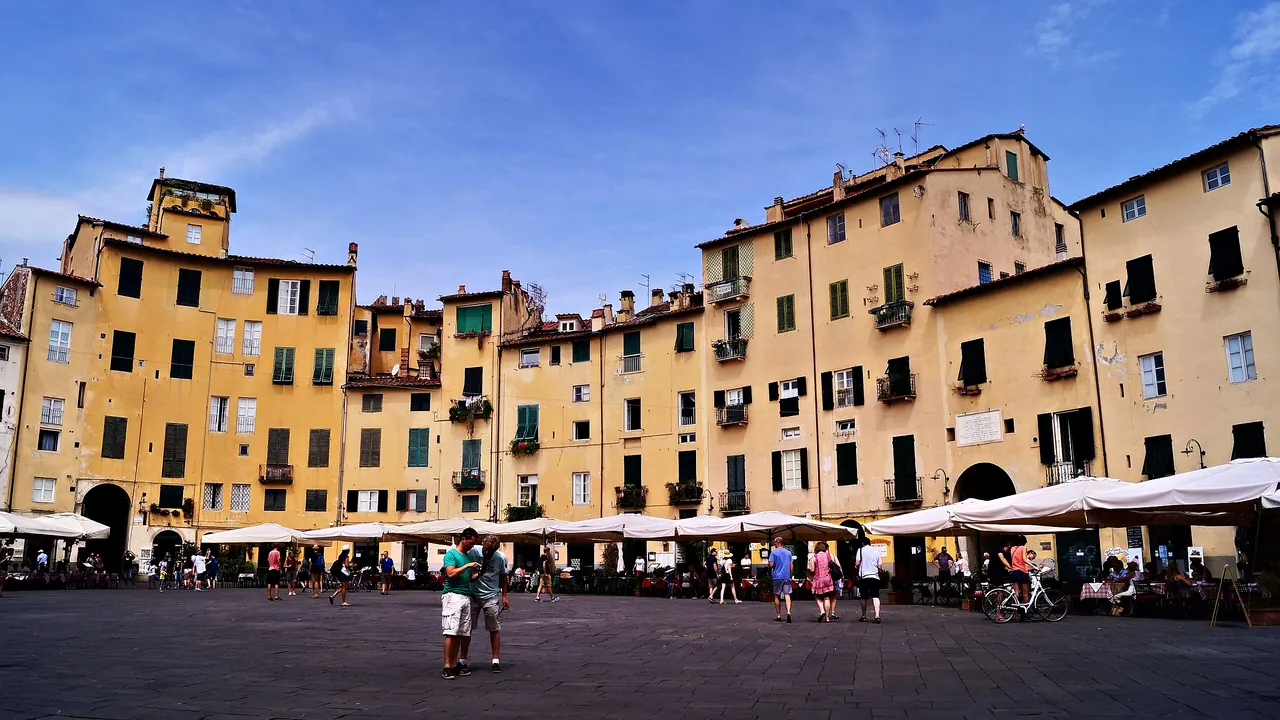
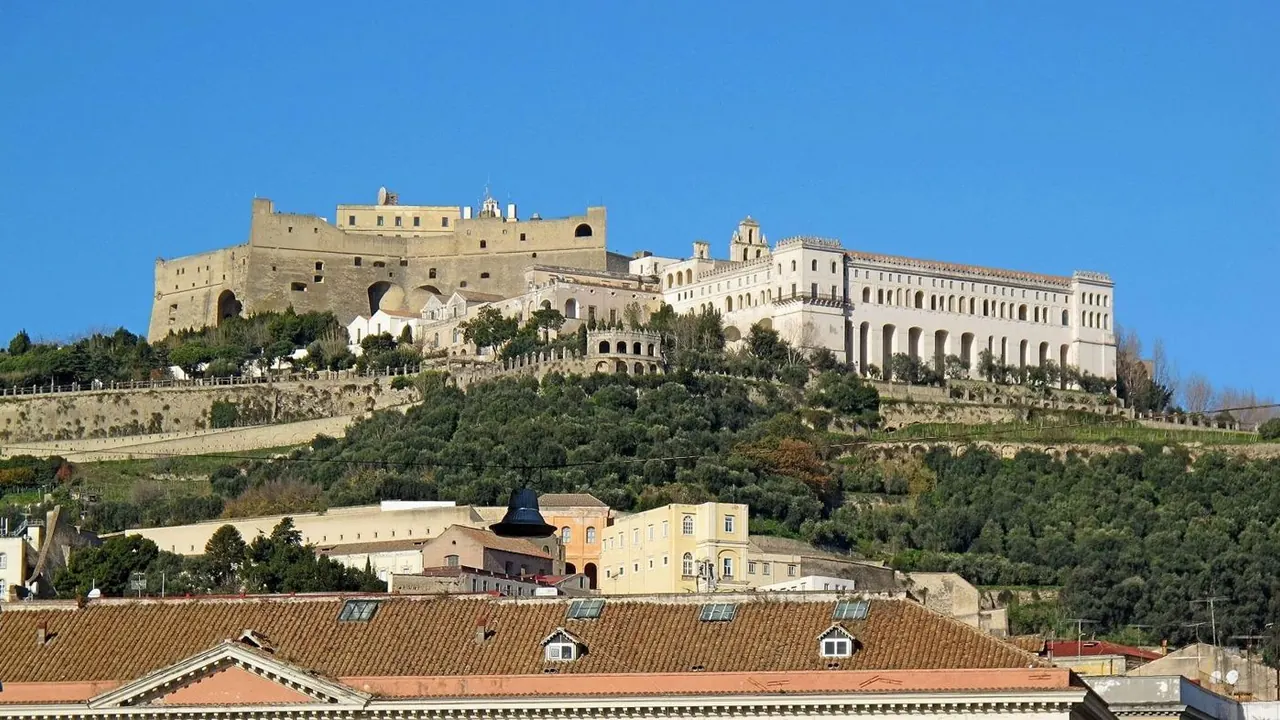
Photos: Lucca by Stefano Sansavini, CC BY-SA 4.0, cropped; Naples by pietro scerrato, CC BY 3.0, cropped.
Lucca or Naples?
Our verdict in twelve categories, each scored against the same fixed benchmark cities, and the climate month by month, so you can choose for your trip.
Choose Lucca for
- getting around
- families
- wellness
Lucca suits a slower, gentler trip. Inside its intact walls you walk or cycle everywhere on flat, car-free streets, children can ride the ramparts, and evenings end early with dinner and a stroll. It is also a handy base for Pisa, Florence, the Tuscan villas and the Versilia sand. Choose it if you want calm and ease more than intensity.
Choose Naples for
- nightlife
- food and drink
- culture and sights
Naples asks more of you and gives more back. The food is stronger, the historic centre and the Archaeological Museum hold far more, the nights run late in the piazzas, and everyday costs are lower. Pompeii, Vesuvius and the islands are all close by. It is the better pick for travellers who like a loud, crowded city and don't mind scooters, uneven pavements and unreliable buses.
Scoreboard
Twelve categories on one fixed scale from 0 to 100. The shaded stretch is the gap between the two.
Your match
Pick a travel style or drag the sliders, and both match scores follow your weighting.
Wins on getting around and families with your weighting.
Wins on nightlife and food and drink with your weighting.
What matters to you?
Category by category
What the scores mean for a trip.
Beaches & swimming
Lucca is inland, but its beaches are an easy outing: Viareggio is about 25 minutes by train, and from there long sandy beaches run north to Forte dei Marmi. The sand shelves gently and is mostly set out in rows of umbrellas at beach clubs, while the Lecciona dunes, backed by pine woods, offer a wilder free stretch.
Naples has the sea right in front of it. Locals swim off the rocks below the Lungomare and from small lidos in Posillipo, though the water near the port is not always clean, and the sandy beaches near the city are crowded, paid clubs. For clear water you take a boat to Procida, Ischia or Capri, or head for the rocky coves of the Sorrento peninsula. Lucca is better for easy wading on open sand, and Naples for swimming in clear water off the rocks.
Food & drink
Naples is the far stronger food city. Pizza was born here, and the street food, from fried pizza to cones of seafood and sfogliatelle, is part of daily life. The Pignasecca and Porta Nolana markets are full of mozzarella, fish and San Marzano tomatoes.
Lucca eats plainly and well: farro soup, tordelli in ragù, chestnut dishes, cecina and buccellato, with mild local olive oil and wines from the surrounding hills. The menus are much the same from one trattoria to the next, so after a few days the choice feels narrow. Naples offers more to eat and is more exciting.
Culture & sights
Lucca is a single, complete picture. You get the walls, the medieval street grid, the carved façade of San Michele, Ilaria del Carretto's tomb in the cathedral and the oval Piazza dell'Anfiteatro, all seen comfortably in two days.
Naples works on a different scale. Its Greek-planned historic centre is one of Europe's largest, the National Archaeological Museum holds the treasures of Pompeii, and there are also the Veiled Christ, the tunnels and catacombs below the city, and the Capodimonte gallery. A week there barely runs out.
Nightlife
Lucca's evenings are aperitivo, dinner and a walk on the walls, and the streets go quiet by midnight. Anyone who wants to dance has to travel out to the Versilia clubs.
Naples stays out late. Students crowd Piazza Bellini and the lanes beside the Greek walls, and Chiaia's small bars spill into the alleys well past midnight. The nights are about the street more than clubs, but there is far more going on than in Lucca.
Nature & outdoors
Lucca's countryside is gentle, with olive groves, villa gardens and cycle paths along the Serchio. The steep marble peaks of the Apuan Alps and the chestnut woods of the Garfagnana lie about an hour north, with birdwatching at Lake Massaciuccoli toward the sea.
Naples has the more striking landscape, because it is volcanic. You can walk up to the crater rim of Vesuvius, explore the old craters of the Phlegraean Fields at Astroni and Lake Avernus, snorkel in the Gaiola underwater park, and hike the Path of the Gods above the Amalfi Coast.
Day trips
Both are excellent bases, and the difference lies in what is within reach. From Lucca, easy trains run to Pisa, Florence and Pistoia, and nearby are the formal gardens of the Lucca villas, Collodi, and the marble towns of Pietrasanta and Carrara. This is classic Tuscany, mostly reached without fuss.
From Naples the outings are more dramatic. Pompeii and Herculaneum are on the Circumvesuviana line, the Caserta palace is inland, ferries run to Capri, Ischia and Procida, and further away are the Amalfi Coast and the temples of Paestum. The catch is that the trains and boats are crowded and less smooth than Tuscany's regional lines.
Good for families
Lucca is the gentler choice with children. The car-free centre is safe to wander, riding a quadricycle around the walls is the classic outing, and Pinocchio Park and sandy beaches are both near. It has little made specifically for children, though.
Naples welcomes children warmly, but the scooters, broken pavements and steps make it tiring with small ones. Older children enjoy the tunnels, funiculars and Pompeii. Many families stay in Sorrento or on an island and come into the city for the day.
Getting around
Lucca is far easier to get around. The walled centre is flat and largely closed to traffic, bikes are the local transport, and the station just outside the walls has regular trains across Tuscany. Only the villas and hill villages really call for a car.
In Naples you walk the historic centre alongside scooters, and Metro Line 1 and four funiculars handle the hills. Beyond them, buses crawl through traffic, the Circumvesuviana is packed and often late, and crossing the road takes nerve.
Shopping & style
Naples has more to buy and more that you can't get elsewhere. Chiaia's tailors make suits, shirts and ties by hand, Via Toledo and the Galleria Umberto I cover the high street, and San Gregorio Armeno is lined with workshops making nativity figures, with coral and cameos from Torre del Greco on top.
Lucca's Via Fillungo is a pretty street with old Liberty shopfronts, and its delicatessens are good for olive oil and buccellato. The main event is the monthly antiques market around the cathedral. Otherwise the shopping is small-town.
Affordability
Naples stretches a budget further. Pizza, street food, coffee at the bar and transport all cost little, and the historic centre has plenty of modest B&Bs. Costs climb only when you head for the islands, the Amalfi Coast or the big archaeological sites.
Lucca is cheaper than Florence but costs the normal central Italian rate. Rooms inside the walls are scarce and fill up in summer and during festivals, so staying just outside often saves money.
Live music & performing arts
Opera ties these two cities together. Lucca's is built around Puccini: short recitals of his arias in a central church most evenings, the Teatro del Giglio's season, and open-air opera by the lake at Torre del Lago in summer, plus big outdoor concerts in Piazza Napoleone each July.
Naples has the greater stage. The Teatro di San Carlo is Europe's oldest working opera house, with a full season of opera, ballet and concerts. Neapolitan song is still part of everyday life, though most spoken theatre is in Italian or dialect.
Wellness & relaxation
Lucca relaxes you through its pace: traffic-free streets, long lunches and evening walks on the shaded walls. For thermal water you take the train to Montecatini, or go to the cave pools of Monsummano or the steam grottoes of Bagni di Lucca.
Naples is too loud and intense to unwind in, apart from the cloisters of Santa Chiara and the Lungomare. Its volcanic ground does provide the stronger spa option, though: Ischia's terraced thermal gardens above the sea are about an hour away by hydrofoil.
When should you go?
Pick your month. The climate figures are measured averages, not a forecast.
Lucca in July
Naples in July
Daytime high, °C
Rainfall in the month, mm
Where the figures come from
Naples's sunshine is measured 28 km from the centre, at Grazzanise.
Temperature and rainfall are climate normals, averaged over the years shown. Lucca: 1991-2020 normals, Pisa / S. Giusto (21.4 km from centre). Naples: 2005-2020 (sunshine 1991-2020, rainfall 1971-2000) normals, Napoli / Capodichino (4.6 km from centre).
The two climates follow much the same pattern, though Naples runs a degree or two warmer for most of the year. Both are best for walking from late April to early June and again in September and early October. July and August reach about 30°C in both, which makes midday sightseeing heavy going, more so in the Tuscan plain around Lucca and in the crowded lanes of Naples. Both are sunniest in July.
For swimming, the sea off Versilia and in the Bay of Naples is warm enough from June to September, peaking around 25°C, and Naples stays warmer slightly longer into the autumn. The rain arrives in September in both cities, and autumn is the wettest season. Lucca is wettest in October and November, while Naples has the heavier November, with about 163mm, and stays damp right through the winter.
Which traveller are you?
On a family trip with young children, Lucca is the easier choice. The centre is flat, compact and mostly traffic-free, the walls make a safe bike ride, and Pinocchio Park and the sandy beaches are both close. Naples, with its scooters, steps and cobbles, is hard going with pushchairs.
For a food and nightlife trip, go to Naples. It has the original pizza, fried street food, pastry shops and markets, then late, sociable nights in Piazza Bellini and Chiaia. Lucca offers rustic trattorias and an aperitivo, and is quiet by midnight.
On a culture and arts trip, Naples gives you a week of material: the Greek street grid, the Archaeological Museum, the Veiled Christ, the catacombs and the San Carlo opera house. Lucca's Romanesque churches and Puccini recitals are lovely but can be seen in two days.
Before you go
| Measure | Lucca | Naples |
|---|---|---|
| Official language | Italian | Italian |
| Currency | Euro (EUR) | Euro (EUR) |
| Sockets | CFL230 V, 50 Hz | CFL230 V, 50 Hz |
| Driving side | Right | Right |
| Time zone | UTC+1, UTC+2 in summer | UTC+1, UTC+2 in summer |
| Emergency number | 112 | 112 |
| Elevation | 19 m | 17 m |
| Main airport | Pisa International Airport (PSA)21 km from centre82 non-stop destinations | Naples International Airport (NAP)7 km from centre131 non-stop destinations |
| Public holidays this year | 13 days | 13 days |
By the numbers
| Measure | Lucca | Naples |
|---|---|---|
| City population | 88,798 | 913,462 |
| People per km² | 478 | 7,676 |
| Museums within 10 km | 20 | 65 |
| UNESCO World Heritage sites within 50 km | 4 | 5 |
| Swim season, months above 21 °C | 4 months | 5 months |
Where else could you go?
Every comparison below shares a destination with this one, so you can follow Lucca or Naples somewhere new.