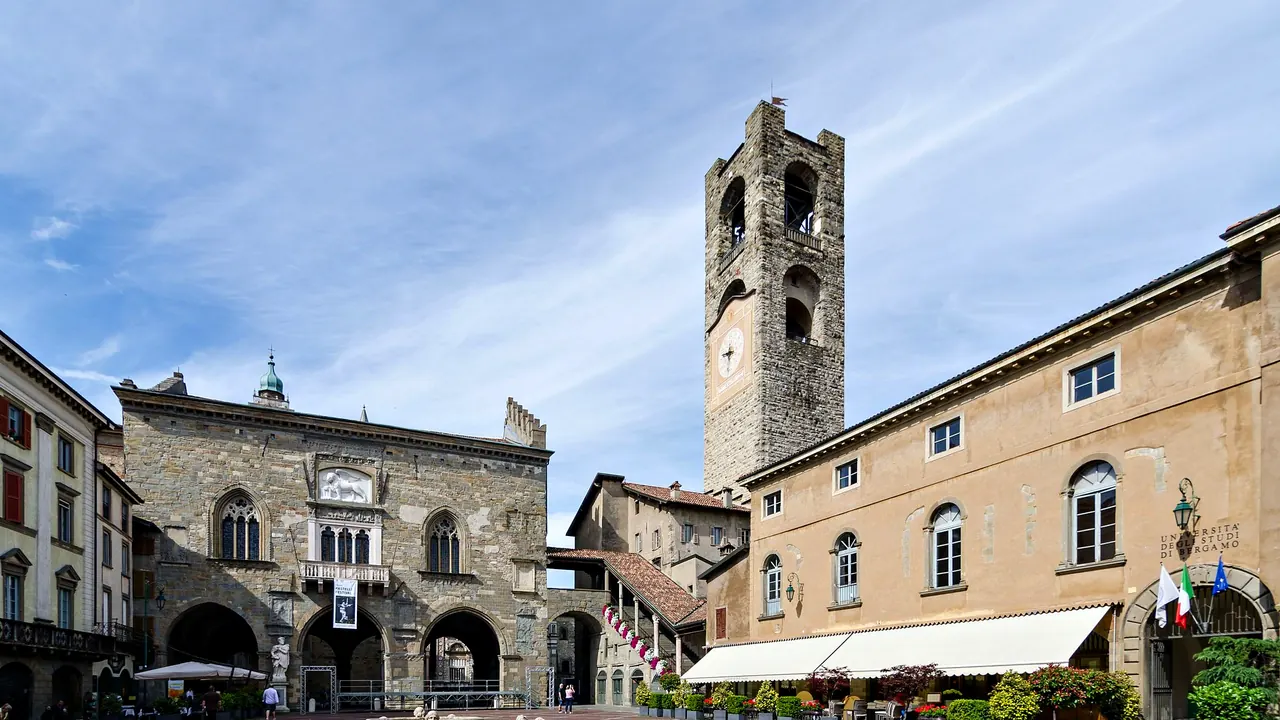
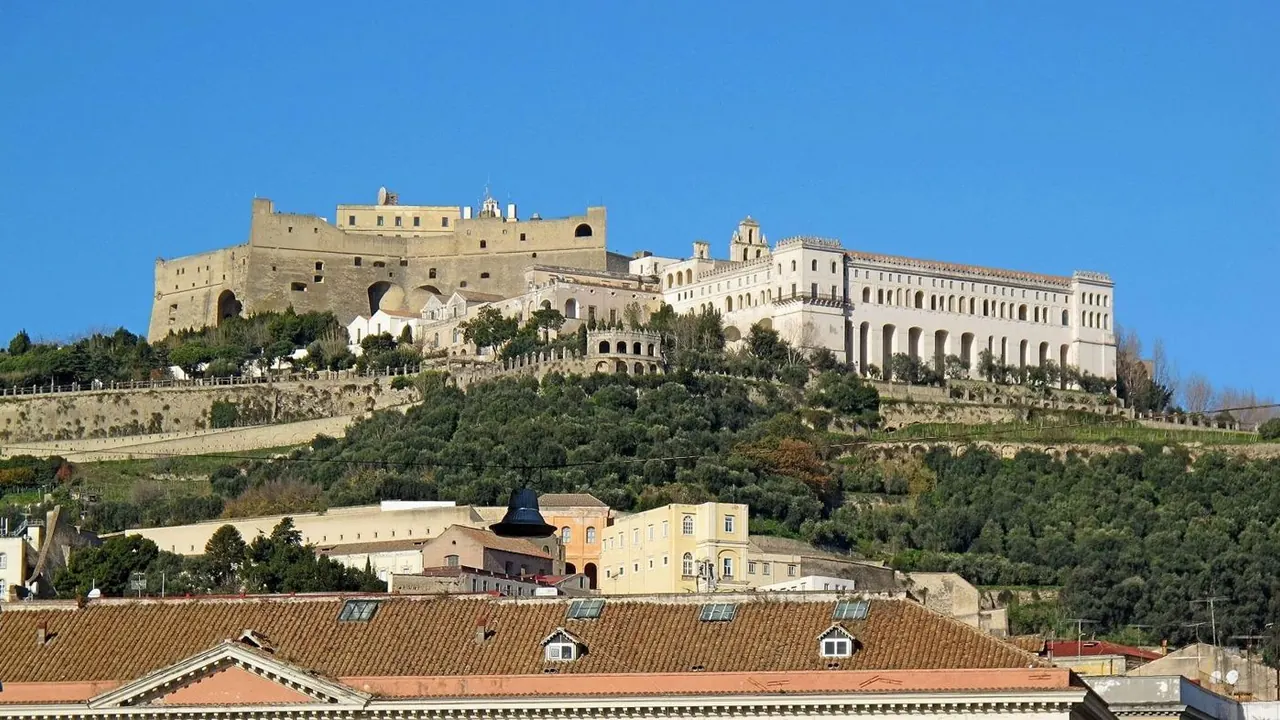
Photos: Bergamo by Steffen Schmitz, CC BY-SA 4.0, cropped; Naples by pietro scerrato, CC BY 3.0, cropped.
Bergamo or Naples?
Our verdict in twelve categories, each scored against the same fixed benchmark cities, and the climate month by month, so you can choose for your trip.
Choose Bergamo for
- getting around
- families
- wellness
Bergamo suits a calmer, more compact trip. Its walled Città Alta fits into a weekend, the funiculars and direct trains make it easy to get around, and the Orobie valleys and the lakes lie just beyond the city. Families with young children, and anyone wanting a quiet, well-connected base for touring Lombardy, will find it much less tiring than the south.
Choose Naples for
- nightlife
- food and drink
- live music and the arts
Naples is the choice for depth and intensity. Its cooking is among the most deeply rooted in Italy, the Greek street grid and the archaeological museum could fill a week, and Pompeii, Herculaneum, Capri and the Amalfi Coast are all within a day's reach. It is louder and harder work, but cheaper to eat your way through, and the street life carries on long after Bergamo has gone to bed.
Scoreboard
Twelve categories on one fixed scale from 0 to 100. The shaded stretch is the gap between the two.
Your match
Pick a travel style or drag the sliders, and both match scores follow your weighting.
Wins on getting around and families with your weighting.
Wins on nightlife and food and drink with your weighting.
What matters to you?
Category by category
What the scores mean for a trip.
Beaches & swimming
Neither city is a beach destination, but Naples at least has the sea. Bergamo's swimming means a trip out to the lidos of Lake Iseo or the Lecco arm of Lake Como, on pebble, grass or concrete platforms.
Naples has rocks below the Lungomare and small lidos at Posillipo, though the water near the port is not always clean. The real reward is a boat to Procida, Ischia or Capri, where clear water and rocky coves make a far better swimming day than any lake.
Food & drink
Bergamo's table is hearty mountain food: casoncelli in butter and sage, polenta with braised meats and game, and some of Italy's great cheeses, Taleggio and Strachitunt among them. It is satisfying, but it is a cuisine you try rather than one you travel for.
Naples is a city people do travel to eat in. Neapolitan pizza was born there, and fried pizza, seafood cones, sfogliatelle and babà fill the streets. The Pignasecca and Porta Nolana markets show off mozzarella, fish and San Marzano tomatoes. Neither city offers much beyond its own region's cooking.
Culture & sights
Bergamo has one superb set piece. The walled Città Alta, with Piazza Vecchia, Santa Maria Maggiore and the marble front of the Cappella Colleoni, sits above the Accademia Carrara and its Raphael and Bellini. You can see all of it properly in a day or two.
Naples works on a far larger scale. Its Greek-planned centre is packed with churches, and the National Archaeological Museum holds the treasures of Pompeii and Herculaneum. Add the Veiled Christ, the tunnels and catacombs underground, and the royal palaces and Capodimonte, and you have a week's worth of sights.
Nightlife
Evenings in Bergamo centre on aperitivo, wine bars and a few pubs around Via XX Settembre and Borgo Santa Caterina, and they mostly wind down by midnight. For anything bigger, people take the train to Milan.
Naples is far livelier, even though it has few clubs worth naming either. The crowd gathers outdoors, students in Piazza Bellini beside the old Greek walls and a smarter set in the lanes of Chiaia. The talk and drinking go on well past midnight, especially at weekends and in summer.
Nature & outdoors
Both cities have striking landscapes on their doorstep, but they are very different. Bergamo looks to the Alps: woodland paths climb to San Vigilio, and Val Brembana and Val Seriana lead to rifugi, high lakes and serious hiking in the Orobie. The lakes add sailing and cycling, though you will want a car for the mountains.
Naples has volcanoes and coast instead. You can climb to the crater rim of Vesuvius, walk the oak-filled crater at Astroni or snorkel at Gaiola, and the Path of the Gods above the Amalfi Coast is within reach. In summer the heat makes midday walking hard work.
Day trips
Both make excellent bases. From Bergamo, Milan's Duomo and Last Supper are under an hour away and Lake Como and Lake Iseo are closer still. Crespi d'Adda, Brescia, Cremona and Verona are all easy days out by train.
Naples still comes out ahead, because so many of its outings are world-famous. Pompeii and Herculaneum are a short ride on the Circumvesuviana. The Caserta palace, Capri, Ischia and Procida, the Amalfi Coast and the temples at Paestum mean you could run out of days before you run out of places.
Good for families
Bergamo is calm, safe and easy to manage with children. Riding the funicular, walking the walls with a gelato, and spending days at Leolandia or the Le Cornelle wildlife park all suit young families. The upper town's cobbles are the only real trial with a buggy.
Neapolitans adore children, but the city itself is tiring for them. Scooters, missing pavements and summer heat make the centre hard going, and there is little designed for children beyond Edenlandia and the zoo. Older children enjoy Pompeii and the tunnels, but many families stay in Sorrento instead.
Getting around
Bergamo is simple to navigate. Funiculars link the lower town to the Città Alta and San Vigilio, buses reach the airport quickly, and direct trains run to Milan, Brescia and Lecco. Only the upper valleys and lake shores really call for a car.
Naples has more transport but less reliability. Metro Line 1, with its art-filled stations, and four funiculars work well, and the old centre is best seen on foot. Buses crawl through traffic, though, and the Circumvesuviana is crowded and prone to delays.
Shopping & style
Bergamo's shopping is mostly everyday: chains and mid-range fashion under the arcades of the Sentierone, plus delicatessens in the Città Alta selling cheese, salumi and Valcalepio. Serious fashion shoppers go to Milan.
Naples offers things you cannot buy elsewhere. In Chiaia you can have a suit, shirt or silk tie made by long-established tailors, and Via San Gregorio Armeno is lined with nativity-figure workshops. Torre del Greco supplies coral and cameos, and the Galleria Umberto I and Via Toledo add a grand setting for ordinary shopping.
Affordability
Naples stretches a budget further. Pizza, street food, coffee at the bar and simple B&Bs in the historic centre all cost noticeably less than in the north. The savings disappear on Capri, along the Amalfi Coast and at the summer beach clubs.
Bergamo is comfortable rather than cheap. Hotels in the lower town are fairly priced for a base in Lombardy, and the funicular costs little, but rooms inside the Città Alta and summer weekends push the bill up.
Live music & performing arts
Bergamo's stage life centres on a single composer. Donizetti was born here, and the theatre named after him builds its autumn festival around his operas, a real draw if you want to hear his work in his home town. In spring, Bergamo Jazz offers something Naples largely lacks, since the south has few jazz or live-music clubs.
Naples gives you far more to choose from through the year. The San Carlo, older than La Scala and still in use, stages opera, ballet and concerts across a full season rather than one festival, and the conservatory and church concerts fill the nights between. Neapolitan song adds a popular tradition that Bergamo has no equivalent for, one you can hear over dinner as easily as in a concert hall.
Wellness & relaxation
Bergamo is the easier place to unwind. The Città Alta is quiet early and late, the walls make a peaceful walk, and the Belle Époque spa at San Pellegrino Terme is only forty minutes up the valley. Trescore Balneario's sulphur springs are also close by.
Naples itself is too loud and crowded to rest in. Its best thermal water is on Ischia, an hour away by hydrofoil, or at Agnano on the city's edge. Those who come to relax usually stay on the island, so the city becomes a day trip.
When should you go?
Pick your month. The climate figures are measured averages, not a forecast.
Bergamo in July
Naples in July
Daytime high, °C
Rainfall in the month, mm
Where the figures come from
Bergamo has no rain gauge within 25 km of the centre, so its rainfall comes from a gridded climate dataset read at the city rather than from a gauge further away.
Bergamo's sunshine is measured 64 km from the centre, at Lugano.
Naples's sunshine is measured 28 km from the centre, at Grazzanise.
Temperature and rainfall are climate normals, averaged over the years shown. Bergamo: 1991-2020 normals, Bergamo / Orio Al Serio (3.9 km from centre). Naples: 2005-2020 (sunshine 1991-2020, rainfall 1971-2000) normals, Napoli / Capodichino (4.6 km from centre).
Bergamo is cold in winter, around 7°C in January, and warms through spring. Its catch is the rain: May is wet, and September to November are the wettest months of all. June to August are warm, with highs near 29°C and the most sunshine of the year. That is the season for lake swimming and the high valleys, and the lower town can feel close at midday.
Naples is milder in winter and much drier in summer. June has only 25mm of rain, and the sea reaches 26°C in August, ideal for the islands. With highs around 31°C, though, midday sightseeing in the old centre is heavy going. Autumn brings the heaviest rain, with November the wettest month. For walking the streets, April, May and late September to October suit Naples best. In Bergamo the best walking months are late spring and early autumn, as long as you pack for showers.
Which traveller are you?
On a family trip with young children, Bergamo is the easier choice. The funiculars, the walk along the Venetian walls, Leolandia and the Le Cornelle wildlife park keep children busy. In Naples you have scooters, broken pavements and summer crowds to contend with.
For a food and nightlife trip, go to Naples. You get pizza in its birthplace, fried street food and pastry shops, then evenings on the steps of Piazza Bellini or in the alleys of Chiaia that run well past midnight. Bergamo's evenings rarely do.
For a short city break, Bergamo is easier. The airport is a short bus ride from the centre, the upper town's sights fit into a day or two, and the funicular saves the climb. Naples rewards a longer stay and takes more effort to get around.
Before you go
| Measure | Bergamo | Naples |
|---|---|---|
| Official language | Italian | Italian |
| Currency | Euro (EUR) | Euro (EUR) |
| Sockets | CFL230 V, 50 Hz | CFL230 V, 50 Hz |
| Driving side | Right | Right |
| Time zone | UTC+1, UTC+2 in summer | UTC+1, UTC+2 in summer |
| Emergency number | 112 | 112 |
| Elevation | 249 m | 17 m |
| Main airport | Il Caravaggio International Airport (BGY)4 km from centre146 non-stop destinations | Naples International Airport (NAP)7 km from centre131 non-stop destinations |
| Public holidays this year | 13 days | 13 days |
By the numbers
| Measure | Bergamo | Naples |
|---|---|---|
| City population | 119,534 | 913,462 |
| People per km² | 2,973 | 7,676 |
| Museums within 10 km | 21 | 65 |
| UNESCO World Heritage sites within 50 km | 6 | 5 |
| Swim season, months above 21 °C | - | 5 months |
Where else could you go?
Every comparison below shares a destination with this one, so you can follow Bergamo or Naples somewhere new.