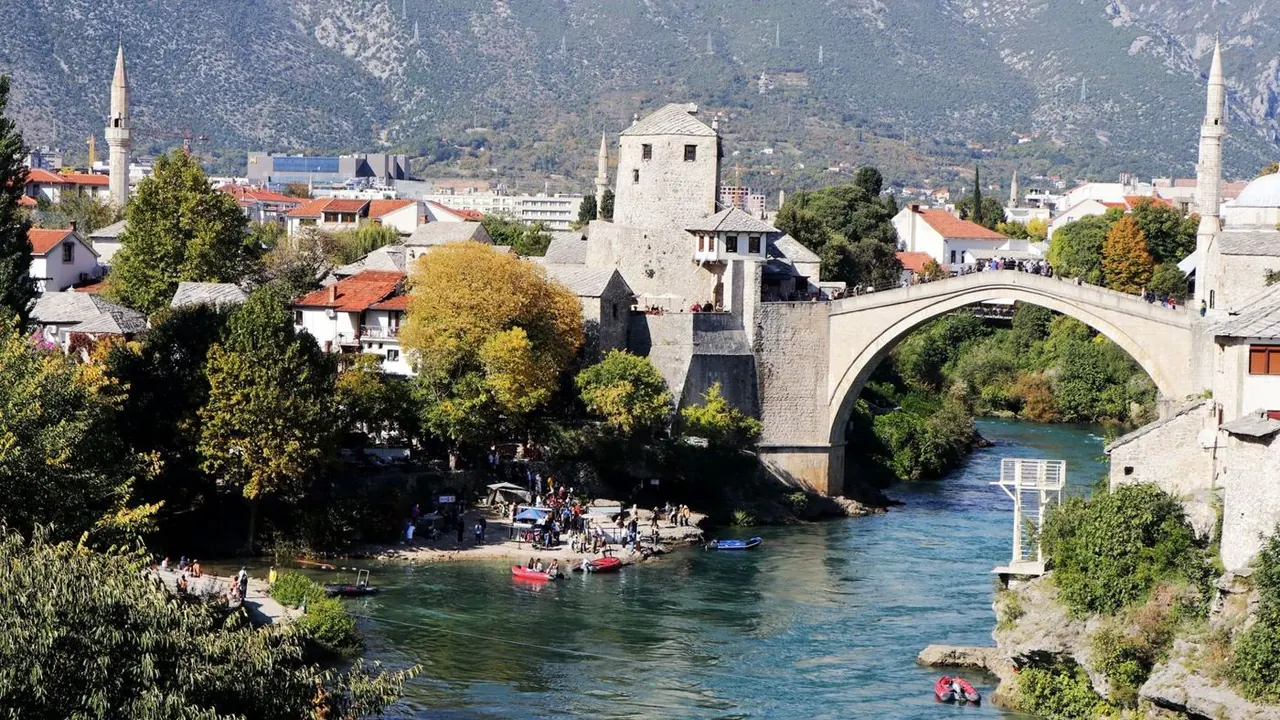
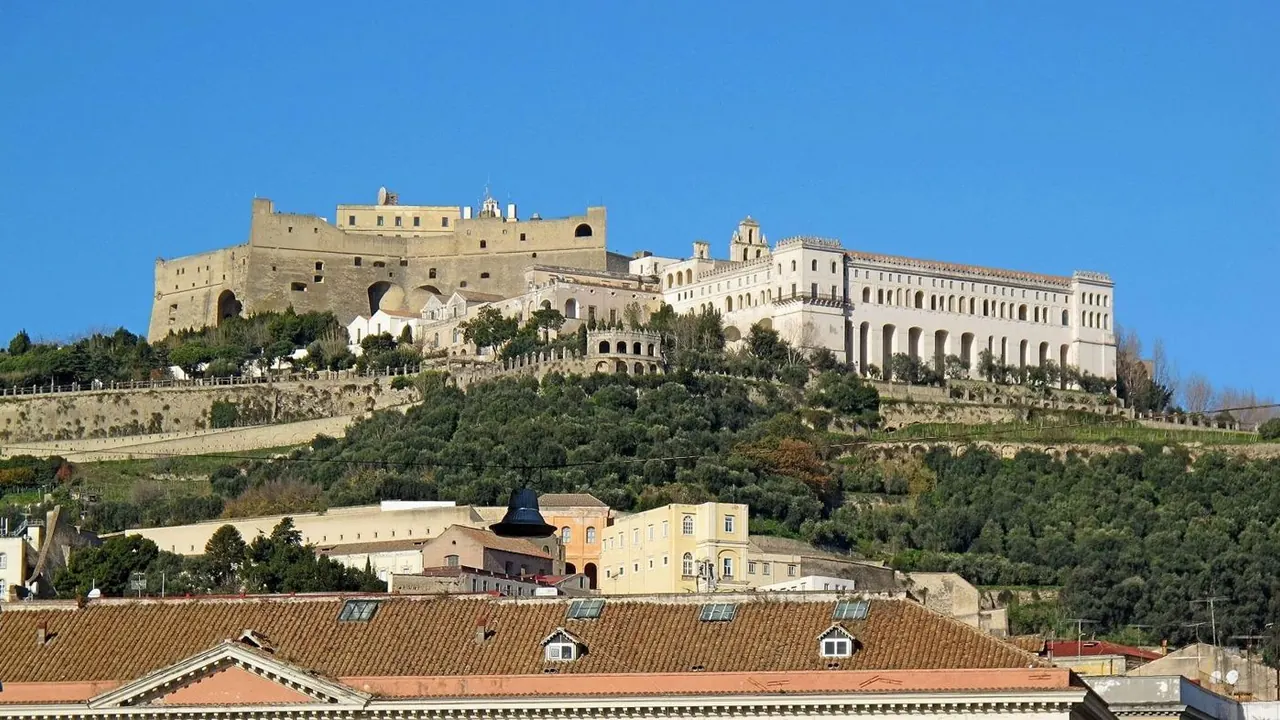
Photos: Mostar by Alan Wang, Pexels License; Naples by pietro scerrato, CC BY 3.0, cropped.
Mostar or Naples?
Our verdict in twelve categories, each scored against the same fixed benchmark cities, and the climate month by month, so you can choose for your trip.
Choose Mostar for
- prices
Mostar suits a traveller who wants one striking place seen slowly and cheaply: the Ottoman bridge and old town, an evening on a river terrace, and a car for Blagaj, Počitelj and the Kravica falls. It works well as a stop of a day or two on a wider Balkan route, and your money goes noticeably further there than around the Bay of Naples.
Choose Naples for
- live music and the arts
- food and drink
- day trips
Choose Naples for a fuller trip with more to do at every turn. It has a Greek street grid packed with churches, the Pompeii collection in the Archaeological Museum, pizza where it was invented, opera at San Carlo and late nights in the piazzas. Beyond that, Pompeii, Herculaneum, Capri and the Amalfi Coast are all within a day's reach. It is louder and more demanding, but it can fill a week in a way Mostar cannot.
Scoreboard
Twelve categories on one fixed scale from 0 to 100. The shaded stretch is the gap between the two.
Your match
Pick a travel style or drag the sliders, and both match scores follow your weighting.
Wins on prices with your weighting.
Wins on live music and the arts and food and drink with your weighting.
What matters to you?
Category by category
What the scores mean for a trip.
Beaches & swimming
Neither city is a beach base, but Naples at least has the sea at the door. People swim off the rocks below the Lungomare and at the Posillipo lidos, and clear coves on Procida, Ischia, Capri and the Sorrento peninsula are a boat ride away.
Mostar is landlocked. The Neretva is too cold for more than a quick plunge, so swimming means the pool under the Kravica falls, about 40km away, or a drive of over an hour to the coast at Neum.
Food & drink
Mostar feeds you well but within a narrow range: charcoal-grilled ćevapi in somun, burek, stuffed peppers and slow stews, with Žilavka and Blatina from the local vineyards and a long Bosnian coffee to finish. It is satisfying home cooking, and the honest places are a few streets back from the bridge.
Naples is one of Europe's great food cities. It has the original pizza, fried pizza and seafood eaten on the street, ragù and genovese in the trattorias, and pastry shops and markets like the Pignasecca behind it all. Both cities are short of international food, but in Naples eating could be the main reason for the trip.
Culture & sights
Mostar's sights centre on one great monument, the rebuilt Stari Most with its divers. Around it are the Kujundžiluk bazaar, the minaret of Koski Mehmed Pasha and a few Ottoman houses. The war-scarred old front line gives it a recent history Naples has nothing like, and the whole set fits into a day or two.
Naples works on a different scale. Its Greek-planned centre is lined with Gothic and Baroque churches, the Archaeological Museum holds the treasures of Pompeii and Herculaneum, and below the streets are tunnels and catacombs. Add the Royal Palace, San Martino and Capodimonte, and a week is easily filled.
Nightlife
In Mostar the evening is dinner and a drink on a terrace facing the floodlit bridge. After that the old town goes quiet, apart from a few cocktail bars and student clubs at summer weekends.
Naples has a far bigger night out, though most of it happens in the open air rather than in clubs. Students drink on the steps of Piazza Bellini, and a smarter crowd fills the alleys of Chiaia well past midnight. Those after serious clubbing will be disappointed in both cities.
Nature & outdoors
Mostar's outdoors are wild karst country. Bare limestone ranges like Prenj and Velež surround the city, there is rafting in the Neretva canyons, and the Blidinje plateau and Hutovo Blato wetland are within reach. Most of it needs a car, and the valley is too hot in summer for much walking.
Naples has more variety close at hand. You can walk to the crater rim of Vesuvius, explore the old craters of the Phlegraean Fields and snorkel at Gaiola. Further out are the Path of the Gods above Amalfi and the island peaks of Capri and Ischia, and the sea is never far away.
Day trips
Mostar's day trips are small, characterful places in the Herzegovina valleys. There is the dervish tekke at Blagaj, hillside Počitelj, the stećci tombstones at Stolac and Tito's bunker at Konjic, with Sarajevo a long day away by train. Most of them need a car or a tour.
Naples has some of the best day trips anywhere. Pompeii and Herculaneum are each under an hour away by train, Caserta is close, ferries leave for Capri, Ischia and Procida, and Sorrento opens up the Amalfi Coast and Paestum. You could spend a whole trip on excursions and still leave some out.
Good for families
Neither city is easy with small children. Both have hard lanes for pushchairs and fierce summers, and both are warm towards children at the table. In Mostar the bridge divers, a minaret climb and a swim at Kravica make a good day or two, but there is little more.
Naples has more to offer older children: the funiculars, the tunnels under the city, a ferry ride, Pompeii, the zoo and the science museum at Bagnoli. Many families stay in Sorrento or on an island and come into the city for the day.
Getting around
Both have centres best seen on foot. Mostar's is a short stroll along the river on slippery cobbles, but buses are of little use to visitors, so Blagaj, Počitelj and Kravica mean a car, taxi or tour.
Naples is harder work in its scooter-filled lanes, but it has a network behind it. Metro Line 1 and four funiculars climb to Vomero, and the Circumvesuviana, crowded as it is, runs to Pompeii and Sorrento, so a car is never needed.
Shopping & style
Mostar's shopping is a single street, the Kujundžiluk. Hand-hammered copper coffee sets and kilims are the things to buy there, but you need to find the craftsmen working among the imported souvenir stock.
Naples has much more to offer. Chiaia workshops make suits, shirts and ties to measure, and Via Toledo, the Galleria Umberto I and Via dei Mille cover fashion. San Gregorio Armeno sells nativity figures, and Torre del Greco is known for coral and cameos.
Affordability
Mostar is the cheaper of the two by some way. Guesthouse rooms, grilled meat, local wine and coffee all cost little, and only the bridge-view terraces and old-town rooms in midsummer cost noticeably more.
Naples is good value for a Western European city if you stay in the centre and eat pizza and street food. The trouble is that its best trips take you to resort prices on Capri and the Amalfi Coast, and the archaeological sites charge entry.
Live music & performing arts
In Mostar the stage plays little part in a visit. The national theatre and youth theatre perform in local languages, and outside the summer open-air concerts, live music means a band in a café bar.
Naples has the Teatro di San Carlo, the oldest working opera house in Europe, with a full season of opera, ballet and concerts. It also has concerts at the San Pietro a Majella conservatory, chamber music in churches and Neapolitan song in the trattorias. Spoken theatre is mostly in Italian or dialect.
Wellness & relaxation
Mostar has no working baths, and the old hammam near the bridge is a monument rather than a bath. Relaxing there means shaded coffee and the quiet old town early and late in the day.
Naples itself is too intense to unwind in, but the volcanic ground around it gives real thermal water. There is the spa at Agnano on the city's edge, and Ischia, an hour away by hydrofoil, has terraced thermal gardens above the sea. That is something Mostar has nothing to match.
When should you go?
Pick your month. The climate figures are measured averages, not a forecast.
Mostar in July
Naples in July
Daytime high, °C
Rainfall in the month, mm
Where the figures come from
Naples has no rain gauge within 25 km of the centre, so its rainfall comes from a gridded climate dataset read at the city rather than from a gauge further away.
Naples's sunshine is measured 28 km from the centre, at Grazzanise.
Temperature and rainfall are climate normals, averaged over the years shown. Mostar: 1991-2020 normals, Mostar (0.9 km from centre). Naples: 2005-2020 (sunshine 1991-2020, rainfall 1991-2020) normals, Napoli / Capodichino (4.6 km from centre).
Mostar lies in an inland basin and has the harsher climate of the two. May is its best month, warm at around 25°C and drier than the rest of spring, which makes it ideal for the old town and the hills around it. April and October are also good for walking, though both are wetter. From June the valley heats up, and July and August reach about 33°C, too hot for the lanes at midday. Heavy rain sets in from September, and winter is cold and very wet, with close to 198mm in December.
Naples is milder all year, and its summer is almost dry from June to August. The sea is warm enough for swimming from June to September and reaches about 26°C in August, though midsummer highs of around 31°C make sightseeing tiring. The rain comes back in September, gets heavier through October and peaks in November. Spring and October are the most comfortable months for the streets and the ruins, with the odd wet day in October. The city also stays mild enough for a winter visit, which Mostar does not.
Which traveller are you?
On a culture and arts trip, Naples is the clear choice. It has the Archaeological Museum, the Veiled Christ, the underground city and the catacombs, and evenings at the Teatro di San Carlo. Mostar's bridge, bazaar and Ottoman houses fill a day or two.
For a food and nightlife trip, Naples wins comfortably. Pizza, fried street food, sfogliatelle and market produce lead into late, sociable nights around Piazza Bellini and Chiaia. In Mostar, dinner is good but simple, and the old town goes quiet after the evening.
On a trip on a tight budget, Mostar stretches your money further. Guesthouses, ćevapi, local wine and coffee all cost little. Naples is cheap for a city, but island ferries, Amalfi hotels and the fees at the big sites soon add up.
Before you go
| Measure | Mostar | Naples |
|---|---|---|
| Official language | Croatian, Serbian, Bosnian | Italian |
| Currency | Convertible Mark (BAM) | Euro (EUR) |
| Sockets | CF230 V, 50 Hz | CFL230 V, 50 Hz |
| Driving side | Right | Right |
| Time zone | UTC+1, UTC+2 in summer | UTC+1, UTC+2 in summer |
| Emergency number | 112 | 112 |
| Elevation | 60 m | 17 m |
| Main airport | Sarajevo International Airport (SJJ)68 km from centre38 non-stop destinations | Naples International Airport (NAP)7 km from centre131 non-stop destinations |
| Public holidays this year | 8 days | 13 days |
By the numbers
| Measure | Mostar | Naples |
|---|---|---|
| City population | 105,448 | 913,462 |
| People per km² | 90 | 7,676 |
| Museums within 10 km | 3 | 65 |
| UNESCO World Heritage sites within 50 km | 1 | 5 |
| Swim season, months above 21 °C | - | 5 months |
Where else could you go?
Every comparison below shares a destination with this one, so you can follow Mostar or Naples somewhere new.