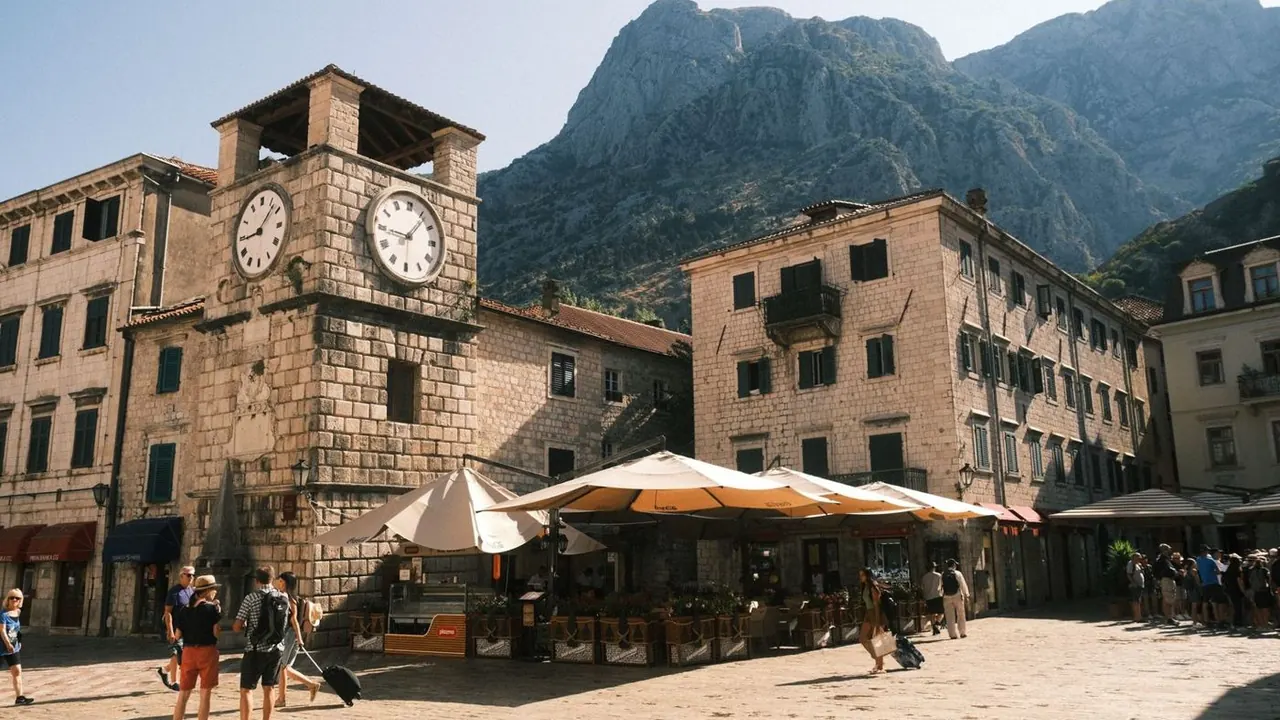
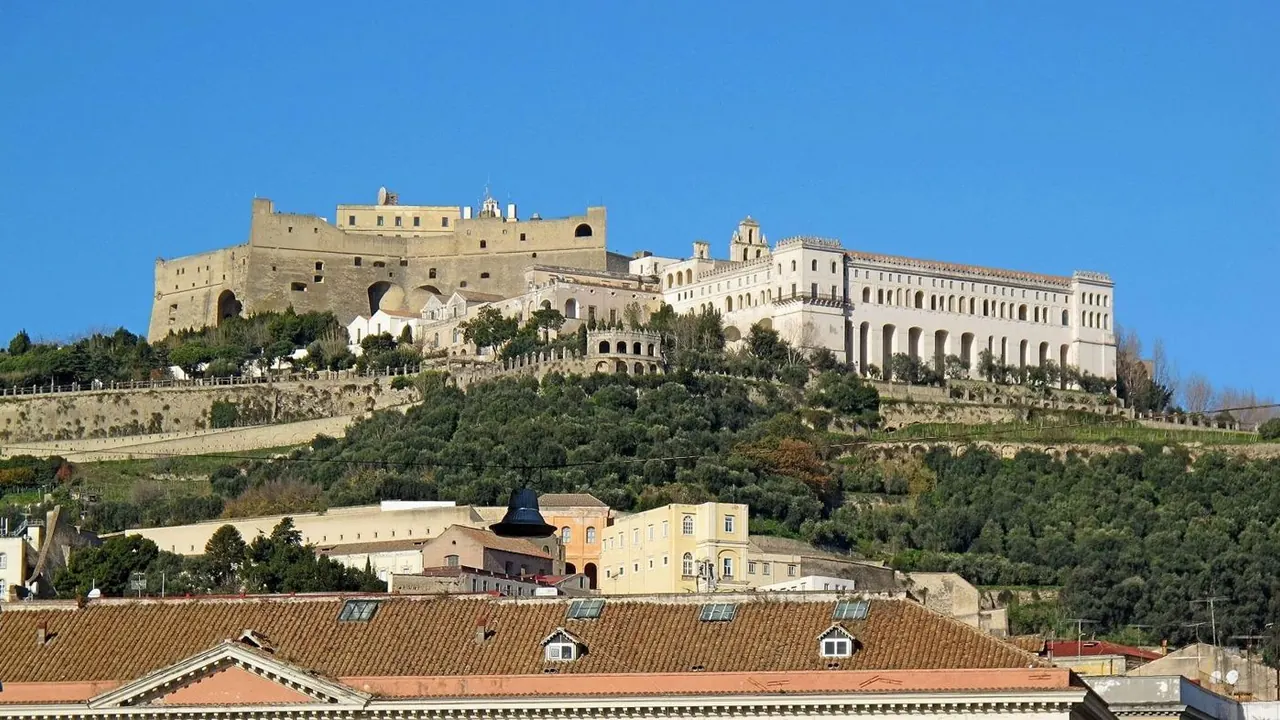
Photos: Kotor by Muhammed Fatih Beki, Pexels License; Naples by pietro scerrato, CC BY 3.0, cropped.
Kotor or Naples?
Our verdict in twelve categories, each scored against the same fixed benchmark cities, and the climate month by month, so you can choose for your trip.
Choose Kotor for
- beaches
- nature and the outdoors
Kotor suits travellers who want scenery more than city life. You get a small walled town at the end of a bay hemmed in by mountains, with walks that begin at the town gates, swims off the jetties of the shore villages and quiet evenings once the day visitors have gone. It is a place for slowing down among stone villages and steep limestone, with a car or a boat to reach the rest of the bay.
Choose Naples for
- food and drink
- live music and the arts
- shopping
Naples is the stronger choice for almost everything a city offers. It has one of Europe's great historic centres, Roman treasures from Pompeii in its museum, pizza in its home town, the San Carlo opera house and lively street nights. Pompeii, Capri and the Amalfi Coast are all close by. Pick it if you want to eat, look and go out, and don't mind noise, scooters and crowds as the price of all that.
Scoreboard
Twelve categories on one fixed scale from 0 to 100. The shaded stretch is the gap between the two.
Your match
Pick a travel style or drag the sliders, and both match scores follow your weighting.
Wins on beaches and nature and the outdoors with your weighting.
Wins on food and drink and live music and the arts with your weighting.
What matters to you?
Category by category
What the scores mean for a trip.
Beaches & swimming
Neither city has a real beach of its own, but Kotor makes swimming a little easier. Along the shore road to Dobrota and Muo you can step off a jetty into calm, warm bay water. The sandy beach at Jaz and the coves around Budva are about half an hour away by bus.
In Naples you swim off the rocks below the Lungomare or at paid lidos in Posillipo, and the water near the port is not always clean. The clearer coves on Capri, Ischia and Procida are a ferry ride away.
Food & drink
Food is one of the biggest gaps between the two. Naples is the home of pizza and has a deep street-food culture of fried pizza, cones of seafood, sfogliatelle and babà, plus espresso drunk standing at the bar. Its trattorias serve ragù and genovese with Campanian wines.
In Kotor the cooking is good but limited: grilled fish, bay mussels, black risotto, Njegusi ham and Vranac wine. The terraces in the old town are uneven, so the better meals are at konobas in Perast or Prcanj.
Culture & sights
Kotor's appeal is the whole walled townscape: marble lanes, the 12th-century Cathedral of St Tryphon, a maritime museum and the walls climbing to St John's fortress. It all fits into a day or two.
Naples has enough for a week or more. There are Gothic and Baroque churches on almost every block of Spaccanapoli, the frescoes and mosaics from Pompeii in the Archaeological Museum, Greco-Roman tunnels under the streets, and the Royal Palace, Capodimonte and San Martino above them.
Nightlife
Naples has far more going on at night, though it is a street scene rather than a club scene. Students crowd the steps of Piazza Bellini, and Chiaia's small bars spill into the alleys until well past midnight. Kotor offers a quiet drink under the floodlit walls and a few late bars in summer. For dancing, people from both cities head out of town: to Budva's beach clubs from Kotor, and to the clubs on the coast from Naples.
Nature & outdoors
Both have outstanding natural settings, but the landscapes are very different. Kotor sits under limestone walls rising more than 1,000m from a bay that looks like a fjord. You can start walking at the town gates and climb the Ladder of Kotor, then go on to the beech woods of Lovcen, or kayak past the villages along the shore.
Naples is volcanic country. You can walk to the rim of Vesuvius, explore the craters of the Phlegraean Fields at Astroni and Lake Avernus, snorkel at Gaiola, or spend a day on the Path of the Gods above the Amalfi Coast.
Day trips
Kotor has good outings: Perast and the island church of Our Lady of the Rocks, the old royal capital of Cetinje over Lovcen, and Dubrovnik across the border. Most of them need a car or a driver.
Naples can hardly be beaten. Pompeii and Herculaneum are under an hour away by local train, and Caserta's palace is close too. Ferries run to Capri, Ischia and Procida, Sorrento is the gateway to Positano and Amalfi, and the temples of Paestum make a longer day.
Good for families
Naples gives families more to do, though neither city is easy with young children. Naples has Edenlandia, the zoo and the science museum at Bagnoli, and older children usually love the tunnels, the funiculars and the ruins of Pompeii. Scooters, missing pavements and steps make life hard with a pushchair, though.
Kotor's car-free old town and its street cats are calm and safe. Beyond the bay swimming and the boat to Perast, however, there is very little made for children, and the fortress climb is too hot in summer.
Getting around
Inside the walls of Kotor everything is a short, flat walk, but leaving town is the hard part. Buses are infrequent, the one road around the bay jams in summer, and most visitors end up hiring a car.
Naples has the edge here, because you never need a car. Metro Line 1 and four funiculars connect the centre with Vomero, and the Circumvesuviana goes to Pompeii and Sorrento, even if the trains are slow and crowded.
Shopping & style
Kotor offers souvenirs, silver filigree and lace, and its best buys are things to eat and drink: Vranac, Njegusi ham and honey from the green market. For brands you have to go to the marina at Tivat.
Naples has real things to shop for. There are tailors in Chiaia, the high street along Via Toledo and the Galleria Umberto I, boutiques on Via dei Mille, nativity workshops on San Gregorio Armeno, and cameos and coral from Torre del Greco.
Affordability
For everyday spending the two are fairly close, and Naples goes slightly further. Pizza, coffee at the bar, street food and the funiculars are all cheap, and there are plenty of simple B&Bs in the old centre. Kotor is cheaper than the resorts along its coast, and an apartment in Dobrota or Muo keeps costs down. In both, prices rise in the same kind of places: the squares inside Kotor's walls in high summer, and the ferries and island hotels around Naples.
Live music & performing arts
Naples has a proper musical life. The Teatro di San Carlo, the oldest opera house in Europe still in use, holds seasons of opera, ballet and concerts, and you can also hear chamber music in churches, concerts at the conservatory and Neapolitan song in the trattorias. Kotor has nothing that runs all year. Its programme is a summer festival in the squares and churches, plus the carnival and Boka Night with decorated boats on the bay.
Wellness & relaxation
Naples is far from restful itself, but its volcanic ground gives it a real spa tradition. There are the Roman-era springs at Agnano, and Ischia's terraced thermal parks are a short hydrofoil ride away.
Kotor has only hotel spas. It offers rest of a different kind: quiet early mornings on the water and long lunches in the shore villages, away from the crowds in the old town at midday.
When should you go?
Pick your month. The climate figures are measured averages, not a forecast.
Kotor in July
Naples in July
Daytime high, °C
Rainfall in the month, mm
Where the figures come from
Kotor has no rain gauge within 25 km of the centre, so its rainfall comes from a gridded climate dataset read at the city rather than from a gauge further away.
Kotor's sunshine is measured 42 km from the centre, at Podgorica-Grad.
Naples has no rain gauge within 25 km of the centre, so its rainfall comes from a gridded climate dataset read at the city rather than from a gauge further away.
Naples's sunshine is measured 28 km from the centre, at Grazzanise.
Temperature and rainfall are climate normals, averaged over the years shown. Kotor: 1991-2020 normals, Tivat (4.2 km from centre). Naples: 2005-2020 (sunshine 1991-2020, rainfall 1991-2020) normals, Napoli / Capodichino (4.6 km from centre).
The two share almost the same sea, warm enough for swimming from June to September and warmest in August at about 26°C. On land, Kotor runs to extremes. Summer days reach 31°C and the heat bounces off the bare limestone, so the fortress climb and the Ladder of Kotor are best left for spring or autumn. May is the pick of spring: warm rather than hot, and drier once the spring rain eases. Autumn is just as pleasant to walk in, with mild days through September and October. It is much wetter, though, with about 122mm in September and 149mm in October, so expect some days lost to rain. From November to March the rain is heavy and the days are short.
Naples is milder all year. Its summer is a little less fierce and its winters are far drier, though November is the wettest month in both. September and October bring much less rain than in Kotor, so early autumn is as reliable as spring for the streets and the ruins of Pompeii. Both are sunniest from June to August, but outside summer Naples is the safer bet for dry weather.
Which traveller are you?
On a beach and sun trip, Kotor has the edge. You can swim in the calm bay off the jetties at Dobrota and Muo, and the sandy beach at Jaz is a short bus ride away. In Naples the better swimming usually means a ferry to the islands.
For a culture and arts trip, Naples is far ahead. It has the Greek street grid, the Archaeological Museum, the Veiled Christ, the catacombs and opera at San Carlo. Kotor's walled town and cathedral are lovely, but you will have seen them in a couple of days.
On a food and nightlife trip, choose Naples. You get pizza where it was invented, fried street food, pastry shops and late, sociable nights around Piazza Bellini and Chiaia. In Kotor the menus are narrow and the evenings are mostly a quiet drink on a square.
Before you go
| Measure | Kotor | Naples |
|---|---|---|
| Official language | Montenegrin | Italian |
| Currency | Euro (EUR) | Euro (EUR) |
| Sockets | CF230 V, 50 Hz | CFL230 V, 50 Hz |
| Driving side | Right | Right |
| Time zone | UTC+1, UTC+2 in summer | UTC+1, UTC+2 in summer |
| Emergency number | 112 | 112 |
| Elevation | 10 m | 17 m |
| Main airport | Tivat Airport (TIV)5 km from centre42 non-stop destinations | Naples International Airport (NAP)7 km from centre131 non-stop destinations |
| Public holidays this year | - | 13 days |
By the numbers
| Measure | Kotor | Naples |
|---|---|---|
| City population | 562 | 913,462 |
| People per km² | - | 7,676 |
| Museums within 10 km | 3 | 65 |
| UNESCO World Heritage sites within 50 km | 3 | 5 |
| Swim season, months above 21 °C | 5 months | 5 months |
Where else could you go?
Every comparison below shares a destination with this one, so you can follow Kotor or Naples somewhere new.