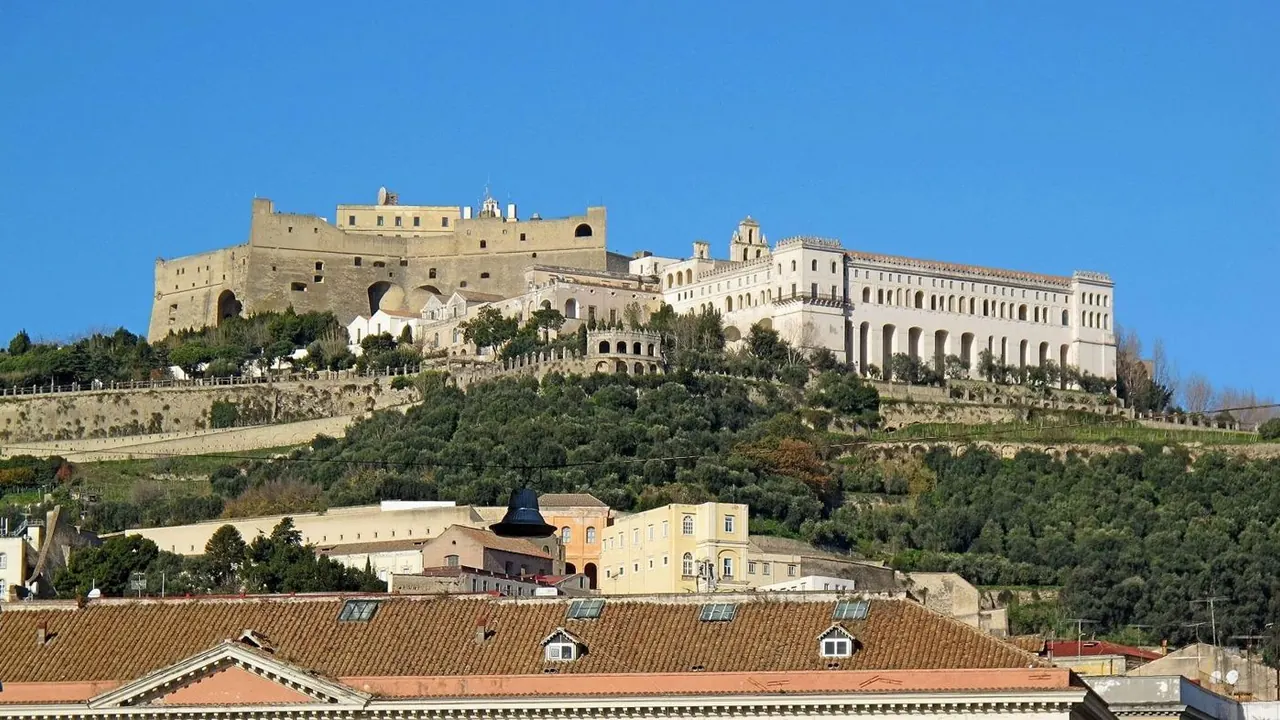
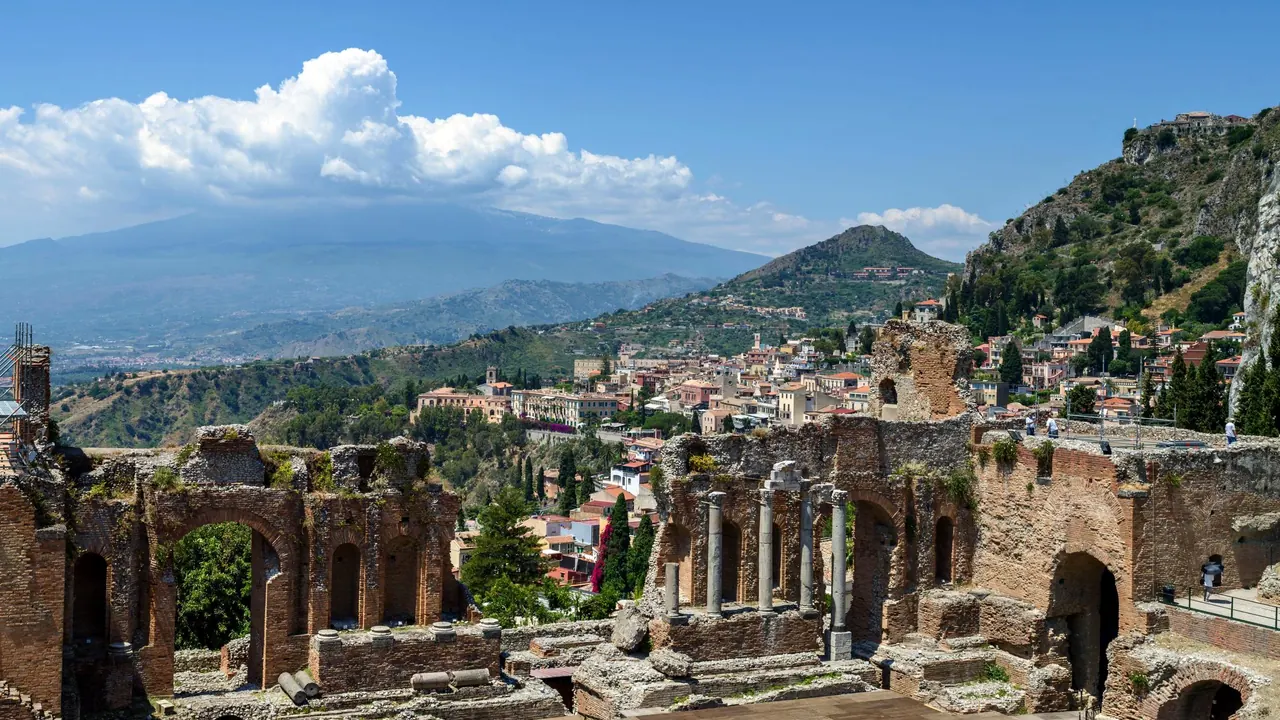
Photos: Naples by pietro scerrato, CC BY 3.0, cropped; Taormina by Reinhard Bruckner, Pexels License.
Naples or Taormina?
Our verdict in twelve categories, each scored against the same fixed benchmark cities, and the climate month by month, so you can choose for your trip.
Choose Naples for
- culture and sights
- prices
- live music and the arts
Naples is the choice for travellers who want a real city with real depth. Its Greek street grid, the Archaeological Museum, the churches and the tunnels underground could fill a week, and Pompeii, Herculaneum, Capri and the Amalfi Coast are all close enough for day trips. Add the pizza and street food, late evenings in the squares and an opera house built for kings, and it suits curious, energetic visitors who don't mind noise, scooters and some grit. It also costs a good deal less day to day.
Choose Taormina for
- beaches
- nature and the outdoors
- getting around
Taormina rewards a slower, more scenic stay. It is a small terrace town with the sea below and Etna above, and it does well for couples who want clear water for snorkelling, mornings on the coast and long evenings over a view. The swimming is easier to reach than anything Naples offers, and the volcano gives you serious outdoor days. The price for this is a short list of sights, quiet nights and resort prices.
Scoreboard
Twelve categories on one fixed scale from 0 to 100. The shaded stretch is the gap between the two.
Your match
Pick a travel style or drag the sliders, and both match scores follow your weighting.
Wins on culture and sights and prices with your weighting.
Wins on beaches and nature and the outdoors with your weighting.
What matters to you?
Category by category
What the scores mean for a trip.
Beaches & swimming
Taormina has the better swimming, and it is right below the town. The cable car drops to Mazzarò and the cove facing Isola Bella, where the water is clear and good for snorkelling. The catch is that these are narrow pebble strips that fill with loungers in high summer. Longer stretches of sand and shingle at Giardini Naxos and Letojanni are a short bus ride away.
In Naples, the sea is mostly something you look at. Locals swim off the rocks below the Lungomare or at small lidos in Posillipo, but the water near the port is not always clean. For clear coves you need to take a boat to Procida, Ischia or Capri.
Food & drink
Naples is one of the great eating cities of Italy, and Taormina can't match it. It is the home of pizza, made soft and blistered in loud rooms on Via dei Tribunali, and it has a whole street-food culture of fried pizza, seafood cones, sfogliatelle and babà. The Pignasecca and Porta Nolana markets keep the cooking close to its ingredients.
Taormina has the Sicilian repertoire, with pasta alla Norma, swordfish, granita and brioche for breakfast, and its trump card is the Etna wine on every list. But it is a small town, and the main street leans towards tourist menus, so the good everyday food takes some looking for.
Culture & sights
Naples is in another league. You can walk Spaccanapoli through churches packed into every block, see the Pompeii frescoes and mosaics in the Archaeological Museum, stand in front of the Veiled Christ at Sansevero, and then go down into the Greco-Roman tunnels and the catacombs of San Gennaro. That is before the Royal Palace, Castel Sant'Elmo and Capodimonte.
Taormina has one superb sight: the Greek theatre, whose ruined stage frames Etna and the coast. Around it, Corso Umberto links the Duomo and a handful of Arab-Norman palazzi. It makes a lovely day's stroll, but there are no major museums.
Nightlife
Neither town has much of a club scene, but Naples has far more going on after dark. Students crowd the steps of Piazza Bellini beside the old Greek walls, and the bars behind Piazza dei Martiri in Chiaia spill into the alleys until well past midnight. It is loud and sociable, and it happens all year.
An evening in Taormina means an aperitivo in Piazza IX Aprile, a passeggiata along the Corso and then a piano bar over the sea. The crowd is mostly couples, a few beach clubs stay open late in summer, and out of season the town is asleep soon after dinner.
Nature & outdoors
Both sit under a volcano, and the outdoors is broadly as good in each. What differs is the kind of landscape. Naples has a patchwork of volcanic ground: a short trail to the rim of Vesuvius, the craters of the Phlegraean Fields with the oak woods of Astroni and Lake Avernus, and snorkelling in the Gaiola underwater park. The Path of the Gods on the Amalfi Coast is within reach for a long day.
Taormina has one dominant mountain. Etna is Europe's highest active volcano, with lava flows and the Silvestri craters to explore, guided trips towards the summit areas and skiing in winter. The basalt gorges of the Alcantara and diving around Isola Bella round it out.
Day trips
Naples has a remarkable range of famous places close by. Pompeii and Herculaneum are each under an hour away on the Circumvesuviana, and Oplontis and Stabiae are on the same line. The palace at Caserta is a short train ride inland. Hydrofoils from Molo Beverello run to Capri, Ischia and Procida, and Sorrento opens the way to Positano, Amalfi and Ravello.
Taormina's outings are good but further apart. Catania is about an hour away, and Ortigia and the Greek remains of Syracuse take about two hours. Closer to home, the trips are quieter: Castelmola, the film villages of Savoca and Forza d'Agrò, and wine cellars on Etna's northern slopes.
Good for families
Neither town is easy with small children, and in both, families often stay somewhere calmer nearby. In Naples that means Sorrento or the islands. In Taormina it means Giardini Naxos. Naples has more things built for children, such as Edenlandia, the zoo and the science museum, and older children love the tunnels underground and the funiculars, but the lanes are full of scooters and broken pavements.
Taormina's pedestrian centre is safer and calmer, and granita, the cable car and snorkelling at Isola Bella go down well. Its steep steps and crowded pebble beaches are hard work with a pushchair, though.
Getting around
Getting around is about equally easy in both, but in very different ways. Naples is a real city with a transport network: Metro Line 1, with its art-gallery stations, plus four funiculars up to Vomero and Posillipo. Beyond those, the buses are slow and the Circumvesuviana is crowded and unreliable.
Taormina is small enough to cross on foot along Corso Umberto, but every outing involves stairs. The cable car reaches the beach, the coastal railway runs from the station by the sea, and for Etna you will realistically need a tour or a hire car.
Shopping & style
Naples has more character and more variety in its shopping. Chiaia's tailors make handmade suits, shirts and silk ties, Via Toledo and the Galleria Umberto I cover the high street, and on Via San Gregorio Armeno, workshops carve nativity figures all year round.
Taormina has one street of shops. Corso Umberto sells coral, cameos, linen, moor's-head vases and Caltagirone majolica, and Bronte pistachio cream and Etna wine make good things to take home. It is pleasant to browse, but it is aimed at visitors, and for anything bigger you have to go to Catania.
Affordability
Your money goes much further in Naples. Pizza, street food, coffee standing at the bar and B&Bs in the historic centre all cost little, and only the island ferries, Amalfi hotels and the big site entry fees push the bill up.
Taormina is the priciest place to stay in eastern Sicily. Its grand hotels with sea views set the tone, and the main street charges resort prices. Granita, bakery snacks and buses stay cheap, and sleeping in Giardini Naxos or Letojanni, or coming in spring or autumn, cuts the cost noticeably.
Live music & performing arts
Naples has a proper musical life all year. The Teatro di San Carlo, the oldest opera house in Europe still in use, runs a full season of opera, ballet and concerts. The San Pietro a Majella conservatory and the churches add chamber music, and Neapolitan song still turns up in trattorias and small theatres.
Taormina offers one spectacular stage for part of the year. On summer nights the Greek theatre hosts concerts, opera, ballet and pop acts, with Etna behind them, and it has its long-running film festival. The rest of the year there is very little, and serious opera means going to Catania.
Wellness & relaxation
Around Naples, rest means thermal water, while in Taormina it means a hotel spa. The volcanic ground of the bay feeds real springs. The spa at Agnano on the edge of the city has used them since Roman times, and Ischia, about an hour away by hydrofoil, is a true spa island with thermal parks terraced through gardens above the sea. The city itself is loud and tiring, and quiet there comes from the cloisters of Santa Chiara or a slow walk along the Lungomare.
Taormina has no public bathing tradition. A spa day there means one of the large hotels, often with a terrace pool over the sea and treatments using volcanic mud, citrus and almond. The town's real restorative pleasure is its slow pace and the shade of the Villa Comunale. That calm holds in May, June and late September, but in August cruise and day-trip crowds pack the Corso.
When should you go?
Pick your month. The climate figures are measured averages, not a forecast.
Naples in July
Taormina in July
Daytime high, °C
Rainfall in the month, mm
Where the figures come from
Naples's sunshine is measured 28 km from the centre, at Grazzanise.
Taormina's temperatures are measured 45 km from the centre, at Messina.
Taormina has no rain gauge within 25 km of the centre, so its rainfall comes from a gridded climate dataset read at the city rather than from a gauge further away.
Temperature and rainfall are climate normals, averaged over the years shown. Naples: 2005-2020 (sunshine 1991-2020, rainfall 1971-2000) normals, Napoli / Capodichino (4.6 km from centre). Taormina: 1991-2020 normals, Messina (45.1 km from centre).
The two share a summer. Both reach about 31°C in July and August, which is good beach weather but hard going for walking in the middle of the day, and both seas warm to about 26°C by August, so swimming is comfortable from June into October. Taormina's summer is the drier and slightly sunnier of the two, with almost no rain in July (around 8mm). Naples gets the odd summer shower.
The real difference comes in autumn and winter. In Naples the rain sets in hard from October, peaking near 163mm in November. Taormina is wetter then too, but less so, and its winter days stay a couple of degrees milder, around 15°C. For walking either town, May and late September are best: warm, mostly dry and still bright.
Which traveller are you?
On a beach and sun trip, Taormina is the better base. A cable car takes you down to clear coves at Mazzarò and Isola Bella, with sandier stretches a bus ride away. In Naples, good swimming usually means taking a ferry out to the islands.
For a culture and arts trip, Naples is far ahead. It has a huge historic centre, the finest Roman finds anywhere in its Archaeological Museum, a city underground and the San Carlo opera house. Taormina's Greek theatre is magnificent, but you will have seen the town within a day.
On a tight budget, choose Naples. Pizza, street food, coffee at the bar and modest B&Bs in the centre keep everyday costs low. Taormina is the most expensive place to stay in eastern Sicily, and to save money there you have to sleep down on the coast.
Before you go
| Measure | Naples | Taormina |
|---|---|---|
| Official language | Italian | Italian |
| Currency | Euro (EUR) | Euro (EUR) |
| Sockets | CFL230 V, 50 Hz | CFL230 V, 50 Hz |
| Driving side | Right | Right |
| Time zone | UTC+1, UTC+2 in summer | UTC+1, UTC+2 in summer |
| Emergency number | 112 | 112 |
| Elevation | 17 m | 204 m |
| Main airport | Naples International Airport (NAP)7 km from centre131 non-stop destinations | Catania-Fontanarossa Airport (CTA)47 km from centre96 non-stop destinations |
| Public holidays this year | 13 days | 13 days |
By the numbers
| Measure | Naples | Taormina |
|---|---|---|
| City population | 913,462 | 10,471 |
| People per km² | 7,676 | 799 |
| Museums within 10 km | 65 | 5 |
| UNESCO World Heritage sites within 50 km | 5 | 2 |
| Swim season, months above 21 °C | 5 months | 5 months |
Where else could you go?
Every comparison below shares a destination with this one, so you can follow Naples or Taormina somewhere new.
- Sorrentovs Naples
- Positanovs Naples
- Amalfivs Naples
- Cataniavs Taormina
- Salernovs Naples
- Syracuse, Sicilyvs Taormina