Slovenia
Piran
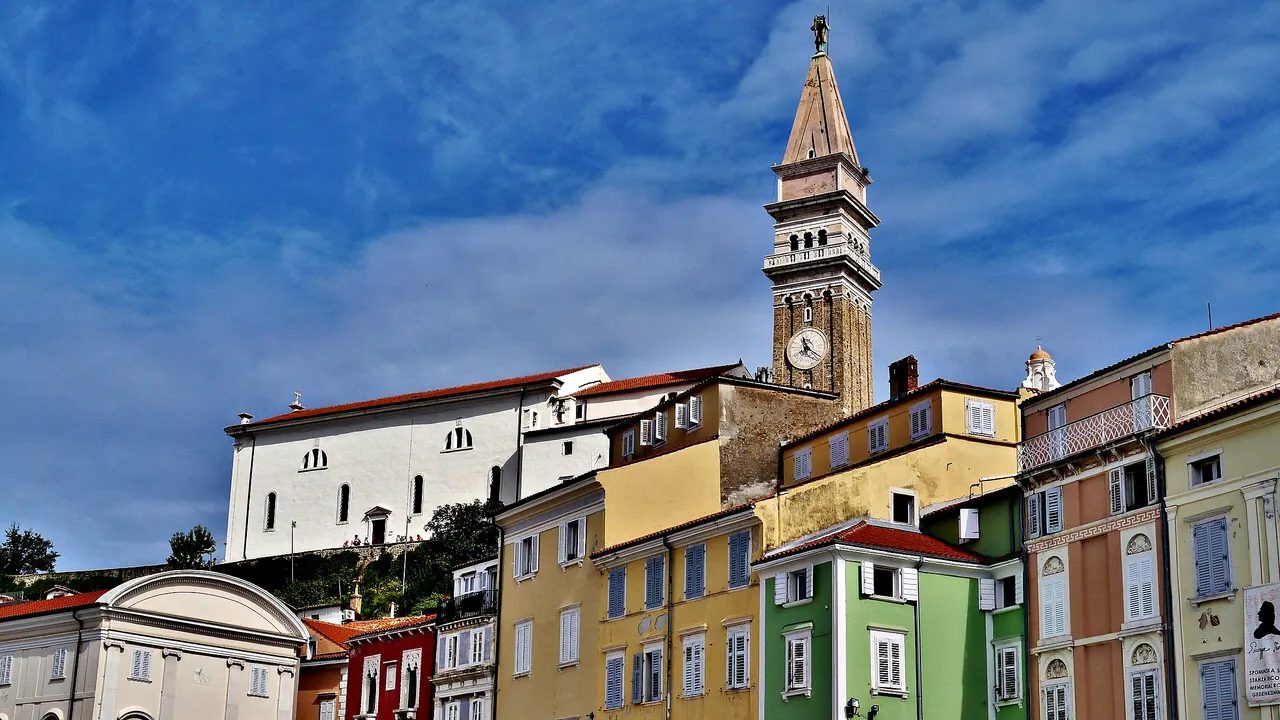
Coloured houses on Tartini Square below the bell tower
- Day trips76
- Getting around62
- Wellness & relaxation60
Photo: Zairon, CC BY-SA 4.0, cropped
Match
46
Every category weighted equally
- Beach & sun49
- Culture & arts44
- Food & nightlife40
- Family trip51
- Outdoors53
- Relax & unwind50
- Shopping & style41
- On a budget46
Piran in twelve categories
Our verdict on each, scored 0 to 100 against the same fixed benchmark cities, so a score means the same thing on every page.
Beaches & swimming. Scores 56 out of 100.
Food & drink. Scores 40 out of 100.
Culture & sights. Scores 44 out of 100.
Nightlife. Scores 20 out of 100.
Nature & outdoors. Scores 55 out of 100.
Day trips. Scores 76 out of 100.
Good for families. Scores 52 out of 100.
Getting around. Scores 62 out of 100.
Shopping & style. Scores 18 out of 100.
Affordability. Scores 45 out of 100.
Live music & performing arts. Scores 20 out of 100.
Wellness & relaxation. Scores 60 out of 100.
Piran category by category
Beaches & swimming
56Piran is a place to swim rather than a place to lie on sand. Along the seafront below the old walls and around the Punta headland, people lower themselves into clear water from concrete platforms, rocks and ladders, and in August the Adriatic reaches about 25°C. Fiesa, a small pebble cove a short walk along the coast, is the nearest thing to a beach in town.
For sand and sunbeds, visitors walk or take the shuttle along the shore to Portoroz, whose beach is pleasant but small and artificial, or head to the quieter cliff-backed shore at Strunjan. The season runs from June to September; families who want long sandy beaches will find the coast modest.
Food & drink
40Eating in Piran means seafood by the water: grilled fish, squid, mussels and scampi buzara, served in simple konobas on the Punta and the streets off Tartini Square. The hills behind the coast supply olive oil, truffles, white Malvazija and dark Refosk, and the salt from the nearby pans turns up on every table.
The range is narrow. Menus along the harbour repeat one another, and serious cooking or variety means driving into the Istrian hinterland or along to Portoroz. A visitor eats well and simply here, but does not come for the food.
Culture & sights
44The old town is the sight: a tight peninsula of Venetian Gothic houses, narrow lanes and little squares, centred on the oval Tartini Square with its statue of the violinist born here. Above it, the Church of St George and its campanile look out over the bay, and a stretch of medieval town walls on the ridge gives the best view of the red roofs.
The museums are modest: a maritime museum in a seafront palazzo, a small aquarium, a Minorite monastery with a quiet cloister and a few galleries. It is a lovely place to wander, and a day covers it.
Nightlife
20Evenings in Piran are a glass of wine on Tartini Square or at a bar on the Punta watching the sunset, and the town is quiet soon after. Neighbouring Portoroz, a few minutes away, adds beach bars, a casino and a handful of summer clubs. Anyone looking for a real night out will find little here.
Nature & outdoors
55Slovenia's coast is short but varied. The Strunjan landscape park has the highest flysch cliffs on the Adriatic and a coastal path above them, and the Secovlje salt pans to the south are a nature park where the old saltworks lie among lagoons full of wading birds. Kayaking and paddleboarding along the cliffs are popular in summer.
The Parenzana, an old narrow-gauge railway line turned cycle route, runs inland through olive groves and vineyards into Istria. Within about an hour the limestone Karst plateau offers walking and the vast Skocjan caves. High mountains are far off, so this is gentle outdoors, best in spring and autumn.
Day trips
76Piran sits where three countries meet, which makes it a good base. Trieste, with its Habsburg squares and coffee houses, is under an hour away, and the Croatian coast of Istria opens up to the south: Porec with its Byzantine basilica, Rovinj on its hill above the sea, and the medieval hilltop towns of Motovun and Groznjan among the vineyards.
In Slovenia, the coastal towns of Izola and Koper are close by, the Lipica stud farm and Predjama Castle built into a cliff face are about an hour off, and Ljubljana is under two hours. In summer, boats run across the gulf to Venice. Most of this is easiest by car.
Good for families
52Piran is easy and safe with children: the old town is closed to cars, the seafront is flat, and the sea is calm and warm in summer. The small aquarium on the harbour suits younger children, and Portoroz nearby has a sandy, shallow beach and more space.
There is little else built for children, swimming from the town means concrete ledges and ladders rather than sand, and the lanes up to the church are steep. It works well for a few relaxed days by the sea, less well for a longer stay with restless older children.
Getting around
62The old town is car-free and small enough to cross on foot in a quarter of an hour, so once you arrive you will not need any transport. Cars are left in the large garage at the edge of town, from where a shuttle bus runs in, and the same shuttle and a seafront promenade link Piran with Portoroz.
Going further is harder. There is no railway, and regional buses reach Koper and Ljubljana but are slow for the Istrian towns and the Karst. Most visitors who want to explore hire a car for a day or two.
Shopping & style
18Shopping is small-scale: a few galleries and craft shops in the lanes, and stalls of souvenirs along the harbour. The local products are the real buys, sea salt and salt flower from the Secovlje pans, Istrian olive oil and bottles of coastal wine. Anything more means a trip to Ljubljana or Trieste.
Affordability
45Piran is mid-priced with a seasonal premium. In July and August rooms in the old town are scarce and expensive, and the waterfront restaurants charge for the view. Eating in simpler konobas, drinking local wine and staying in Portoroz or out of season bring costs down to a fair level for Western Europe. Most of the pleasure here, swimming and walking, costs nothing.
Live music & performing arts
20Music here is mostly a summer affair. The town honours Giuseppe Tartini with classical concerts in churches, the monastery cloister and on the main square, and there are open-air performances in the warmer months. The small Tartini Theatre hosts occasional plays and recitals. Outside summer there is little to attend.
Wellness & relaxation
60Neighbouring Portoroz grew up as a spa resort, and its treatments still draw on the sea: seawater pools, brine baths and the mineral-rich mud from the salt pans. Among the pans themselves, an outdoor thalasso spa lets you lie in brine and salt mud with the lagoons around you, and Strunjan has a seawater health resort.
Piran adds the pace. The car-free lanes, the evening light over the bay and long hours on the seafront make it a natural place to slow down, especially in May, June and September when the crowds are gone.
When should you go?
Pick a month to see what it is like. The climate figures are measured averages, not a forecast.
Piran in July
Daytime high, °C
Rainfall in the month, mm
The whole year
Shaded against this city’s own year: the deepest cell is its best month for that figure and the palest its weakest.
Temperature and rainfall are climate normals, averaged over the years shown. Piran: 2005-2020 (sunshine 1991-2020, rainfall 1991-2020) normals, Portoroz (1.2 km from centre).
Before you go
| Measure | Piran |
|---|---|
| Official language | Slovene |
| Currency | Euro (EUR) |
| Sockets | CF230 V, 50 Hz |
| Driving side | Right |
| Time zone | UTC+1, UTC+2 in summer |
| Emergency number | 112 |
| Elevation | 7 m |
| Main airport | Trieste Airport (TRS)34 km from centre32 non-stop destinations |
| Public holidays this year | 21 days |
By the numbers
| Measure | Piran |
|---|---|
| City population | 3,787 |
| People per km² | 85 |
| Museums within 10 km | 5 |
| UNESCO World Heritage sites within 50 km | 4 |
| Swim season, months above 21 °C | 4 months |
Compare Piran with
Every comparison with a written verdict behind it.
- Bergamo
- Bern
- Bled
- Bologna
- Bratislava
- Brno
- Budapest
- Cesky Krumlov
- Como
- Cortina d'Ampezzo
- Dubrovnik
- Florence
- Genoa
- Graz
- Hallstatt
- Innsbruck
- Interlaken
- La Spezia
- Ljubljana
- Lucca
- Lucerne
- Lugano
- Milan
- Mostar
- Munich
- Nuremberg
- Padua
- Pisa
- Portofino
- Pula
- Rome
- Rovinj
- Salzburg
- Sarajevo
- Siena
- Split
- Stuttgart
- Trieste
- Turin
- Venice
- Verona
- Vienna
- Zadar
- Zagreb
- Zermatt
- Zurich