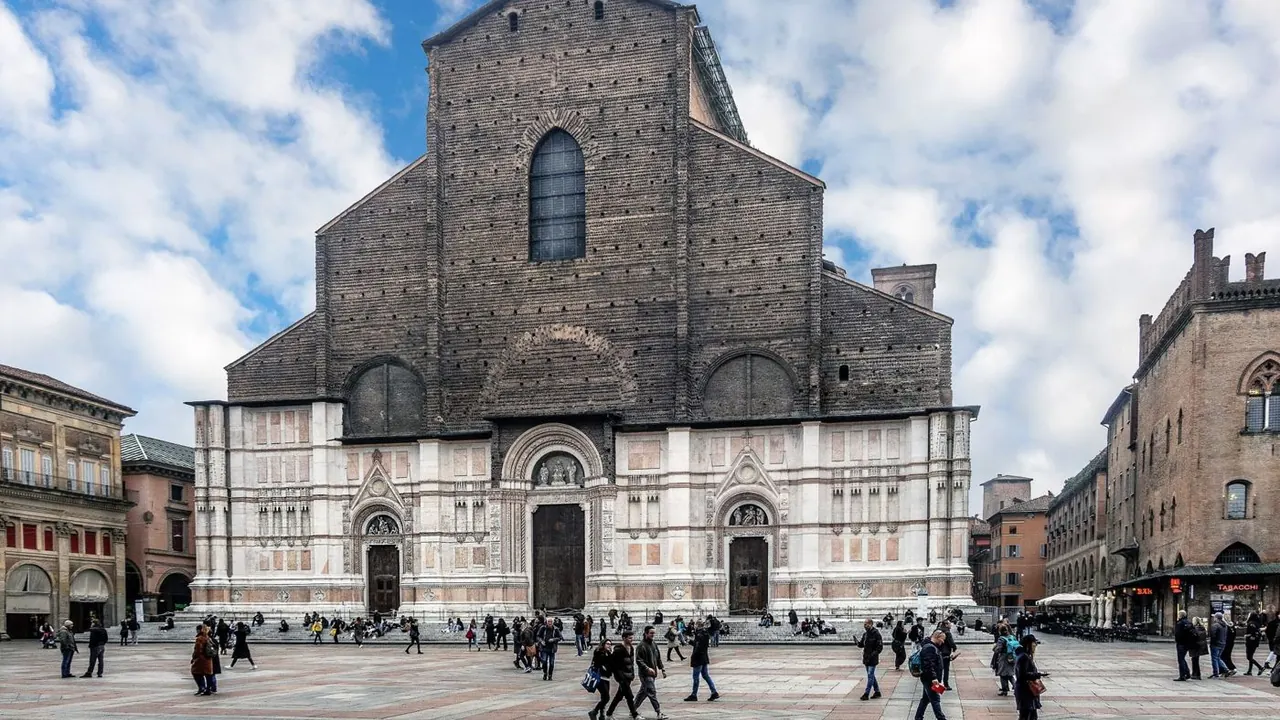
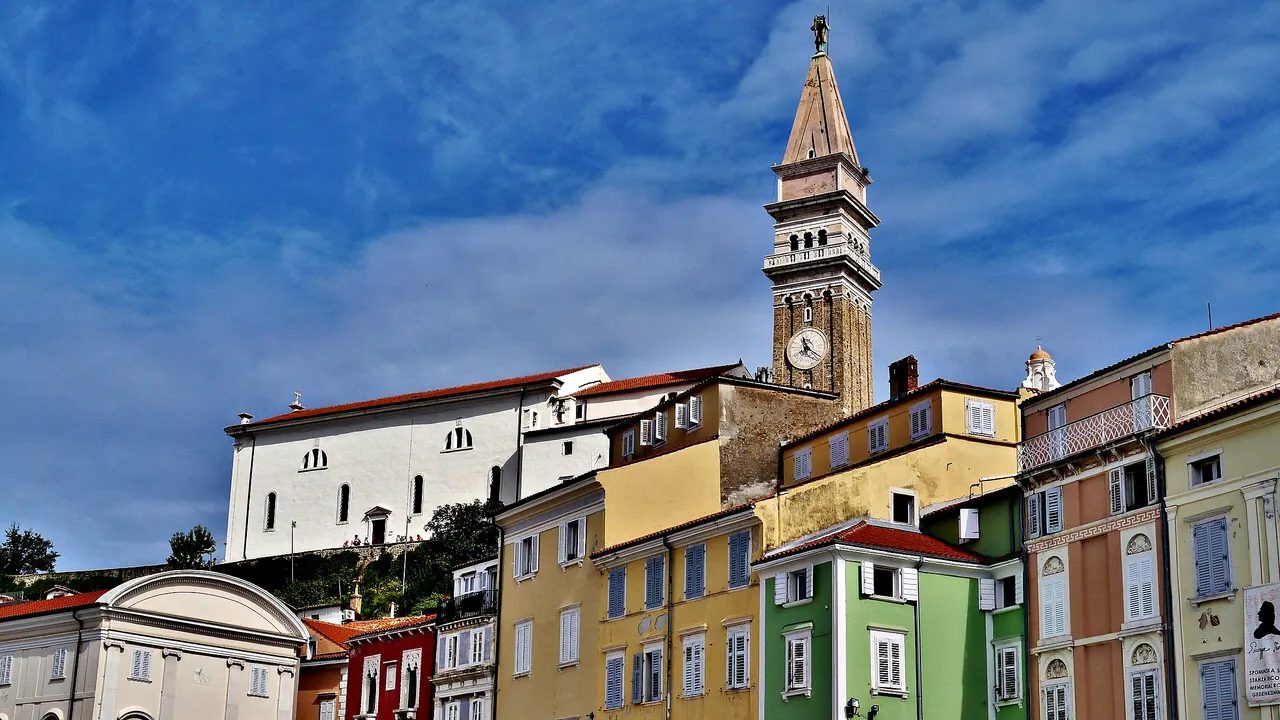
Photos: Bologna by Vanni Lazzari, CC BY-SA 4.0, cropped; Piran by Zairon, CC BY-SA 4.0, cropped.
Bologna or Piran?
Our verdict in twelve categories, each scored against the same fixed benchmark cities, and the climate month by month, so you can choose for your trip.
Choose Bologna for
- food and drink
- live music and the arts
- nightlife
Bologna is the choice for a trip built around eating and looking. It has the richer cooking of the two and a whole medieval brick city under its porticoes. Student bars stay open late, and fast trains run to Florence, Ravenna and Venice. It suits travellers who want a full few days in a city and are happy to leave the sea out of it.
Choose Piran for
- beaches
- wellness
- nature and the outdoors
Piran is for people who want to slow down by the water. You swim off the rocks below the walls, watch the sunset from the Punta, try the salt-pan spas nearby and find the evenings end early. That makes it a place for unhurried days rather than packed itineraries. The food is simple and good, though not a reason to come.
Scoreboard
Twelve categories on one fixed scale from 0 to 100. The shaded stretch is the gap between the two.
Your match
Pick a travel style or drag the sliders, and both match scores follow your weighting.
Wins on food and drink and live music and the arts with your weighting.
Wins on beaches and wellness with your weighting.
What matters to you?
Category by category
What the scores mean for a trip.
Beaches & swimming
Piran is the one for swimming, though not for sand. You climb down ladders and off rocks into clear water right below the old walls. Fiesa's pebble cove is a short walk away, and Portoroz has a small artificial beach with sunbeds.
Bologna has no sea of its own. A day at Rimini's organised lidos, about an hour away by train, gets you out of the summer heat, but the water there is greener and the shore is a long line of umbrellas.
Food & drink
This is where Bologna pulls furthest ahead of Piran. It is the home of tagliatelle al ragù, tortellini in brodo and mortadella. Pasta is rolled by hand in shop windows, the Quadrilatero is full of delicatessens, and Parmigiano and balsamic vinegar are made less than an hour away.
Piran eats well but within a narrow range: grilled fish, squid and scampi buzara in konobas, with Malvazija, Refosk and olive oil from the hills behind. The harbour menus repeat one another, so a week of seafood suppers here wears thinner than a week at Bologna's tables.
Culture & sights
Bologna has two or three days of serious sightseeing. There are the UNESCO-listed brick porticoes, San Petronio and the Two Towers, the seven churches of Santo Stefano, the university's Archiginnasio and a Pinacoteca full of Bolognese painting.
Piran is one lovely day by comparison. Its Venetian Gothic peninsula, the oval Tartini Square and the walls above St George's have atmosphere and fine views. The museums are modest, though: a maritime collection and a small aquarium.
Nightlife
This is the gap between a university city and a seaside town. Bologna's large student population keeps the streets busy well after dinner, even midweek, in cheap and informal bars where most people drink standing outside, with wine bars around Via San Vitale for a slower evening. It is a night out in jeans rather than a dressed-up one, and dancing means a taxi out of the centre. August is the exception, when the students go home and the city falls quiet.
In Piran the sunset is the night out. A drink on the Punta as the light fades over the bay is the high point, and by the hour Bologna gets going the lanes are empty. For anything livelier you go along the shore to Portoroz, where summer brings beach bars and a few clubs.
Nature & outdoors
Both offer gentle outdoors rather than wild country, but of different kinds. Bologna has the green Apennine hills at its back: the walk up to San Luca, the gypsum caves of the Parco dei Gessi, the Via degli Dei trail to Florence and summer hiking on Corno alle Scale.
Piran's outdoors is on the coast. There are the flysch cliffs and clifftop path at Strunjan, wading birds among the Secovlje salt pans, kayaking under the cliffs and the Parenzana cycle route inland. The Skocjan caves are about an hour away. The choice is between hill trails and sea and lagoons.
Day trips
Both make good bases, but Bologna is exceptional. Its station sits at the rail hub of northern Italy, so Florence is half an hour away and Ravenna, Ferrara, Modena and Parma are easy train rides. Venice and Verona still make a comfortable day out.
Piran's advantage is having three countries close by: Trieste, the Istrian hill towns of Motovun and Groznjan, Rovinj, Predjama Castle and the summer boat to Venice. The difference is that most of this needs a hire car rather than a train ticket.
Good for families
Neither city is built around children, and they come out about even. Bologna's flat, largely car-free centre and shaded porticoes make walking easy, older children can climb the Asinelli tower, and Mirabilandia is within reach. Summer heat in the city is hard on little ones, though.
Piran swaps sights for the sea, with calm warm water, a car-free town and a small aquarium. Swimming is from concrete ledges and the lanes are steep. It suits a few seaside days, while Bologna suits a short city stay with older children.
Getting around
In both places you walk once you arrive, but Bologna is far better connected. Its flat centre is lined with porticoes, buses reach the hills, and the main station on the edge of the old town has trains across northern Italy.
Piran's car-free peninsula takes a quarter of an hour to cross, and a shuttle runs to Portoroz. There is no railway and the regional buses are slow, so exploring Istria or the Karst usually means hiring a car.
Shopping & style
Bologna has a modest but real range of shops. The Italian chains line Via dell'Indipendenza, a small group of luxury labels sits in the Galleria Cavour, and the vintage stores and bookshops of the university quarter fill a slow afternoon. It is no rival to Milan, but buying clothes, books or a gift is easy.
Piran has almost none of this. Apart from a few craft shops and the souvenir stalls on the harbour, the things worth taking home come from the land and the pans around the town: salt flower from Secovlje, olive oil and coastal wine. For real shopping you would need to cross the border to Trieste.
Affordability
The two cost much the same, and in both the money goes on rooms. Bologna's trattorias and aperitivo with food stretch a budget, but old-town hotels are expensive and trade fairs make rooms scarce and costly.
In Piran the expensive time is July and August, when old-town rooms are hard to find and waterfront tables charge for the view. Coming out of season or staying in Portoroz keeps costs fair, and swimming and walking cost nothing.
Live music & performing arts
Bologna has a scene all year round. The historic Teatro Comunale stages opera, ballet and concerts, jazz plays in basement clubs most nights, students fill small venues with gigs, and Piazza Maggiore has summer screenings. UNESCO recognises it as a City of Music.
In Piran, music belongs to summer. Tartini is honoured with concerts in churches and the monastery cloister and with open-air performances on the square. Outside the warm months the small Tartini Theatre has little on.
Wellness & relaxation
Piran is the calmer place to unwind and has more to offer for it. Next door, Portoroz has a long spa tradition of seawater pools and salt-pan mud, there is an unusual outdoor thalasso spa among the Secovlje lagoons, and the car-free lanes set a slow pace.
In Bologna, relaxing means a long lunch under the arches. Thermal water is a half-day trip to Castel San Pietro Terme or Porretta Terme. The noisy university quarter and the summer heat work against rest.
When should you go?
Pick your month. The climate figures are measured averages, not a forecast.
Bologna in July
Piran in July
Daytime high, °C
Rainfall in the month, mm
Where the figures come from
Bologna has no rain gauge within 25 km of the centre, so its rainfall comes from a gridded climate dataset read at the city rather than from a gauge further away.
Bologna's sunshine is measured 82 km from the centre, at Cervia.
Temperature and rainfall are climate normals, averaged over the years shown. Bologna: 1991-2020, 14 years observed normals, Bologna / Borgo Panigale (5.5 km from centre). Piran: 2005-2020 (sunshine 1991-2020, rainfall 1991-2020) normals, Portoroz (1.2 km from centre).
Both cities are easiest in spring and early autumn, but summer sets them apart. Inland Bologna reaches 32°C in July and August, which makes walking the streets sticky and tiring. May, June and September are its best months, and October brings more rain. Winters are cold and grey, with little sun.
Piran is a little milder in winter and a little cooler in high summer, and its sea is the main draw. The water is warm enough for swimming from June to September, reaching 25°C in July and August and still around 23°C in September. The coast gets wetter from September, with rain peaking around 125mm in November. Late spring and early September suit a calm stay best.
Which traveller are you?
For a beach and sun trip, Piran is the clear pick. You swim straight from the seafront ladders and rocks into clear water, with the pebble cove at Fiesa and the sand at Portoroz close by. Bologna's nearest sea is an hour away at Rimini.
On a food and nightlife trip, Bologna wins on both counts. You eat tagliatelle al ragù in old osterie and take aperitivo in the Quadrilatero, then move on to the student bars of Piazza Verdi and Via del Pratello until late. Piran offers grilled fish and quiet nights.
For a culture and arts trip, Bologna has far more to fill the days: the arcaded medieval centre, the Archiginnasio's anatomical theatre, the Pinacoteca and opera at the Teatro Comunale. Piran's Venetian lanes and small museums are charming but take a single day.
Before you go
| Measure | Bologna | Piran |
|---|---|---|
| Official language | Italian | Slovene |
| Currency | Euro (EUR) | Euro (EUR) |
| Sockets | CFL230 V, 50 Hz | CF230 V, 50 Hz |
| Driving side | Right | Right |
| Time zone | UTC+1, UTC+2 in summer | UTC+1, UTC+2 in summer |
| Emergency number | 112 | 112 |
| Elevation | 54 m | 7 m |
| Main airport | Bologna Guglielmo Marconi Airport (BLQ)6 km from centre98 non-stop destinations | Trieste Airport (TRS)34 km from centre32 non-stop destinations |
| Public holidays this year | 13 days | 21 days |
By the numbers
| Measure | Bologna | Piran |
|---|---|---|
| City population | 387,971 | 3,787 |
| People per km² | 2,754 | 85 |
| Museums within 10 km | 68 | 5 |
| UNESCO World Heritage sites within 50 km | 3 | 4 |
| Swim season, months above 21 °C | - | 4 months |
Where else could you go?
Every comparison below shares a destination with this one, so you can follow Bologna or Piran somewhere new.