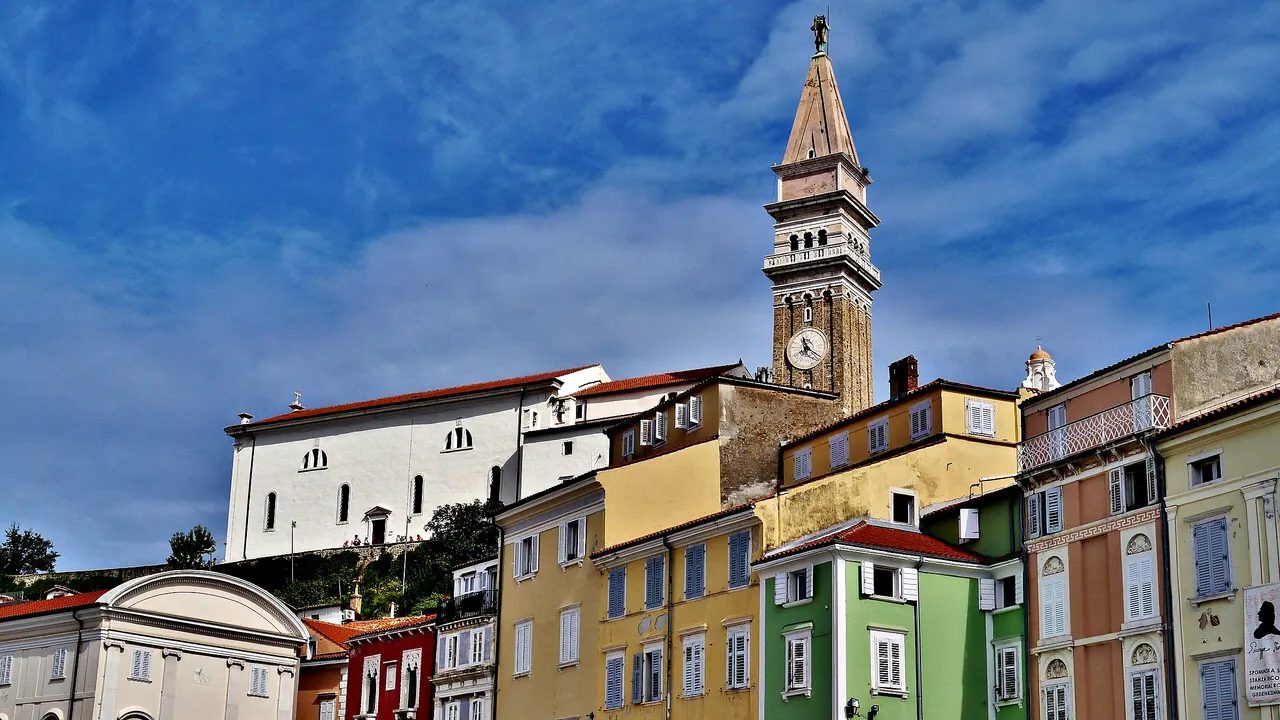
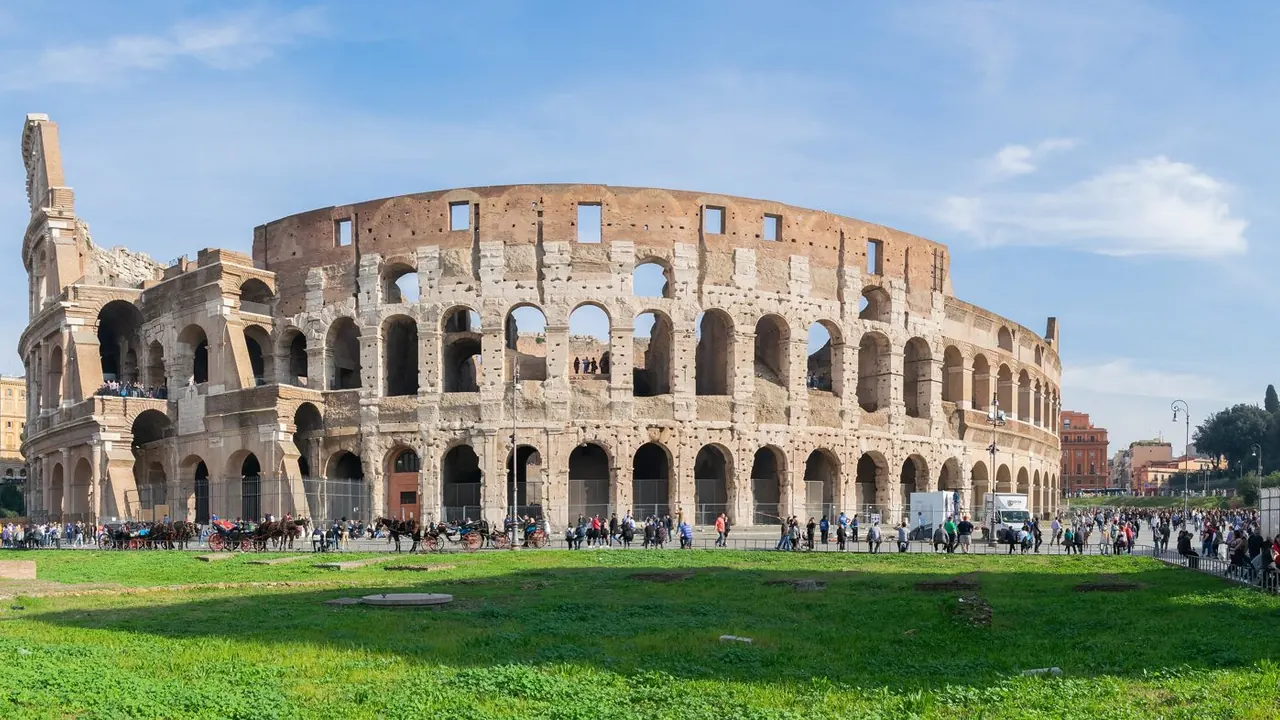
Photos: Piran by Zairon, CC BY-SA 4.0, cropped; Rome by Tournasol7, CC BY-SA 4.0, cropped.
Piran or Rome?
Our verdict in twelve categories, each scored against the same fixed benchmark cities, and the climate month by month, so you can choose for your trip.
Choose Piran for
- wellness
- prices
- beaches
Piran suits a slow seaside stay: a few days swimming off the rocks below a small Venetian town, spa time among the salt pans, and drives out into Istria, the Karst or across to Trieste. It is a little cheaper and calmer in every way, and it asks nothing more of you than a walk along the seafront.
Choose Rome for
- culture and sights
- shopping
- live music and the arts
Choose Rome when the trip is about seeing and eating. Its ancient monuments, the Vatican collections and its Baroque churches dwarf Piran's old town. The trattorias, the evening piazzas, the opera and the fashion streets give it a depth that a small fishing town cannot match. It is louder, hotter and dearer to sleep in, so it rewards energy rather than rest.
Scoreboard
Twelve categories on one fixed scale from 0 to 100. The shaded stretch is the gap between the two.
Your match
Pick a travel style or drag the sliders, and both match scores follow your weighting.
Wins on wellness and prices with your weighting.
Wins on culture and sights and shopping with your weighting.
What matters to you?
Category by category
What the scores mean for a trip.
Beaches & swimming
Neither is a classic sandy vacation, but in Piran the sea is part of daily life. You swim in clear water from platforms and ladders right below the old town, with the pebble cove at Fiesa and the small sandy beach at Portoroz close by.
In Rome the sea is an outing. Ostia's dark volcanic sand is half an hour away by train, mostly divided into paid lidos that fill with Romans at weekends, and the water is rarely clear. For the prettier coves at Sperlonga you need a longer trip.
Food & drink
Rome is one of the great places in Europe to eat. There is carbonara and cacio e pepe in plain trattorias, Jewish-style artichokes in the Ghetto, offal dishes in Testaccio, and supplì and pizza al taglio on the street. With Trastevere, Monti and Testaccio to choose from, a week of meals need never repeat itself.
Piran eats well but narrowly: grilled fish, squid and scampi buzara by the harbour, with Malvazija and local olive oil, and menus along the water that look much alike. For more range you have to drive into Istria.
Culture & sights
This is where the two differ most. Piran's sight is the town itself: the Venetian Gothic lanes around Tartini Square, the view from St George's and the old walls, and a small maritime museum. A day covers it.
Rome has the Colosseum, the Forum and the Pantheon, the Vatican Museums and the Sistine Chapel, the Borghese Gallery and Caravaggios above side altars. That is enough for weeks rather than a day, and a casual walk between them passes obelisks and aqueduct arches.
Nightlife
Piran goes quiet soon after a sunset glass on the Punta or Tartini Square, and the only alternative is the casino and a few summer clubs in Portoroz.
Rome's evenings run late and mostly outdoors. Aperitivo leads on to the wine bars of Trastevere, cocktails in Monti, cheap student bars in San Lorenzo and Pigneto's arty crowd. It is not a city for dancing until dawn, but it gives you a real night out, which Piran does not.
Nature & outdoors
Both offer gentle outdoors at its best in spring and autumn, but of different kinds. Piran's is coastal: kayaking under the flysch cliffs at Strunjan, wading birds on the Secovlje salt pans, the Parenzana cycle route through olive groves, and the Skocjan caves on the Karst.
Rome's begins inside the city, in the villa parks and along the Appian Way among tombs and ruins. The crater lakes of the Alban Hills are close, and real mountains, with winter skiing at Terminillo, are about ninety minutes away.
Day trips
Both are good bases, but Rome reaches further and more easily. Ostia Antica, Tivoli, the Etruscan tombs of Tarquinia and cliff-top Orvieto are all close, and high-speed trains put Florence and Naples within about ninety minutes, with no car needed.
Piran's strength is sitting on three borders. Trieste, Rovinj and the Istrian hill towns of Motovun and Groznjan, Predjama Castle and Ljubljana are all within reach, plus a summer boat to Venice. Without a railway, though, most of these need a hire car.
Good for families
Neither is built around children, and they come out about even for different reasons. Piran offers a car-free old town, a calm warm sea, the small aquarium and Portoroz's shallow sandy beach, but little to hold restless older children for long.
Rome catches children's interest with gladiators, catacombs and the Bioparco in Villa Borghese. Queues, heat, cobbles that are hard on pushchairs and busy roads make it tiring, though, so it works best in spring or autumn with an unhurried plan.
Getting around
In both, the centre is best seen on foot, but the scale differs. Piran's car-free peninsula takes a quarter of an hour to cross, and a shuttle links it to the edge-of-town garage and Portoroz. Going further means slow regional buses or a hire car.
Rome's walk from the Colosseum to Trastevere is longer and hard on the feet, and its few metro lines skirt the core. Trains still carry you to Ostia, Tivoli and the rest of Italy without a car.
Shopping & style
Rome has the fashion houses of Via Condotti, the young designers and vintage shops of Monti, antique dealers along Via dei Coronari and the sprawling Porta Portese flea market. Piran has a few galleries and souvenir stalls, and its best buys are things to eat and drink: salt from the Secovlje pans, olive oil and coastal wine.
Affordability
Neither is cheap, but Piran works out a little kinder, especially if you avoid the old town in July and August or stay in Portoroz. Its main pleasures, swimming and walking, cost nothing.
In Rome, rooms in the centre are small and costly through spring and autumn, and the big sights charge entry fees. Standing espresso, pizza al taglio, free water from the fountains and churches full of art all help to soften the daily bill.
Live music & performing arts
Rome has a real season. There is opera and ballet at the Teatro dell'Opera, summer opera among the ruins of the Baths of Caracalla, the Santa Cecilia orchestra at the Auditorium Parco della Musica, and a long-running jazz scene.
Piran's music is a summer affair: Tartini concerts in churches, in the monastery cloister and on the main square. Outside the warm months there is little on.
Wellness & relaxation
Piran is the easier place to unwind. Portoroz has seawater pools and salt-mud treatments, there is an open-air thalasso spa among the Secovlje lagoons, and the evenings by the bay are car-free.
Rome's centre is loud with scooters and crowds. Wellness there means hotel spas or a trip out to the springs at Bagni di Tivoli or around Viterbo, and for quiet you go to the villa gardens and the Aventine.
When should you go?
Pick your month. The climate figures are measured averages, not a forecast.
Piran in July
Rome in July
Daytime high, °C
Rainfall in the month, mm
Where the figures come from
Rome's sunshine is measured 31 km from the centre, at Vigna Di Valle.
Temperature and rainfall are climate normals, averaged over the years shown. Piran: 2005-2020 (sunshine 1991-2020, rainfall 1991-2020) normals, Portoroz (1.2 km from centre). Rome: 1991-2020 normals, Roma / Ciampino (15.1 km from centre).
Piran's swimming season runs from June to September, and the sea is warmest in July and August at about 25°C. July is the hottest month, with long sunny days and highs near 30°C. May and June are the pleasant months for walking the lanes, warm but not yet hot, though May brings a fair share of showers. The rain sets in properly in September and stays through the autumn, with November the wettest month at about 125mm. Winters are cool and grey.
Rome's summer is much like Piran's, only a degree or two hotter at about 31°C, but it is sunnier and far drier, with barely 21mm of rain in July. That heat makes midday sightseeing hard work, so April, May and late September suit its streets better. Rome's rain comes later, from October into December, and its winters are a few degrees milder than Piran's. The sea off Ostia warms as much as Piran's does in summer, but you take a train to reach it.
Which traveller are you?
For a culture and arts trip, Rome is the obvious choice. Ancient Rome, the Vatican Museums, Bernini's piazzas and the Borghese Gallery can fill a week, and evenings can end at the opera. Piran's lovely old town and small museums take only a day.
On a relaxing and wellness trip, Piran suits better. Brine and salt-mud treatments at the salt pans and in Portoroz, swims from the rocks and quiet car-free evenings by the bay set an easy rhythm, while Rome's heat, crowds and scooters keep you on the move.
For a food and nightlife trip, Rome wins clearly. You get Roman pastas in Testaccio trattorias, pizza al taglio and supplì on the street, then aperitivo and late wine bars in Trastevere and Monti. Piran offers good grilled fish and a sunset glass, then quiet nights.
Before you go
| Measure | Piran | Rome |
|---|---|---|
| Official language | Slovene | Italian |
| Currency | Euro (EUR) | Euro (EUR) |
| Sockets | CF230 V, 50 Hz | CFL230 V, 50 Hz |
| Driving side | Right | Right |
| Time zone | UTC+1, UTC+2 in summer | UTC+1, UTC+2 in summer |
| Emergency number | 112 | 112 |
| Elevation | 7 m | 21 m |
| Main airport | Trieste Airport (TRS)34 km from centre32 non-stop destinations | Rome–Fiumicino Leonardo da Vinci International Airport (FCO)23 km from centre242 non-stop destinations |
| Public holidays this year | 21 days | 13 days |
By the numbers
| Measure | Piran | Rome |
|---|---|---|
| City population | 3,787 | 2,748,109 |
| People per km² | 85 | 2,135 |
| Museums within 10 km | 5 | 178 |
| UNESCO World Heritage sites within 50 km | 4 | 8 |
| Swim season, months above 21 °C | 4 months | 5 months |
Where else could you go?
Every comparison below shares a destination with this one, so you can follow Piran or Rome somewhere new.