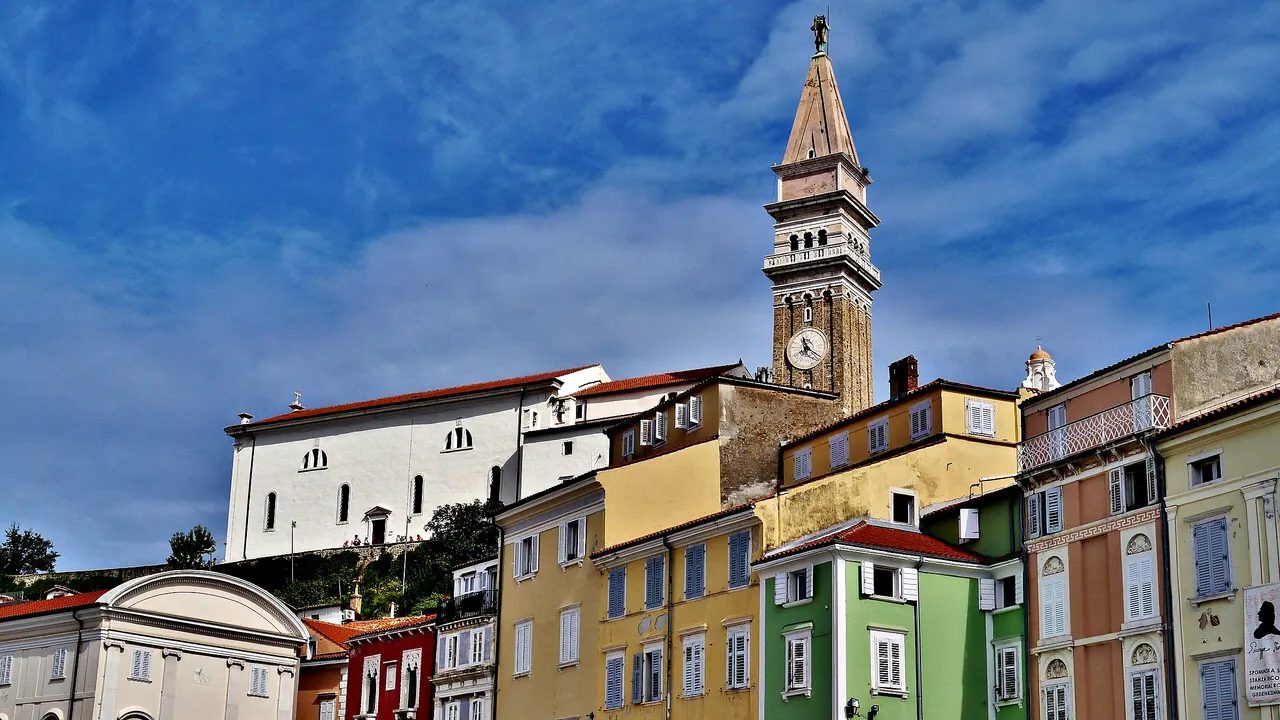
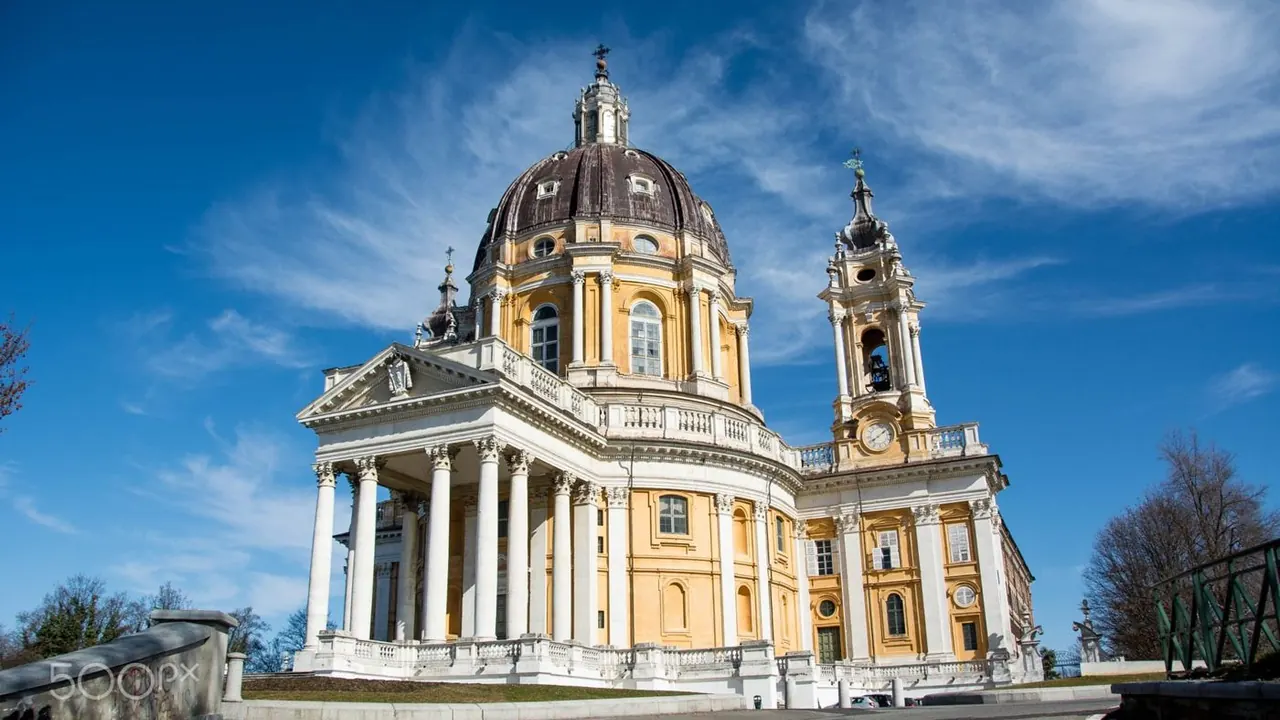
Photos: Piran by Zairon, CC BY-SA 4.0, cropped; Turin by Konstantin Dacosta, CC BY 3.0, cropped.
Piran or Turin?
Our verdict in twelve categories, each scored against the same fixed benchmark cities, and the climate month by month, so you can choose for your trip.
Choose Piran for
- beaches
- wellness
Piran suits a slow seaside stay. The days go on swimming off the rocks below the old walls, wandering a car-free Venetian peninsula that a day covers, and lying in salt mud at the pans. In the evenings you sit over a glass of Malvazija on Tartini Square. It is best for couples and anyone who wants the sea and very little else, with Trieste and the Istrian hill towns close by when they get restless.
Choose Turin for
- live music and the arts
- food and drink
- shopping
Turin is the trip for travellers who want to eat, look and listen. It has Piedmontese cooking and Barolo, the Museo Egizio and the Savoy palaces, opera at the Teatro Regio and an aperitivo that runs on into the bar streets. That gives a week of city life Piran cannot offer, and both the Alps and the Langhe wine country are within reach. The one thing missing is the sea.
Scoreboard
Twelve categories on one fixed scale from 0 to 100. The shaded stretch is the gap between the two.
Your match
Pick a travel style or drag the sliders, and both match scores follow your weighting.
Wins on beaches and wellness with your weighting.
Wins on live music and the arts and food and drink with your weighting.
What matters to you?
Category by category
What the scores mean for a trip.
Beaches & swimming
Piran wins easily here, though it is a swimming town rather than a sandy one. You get into the clear water from concrete ledges along the Punta, from the pebble cove at Fiesa, or from the small sandy beach at Portoroz.
Turin is landlocked on the Po plain. In summer the locals cool off in lakes such as Avigliana or Viverone, and the Riviera is far enough away that it means staying on the coast rather than going for an afternoon swim.
Food & drink
Piran feeds you simply and well: squid, mussels and scampi buzara in konobas off Tartini Square, with salt from the pans and Istrian olive oil on the table. But the harbour menus are all much the same.
Turin is a city to come to for the food. It offers agnolotti del plin, vitello tonnato, autumn truffles from the Langhe, Barolo on every wine list, vermouth where it began, and gianduiotti and bicerin in the old cafés. Porta Palazzo market adds produce and cheap bites.
Culture & sights
In Piran the town itself is the sight: Venetian Gothic lanes, the oval square named after Tartini, and the view from St George's campanile and the old walls. Beyond that there is only a maritime museum and a monastery cloister.
Turin has the depth that Piran lacks. The Museo Egizio alone justifies a visit, and around it are the Royal Palace, Palazzo Madama, the Savoy residences out to Venaria, the cinema museum inside the Mole and contemporary art at Rivoli. It takes several days rather than one.
Nightlife
After sunset Piran settles down to a glass of wine on the Punta, and for anything louder you have to go to Portoroz for its beach bars and casino. Turin keeps going for much longer. The aperitivo leads on to cocktail bars in the Quadrilatero Romano, pavement crowds in San Salvario and the riverside Murazzi in summer, though it is a sociable scene rather than a wild one.
Nature & outdoors
Piran's surroundings are small-scale and pleasant: the flysch cliffs at Strunjan, where you can kayak below them, wading birds among the Secovlje salt pans, and the Parenzana cycle route through olive groves.
Turin has the Alps close by. Gran Paradiso, with its ibex and high trails, and the Susa valley are both within about an hour and a half, offering hut-to-hut hiking in summer and skiing in winter. You can also walk up through the hills to Superga without leaving town.
Day trips
Both make good bases. Piran's strength is its position where three countries meet: Trieste, Rovinj, Motovun and the Skocjan caves are all close, and summer boats run to Venice. You will mostly need a car, though.
Turin gives you a little more, and much of it by train. The Langhe wine villages and Alba are about an hour south, Milan is about an hour by fast train, and the Sacra di San Michele, Aosta and Genoa make longer days out.
Good for families
Neither is ideal, and they suit different children. Piran works for a few calm days with young ones: the town has no cars, the summer sea is warm and there is a small aquarium, but swimming is off ledges and the lanes up to the church are steep.
Turin suits older, curious children better. They can ride the glass lift up the Mole and see the mummies, the car museum and the planetarium, and the grid of arcades is easy with a pushchair. For animals you need the zoo park at Cumiana.
Getting around
Inside town, both are easy on foot. Piran's car-free peninsula takes about a quarter of an hour to cross, and Turin's flat arcaded grid links the station to the Mole and the river.
The difference shows once you leave town. Piran has no railway and slow buses, so most visitors hire a car. Turin adds a metro line, trams and good rail links to the rest of Italy.
Shopping & style
In Piran, shopping means a few craft galleries, souvenir stalls along the harbour and the things worth taking home: salt flower from Secovlje, olive oil and coastal wine.
Turin is a proper shopping city. Via Roma has designer labels under its arcades, Via Garibaldi has the high-street names, and there are antique dealers on Via Maria Vittoria and the Balon flea market. Above all there are chocolate makers and delicatessens, though the designer fashion choice is limited.
Affordability
Turin is the cheaper stay. Central hotels are fairly priced for most of the year, a generous aperitivo can replace dinner, and public transport costs little. Costs only rise for fine dining, truffle season and during big trade fairs.
Piran costs more in July and August, when old-town rooms are scarce and waterfront tables charge for the view. Staying in Portoroz, eating in plain konobas or coming outside the summer brings it closer to Turin's level.
Live music & performing arts
In Piran, music is almost all in summer: Tartini concerts in churches, the monastery cloister and on the square, and occasional recitals at the small Tartini Theatre. Turin has a full year-round season, with opera and ballet at the Teatro Regio, the RAI National Symphony Orchestra, concerts at the Lingotto and jazz clubs across the centre. Its theatre, however, is almost all in Italian.
Wellness & relaxation
Piran is the better place to unwind. Portoroz grew up as a spa town around seawater pools and brine baths, and out among the salt pans you can lie in salt mud with the lagoons around you. The car-free lanes slow you down too.
Turin offers calm rather than treatment: long coffee breaks under the arcades, walks along the Po and hotel spas. Real thermal baths at Acqui Terme or in the Aosta valley are close to two hours away.
When should you go?
Pick your month. The climate figures are measured averages, not a forecast.
Piran in July
Turin in July
Daytime high, °C
Rainfall in the month, mm
Where the figures come from
Turin has no rain gauge within 25 km of the centre, so its rainfall comes from a gridded climate dataset read at the city rather than from a gauge further away.
Temperature and rainfall are climate normals, averaged over the years shown. Piran: 2005-2020 (sunshine 1991-2020, rainfall 1991-2020) normals, Portoroz (1.2 km from centre). Turin: 1991-2020 normals, Torino / Caselle (15.4 km from centre).
Piran is a summer town. From June to September the Adriatic is warm enough for long swims, reaching 25°C in July and August, and those months are also the sunniest. From September the autumn rain sets in, and November is the wettest month at 125mm. Winter is mild but grey and quiet. May, June and September are the most comfortable months for walking the lanes and the coastal paths.
Turin has no sea, so summer counts for less. July reaches about 29°C and the plain can feel sticky. May is the wettest month at 115mm. Winters are colder than on the coast, around 7°C in January, but dry and often clear, with the Alps sharp on the horizon. September and October are the best months for walking the city, and autumn is also when white truffles come in from the Langhe.
Which traveller are you?
For a beach and sun trip, choose Piran. You swim from ladders and rocks into clear Adriatic water, with sand at Portoroz along the promenade. Turin is inland, and the Ligurian coast makes a long day out, not an afternoon swim.
On a food and nightlife trip, Piran offers grilled fish by the harbour and an early night. Turin is the one to choose: agnolotti and Barolo, bicerin under the arcades, and an aperitivo that leads on to the Quadrilatero's wine bars.
For skiers, Turin is the only choice. Piran's coast has no mountains, and its outdoors is gentle and best in spring and autumn. From Turin, the Via Lattea slopes around Sestriere are within about an hour and a half, with ski touring too.
Before you go
| Measure | Piran | Turin |
|---|---|---|
| Official language | Slovene | Italian |
| Currency | Euro (EUR) | Euro (EUR) |
| Sockets | CF230 V, 50 Hz | CFL230 V, 50 Hz |
| Driving side | Right | Right |
| Time zone | UTC+1, UTC+2 in summer | UTC+1, UTC+2 in summer |
| Emergency number | 112 | 112 |
| Elevation | 7 m | 239 m |
| Main airport | Trieste Airport (TRS)34 km from centre32 non-stop destinations | Turin Airport (TRN)14 km from centre65 non-stop destinations |
| Public holidays this year | 21 days | 13 days |
By the numbers
| Measure | Piran | Turin |
|---|---|---|
| City population | 3,787 | 841,600 |
| People per km² | 85 | 6,474 |
| Museums within 10 km | 5 | 72 |
| UNESCO World Heritage sites within 50 km | 4 | 4 |
| Swim season, months above 21 °C | 4 months | - |
Where else could you go?
Every comparison below shares a destination with this one, so you can follow Piran or Turin somewhere new.