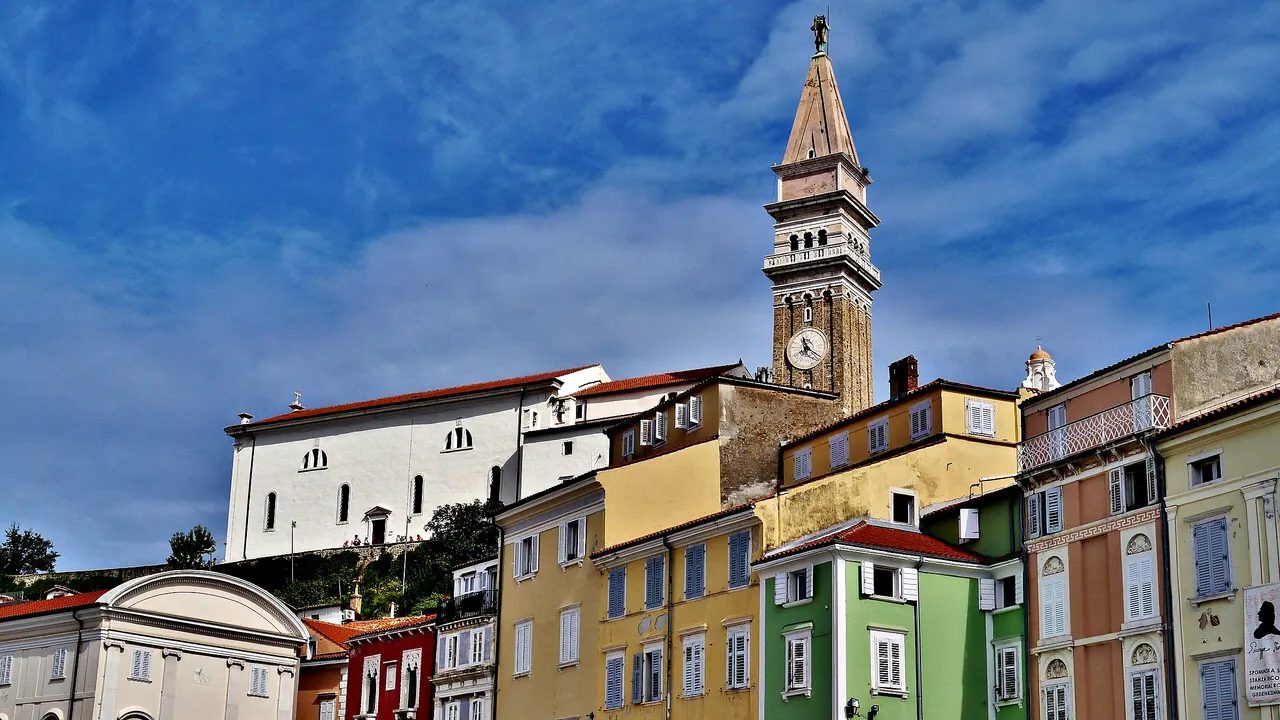
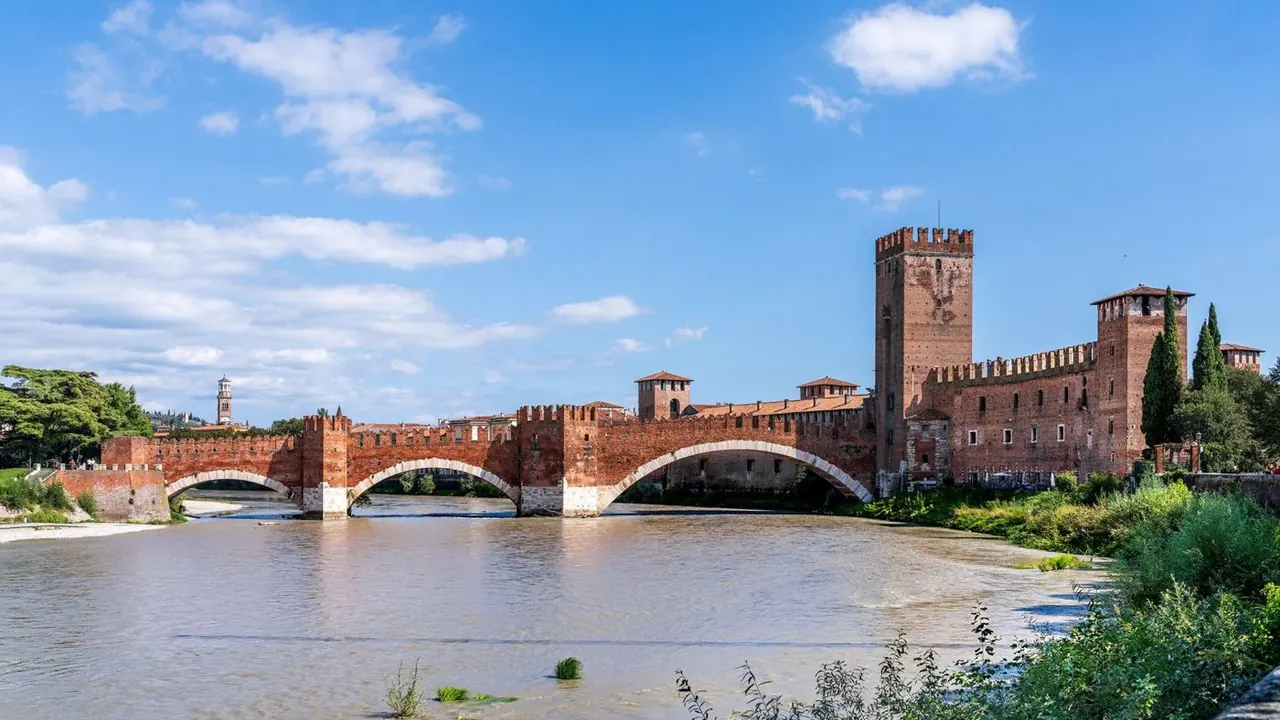
Photos: Piran by Zairon, CC BY-SA 4.0, cropped; Verona by NorbertNagel, CC BY-SA 4.0, cropped.
Piran or Verona?
Our verdict in twelve categories, each scored against the same fixed benchmark cities, and the climate month by month, so you can choose for your trip.
Choose Piran for
- beaches
- wellness
Piran suits a slow seaside stay: swimming off the rocks below a car-free Venetian town, salt-mud spas among the lagoons and sunsets on the Punta, with Trieste and the Istrian hill towns within reach by car. Choose it if the sea matters more than the sights and a quiet evening is the whole point.
Choose Verona for
- live music and the arts
- shopping
- culture and sights
Verona is the richer city to explore. It has a Roman arena, Romanesque churches, opera under the stars and Veneto cooking backed by Amarone and Valpolicella. It also makes a fine rail base for Venice, Padua and Lake Garda, so it fits travellers who want culture, food and variety more than a coastline.
Scoreboard
Twelve categories on one fixed scale from 0 to 100. The shaded stretch is the gap between the two.
Your match
Pick a travel style or drag the sliders, and both match scores follow your weighting.
Wins on beaches and wellness with your weighting.
Wins on live music and the arts and shopping with your weighting.
What matters to you?
Category by category
What the scores mean for a trip.
Beaches & swimming
Piran has the sea at its door. You swim from concrete platforms and rocks below the walls or at Fiesa's small pebble cove, and sand and sunbeds are a short shuttle ride away at Portoroz. It is a swimming town rather than a beach town, but the water is part of every day.
Verona's swimming is at Lake Garda, about half an hour away at Peschiera, Lazise or Sirmione's limestone shelves. The lake is calm and nearly as warm in summer, but going there is an outing rather than a swim before breakfast.
Food & drink
Piran keeps to grilled fish, squid and scampi buzara by the harbour. The food is fresh and simple, but the menus echo one another, and anything more ambitious means driving inland into Istria.
Verona has a proper regional kitchen: Amarone risotto, bigoli with duck, and bollito with pearà, served in wood-panelled osterie around Piazza delle Erbe and in Veronetta. With the Valpolicella and Soave vineyards on the doorstep, eating and drinking become a reason to come rather than a pleasant extra.
Culture & sights
In Piran the culture is the town itself: Venetian Gothic lanes, the oval Tartini Square, St George's above the bay and a few small museums. A day of wandering covers it.
Verona has far more to see. Its UNESCO-listed centre holds the Roman Arena and theatre, the squares of the della Scala lords, San Zeno with its bronze doors, and Castelvecchio's art in Scarpa's galleries. That is enough for two or three full days.
Nightlife
Neither city is a place for clubbing. Piran's evenings end with a glass of wine on the Punta at sunset, and anyone wanting more goes to the beach bars and casino at Portoroz.
Verona offers rather more. The aperitivo crowds fill Piazza delle Erbe, the university quarter of Veronetta has younger wine bars that stay open later, and in summer the opera audience leaving the Arena brings the centre back to life near midnight.
Nature & outdoors
Piran's outdoors is coastal and gentle. There is the cliff path above the flysch at Strunjan, birdlife in the Secovlje salt pans, paddling below the cliffs, and the Parenzana cycle route heading inland, with the Skocjan caves about an hour away.
Verona has more variety because the Alps begin nearby. Vineyard walks in Valpolicella and the Adige cycle route are close at hand. Monte Baldo above Lake Garda adds ridge hikes and paragliding, and the northern end of the lake has the steady winds that sailors and windsurfers come for.
Day trips
Both make good bases, but in different ways. Piran's advantage is the border: Trieste is under an hour away, Rovinj and the Istrian hill towns lie across in Croatia, and summer boats cross to Venice. Most of these trips need a car.
From Verona there is more to reach, and mostly by train. Venice, Vicenza, Padua and Mantua are all easy day trips, and the Garda towns and the Soave and Valpolicella wine country are closer still. You can visit a different art city each day without driving.
Good for families
Piran is safe and calm for small children, with no cars in the old town, a flat seafront and a small aquarium. But swimming means ledges and ladders, and older children soon run out of things to do.
Verona keeps children busy for longer thanks to what lies around it: Gardaland, the water parks on Garda's southern shore and the safari zoo at Parco Natura Viva. You will need a car or transfers to reach them, and summer afternoons in town can be very hot.
Getting around
Both centres are best seen on foot. Piran's car-free peninsula takes a quarter of an hour to cross, and in Verona's flat river loop the Arena, the squares and Castelvecchio are all a short stroll apart.
The difference shows once you leave town. Piran has no railway, so the Karst and Istria really call for a hire car. Verona's station has quick trains to Venice, Milan and the lake, and a car is needed only for the hills and some Garda attractions.
Shopping & style
Piran has little beyond craft shops, galleries and harbour souvenirs. The best things to take home are sea salt and salt flower from the Secovlje pans, olive oil and coastal wine.
Verona has a real shopping street in marble-paved Via Mazzini, with Italian fashion labels, and smaller boutiques and jewellers along Corso Porta Borsari. It is smart rather than a shopping destination, but you can buy clothes and shoes there as well as Amarone and pandoro.
Affordability
Costs are much the same in both, and in both it is the rooms that push the bill up. In Piran the expensive part is the old town in July and August, and staying in Portoroz or coming outside the peak brings it down.
In Verona it is central hotels on opera nights and during trade fairs, which you can avoid by staying near the station or across the river. Piran's main pleasures, swimming and walking, cost nothing, while Verona offers local wine by the glass that is good value.
Live music & performing arts
Piran has summer concerts in honour of Tartini, held in churches, the monastery cloister and on the square, and a small theatre with occasional recitals. Outside summer there is little to attend.
Verona has opera in the Roman Arena, one of Europe's great summer spectacles, with Verdi and Puccini played to thousands on the ancient stone tiers. The Roman theatre adds Shakespeare, dance and jazz in the warm months, and the Teatro Filarmonico keeps opera and concerts going through the cooler ones.
Wellness & relaxation
Piran is the easier place to unwind, with a spa tradition right beside it. You can lie in brine and salt mud out among the Secovlje lagoons, use the seawater pools at Portoroz or visit the health resort at Strunjan, all a short hop from a quiet car-free town.
Verona's warm springs mean a trip out, to the lakeside thermal centre at Sirmione or the spring-fed lake near Lazise. In town, relaxing means long lunches and the terraces of the Giardino Giusti, though summer crowds gather around the Arena.
When should you go?
Pick your month. The climate figures are measured averages, not a forecast.
Piran in July
Verona in July
Daytime high, °C
Rainfall in the month, mm
Temperature and rainfall are climate normals, averaged over the years shown. Piran: 2005-2020 (sunshine 1991-2020, rainfall 1991-2020) normals, Portoroz (1.2 km from centre). Verona: 1991-2020 normals, Verona / Villafranca (11.6 km from centre).
Piran is a summer sea town. The water is warm enough for comfortable swimming from June to September and reaches about 25°C in July and August. May and June bring long, sunny days without the full heat. Autumn is wet, with rain building from September to about 125mm in November, so a late-season trip needs plans for rainy days.
Verona has almost the same summer temperatures but without the sea beside it. July and August reach about 30°C, which makes afternoon sightseeing hard work and moves life into the evenings. May, June and September are the best months for walking. Winter is colder than on the coast, around 7°C in January, but also drier, so an off-season city break works better in Verona than a winter stay in Piran.
Which traveller are you?
On a beach and sun trip, base yourself in Piran and plan the days around the water rather than the sights. Verona works better as a night or two on the way, since every swim there costs half a day.
For a culture and arts trip, choose Verona and give it three nights, with a summer evening at the Arena opera and a train out to another art city. Piran makes a quiet coda rather than the main event.
On a relaxing and wellness trip, Piran is the better base: book a few spa sessions and leave the rest of each day unplanned, ideally in May, June or September. Verona tends to pull you into a fuller itinerary.
Before you go
| Measure | Piran | Verona |
|---|---|---|
| Official language | Slovene | Italian |
| Currency | Euro (EUR) | Euro (EUR) |
| Sockets | CF230 V, 50 Hz | CFL230 V, 50 Hz |
| Driving side | Right | Right |
| Time zone | UTC+1, UTC+2 in summer | UTC+1, UTC+2 in summer |
| Emergency number | 112 | 112 |
| Elevation | 7 m | 59 m |
| Main airport | Trieste Airport (TRS)34 km from centre32 non-stop destinations | Verona Villafranca Valerio Catullo Airport (VRN)10 km from centre96 non-stop destinations |
| Public holidays this year | 21 days | 13 days |
By the numbers
| Measure | Piran | Verona |
|---|---|---|
| City population | 3,787 | 255,588 |
| People per km² | 85 | 1,285 |
| Museums within 10 km | 5 | 18 |
| UNESCO World Heritage sites within 50 km | 4 | 5 |
| Swim season, months above 21 °C | 4 months | - |
Where else could you go?
Every comparison below shares a destination with this one, so you can follow Piran or Verona somewhere new.