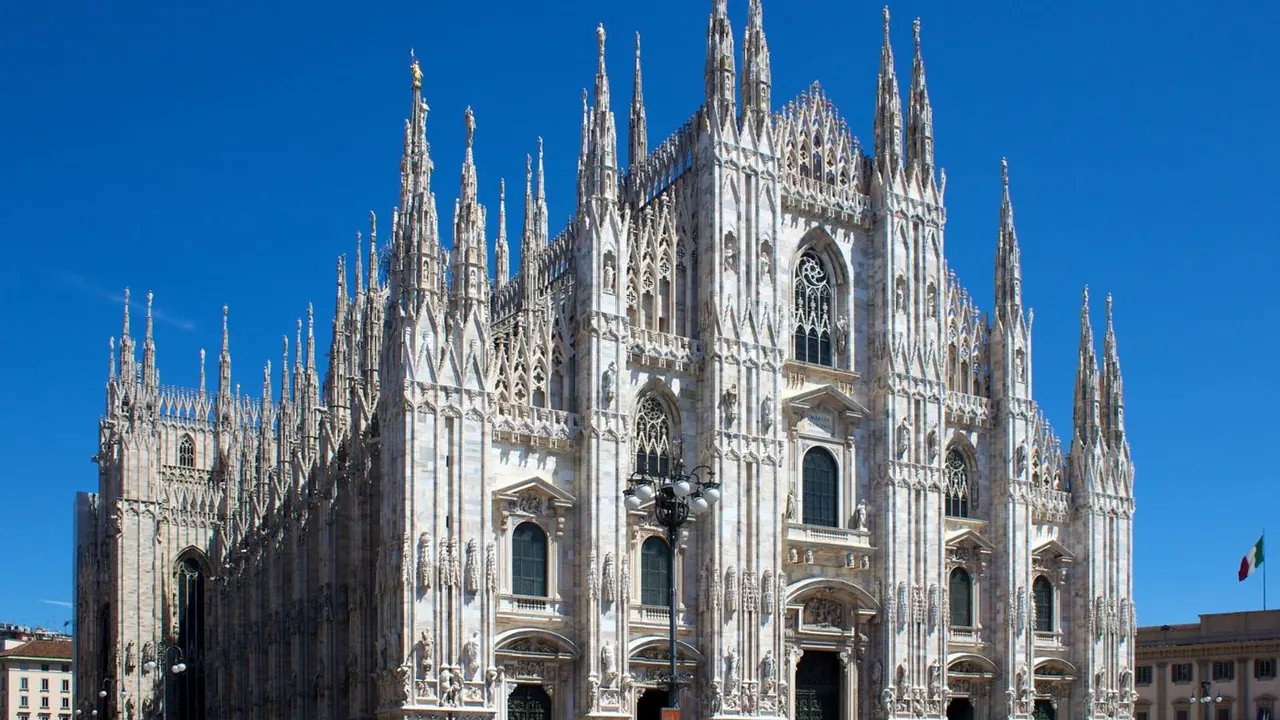
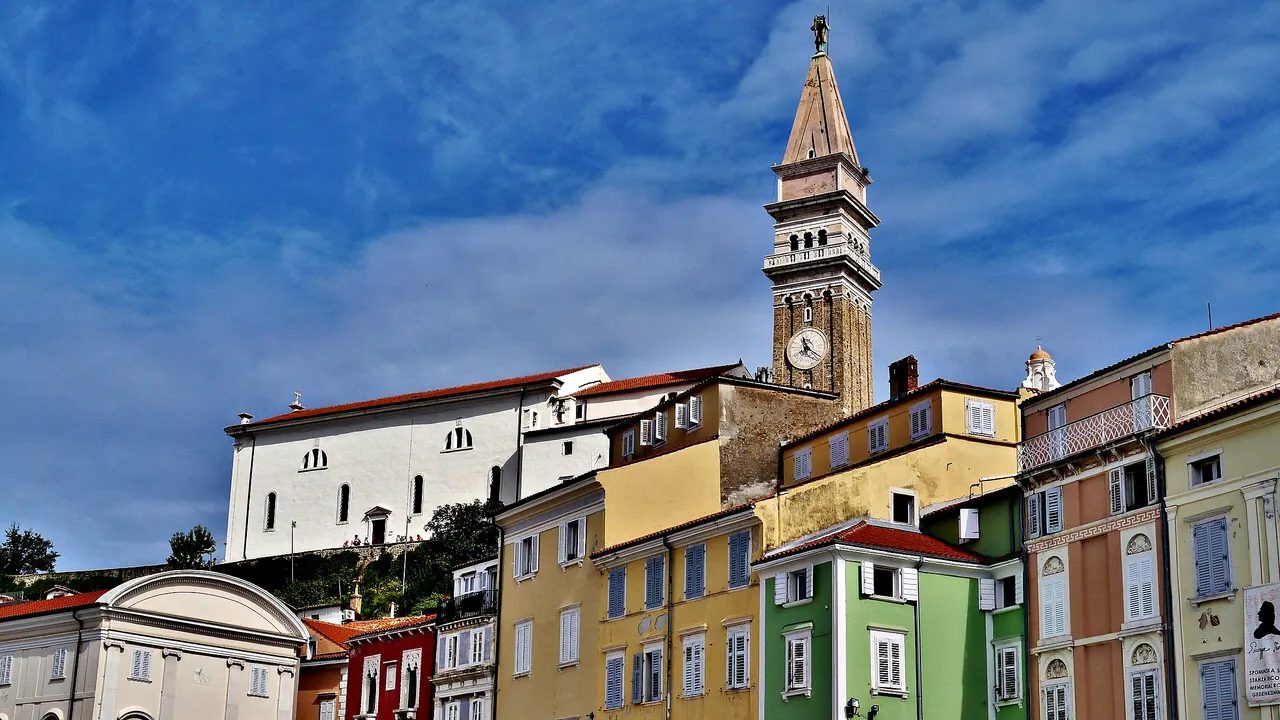
Photos: Milan by Jiuguang Wang, CC BY-SA 3.0, cropped; Piran by Zairon, CC BY-SA 4.0, cropped.
Milan or Piran?
Our verdict in twelve categories, each scored against the same fixed benchmark cities, and the climate month by month, so you can choose for your trip.
Choose Milan for
- shopping
- live music and the arts
- nightlife
Milan suits a traveller who wants a big city with plenty to fill the days: the Duomo and the Last Supper, an evening at La Scala, serious shopping in the Quadrilatero and aperitivo along the Navigli. Its fast rail links put Bergamo, Verona, Turin and the lakes within easy reach, so it also works as a base for seeing a wide slice of northern Italy without a car.
Choose Piran for
- beaches
- wellness
- prices
Piran is the better pick for slowing down by the sea. It is a small, car-free Venetian peninsula where the days go on swimming off the rocks, wandering the lanes and watching the sunset over the bay, with the salt-pan spas of Portoroz close by. It costs less than Milan, and it gives up the nightlife, the shopping and the cultural depth to offer that quiet.
Scoreboard
Twelve categories on one fixed scale from 0 to 100. The shaded stretch is the gap between the two.
Your match
Pick a travel style or drag the sliders, and both match scores follow your weighting.
Wins on shopping and live music and the arts with your weighting.
Wins on beaches and wellness with your weighting.
What matters to you?
Category by category
What the scores mean for a trip.
Beaches & swimming
Piran has the sea on its doorstep, and that settles it. People swim from platforms and ladders below the old walls and around the Punta. Fiesa's pebble cove, Portoroz's small sandy beach and the cliff-backed shore at Strunjan are all within walking distance or a short shuttle ride. It is a place to swim rather than to sunbathe on sand, but the swimming is part of every summer day.
Milan has no coast at all. Locals cool off at the Idroscalo basin or the city pools. A proper swim means a day out by train to the pebbly lidos of Lake Como or Lake Maggiore, so the water is something you visit rather than live beside.
Food & drink
Milan gives you far more range. Its own cooking is rich and butter-based, with saffron risotto, ossobuco and cotoletta. As a magnet for Italians from every region, it also serves good Neapolitan pizza, Sicilian pastry and serious fine dining. Then there is the aperitivo ritual in the Navigli, Brera and Isola.
Piran eats simply and well from the sea: grilled fish, squid and scampi buzara in konobas on the Punta, with Malvazija, Refosk and Istrian olive oil from the hills. The harbour menus repeat one another, though, and anything more ambitious means heading inland or to Portoroz.
Culture & sights
Milan holds a handful of first-rank treasures: the Duomo with its rooftop among the spires, Leonardo's Last Supper, the Brera's paintings and Michelangelo's Rondanini Pietà in the Castello Sforzesco. They come in clusters within a largely modern city, but together they fill several days.
Piran works the other way round. The whole old town is the sight, with Venetian Gothic houses around Tartini Square, St George's campanile and the walls above the red roofs. The museums are small, and a day covers everything.
Nightlife
Milan has a real night out. Aperitivo drifts into bars spilling onto the Navigli towpaths, quieter evenings in Brera and Isola, the gay scene around Porta Venezia, and clubs from dressy Corso Como to warehouse nights on the edges of the city. Expect it to be well dressed rather than wild.
Piran's evening is a glass of wine on Tartini Square or the Punta at sunset, and then the town goes quiet. Portoroz adds a casino and a few summer clubs, but no one should come for the nightlife.
Nature & outdoors
Milan itself is flat and often hazy. What puts it ahead is what lies an hour north: Lake Como and Lake Maggiore under steep wooded slopes, the Grigne ridges for proper hiking and via ferrata, and Alpine ski valleys within a long day's reach. The canal towpaths also make easy cycling into the rice fields.
Piran's outdoors is gentler and starts at the edge of town. You can walk the cliff path at Strunjan, watch wading birds on the Secovlje salt pans, kayak below the flysch cliffs or cycle the Parenzana through olive groves. The Karst and the Skocjan caves are an hour inland, but there are no high mountains nearby.
Day trips
Both make good bases, but Milan's high-speed trains give it the edge. Verona, Turin and Bergamo's upper town are each about an hour away, and Bologna is not far beyond. Add Lake Como's villages, the Certosa di Pavia, Mantua, Parma and even Lugano, all reachable without a car.
Piran's strength is its position where three borders meet. Trieste, Rovinj, Motovun and Predjama Castle are close, Ljubljana is under two hours away, and summer boats cross to Venice. Most of this needs a hire car, though.
Good for families
Neither place is built around children, and they suit different kinds of family trip. Milan offers the science and technology museum with its submarine, playgrounds in Parco Sempione and theme parks such as Leolandia and Gardaland. That is more to keep older children busy, but in a hot city whose main sights are aimed at adults.
Piran is calmer and safer for little ones. There are no cars in the old town, the sea is warm and still, and Portoroz has a shallow sandy beach. Swimming from concrete ledges and the steep lanes to the church make it best for a few easy days rather than a long stay with restless teenagers.
Getting around
Milan is easier to get around at every scale. Its flat centre puts the Duomo, Brera and the Castello within walking distance, and five simple metro lines and old orange trams fill the gaps. Direct trains run out to the lakes and towns. The weak points are stuffy platforms in summer and the long ride in from Malpensa.
Piran's car-free peninsula takes a quarter of an hour to cross, and a shuttle links the edge-of-town garage and Portoroz. Beyond that there is no railway and buses are slow, so exploring Istria or the Karst usually means hiring a car.
Shopping & style
This is the widest gap between the two. Milan is a world fashion capital, with the great Italian houses on Via Montenapoleone and Via della Spiga, the old shops of the Galleria, everyday chains on Corso Buenos Aires, design showrooms and antique markets on the Navigli.
Piran has a few craft shops and souvenir stalls. Its best buys are edible: salt flower from the Secovlje pans, olive oil and coastal wine.
Affordability
Piran is the gentler on the wallet, though it is not cheap. High-summer rooms in the old town and waterfront tables carry a premium. Staying in Portoroz, eating in plain konobas or coming outside July and August brings costs down, and the swimming and walking are free.
Milan is Italy's most expensive city. Hotel rates soar during trade fairs and fashion weeks. Lunchtime set menus, aperitivo standing in for supper and a room near a metro stop outside the centre help, but the overall bill stays higher.
Live music & performing arts
La Scala alone puts Milan far ahead. Its opera and ballet season opens each December on Sant'Ambrogio, and gallery seats make it reachable for a determined visitor. The Piccolo Teatro, a fine symphony orchestra, musicals at the Arcimboldi, jazz rooms and summer stadium concerts at San Siro fill out the year.
Piran's offer is small and seasonal. There are summer concerts in honour of Tartini in churches, the monastery cloister and on the square, plus the occasional recital at the little theatre.
Wellness & relaxation
Piran is the restful one. Portoroz grew up as a spa resort, with seawater pools and salt-pan mud. There is an open-air thalasso spa among the Secovlje lagoons and a seawater health resort at Strunjan. The car-free town, especially in May, June and September, does the rest.
Milan has its thermal spa complex with outdoor pools, a few hotel spas and the 1930s Bagni Misteriosi for a summer afternoon. Still, it is a city of work and pace, and most people looking for real calm take the train to the lakes.
When should you go?
Pick your month. The climate figures are measured averages, not a forecast.
Milan in July
Piran in July
Daytime high, °C
Rainfall in the month, mm
Where the figures come from
Milan's sunshine is measured 41 km from the centre, at Novara / Cameri.
Temperature and rainfall are climate normals, averaged over the years shown. Milan: 1991-2020 (rainfall 1971-2000) normals, Milano / Linate (8 km from centre). Piran: 2005-2020 (sunshine 1991-2020, rainfall 1991-2020) normals, Portoroz (1.2 km from centre).
Milan is at its best for walking the streets in May, June and September, when the days are warm but the heavy, humid heat of the plain has not yet settled in or has eased. In July and August highs reach about 30°C and sightseeing becomes hard going. Winter is cold and grey from December to February, with highs near 7°C and short, dull days. The wettest spells come in May and October, so even the good months need an umbrella.
Piran gets the same summer heat, but it has the sea to cool off in, and it is sunnier than Milan in every month of the year. The water is warm enough for easy swimming from June to September, around 23°C at either end and 25°C in July and August, while in May it is still bracing. June is the sweet spot, with warm water, long sunny days and less rain than in autumn. September still has a warm sea, but it also brings the first heavy rain, and by November Piran is wetter than Milan, though its winters stay a few degrees milder.
Which traveller are you?
On a shopping trip, Milan is in another league. It has the flagship houses of the Quadrilatero, La Rinascente beside the Duomo, design showrooms and vintage shops in Brera and Porta Ticinese. Piran offers sea salt, olive oil and a few craft galleries.
For a beach and sun trip, choose Piran. You swim in clear Adriatic water straight from the seafront, with the pebble cove at Fiesa and the sand of Portoroz nearby. From Milan, a swim means an hour's train ride to a lake lido.
On a relaxing and wellness trip, Piran's car-free lanes and evening light set an unhurried pace. The brine baths and salt-mud treatments of Portoroz and the Secovlje pans are close at hand. Milan is a busy working city where real rest means leaving for the lakes.
Before you go
| Measure | Milan | Piran |
|---|---|---|
| Official language | Italian | Slovene |
| Currency | Euro (EUR) | Euro (EUR) |
| Sockets | CFL230 V, 50 Hz | CF230 V, 50 Hz |
| Driving side | Right | Right |
| Time zone | UTC+1, UTC+2 in summer | UTC+1, UTC+2 in summer |
| Emergency number | 112 | 112 |
| Elevation | 138 m | 7 m |
| Main airport | Milan Malpensa International Airport (MXP)40 km from centre208 non-stop destinations | Trieste Airport (TRS)34 km from centre32 non-stop destinations |
| Public holidays this year | 13 days | 21 days |
By the numbers
| Measure | Milan | Piran |
|---|---|---|
| City population | 1,354,196 | 3,787 |
| People per km² | 7,453 | 85 |
| Museums within 10 km | 88 | 5 |
| UNESCO World Heritage sites within 50 km | 4 | 4 |
| Swim season, months above 21 °C | - | 4 months |
Where else could you go?
Every comparison below shares a destination with this one, so you can follow Milan or Piran somewhere new.