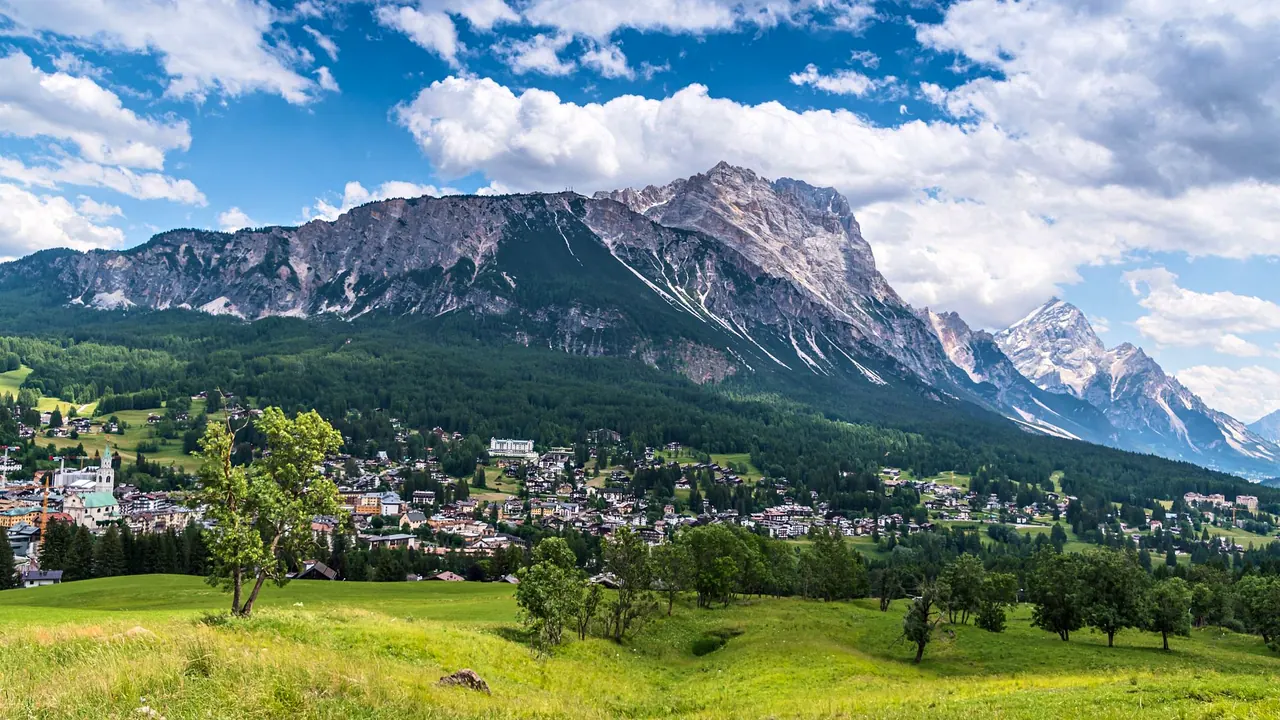
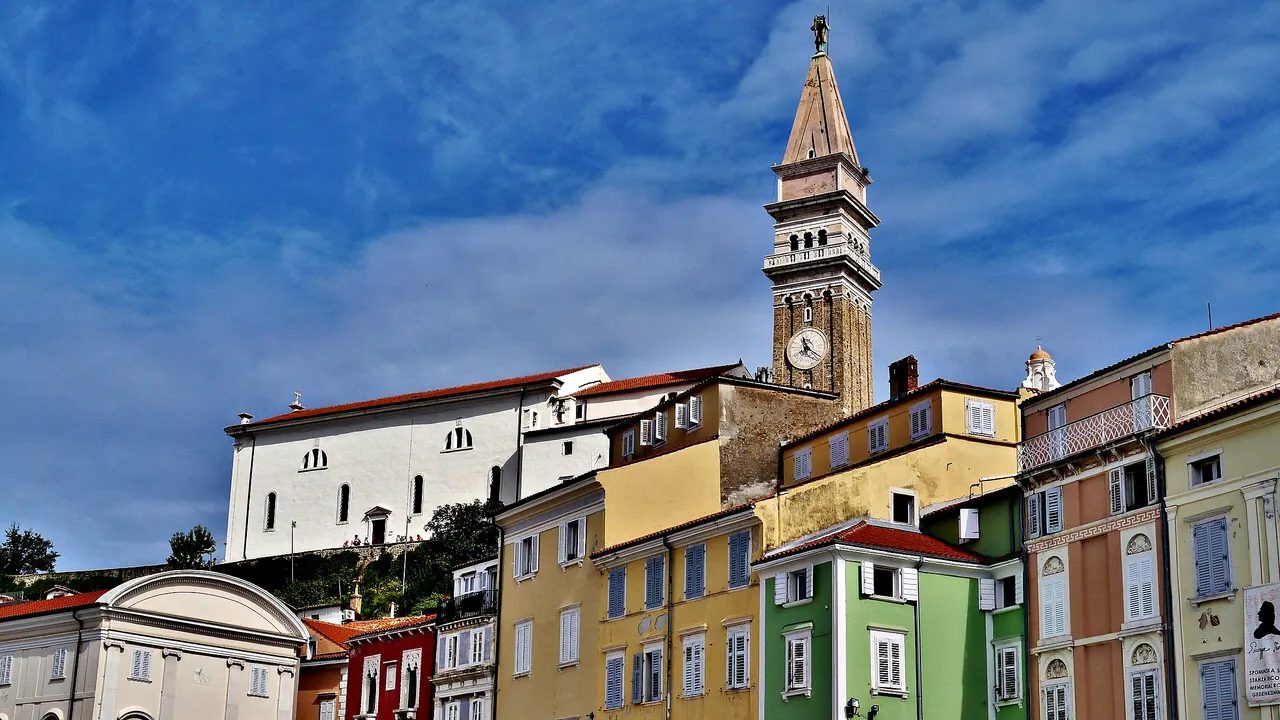
Photos: Cortina d'Ampezzo by Andreas Neubauer, Pexels License; Piran by Zairon, CC BY-SA 4.0, cropped.
Cortina d'Ampezzo or Piran?
Our verdict in twelve categories, each scored against the same fixed benchmark cities, and the climate month by month, so you can choose for your trip.
Choose Cortina d'Ampezzo for
- nature and the outdoors
- shopping
- food and drink
Cortina d'Ampezzo is for travellers who come for the mountains themselves. Skiers reach the Dolomiti Superski area straight from the town's lifts, and in summer walkers, climbers and via ferrata fans have the Tofane, the Cinque Torri and the Tre Cime almost on the doorstep. Choose it if the scenery matters more than the cost, and if you are happy with long dinners in the evening rather than a night out.
Choose Piran for
- beaches
- prices
- day trips
Piran suits a slower, warmer vacation by the sea, and it costs less. Its car-free Venetian old town, swimming from the rocks below the walls and the seawater spas of Portoroz make for easy days. Trieste, Istria and Ljubljana are all within reach for a day out. It is the better choice for swimmers, for anyone who enjoys wandering an old town, and for anyone who would rather drift than climb.
Scoreboard
Twelve categories on one fixed scale from 0 to 100. The shaded stretch is the gap between the two.
Your match
Pick a travel style or drag the sliders, and both match scores follow your weighting.
Wins on nature and the outdoors and shopping with your weighting.
Wins on beaches and prices with your weighting.
What matters to you?
Category by category
What the scores mean for a trip.
Beaches & swimming
Piran wins this easily. Cortina sits in a high valley, and its only open water is snowmelt lakes like Ghedina and Pianozes, which stay cold even in July. Swimming there mostly means a hotel pool.
Piran is built on the sea. You swim in clear water from the rocks and ladders below the walls and around the Punta, Fiesa's pebble cove is a short walk away, and Portoroz and Strunjan have sandier shores. It is a town for swimming rather than lying on sand, but the Adriatic is right there.
Food & drink
Both towns eat well within a narrow range, but the food itself is very different. Cortina serves mountain cooking with a Venetian accent: casunziei with poppy seeds, polenta with game, barley soup. It tastes best on a rifugio terrace among the peaks, and a few ambitious kitchens in the valley cater for its wealthy visitors.
Piran serves grilled fish, squid and scampi buzara in simple konobas by the water, with Malvazija or Refosk to drink and salt from its own pans on the table. Cortina has the more polished dining rooms. Piran has the simpler, cheaper meal with a sea view.
Culture & sights
Piran is the better place to wander. The sight is the whole town: a peninsula of Venetian Gothic houses with oval Tartini Square, St George's Church above the bay and the medieval walls on the ridge, and its lanes and cloister fill a day well.
Cortina's centre is pleasant but has little to see: the basilica's bell tower, painted houses, the 1956 Olympic ice stadium and the Rimoldi art collection. Its most powerful history is the First World War tunnels on Lagazuoi and the Cinque Torri, and reaching them takes a day in the mountains.
Nightlife
Neither town is a place for a night out, but evenings take different forms. Cortina has après-ski when the lifts close and a passeggiata along the Corso Italia, and only in the peak winter weeks do a couple of smart bars and clubs stay open late. In Piran the evening is a glass of wine at sunset on the Punta, and Portoroz next door has beach bars, a casino and summer clubs for anyone who wants more.
Nature & outdoors
Cortina is in a different league here. The Dolomites ring the town, lifts rise straight onto the Tofane and Cristallo, and the Tre Cime and Lago di Misurina are under an hour away. Winter brings the Dolomiti Superski area, and summer brings the Alta Via 1, hut-to-hut walking and some of the oldest via ferrata routes in the Alps.
Piran's outdoors is gentler and by the coast: the cliff path at Strunjan, wading birds in the Secovlje salt pans, kayaking under the flysch cliffs and the Parenzana cycle route inland. These make pleasant days in spring and autumn, but nothing to match a Dolomite summit.
Day trips
Piran is the better base, with three countries within easy reach. Trieste is under an hour away, the Istrian towns of Rovinj, Porec and Motovun are to the south, and Predjama Castle and the Lipica stud farm are about an hour off. Ljubljana is under two hours away, and in summer boats cross to Venice.
From Cortina most outings stay in the mountains. San Candido, Brunico and Bolzano with its Iceman are the best of the South Tyrol towns, Lienz in Austria is within range too, and Venice is a long coach ride each way.
Good for families
Both suit families who want a calm, safe place rather than attractions, and neither has a zoo or theme park. The difference is in how the days are spent. In Cortina children have ski school at Socrepes, skating at the Olympic stadium and meadows by the mountain huts. In Piran they swim in a calm, warm sea, visit the small aquarium and play in Portoroz's sandy shallows.
Cortina's costs climb quickly with children in tow. Piran's steep lanes and concrete ledges suit a few days better than a long stay.
Getting around
Once you have arrived, Piran is the easier place. Its car-free old town takes about a quarter of an hour to cross, and a shuttle bus links the garage at the edge of town with the centre and Portoroz. Cortina's centre is just as walkable and its ski buses work well in winter. But with no railway, getting there means a coach from Venice or a long drive, and buses to the passes and the Tre Cime are infrequent.
Neither town has a train, so in both you will want a hire car to see the wider area: the Dolomite passes from Cortina, and the Istrian hill towns and the Karst from Piran.
Shopping & style
Cortina is clearly the better place to shop. The Corso Italia fits luxury fashion, jewellers, furriers and upmarket mountain wear into one pedestrian street. At its heart is the Cooperativa, founded in 1893, which sells everything from local food to outdoor gear.
Piran has a few galleries, craft shops and souvenir stalls along the harbour. Its best buys are edible: salt flower from the Secovlje pans, Istrian olive oil and coastal wine.
Affordability
Piran is far easier on the wallet. It is mid-priced for Western Europe, dearer in July and August, and the swimming and walking that fill the days cost nothing. Cortina is among the most expensive places to stay in Italy, with luxury prices for hotels and restaurants in winter and August, and lift passes and equipment hire on top.
Timing helps in both. In Cortina, rates ease in early summer and late September and rifugio meals are fair value. In Piran, staying in Portoroz or eating in simple konobas brings costs down.
Live music & performing arts
Neither town has much live culture, but Piran has a little more. Summer concerts honour Tartini in its churches, the monastery cloister and on the main square, and the small Tartini Theatre puts on the occasional play or recital. Cortina has no theatre season at all: its music comes from summer chamber festivals, sometimes held outdoors in the mountains, and a few concerts around Christmas and New Year.
Wellness & relaxation
Piran has a real spa tradition. Portoroz grew up as a spa resort using seawater, brine and mud from the salt pans. At the Secovlje pans you can lie in salt mud outdoors among the lagoons, and Strunjan has its own seawater health resort.
Cortina has no springs and no bathing culture, so relaxing means a hotel spa with sauna and hay bath after the slopes, or a long afternoon on a hut terrace. Its calm also depends on the season, and it disappears in the peak weeks.
When should you go?
Pick your month. The climate figures are measured averages, not a forecast.
Cortina d'Ampezzo in July
Piran in July
Daytime high, °C
Rainfall in the month, mm
Temperature and rainfall are climate normals, averaged over the years shown. Cortina d'Ampezzo: 1991-2020 normals, Dobbiaco (22.5 km from centre). Piran: 2005-2020 (sunshine 1991-2020, rainfall 1991-2020) normals, Portoroz (1.2 km from centre).
Cortina's walking and climbing season runs from June to September. Midsummer highs reach about 22°C, which is pleasant for hiking but never beach weather. Summer is also the wettest time, with around 130mm of rain in July, so September is often the more settled month: cooler, but drier. From December to February daytime temperatures hover around freezing. That suits the slopes better than strolling round town, though the winters are fairly dry.
Piran warms up earlier in the year and stays warm for longer. From June to September the sea is warm enough for swimming, reaching 25°C in July and August. July has the most sunshine, with highs around 30°C, which is hot for climbing the lanes up to the church. May is the best month for walking, warm and sunny before the summer heat. Late September is still mild, but it opens the wet season: September, October and November are the three rainiest months, and November is the wettest at about 125mm. The two towns get their rain at opposite times, Cortina in summer and Piran in autumn, and Piran's winters are mild and grey rather than cold.
Which traveller are you?
For an outdoors trip, Cortina wins easily. Lifts climb from town straight into the Dolomites, for skiing in winter and for hut-to-hut hiking, via ferrata and mountain biking in summer. Piran's outdoors is limited to gentle cliff paths, kayaking and cycling.
On a beach and sun trip, choose Piran. It has long sunny summers, a warm Adriatic to swim in from rocks, ladders or a pebble cove, and sandier beaches at Portoroz. Cortina's only water is cold snowmelt lakes and hotel pools.
On a tight budget, Piran is the realistic choice. Simple konobas, local wine, rooms in Portoroz and days of swimming that cost nothing keep spending fair. Cortina's hotels, restaurants and lift passes charge luxury-resort prices for much of the year.
Before you go
| Measure | Cortina d'Ampezzo | Piran |
|---|---|---|
| Official language | Italian | Slovene |
| Currency | Euro (EUR) | Euro (EUR) |
| Sockets | CFL230 V, 50 Hz | CF230 V, 50 Hz |
| Driving side | Right | Right |
| Time zone | UTC+1, UTC+2 in summer | UTC+1, UTC+2 in summer |
| Emergency number | 112 | 112 |
| Elevation | 1,224 m | 7 m |
| Main airport | Venice Marco Polo Airport (VCE)116 km from centre103 non-stop destinations | Trieste Airport (TRS)34 km from centre32 non-stop destinations |
| Public holidays this year | 13 days | 21 days |
By the numbers
| Measure | Cortina d'Ampezzo | Piran |
|---|---|---|
| City population | 5,546 | 3,787 |
| People per km² | 22 | 85 |
| Museums within 10 km | 3 | 5 |
| UNESCO World Heritage sites within 50 km | 1 | 4 |
| Swim season, months above 21 °C | - | 4 months |
Where else could you go?
Every comparison below shares a destination with this one, so you can follow Cortina d'Ampezzo or Piran somewhere new.
- Triestevs Piran
- Rovinjvs Piran
- Pulavs Piran
- Ljubljanavs Piran
- Venicevs Piran
- Innsbruckvs Cortina d'Ampezzo