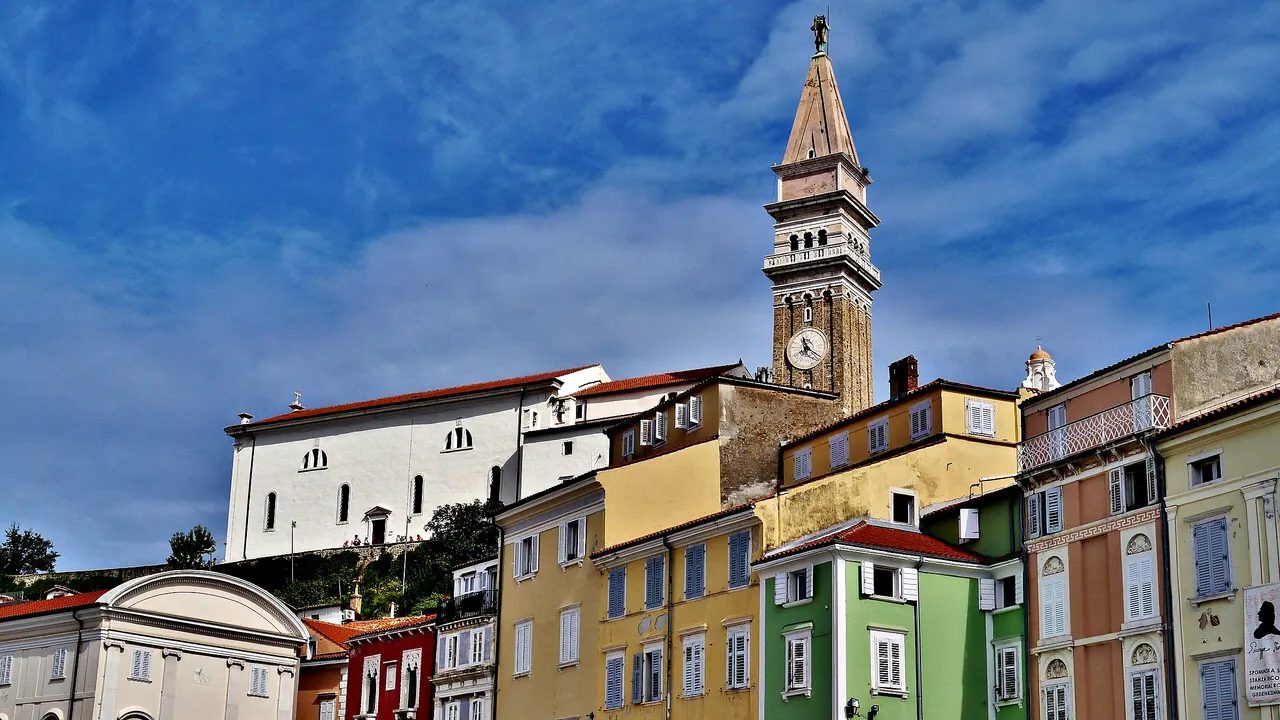
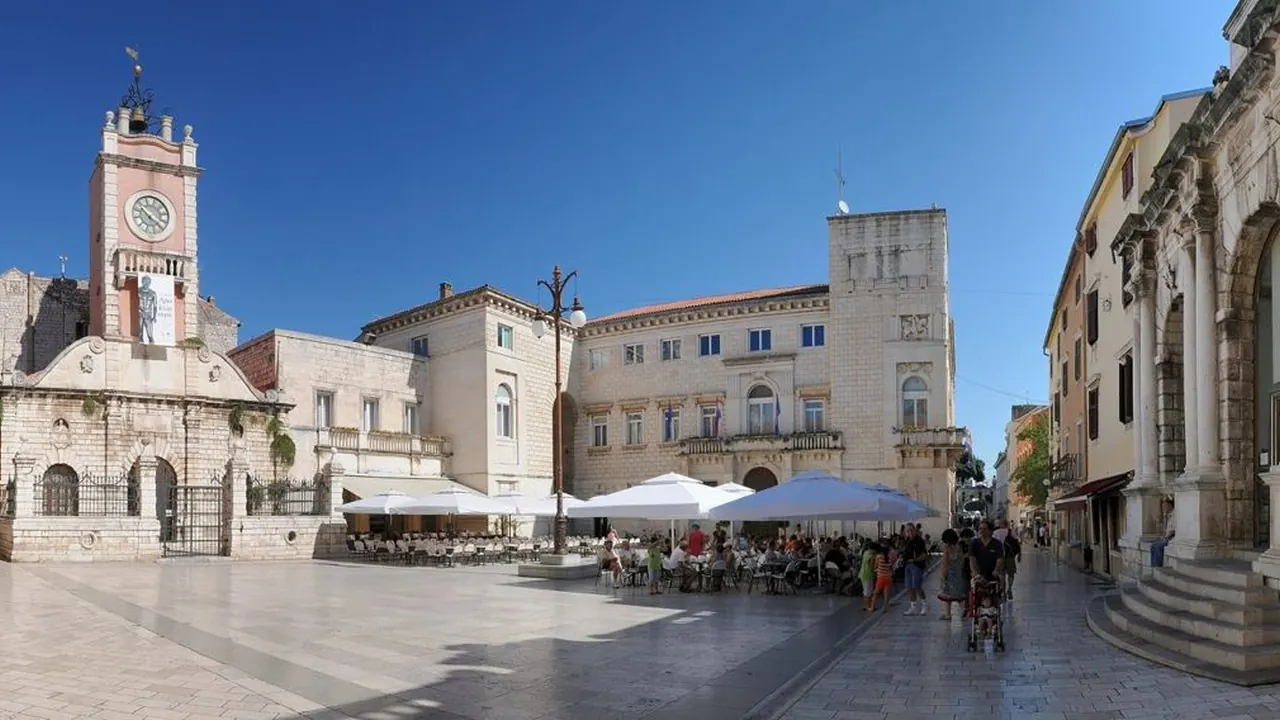
Photos: Piran by Zairon, CC BY-SA 4.0, cropped; Zadar by Böhringer Friedrich, CC BY-SA 2.5, cropped.
Piran or Zadar?
Our verdict in twelve categories, each scored against the same fixed benchmark cities, and the climate month by month, so you can choose for your trip.
Choose Piran for
- wellness
- day trips
- getting around
Piran suits a slow, unhurried stay on a tiny car-free peninsula, with seawater spas and salt-mud treatments close by and evenings that end early on Tartini Square. It is also the better base for roaming: Trieste, the Istrian hill towns, Ljubljana and even Venice by boat are all within a day's reach. Choose it for a quiet, romantic vacation that mixes swimming off the rocks with outings across three countries.
Choose Zadar for
- nature and the outdoors
- nightlife
- beaches
Zadar is the better pick for an active trip. Paklenica's gorges, the Kornati islands and the Krka falls are all close, and ferries leave from the edge of the old town. It also has the sandy beaches at Nin, more Roman and medieval history to explore, and livelier summer evenings on the Riva. Travellers who want a fuller, more varied week by the sea will get more out of it.
Scoreboard
Twelve categories on one fixed scale from 0 to 100. The shaded stretch is the gap between the two.
Your match
Pick a travel style or drag the sliders, and both match scores follow your weighting.
Wins on wellness and day trips with your weighting.
Wins on nature and the outdoors and nightlife with your weighting.
What matters to you?
Category by category
What the scores mean for a trip.
Beaches & swimming
Both towns swim the same way at home: you lower yourself off concrete platforms and rocks into clear Adriatic water, from Piran's seafront below the walls or from Zadar's stone promenade. The difference is what lies beyond. From Piran the choice is the little pebble cove at Fiesa, the small artificial sand at Portoroz or the cliff-backed shore at Strunjan.
Zadar has much more. Kolovare and the pine-shaded shore at Borik are in town, the long, shallow sandy beaches at Nin are about 20 minutes north, and ferries run to coves on Ugljan, Pašman and Dugi Otok, where Sakarun's pale sand makes a proper beach day.
Food & drink
Neither town is a food destination, and both serve grilled fish and squid in konobas whose menus repeat one another. The difference lies in what comes from inland. Piran draws on Slovenian Istria: truffles, olive oil, white Malvazija, dark Refosk and the salt from its own pans.
Zadar cooks Dalmatian food, with black risotto, octopus or lamb under the peka bell, Pag cheese and pršut, and a glass of Maraschino, the town's own cherry liqueur. Its market by the walls adds a morning outing that Piran does not have.
Culture & sights
Zadar has the deeper history. The open Roman forum, the round ninth-century Church of St Donatus, a cathedral bell tower you can climb, and Venetian walls on the UNESCO list all sit within a few minutes of each other. The Museum of Ancient Glass and the Sea Organ add enough for two full days.
Piran is more about atmosphere than sights. Its Venetian Gothic lanes, oval Tartini Square and St George's campanile above the bay make a lovely half-day to full-day wander, but the maritime museum and the aquarium are modest.
Nightlife
Neither is a party town, but Zadar keeps going later. Summer evenings start with the sunset at the Sea Organ and move on to café-bars on Kalelarga and terrace bars on the walls. Anyone wanting clubs can make the hour's trip to Zrće on Pag.
Piran goes quiet soon after a glass of wine on the square or on the Punta, and the nearest late-night options are the beach bars, casino and few summer clubs in Portoroz.
Nature & outdoors
Zadar sits between a mountain range and an archipelago, and that makes a big difference. Paklenica's limestone gorges offer real hiking and some of Croatia's best climbing. Boats go out to the bare Kornati islands and the salt lake at Telašćica, and Krka's waterfalls and Plitvice Lakes are within day range.
Piran's outdoors is gentler and smaller in scale: the flysch cliffs and cliff-top path at Strunjan, the birds of the Secovlje lagoons, kayaking below the cliffs, and the Parenzana cycle route through olive groves, with the Skocjan caves about an hour inland.
Day trips
Piran has the edge here because it sits where three countries meet. Trieste's Habsburg squares are under an hour away. Rovinj, Porec, Motovun and Groznjan lie just across the Croatian border, Ljubljana and Predjama Castle are easy days out, and in summer boats cross the gulf to Venice.
Zadar's best outings are Šibenik's hillside old town and Nin's tiny royal church, both close. Split and Trogir are rewarding but mean long days, and the variety does not match Piran's reach into three countries.
Good for families
Both are calm, safe and car-free, and both are short on attractions built for children, so the difference is in the detail. Piran has a small aquarium on the harbour, but its swimming is off ledges and its lanes to the church are steep.
Zadar is flat throughout. It has a broad promenade for scooters, the Sea Organ and the light-up tiles of the Greeting to the Sun, Nin's sandy shallows and short ferry rides that feel like an adventure, which makes a longer stay easier to fill.
Getting around
Both old towns are compact, pedestrian peninsulas you can cross on foot in about a quarter of an hour. In Piran you leave the car in the garage at the edge of town and use the shuttle or the seafront promenade to reach Portoroz.
Zadar's advantage is the ferries from the edge of the old town, which make island hopping easy, while summer parking near the peninsula is tight. In both places the wider region, from the Istrian hill towns to the national parks, is far easier by hire car than by regional bus.
Shopping & style
Zadar offers a little more. Kalelarga, its marble main street, has jewellers and fashion chains, the open-air market is pleasant for browsing, and there are malls on the edge of town. Piran has only galleries, craft shops and harbour souvenir stalls. In both places the best things to take home are edible: salt flower from Secovlje in Piran, and Maraschino, Pag cheese and Pag lace in Zadar.
Affordability
Zadar is somewhat easier on the budget, with private apartments that are good value outside high summer and inexpensive ferries and buses. National park tickets and boat excursions are the costs that add up there.
Piran's tiny old town has few rooms and fills up in July and August, so staying in Portoroz or coming out of season is the usual way to keep costs down. On the other hand, its main pleasures, swimming and wandering, cost nothing.
Live music & performing arts
Both towns are summer-only for music, and both build their programmes around old churches. Zadar has the more memorable series in the Musical Evenings in St Donatus, with early and chamber music in a ninth-century rotunda, and you may hear klapa singing in the squares. Piran honours Tartini with concerts on the square and in the monastery cloister, plus occasional recitals at the small Tartini Theatre.
Wellness & relaxation
Piran is much the stronger choice for spa time, because the sea and the salt pans supply the treatments. Portoroz offers seawater pools and brine baths, at Secovlje you can lie in salt mud outdoors among the lagoons, and Strunjan has its own seawater health resort.
Zadar has no comparable spa tradition. Beyond the hotel spas at Borik and the mud of Nin's lagoon, it relies on a slow pace: café mornings, an afternoon siesta and sunset on the Sea Organ steps.
When should you go?
Pick your month. The climate figures are measured averages, not a forecast.
Piran in July
Zadar in July
Daytime high, °C
Rainfall in the month, mm
Where the figures come from
Zadar has no rain gauge within 25 km of the centre, so its rainfall comes from a gridded climate dataset read at the city rather than from a gauge further away.
Temperature and rainfall are climate normals, averaged over the years shown. Piran: 2005-2020 (sunshine 1991-2020, rainfall 1991-2020) normals, Portoroz (1.2 km from centre). Zadar: 1999-2020 (rainfall 1991-2020) normals, Zadar / Zemunik (9.9 km from centre).
Both towns are for swimming from June to September. The sea reaches about 25°C in August at each, and in May and October it is too cool for most people. The main difference is summer rain. Piran has no real dry season: rain keeps coming through June, July and August, though July and August are still its sunniest months, with July just ahead. Zadar is markedly dry in high summer, with only 29mm in July. It is also a little hotter, at around 31°C in July and August, which makes midday walks and high-ground hikes hard work.
Autumn turns wet on both coasts from September, and November is Piran's rainiest month at 125mm. May, June and September are the best months for walking either town in comfortable warmth. In winter Zadar stays about a degree milder, but neither town is a place for winter sun.
Which traveller are you?
For an outdoors trip, Zadar is the clear choice. Paklenica has serious hiking and climbing, sailing and boat trips go out to the Kornati and Telašćica, and Krka and Plitvice are within reach. Piran's cliff paths, salt pans and cycle route are gentle by comparison.
On a relaxing and wellness trip, Piran comes out ahead. Portoroz has a long spa tradition, with seawater pools and brine baths, you can lie in salt mud outdoors at the Secovlje pans, and the car-free lanes set an easy pace. Zadar mostly has hotel spas.
On a beach and sun trip, Zadar gives you more. You can swim off the promenade in town, and Nin's long sandy shallows and the island coves, Sakarun above all, are a ferry or a short drive away. Its drier summers help too, while Piran means concrete ledges or Portoroz's small artificial beach.
Before you go
| Measure | Piran | Zadar |
|---|---|---|
| Official language | Slovene | Croatian |
| Currency | Euro (EUR) | Euro (EUR) |
| Sockets | CF230 V, 50 Hz | CF230 V, 50 Hz |
| Driving side | Right | Right |
| Time zone | UTC+1, UTC+2 in summer | UTC+1, UTC+2 in summer |
| Emergency number | 112 | 112 |
| Elevation | 7 m | 5 m |
| Main airport | Trieste Airport (TRS)34 km from centre32 non-stop destinations | Zadar Airport (ZAD)10 km from centre66 non-stop destinations |
| Public holidays this year | 21 days | 14 days |
By the numbers
| Measure | Piran | Zadar |
|---|---|---|
| City population | 3,787 | 70,779 |
| People per km² | 85 | - |
| Museums within 10 km | 5 | 1 |
| UNESCO World Heritage sites within 50 km | 4 | 2 |
| Swim season, months above 21 °C | 4 months | 4 months |
Where else could you go?
Every comparison below shares a destination with this one, so you can follow Piran or Zadar somewhere new.