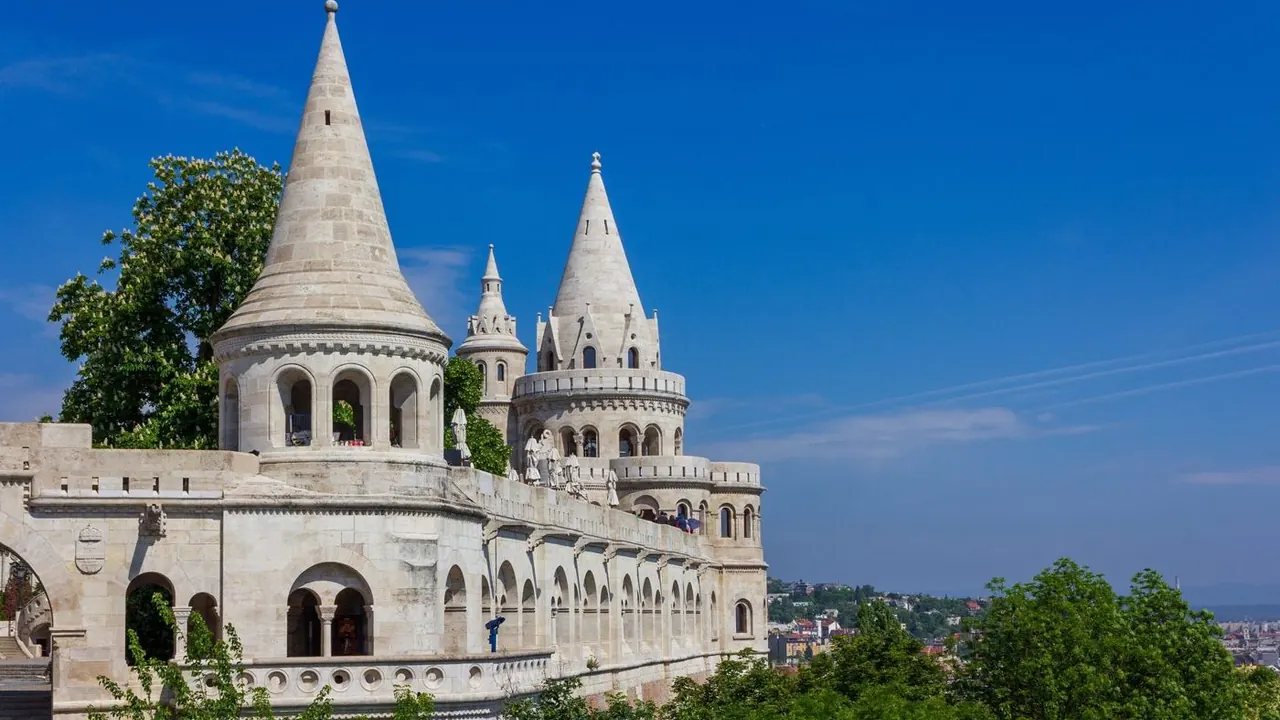
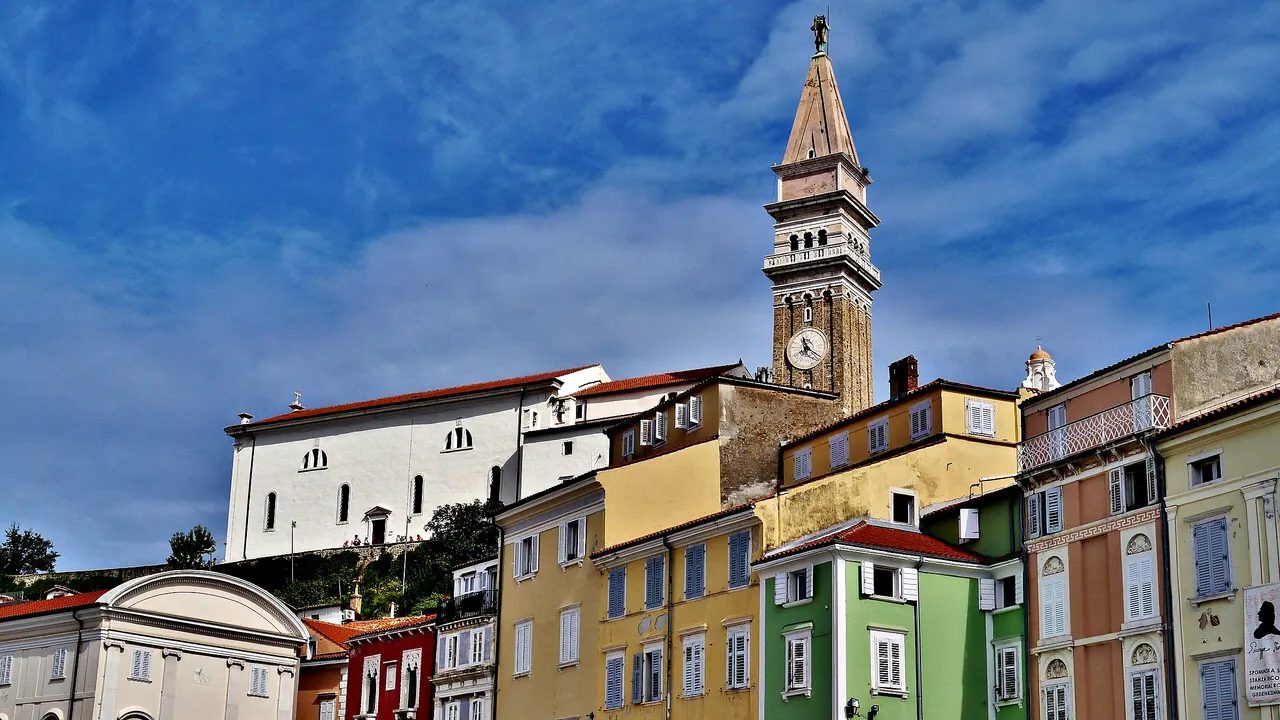
Photos: Budapest by Perituss, CC0; Piran by Zairon, CC BY-SA 4.0, cropped.
Budapest or Piran?
Our verdict in twelve categories, each scored against the same fixed benchmark cities, and the climate month by month, so you can choose for your trip.
Choose Budapest for
- nightlife
- live music and the arts
- wellness
Budapest suits a city trip with real depth. Parliament and the castle face each other across the Danube, there is classical music most nights, the ruin bars of District VII stay open late, and the thermal baths make a cold month as worthwhile as a warm one. It rewards several full days of sights and evenings out, and it costs less once you eat away from the tourist core.
Choose Piran for
- beaches
- day trips
Pick Piran if what you want is the sea and a slower pace. The car-free peninsula takes about a day to get to know, so the town works best as a quiet base: swim off the rocks in summer, then drive out to Trieste, the Istrian hill towns and the Karst caves. Expect early nights and simple seafood rather than a full cultural programme.
Scoreboard
Twelve categories on one fixed scale from 0 to 100. The shaded stretch is the gap between the two.
Your match
Pick a travel style or drag the sliders, and both match scores follow your weighting.
Wins on nightlife and live music and the arts with your weighting.
Wins on beaches and day trips with your weighting.
What matters to you?
Category by category
What the scores mean for a trip.
Beaches & swimming
Piran has the sea, which Budapest cannot offer. In Piran you climb down ladders and off concrete platforms below the walls into clear Adriatic water. The pebbles at Fiesa and the small artificial sand beach at Portoroz are close by, though neither is a long strand.
Budapest's version of a beach is the lido. Big open-air pools such as Palatinus on Margaret Island have lawns, slides and wave pools. Lake Velence, under an hour by train, adds warm, shallow open water, but that is a lake outing, not a seaside one.
Food & drink
Budapest has far more to eat. There are paprika-red Hungarian classics, the tiled Great Market Hall, layered cakes in the old coffee houses, a serious modern restaurant scene and wine bars pouring Tokaji, Eger reds and Somló whites.
In Piran the cooking is grilled fish, squid and scampi buzara, eaten in konobas around Tartini Square with Malvazija and local olive oil. The food is fresh and pleasant, but the harbour menus repeat each other, and anything more ambitious means driving into Istria.
Culture & sights
Budapest is a capital with several days of sightseeing. Parliament, the Royal Palace and the Fishermen's Bastion line the river, Andrássy Avenue runs out to Heroes' Square, and the city has the Museum of Fine Arts, the Dohány Street Synagogue and Memento Park's communist statues.
Piran's sight is the town itself: Venetian Gothic houses, oval Tartini Square, the campanile of St George and the walk along the old walls above the red roofs. Its maritime museum and monastery cloister are modest, and one unhurried day covers it all.
Nightlife
These two could hardly be further apart after dark. Budapest's ruin bars fill crumbling tenement courtyards in the old Jewish Quarter, the clubs on Kazinczy and Király streets stay loud past 2am, and in summer the party moves onto Danube boats and garden bars. Weekends can be rowdy with stag groups, but the wine bars of District V are calmer.
In Piran, an evening means a glass of wine on the Punta while the sun goes down, and the town is asleep soon after. Portoroz's casino and handful of summer clubs are the only alternative.
Nature & outdoors
Both offer gentle outdoors rather than mountains, but the setting differs. Budapest has wooded hills and the river. You can take the cogwheel railway into the Buda Hills, crawl through caves carved by thermal water, or go an hour north to the forested ridges and cycle path of the Danube Bend.
Piran's outdoors is the coast. You can paddle beneath the flysch cliffs of Strunjan, watch wading birds among the Secovlje salt pans, cycle the Parenzana through olive groves, or go underground in the huge Skocjan caves on the Karst.
Day trips
Piran has the edge because it sits where three countries meet. Trieste is under an hour away, Rovinj, Porec and the hill towns of Motovun and Groznjan lie across the Croatian border, Predjama Castle and Ljubljana are within reach, and summer boats cross to Venice. Most of this works best with a hire car.
Budapest's outings are easier without one. Suburban trains run to Szentendre's Baroque lanes and Gödöllő's palace, and the castles of Visegrád and Esztergom's basilica sit along the Danube Bend. Eger and Hollókő are longer days out.
Good for families
Budapest gives children more to do. There is the old zoo with its Art Nouveau animal houses, the Children's Railway run by uniformed schoolchildren, the hands-on Palace of Wonders and summer lidos with slides. Metro stairs and the loud weekend nights in District VII take some planning.
Piran is easy and safe, with no cars in the old town, a flat seafront and calm, warm water, plus a small aquarium for younger children. Beyond that there is little built for families, so it suits a few relaxed days better than a long stay with restless older children.
Getting around
Budapest is the easier city to get around. Central Pest is flat and walkable. One tram line runs along the river past Parliament, the boulevard trams run round the clock, and the little yellow carriages of continental Europe's oldest underground still run under Andrássy Avenue. Ferries and the funicular cover the rest.
Piran itself needs no transport, since you can walk across the car-free old town in a quarter of an hour. Leaving it is the problem: there is no railway and buses are slow to Istria and the Karst, so most visitors hire a car.
Shopping & style
Budapest is no great shopping capital, but it has far more to buy. Herend and Zsolnay porcelain have their own shops, and there are Hungarian design boutiques in Districts V and VII, communist-era finds at the Ecseri flea market, and paprika and Tokaji in the Great Market Hall.
Piran's best buys are what the coast produces: sea salt and salt flower from Secovlje, Istrian olive oil and local wine. For anything else you go to Ljubljana or Trieste.
Affordability
Budapest is the cheaper stay. Transport, wine and ordinary coffee houses cost little, central mid-range hotels are easy to find, and lunch menus in residential districts keep meals cheap. Prices rise only in the tourist core around Váci utca.
Piran has a summer premium: in July and August, rooms in the old town are scarce and waterfront tables charge for the view. Staying in Portoroz or coming outside the season brings costs back to fair, and the swimming and walking cost nothing.
Live music & performing arts
Budapest has a serious music city's calendar all year. Opera plays at the neo-Renaissance State Opera House, chamber music fills the Art Nouveau hall of the Liszt Academy, orchestras perform at Müpa, and folk ensembles, operetta and church concerts add to it. Spoken theatre is mostly in Hungarian, so visitors stick to music and dance.
Piran honours its native violinist Tartini with summer concerts in churches, the monastery cloister and the main square. Outside the warm months there is very little on.
Wellness & relaxation
Budapest has some of Europe's great bathing culture. Over a hundred hot springs feed baths such as the Széchenyi, with chess players in the steaming water, the mosaic halls of the Gellért, and Rudas and Király under sixteenth-century Ottoman domes. An afternoon of pools, saunas and cold plunges is part of almost any stay.
Piran relaxes you with sea and salt instead of hot water. Portoroz offers seawater pools and brine baths, and at the outdoor spa among the salt pans you can lie in salt mud surrounded by lagoons. The car-free lanes and evening light set a slow pace, especially in May, June and September.
When should you go?
Pick your month. The climate figures are measured averages, not a forecast.
Budapest in July
Piran in July
Daytime high, °C
Rainfall in the month, mm
Temperature and rainfall are climate normals, averaged over the years shown. Budapest: 1991-2020 (sunshine 1981-2010, rainfall 1981-2010) normals, Budapest Met Center (2.1 km from centre). Piran: 2005-2020 (sunshine 1991-2020, rainfall 1991-2020) normals, Portoroz (1.2 km from centre).
Budapest has a proper continental year. August days reach 28°C, which is lido weather, and July is the sunniest month, but winter highs of around 4°C make long walks a chilly business. For walking, May and September are the months to aim for: mild days and plenty of light. May and June bring the year's heaviest showers, so September is usually the steadier of the two. In midwinter the steaming outdoor baths are the reason to come.
Piran has milder winters, but its year turns on the sea. The water is warm enough to swim from June to September and reaches 25°C in July and August. July highs of 30°C make the steep lanes hard work at midday. In autumn the two cities part ways. From September the coast gets much wetter, peaking at about 125mm in November, while Budapest stays fairly dry. That makes June the best month for Piran, with warm water, long sunny days and moderate rain. September still has a warm sea, but expect more wet days.
Which traveller are you?
On a beach and sun trip, Piran is the clear choice. It has warm, clear Adriatic water right below the old town walls, a pebble cove at Fiesa and sand at Portoroz. Budapest is landlocked and only has lidos and lakes.
For a food and nightlife trip, Budapest wins easily. You can spend evenings in the ruin bars and late clubs of District VII after dinners of goulash, Tokaji and Eger reds. Piran offers seafood and a sunset glass of wine, and then the town goes quiet.
On a relaxing and wellness trip, Budapest's thermal baths are hard to match: Széchenyi's outdoor pools, Gellért's mosaics and the Ottoman domes of Rudas. Piran's seawater and salt-mud treatments and car-free calm are gentler but more limited.
Before you go
| Measure | Budapest | Piran |
|---|---|---|
| Official language | Hungarian | Slovene |
| Currency | Forint (HUF) | Euro (EUR) |
| Sockets | CF230 V, 50 Hz | CF230 V, 50 Hz |
| Driving side | Right | Right |
| Time zone | UTC+1, UTC+2 in summer | UTC+1, UTC+2 in summer |
| Emergency number | 112 | 112 |
| Elevation | 117 m | 7 m |
| Main airport | Budapest Liszt Ferenc International Airport (BUD)18 km from centre157 non-stop destinations | Trieste Airport (TRS)34 km from centre32 non-stop destinations |
| Public holidays this year | 13 days | 21 days |
By the numbers
| Measure | Budapest | Piran |
|---|---|---|
| City population | 1,675,777 | 3,787 |
| People per km² | 3,191 | 85 |
| Museums within 10 km | 81 | 5 |
| UNESCO World Heritage sites within 50 km | 1 | 4 |
| Swim season, months above 21 °C | - | 4 months |
Where else could you go?
Every comparison below shares a destination with this one, so you can follow Budapest or Piran somewhere new.