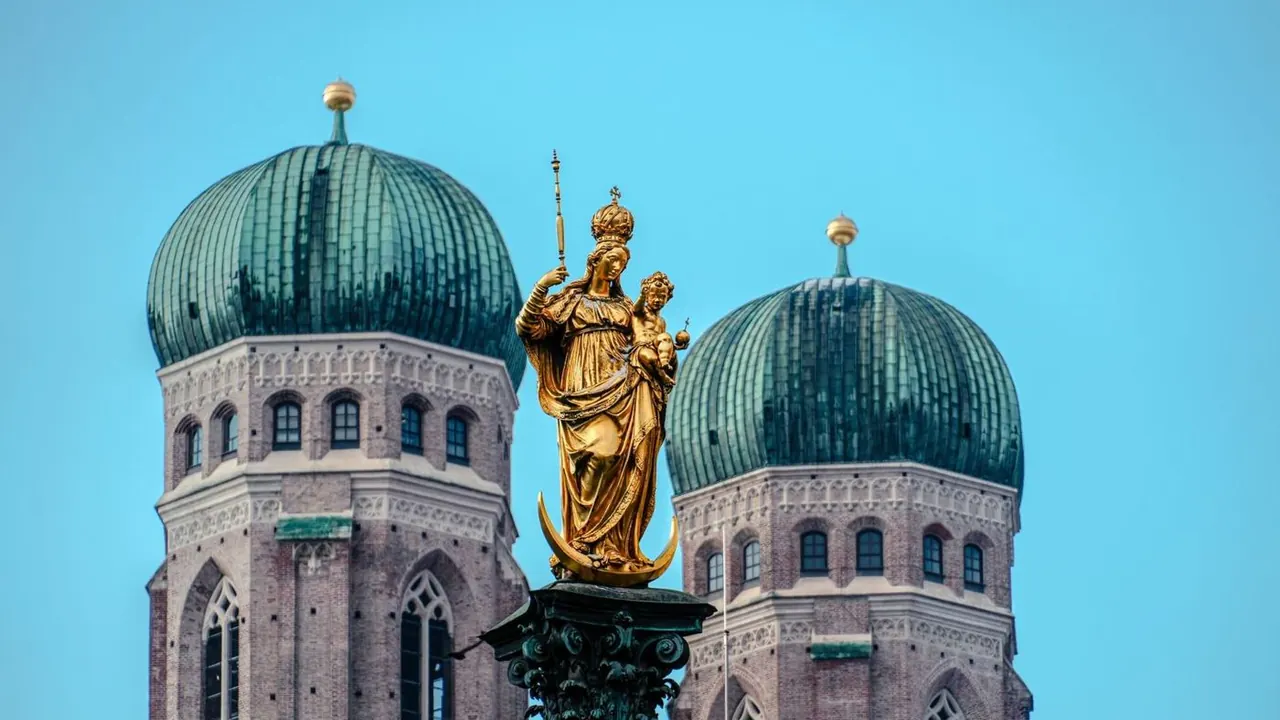
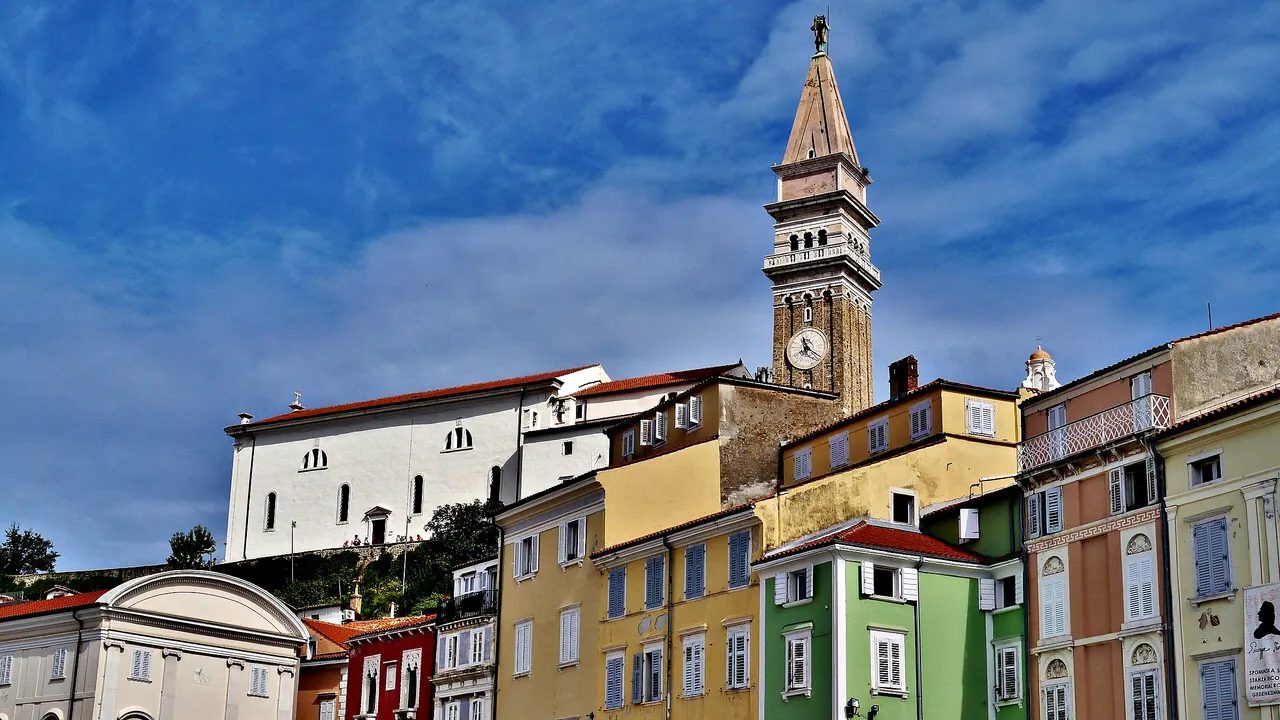
Photos: Munich by 0xd1ma, Pexels License; Piran by Zairon, CC BY-SA 4.0, cropped.
Munich or Piran?
Our verdict in twelve categories, each scored against the same fixed benchmark cities, and the climate month by month, so you can choose for your trip.
Choose Munich for
- live music and the arts
- shopping
- nightlife
Munich suits travellers who want a full city with plenty to fill every day. It has royal picture galleries and palaces, a world-class opera house and three serious orchestras, beer gardens and shopping streets, and an integrated train network that reaches the Alps, Salzburg and the castles of Bavaria without a car. It costs more and has no sea, but over a week it gives you far more to do.
Choose Piran for
- beaches
- prices
Piran is for a slower, smaller trip built around the water. You swim off the rocks below a Venetian old town, eat grilled fish by the harbour and watch the sunset from Tartini Square, with Trieste and the hill towns of Istria close by. Evenings are quiet and the town is easy to see in a day, so it rewards people who want sun, sea and rest more than a full programme.
Scoreboard
Twelve categories on one fixed scale from 0 to 100. The shaded stretch is the gap between the two.
Your match
Pick a travel style or drag the sliders, and both match scores follow your weighting.
Wins on live music and the arts and shopping with your weighting.
Wins on beaches and prices with your weighting.
What matters to you?
Category by category
What the scores mean for a trip.
Beaches & swimming
Piran has the sea, and Munich does not, though neither has a long sandy strand. In Piran you swim in clear Adriatic water from concrete platforms, rocks and ladders along the seafront and around the Punta, or from the pebbles at Fiesa. For sand you go along the shore to Portoroz or to the cliff-backed coast at Strunjan.
Munich's swimming is a summer side trip. People lie on the gravel banks of the Isar at the Flaucher or take the S-Bahn to the Starnberger See or the Ammersee, where you swim off jetties in fresh, alpine-fed water that never gets as warm as the Adriatic.
Food & drink
Munich gives you more to eat and more reasons to sit down. The beer halls and chestnut-shaded beer gardens serve roast pork, Schweinshaxe and white sausage, the Viktualienmarkt is good for grazing, and there are starred restaurants and solid Italian, Turkish and Balkan cooking.
Piran's strength is narrower: grilled fish, squid and scampi buzara in simple konobas, with Malvazija, Refosk, Istrian olive oil and local salt. It is good, plain eating, but the harbour menus are much alike, and anything more ambitious means driving inland.
Culture & sights
Munich is one of the great museum cities of Europe. The Kunstareal alone holds the old masters of the Alte Pinakothek, the Glyptothek's antique sculpture and the Blue Rider painters at the Lenbachhaus. Then there are the Residenz, Nymphenburg Palace and the vast Deutsches Museum, enough for several full days.
In Piran the town itself is the sight. Its Venetian Gothic lanes lead to the oval Tartini Square, and St George's campanile and the old walls look over the red roofs. The maritime museum and the Minorite cloister are pleasant but small, and a single unhurried day covers it all.
Nightlife
Munich has a real night out, even if it is a tidy one. Evenings often begin in a beer hall, and from there you can move on to the cocktail and gay bars of the Glockenbachviertel and Gärtnerplatz, the student pubs of Schwabing or a techno club that runs until morning at weekends. During the Oktoberfest the whole city turns into one long party.
Piran's evening is a glass of wine at sunset on Tartini Square or the Punta, then bed. Portoroz, a few minutes away, adds beach bars, a casino and some summer clubs, but the gap is wide.
Nature & outdoors
Munich has the mountains on its doorstep. The Alps begin about an hour south, and trains reach Garmisch-Partenkirchen, the Zugspitze and Tegernsee for hiking in summer and skiing in winter. In town, the English Garden is enormous, and surfers ride the Eisbach wave at its edge.
Piran's outdoors is gentler and coastal. You can walk the path above the flysch cliffs of Strunjan, watch wading birds at the Secovlje salt pans, paddle along the shore or cycle the old Parenzana railway line through vineyards. The Karst and the Skocjan caves are about an hour inland.
Day trips
Munich is the better base by some distance, both for the range of places within reach and because nearly all of them are a train ride away. Augsburg and its Fuggerei are half an hour out, Nuremberg's castle about an hour, and Regensburg on the Danube, baroque Salzburg and Innsbruck all make comfortable days. Add Neuschwanstein, Herrenchiemsee on its island in the Chiemsee and the painted villages of Oberammergau and Mittenwald, and you can fill a week of outings without a car.
Piran's strength is its corner of the map, where Slovenia, Italy and Croatia meet. Trieste is under an hour away, the hilltop towns of Motovun and Groznjan and the coast at Rovinj and Porec lie to the south, and in summer boats cross the gulf to Venice. The list is shorter, though, and most of it is far easier with a hire car.
Good for families
Munich has far more laid on for children. There is the Hellabrunn zoo on the Isar meadows, the hands-on sections of the Deutsches Museum, an aquarium in the Olympic Park, beer gardens with playgrounds, and Legoland within reach. Getting about with a pushchair is easy.
Piran is safe and calm, with a car-free old town, a flat seafront and warm, gentle summer sea, and its small aquarium suits toddlers. But swimming means ledges and ladders rather than sand, and the lanes up to the church are steep, so it suits a few quiet days with young children better than a long stay.
Getting around
Both centres are easy on foot. You can cross Piran's car-free peninsula in a quarter of an hour, and Munich's pedestrianised old town puts Marienplatz, the Residenz and the market a short walk apart.
Further out, Munich pulls well ahead. Its U-Bahn, S-Bahn, trams and buses form one network that reaches the museums, the palaces, the lakes and the airport, and the flat city is good for cycling. Piran has a shuttle to the car park and Portoroz, but there is no railway and the regional buses are slow, so most visitors hire a car to explore.
Shopping & style
Munich is a serious shopping city. It has the luxury houses of Maximilianstrasse, the department stores on Kaufingerstrasse, independent boutiques in Glockenbach, the old delicatessen Dallmayr and tailors who make dirndls and lederhosen. In December the Christmas markets add craft stalls to the old town.
Piran has a few galleries, craft shops and harbour souvenir stalls. The worthwhile buys are edible: salt flower from Secovlje, Istrian olive oil and coastal wine.
Affordability
Piran is the cheaper of the two, although neither is a bargain. It becomes dear in July and August, when old-town rooms are scarce and the waterfront restaurants charge for the view. Staying in Portoroz, coming outside high summer and eating in the simpler konobas bring costs down to a fair level.
Munich is expensive all year, with hotels the biggest cost, and they become very dear during the Oktoberfest and the trade fairs. Beer-garden picnics, free parks and lakes, and token Sunday museum fees help, but they do not close the gap.
Live music & performing arts
The two cities are not close here. Munich has the Bavarian State Opera in the National Theatre, the Munich Philharmonic and two more orchestras of real standing, chamber opera in the rococo Cuvilliés Theatre, operetta at the Gärtnerplatztheater, jazz clubs, and big touring acts at the Olympic Park.
Piran's music is a summer pleasure built around Tartini, the violinist born in the town. There are concerts in churches, the monastery cloister and on the square. Out of season there is very little to see.
Wellness & relaxation
Both are good places to unwind, but they offer different kinds of bathing. Munich follows the German indoor tradition. There are the Art Nouveau pools and steam bath of the Müller'sches Volksbad, textile-free saunas with infusion rituals, the huge thermal complex at Erding, and the spa towns of Bad Tölz and Bad Reichenhall towards the mountains.
Piran's treatments come from the sea. Portoroz has seawater pools and brine baths, you can lie in salt mud at the outdoor thalasso spa among the Secovlje lagoons, and Strunjan has a seawater health resort. The car-free lanes and evening light over the bay make it easy to slow down.
When should you go?
Pick your month. The climate figures are measured averages, not a forecast.
Munich in July
Piran in July
Daytime high, °C
Rainfall in the month, mm
Temperature and rainfall are climate normals, averaged over the years shown. Munich: 1991-2020 normals, München (1.9 km from centre). Piran: 2005-2020 (sunshine 1991-2020, rainfall 1991-2020) normals, Portoroz (1.2 km from centre).
Piran is the warmer of the two and its summer runs longer. From June to September afternoons are hot, reaching about 30°C in July, and the Adriatic is good for swimming from late June until the end of September, at around 25°C in high summer. Sunshine is plentiful from May to August. Autumn brings the rain, with the wettest months from September to November at up to 125mm. Spring and early autumn are the pleasant times for walking the lanes without the midday heat.
Munich has a shorter, cooler summer that peaks at about 25°C in July and August, good weather for walking the streets, though this is also its wettest season, with showers and storms bringing around 120mm a month. The lakes are warm enough to swim in only from June to early September. May and September are the comfortable months for sightseeing, and from November to February the city is cold and grey, with little sun.
Which traveller are you?
For a beach and sun trip, Piran is the obvious pick. It has warm Adriatic water to swim in from the rocks and ladders under the town walls, pebbles at Fiesa and sand in Portoroz. Munich has only cool alpine lakes and the gravel banks of the Isar.
On a culture and arts trip, Munich wins easily. It has the Alte Pinakothek and the rest of the Kunstareal, the Residenz and Nymphenburg, and a full opera and concert season. Piran has a lovely old town and summer recitals, but a single day covers them.
For a food and nightlife trip, Munich offers far more. You get beer halls and gardens, the Viktualienmarkt, starred dining and late bars and clubs around Gärtnerplatz. Piran's harbour menus repeat one another and its lanes go quiet soon after sunset.
Before you go
| Measure | Munich | Piran |
|---|---|---|
| Official language | German | Slovene |
| Currency | Euro (EUR) | Euro (EUR) |
| Sockets | CF230 V, 50 Hz | CF230 V, 50 Hz |
| Driving side | Right | Right |
| Time zone | UTC+1, UTC+2 in summer | UTC+1, UTC+2 in summer |
| Emergency number | 112 | 112 |
| Elevation | 519 m | 7 m |
| Main airport | Munich Airport (MUC)29 km from centre210 non-stop destinations | Trieste Airport (TRS)34 km from centre32 non-stop destinations |
| Public holidays this year | 12 days | 21 days |
By the numbers
| Measure | Munich | Piran |
|---|---|---|
| City population | 1,505,036 | 3,787 |
| People per km² | 4,844 | 85 |
| Museums within 10 km | 75 | 5 |
| UNESCO World Heritage sites within 50 km | 1 | 4 |
| Swim season, months above 21 °C | - | 4 months |
Where else could you go?
Every comparison below shares a destination with this one, so you can follow Munich or Piran somewhere new.