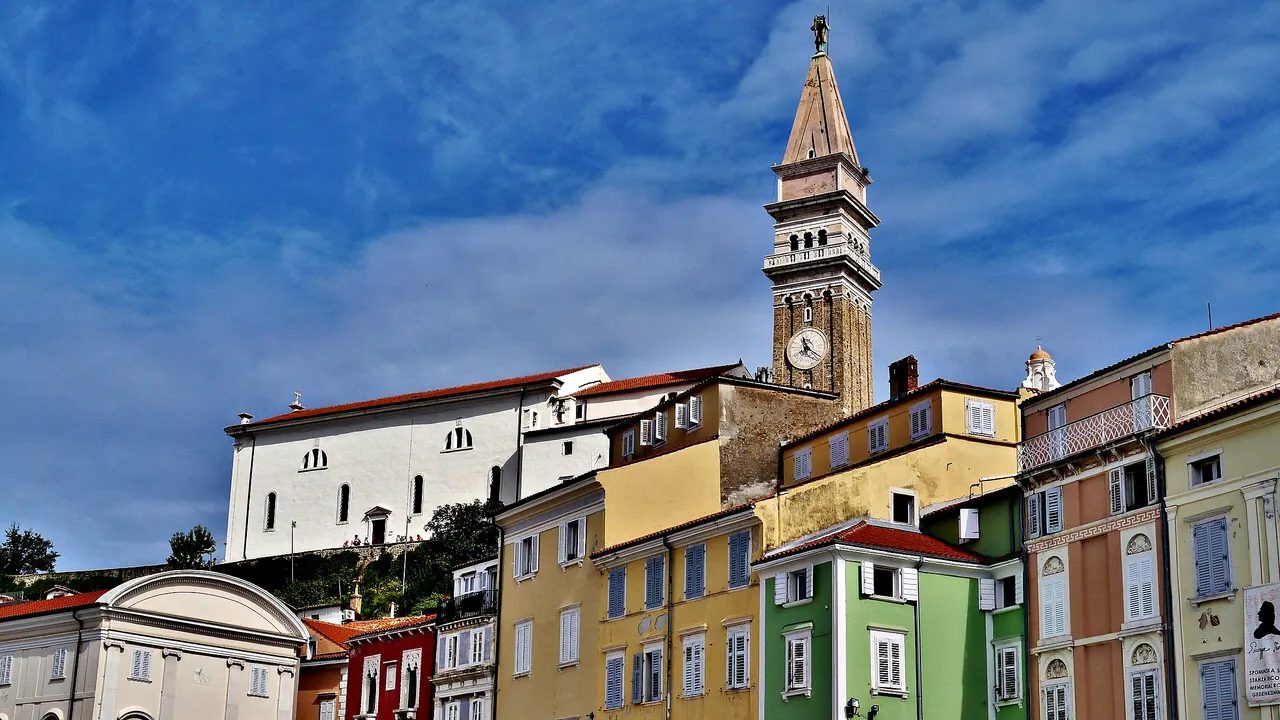
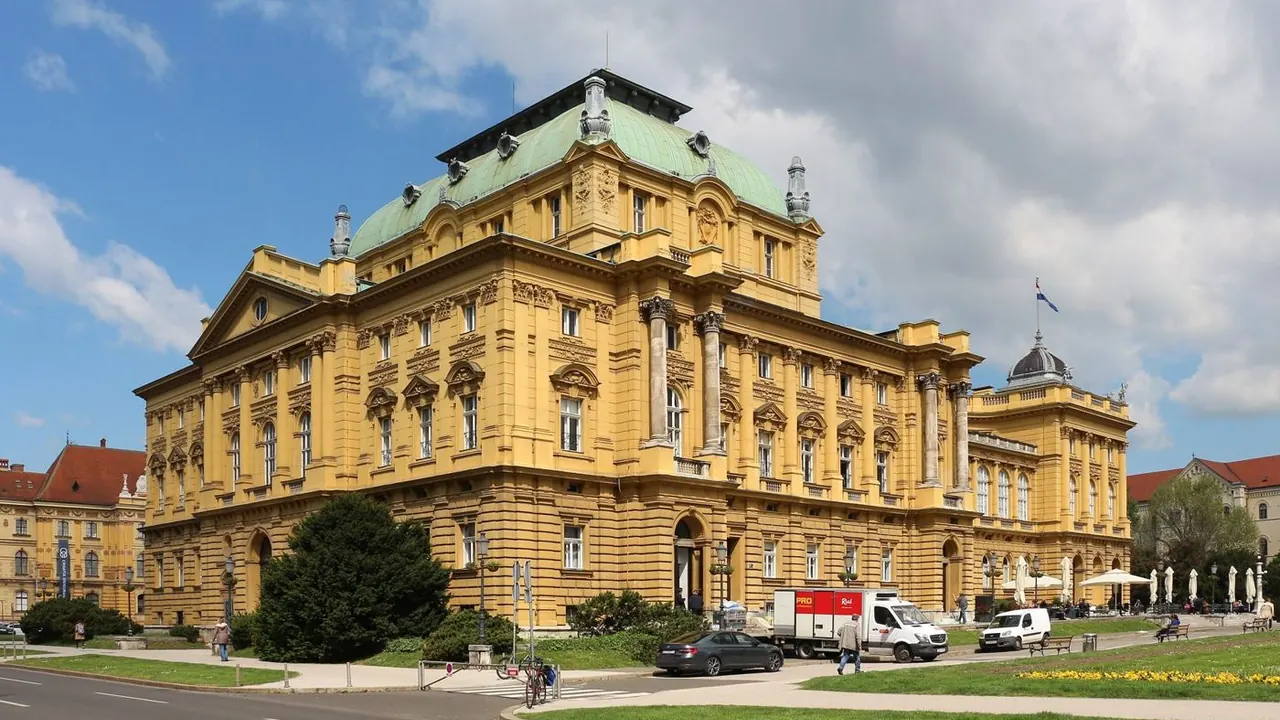
Photos: Piran by Zairon, CC BY-SA 4.0, cropped; Zagreb by Bernard Gagnon, CC BY-SA 4.0, cropped.
Piran or Zagreb?
Our verdict in twelve categories, each scored against the same fixed benchmark cities, and the climate month by month, so you can choose for your trip.
Choose Piran for
- beaches
- wellness
- day trips
Piran suits a slow trip by the water. You swim off the rocks below a Venetian old town, spend evenings on Tartini Square and book seawater and salt-mud treatments nearby. A hire car opens up Trieste, the hill towns of Istria and the Karst. Choose it for a summer week of sea and quiet, not for nights out or a full programme of concerts.
Choose Zagreb for
- live music and the arts
- nightlife
- shopping
For a city break with more going on, Zagreb is the better pick. It has two days of Upper Town churches and Lower Town museums, opera and orchestras at the National Theatre and Lisinski, and café terraces that become bars along Tkalčićeva. Daily costs are also lower. Anyone who wants the sea should treat it as a stop before the coast, not the whole trip.
Scoreboard
Twelve categories on one fixed scale from 0 to 100. The shaded stretch is the gap between the two.
Your match
Pick a travel style or drag the sliders, and both match scores follow your weighting.
Wins on beaches and wellness with your weighting.
Wins on live music and the arts and nightlife with your weighting.
What matters to you?
Category by category
What the scores mean for a trip.
Beaches & swimming
Piran has the Adriatic right at its walls, but here you swim rather than sunbathe. You climb down ladders from concrete platforms around the Punta or use the small pebble cove at Fiesa. For sand you go to Portoroz or the quieter shore at Strunjan.
Zagreb is two hours from the sea. Lake Jarun and Bundek are pleasant for a swim on a hot afternoon, but a real beach day means leaving the city for the day.
Food & drink
Zagreb offers more variety and more of its own character. There are štrukli, turkey with mlinci and Zagorje sausages, the farmers' stalls at Dolac each morning, and a coffee culture that is a pastime in itself. Its serious kitchens are few, but the range is wider than on the coast.
Piran keeps things simple, with grilled fish, squid and scampi buzara by the harbour, local olive oil, Malvazija and salt from the pans. The seafood is good, but the harbour menus repeat one another, and for variety you have to drive inland.
Culture & sights
Piran is a single sight: a compact Venetian Gothic peninsula around Tartini Square, the campanile of St George and the old walls on the ridge. Its maritime museum and monastery cloister are modest, and a day covers the lot.
Zagreb needs two days. There is the Upper Town with St Mark's tiled roof and the Stone Gate, and the Austro-Hungarian Lower Town around the Green Horseshoe. Add the Mimara and Strossmayer collections, the Museum of Naive Art and the ivy-covered arcades of Mirogoj.
Nightlife
Piran goes quiet soon after sunset drinks on the Punta. The beach bars, casino and few summer clubs of Portoroz are the only step up.
Zagreb has a proper night out, though a relaxed one. The terraces of Tkalčićeva fill on warm evenings, smaller cocktail and craft beer bars sit around Flower Square, the lakeside clubs at Jarun open in summer, and student venues run all year.
Nature & outdoors
Zagreb has a forested mountain on its doorstep. The beech woods, marked trails and huts of Medvednica are a tram and bus ride away, Maksimir's lakes and oak woods are in town, and Plitvice's waterfalls make a long day trip south.
Piran's outdoors is coastal and gentler. There are the flysch cliffs and clifftop path at Strunjan, wading birds among the Secovlje salt pans, kayaking under the cliffs and the Parenzana cycle route through the vineyards. For woodland walking without a car, Zagreb gives you more.
Day trips
Piran's position where three countries meet is its great strength. Trieste is under an hour away, Rovinj, Porec and Motovun lie across the border in Istria, and Predjama Castle and Ljubljana are on the Slovenian side. In summer, boats cross the gulf to Venice.
Zagreb's choice is good but lower-key: Trakošćan and the Zagorje hills, baroque Varaždin, Samobor and Karlovac's star-shaped fortress. Nothing on that list matches Venice or Trieste, though Zagreb does have a train to Ljubljana while Piran depends on a car.
Good for families
Both are safe and easy with children for a few relaxed days, and neither is built around them. What differs is the setting. Piran has the sea, with a car-free old town, calm warm water and a small aquarium, though swimming is from ladders and the sand is at Portoroz.
Zagreb has city outings instead: the zoo in Maksimir, the old trams and planes at the Tesla technical museum, the funicular ride and lake swimming at Jarun in summer.
Getting around
Inside Piran you need no transport at all, since the car-free old town takes a quarter of an hour to cross on foot. Beyond it there is no railway, and the buses are slow, so exploring the region usually means hiring a car.
Zagreb has a real network. Blue trams run across the city, the funicular lifts you to the Upper Town and buses go out to Medvednica and the airport, so you can see far more without driving.
Shopping & style
Neither is a shopping destination, but Zagreb at least has Ilica's chains and local fashion, a few design shops, licitar hearts, Croatian neckties and a Sunday flea market at Britanski trg. Piran comes down to a few galleries and the salt, olive oil and wine of the coast, though these are well worth taking home.
Affordability
Zagreb is the cheaper stay. Central apartments are reasonably priced, trams and museums cost little, and bakery snacks and market food keep everyday spending low.
Piran is mid-priced, and July and August cost more because old-town rooms are scarce and the waterfront restaurants charge for the view. Staying in Portoroz or coming out of season helps, and the town's main pleasures, swimming and walking, are free.
Live music & performing arts
Zagreb has a season that runs through the year. Opera and ballet play at the ochre Croatian National Theatre, the Zagreb Philharmonic is at Lisinski, the Zagreb Soloists perform in churches and halls, and there are jazz clubs and summer courtyard concerts. Much of the spoken theatre is in Croatian.
Piran's music is a summer affair of Tartini concerts in churches, the monastery cloister and on the square. Out of season there is little to go to.
Wellness & relaxation
Piran is the better place to unwind. Portoroz has seawater pools and brine baths, you can lie in salt mud at the outdoor spa among the Secovlje pans, and the car-free lanes at dusk set the pace.
Zagreb's spas in town are mostly hotel wellness floors, and its thermal pools are about an hour away in Zagorje, at Tuheljske or Stubičke Toplice. Its calm comes from long café mornings and shaded parks rather than treatments.
When should you go?
Pick your month. The climate figures are measured averages, not a forecast.
Piran in July
Zagreb in July
Daytime high, °C
Rainfall in the month, mm
Temperature and rainfall are climate normals, averaged over the years shown. Piran: 2005-2020 (sunshine 1991-2020, rainfall 1991-2020) normals, Portoroz (1.2 km from centre). Zagreb: 1991-2020 (sunshine 1981-2010, rainfall 1981-2010) normals, Zagreb / Gric (0.6 km from centre).
Piran's beach season runs from June to September, when the sea reaches 23-25°C and July brings the longest, sunniest days. May and the first half of September are the gentler months for walking the lanes and the cliff paths. The rain sets in from late September, and October and November are the wettest stretch of the year.
Zagreb has a sharper inland climate. Winters are colder, at about 5°C by day in January, and July climbs to around 29°C, with June and August the wettest summer months. Late spring and September are the most comfortable times to walk the city. In high summer the two are similarly warm, but only Piran has the sea to cool off in.
Which traveller are you?
For a beach and sun trip, Piran is the clear choice. It sits on the Adriatic, with clear, warm water off its rocks and sand a short walk away at Portoroz. Zagreb's lakes are only for cooling off, and the sea is two hours away.
On a culture and arts trip, Zagreb gives you more to fill the days. It has an Upper Town and a Lower Town to explore, museums ranging from old masters to naive art, and opera, ballet and orchestras at the National Theatre and Lisinski.
For a relaxing and wellness trip, Piran is the calmer base. It has car-free lanes and evenings over the bay, with seawater and salt-mud treatments at Portoroz and among the salt pans. Zagreb's thermal spas are an hour out of town.
Before you go
| Measure | Piran | Zagreb |
|---|---|---|
| Official language | Slovene | Croatian |
| Currency | Euro (EUR) | Euro (EUR) |
| Sockets | CF230 V, 50 Hz | CF230 V, 50 Hz |
| Driving side | Right | Right |
| Time zone | UTC+1, UTC+2 in summer | UTC+1, UTC+2 in summer |
| Emergency number | 112 | 112 |
| Elevation | 7 m | 127 m |
| Main airport | Trieste Airport (TRS)34 km from centre32 non-stop destinations | Zagreb Franjo Tuđman International Airport (ZAG)11 km from centre66 non-stop destinations |
| Public holidays this year | 21 days | 14 days |
By the numbers
| Measure | Piran | Zagreb |
|---|---|---|
| City population | 3,787 | 767,131 |
| People per km² | 85 | - |
| Museums within 10 km | 5 | 27 |
| UNESCO World Heritage sites within 50 km | 4 | 0 |
| Swim season, months above 21 °C | 4 months | - |
Where else could you go?
Every comparison below shares a destination with this one, so you can follow Piran or Zagreb somewhere new.