Photos: Piran by Zairon, CC BY-SA 4.0, cropped; Vaduz by Justin LaBerge, CC BY 2.0, cropped.
Piran or Vaduz?
Our verdict in twelve categories, each scored against the same fixed benchmark cities, and the climate month by month, so you can choose for your trip.
Choose Piran for
- beaches
- prices
- culture and sights
Choose Piran for a slow seaside stay where swimming, sunsets and a lovely Venetian old town fill the days. It is the warmer, sunnier and much cheaper of the two. You also eat better, with seafood by the water, and Trieste and the Istrian coast are close for outings when the sea is not enough.
Choose Vaduz for
- nature and the outdoors
Vaduz makes sense for walkers, and for skiers in winter, who want the mountains right outside town. Trails start at the edge of the centre and the Rätikon peaks are half an hour up the road. In return, expect quiet evenings, a short list of sights led by a fine modern art collection, and Swiss prices that make it a costly base.
Scoreboard
Twelve categories on one fixed scale from 0 to 100. The shaded stretch is the gap between the two.
Your match
Pick a travel style or drag the sliders, and both match scores follow your weighting.
Wins on beaches and prices with your weighting.
Wins on nature and the outdoors with your weighting.
What matters to you?
Category by category
What the scores mean for a trip.
Beaches & swimming
Piran has the Adriatic right below its walls. You swim in clear water from rocks, ladders and concrete platforms around the Punta, Fiesa is a small pebble cove nearby, and there is sand at Portoroz or along the cliff-backed shore at Strunjan. It is a place for swimming rather than sunbathing, but the sea is there every day of summer.
Vaduz has nothing like it. The Rhine is not for swimming, so on a hot afternoon you go to a municipal pool or drive to the Walensee or Lake Constance. The lake water there stays a few degrees cooler than the Adriatic.
Food & drink
Neither town is a food destination, but Piran gives you more to enjoy at the table. Simple konobas serve grilled fish, squid and scampi buzara, with Istrian olive oil, truffles and local salt on every table, even if the harbour menus repeat one another.
Vaduz offers solid Alpine cooking in hotel dining rooms and inns in the hills: Käsknöpfle, rösti and game in autumn. There is less range and no market life. Its one real strength is wine, since the prince's estate below the castle sells its own Pinot Noir in town.
Culture & sights
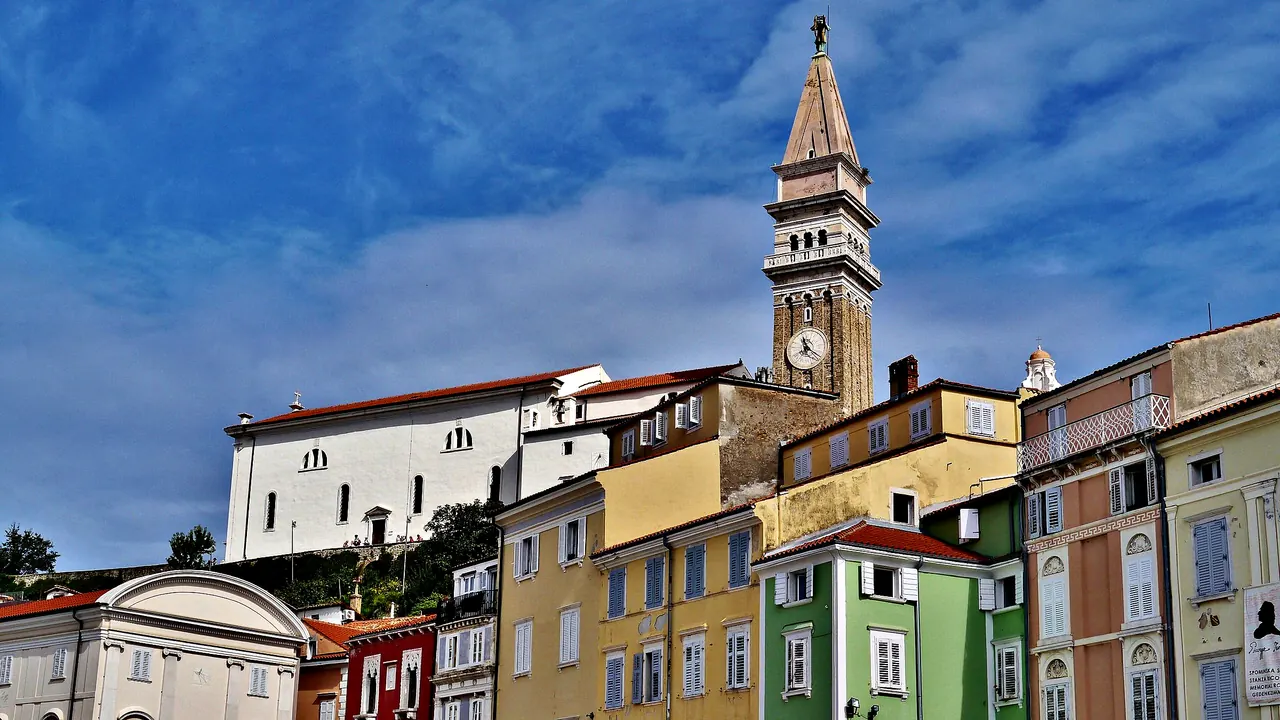
In Piran the town itself is the sight. It is a Venetian Gothic peninsula of lanes and little squares around Tartini Square, with St George's campanile and the old walls looking down over red roofs. The museums are small, but the whole town is worth a day of wandering.
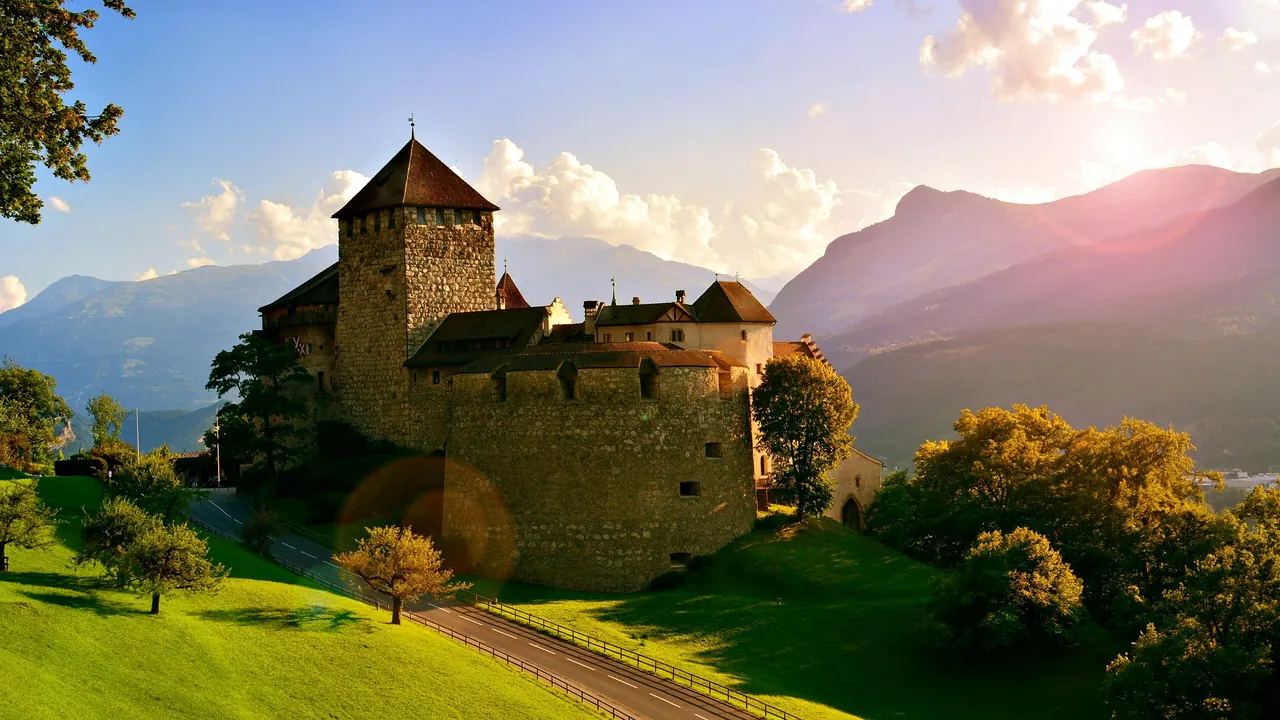
Vaduz has the stronger art, with the Kunstmuseum and the Hilti Art Foundation side by side. Beyond those and the National Museum, though, the town is one short pedestrian street, and the castle is closed to visitors. Piran gives more to a day spent simply looking around.
Nightlife
Both towns go quiet early, but Piran at least gives you an evening: wine on Tartini Square, sunset drinks on the Punta, and beach bars, a casino and summer clubs a few minutes away in Portoroz. Vaduz has a few wine bars and hotel lounges on the Städtle, and anyone who wants more goes over the border to Feldkirch or on to Zurich.
Nature & outdoors
This is where Vaduz pulls clearly ahead. Trails climb from the town centre through vineyards and beech forest, and Malbun and the Rätikon peaks are half an hour up the road for high ridge walks and the exposed Fürstensteig path. In winter there is skiing at Malbun, with larger Swiss resorts within an hour.
Piran's outdoors is gentler and flatter. You get the flysch cliffs and coastal path at Strunjan, wading birds in the Secovlje salt pans, paddling along the shore and cycling the Parenzana into Istria. It is lovely in spring and autumn, but there are no mountains nearby.
Day trips
Both towns sit where borders meet, so both are good bases. Piran has the edge for variety. Trieste is under an hour away, the Istrian towns of Rovinj, Porec and Motovun are to the south, Predjama Castle and the Karst are inland, Ljubljana is within two hours, and summer boats cross to Venice.
From Vaduz you can reach Feldkirch in about twenty minutes, plus the abbey library at St Gallen, Appenzell, Chur, Lake Constance and Zurich. From either town, a car opens up far more than the buses do.
Good for families
Piran suits young children better. The old town is closed to cars, the sea is calm and warm in summer, the harbour aquarium fills an hour, and Portoroz has a shallow, sandy beach. The downsides are the steep lanes and the concrete ledges you swim from in town.
Vaduz is just as safe and easy with a pushchair, but it has nothing built for children, and its museums are about modern art and stamps. It works better for older children who like hiking, or for beginner skiers at Malbun.
Getting around
Both centres are small enough to walk, so the difference is in what happens beyond them. Piran is a car-free peninsula with a shuttle from the garage at the edge of town and a seafront path to Portoroz. It has no railway, and the regional buses are slow.
Vaduz has better public transport. Buses reach every village in the country, climb to Malbun and connect with trains at Buchs, Sargans and Feldkirch. Neither town has its own station, though, so in both regions a hire car makes things easier.
Shopping & style
The best things to take home from Piran come from its own coast: sea salt and salt flower from the Secovlje pans, Istrian olive oil and bottles of coastal wine. A few galleries and craft shops in the lanes are good for an hour of browsing. Anything more means a trip to Trieste or Ljubljana.
In Vaduz, the classic souvenir is a set of Liechtenstein's collectable stamps, or a bottle from the vineyards below the castle. Beyond that, the Städtle has a handful of watch, jewellery and souvenir shops, so there is even less to browse than in Piran, and serious shoppers head to Zurich.
Affordability
The difference in cost is large. Piran is mid-priced for Western Europe and expensive for old-town rooms in July and August. You can keep costs down by eating in konobas, staying in Portoroz or coming out of season, and the main pleasures, swimming and walking, are free.
Vaduz has Swiss prices for both rooms and meals, with few hotels and almost nothing at the budget end. Even a short stay is costly, and some visitors stay across the border in Austria to spend less.
Live music & performing arts
Neither town has much to see, and both rely mainly on classical music. In Piran it is almost all in summer: Tartini concerts in churches, in the monastery cloister and on the square, with little once the season ends.
Vaduz spreads its small programme across the year. The national stage in nearby Schaan has drama and dance, and there is a short orchestral season, a cabaret stage and a classical music festival in summer.
Wellness & relaxation
Piran is better for a slow, restful stay. Portoroz grew up as a spa resort using seawater, brine and mud from the salt pans, and the Secovlje pans have an open-air thalasso spa among the lagoons. The car-free town itself makes it easy to slow down, especially in May, June and September.
Vaduz is calm and orderly, with mountain views and early evenings, but its spas are limited to a few hotels. Its best option is the thermal bath at Bad Ragaz, about twenty-five minutes away, fed by warm spring water from the Tamina gorge.
When should you go?
Pick your month. The climate figures are measured averages, not a forecast.
Piran in July
Vaduz in July
Daytime high, °C
Rainfall in the month, mm
Where the figures come from
Vaduz's temperatures are measured 51 km from the centre, at Sigmarszell-Zeisertsweiler.
Vaduz has no rain gauge within 25 km of the centre, so its rainfall comes from a gridded climate dataset read at the destination rather than from a gauge further away.
Temperature and rainfall are climate normals, averaged over the years shown. Piran: 2005-2020 (sunshine 1991-2020, rainfall 1991-2020) normals, Portoroz (1.2 km from centre). Vaduz: 1991-2020 normals, Sigmarszell-Zeisertsweiler (51.3 km from centre).
Piran is at its best in summer. From June to September the sea is warm enough for long swims, reaching about 25°C in July and August. Afternoons then climb to around 30°C under long, sunny days, which is comfortable by the water but sticky in the steep lanes at midday. May and early October are the best months for walking. Autumn is the wet season here: rain builds from September to a peak of about 125mm in November, and the winters are mild but grey.
Vaduz is cooler and, in the warm months, wetter. Summer highs stay around 24°C, which is ideal for mountain walking, but July and August are its rainiest months, about as wet as Piran in autumn, so expect afternoon showers. Winter is cold, with highs near 4°C. That is when the slopes at Malbun come into their own, while the valley gets far less sun than the coast from November to February.
Which traveller are you?
For a beach and sun trip, Piran is the clear choice. Its Adriatic water warms for swimming all summer, the sunshine is reliable, and Fiesa, Portoroz and Strunjan add pebbles and sand. Vaduz has only outdoor pools and cooler lakes a drive away.
On an outdoors trip, Vaduz is far ahead. Walking trails start in town, the Rätikon ridges and the Fürstensteig path are half an hour away, and in winter there is skiing at Malbun. Piran's cliff paths and salt pans are gentle by comparison.
On a tight budget, Piran is much easier. Simple konobas, local wine, and rooms in Portoroz or outside high summer keep costs fair, and swimming is free. Vaduz charges Swiss prices for rooms and meals and has little at the budget end.
Before you go
| Measure | Piran | Vaduz |
|---|---|---|
| Official language | Slovene | German |
| Currency | Euro (EUR) | Swiss Franc (CHF) |
| Sockets | CF230 V, 50 Hz | CJ230 V, 50 Hz |
| Driving side | Right | Right |
| Time zone | UTC+1, UTC+2 in summer | UTC+1, UTC+2 in summer |
| Emergency number | 112 | 112 |
| Elevation | 7 m | 455 m |
| Main airport | Trieste Airport (TRS)34 km from centre32 non-stop destinations | Zürich Airport (ZRH)81 km from centre226 non-stop destinations |
| Public holidays this year | 21 days | 21 days |
By the numbers
| Measure | Piran | Vaduz |
|---|---|---|
| Population | 3,787 | 5,668 |
| People per km² | 85 | 328 |
| Museums within 10 km | 5 | 7 |
| UNESCO World Heritage sites within 50 km | 4 | 3 |
| Swim season, months above 21 °C | 4 months | - |
Where else could you go?
Every comparison below shares a destination with this one, so you can follow Piran or Vaduz somewhere new.