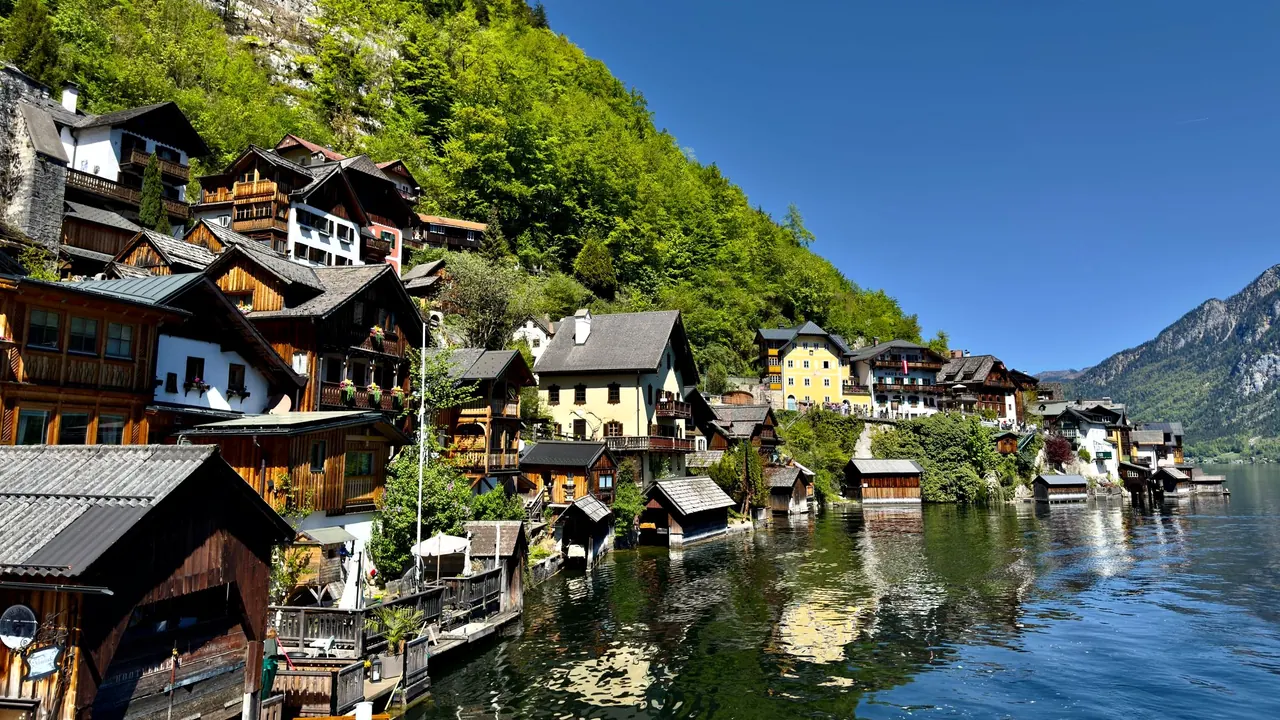
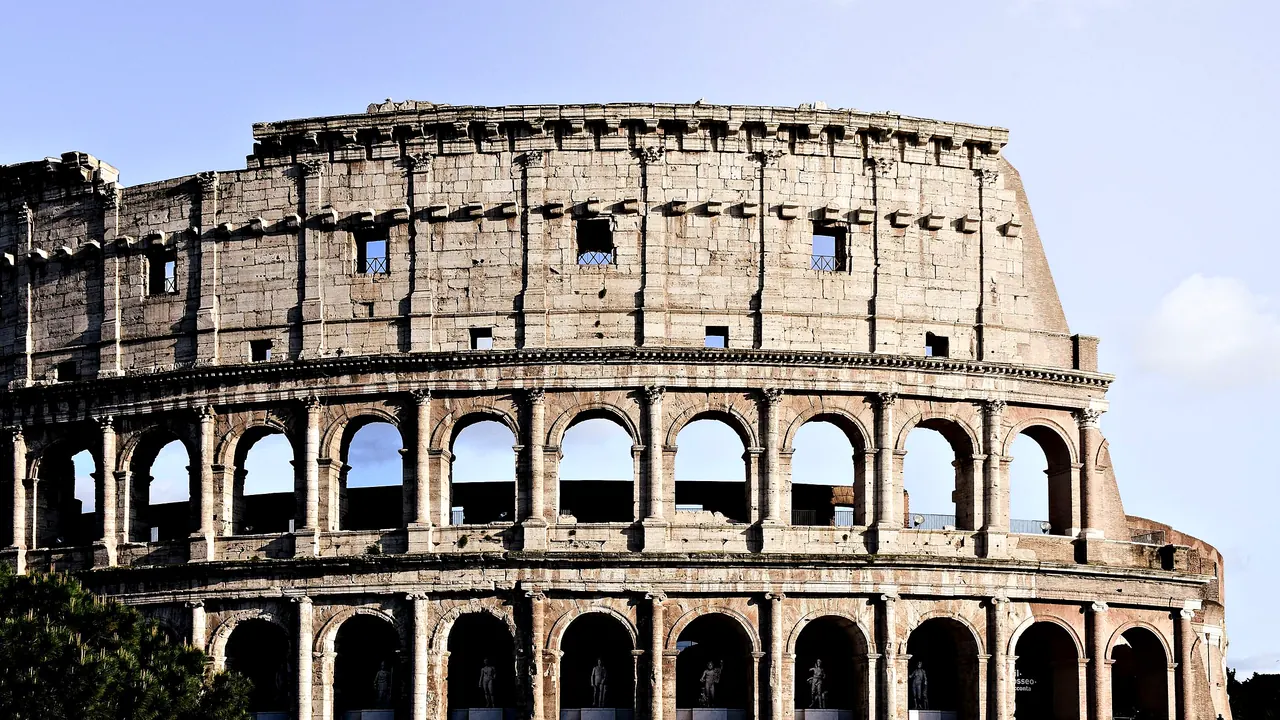
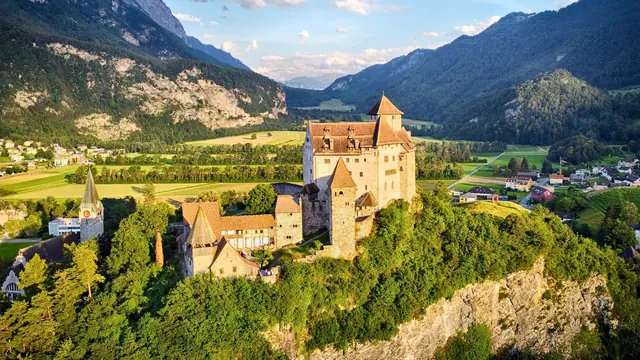
Photos: Austria by Marlon Castor, Pexels License; Italy by AXP Photography, Pexels License.
Austria or Italy?
Our verdict in twelve categories, each scored against the same fixed benchmark cities, and the climate month by month, so you can choose for your trip.
Choose Austria for
- live music and the arts
- getting around
- families
Austria suits travellers who want mountains, music and an easy run of it. The Alps of Tyrol and the Hohe Tauern are simple to reach by lift and train, family hotels and ski schools make it relaxed with children, and Vienna and Salzburg give it a concert and opera life few countries can match. Spa towns and Alpine saunas round off a calm, well-organised trip.
Choose Italy for
- beaches
- shopping
- food and drink
Italy is the better pick for anyone who travels to eat, see great heritage and spend time by the sea. Rome, Florence, Venice and Sicily hold more first-rank sights, the regional cooking is a reason to go on its own, and Sardinia, Sicily and Salento give it a real beach season that landlocked Austria lacks. Shoppers and day-trippers get more from it too. The trade-off is more travel effort once you leave the main rail line.
Scoreboard
Twelve categories on one fixed scale from 0 to 100. The shaded stretch is the gap between the two.
Your match
Pick a travel style or drag the sliders, and both match scores follow your weighting.
Wins on live music and the arts and getting around with your weighting.
Wins on beaches and shopping with your weighting.
What matters to you?
Category by category
What the scores mean for a trip.
Beaches & swimming
Austria's swimming is lake swimming. In high summer the Carinthian lakes such as the Wörthersee are pleasant to swim in, and towns like Velden and Pörtschach have wooden lidos, jetties and lawns rather than sand. The Attersee and Wolfgangsee in the Salzkammergut give a cooler, clearer dip under the mountains. The bathing spots are small, so it works as part of a summer trip rather than the reason for one.
Italy has a real seaside, with sand and open Mediterranean water along a long coastline. Sardinia's Costa Smeralda and Maddalena islands have white sand and turquoise coves, Sicily adds San Vito Lo Capo and the Aeolian and Egadi islands, and Salento has sandy Ionian bays. On much of the mainland you rent a lounger at a paid lido, but the islands and the south still give you a proper beach vacation.
Where in Austria: Carinthian lakes, Wörthersee, Salzkammergut
Food & drink
Austrian food is one comforting tradition centred on Vienna: coffee houses with marble tables, schnitzel and boiled beef, cakes and strudel, and young wine at the Heurigen on the city's edge. Beyond the capital it follows the wine, to the Grüner Veltliner of the Wachau and the pumpkin-seed oil of South Styria.
Italy gives you a different cuisine in every region, and that is why food can shape a whole route. Emilia-Romagna has egg pasta and Parmigiano, Naples has pizza and fried street food, Rome has carbonara, and Sicily has arancini and cannoli. Even a standing espresso bar or a plain trattoria cooks to a standard Austria rarely matches in such range.
Where in Austria: Vienna, Wachau, South Styria, Bregenzerwald
Culture & sights
Austria's heritage is grand and imperial, and most of it is in Vienna: the Hofburg, Schönbrunn and the Belvedere, the paintings of the Kunsthistorisches Museum and the Klimt and Schiele of 1900. Salzburg's baroque old town and the abbey of Melk add a second strong layer.
Italy goes deeper and spans far more centuries. Rome's Colosseum and Vatican Museums, Florence's Uffizi and David, Venice on its canals, and buried Pompeii are each a trip in themselves. Sicily alone adds Greek temples at Agrigento and Arab-Norman Palermo, so you could plan several heritage trips to Italy without repeating a region.
Nightlife
The two countries are at their loudest in opposite seasons. Austria's best-known nights are winter après-ski in Ischgl and St Anton, which start at the slope-side bars in the afternoon and suit groups. In the city, Vienna offers wine taverns, bars in the Gürtel railway arches and summer drinks along the Danube Canal, while Salzburg and Innsbruck go quiet early.
Italy has more going on, and it builds the evening around aperitivo, dinner and a piazza. Milan's Navigli, Brera and Isola and the bars of Rome's Trastevere and Pigneto keep nights going all year. In summer the big open-air clubs of Rimini and Riccione, Gallipoli in August and the Costa Smeralda's beach clubs take over.
Where in Austria: Vienna, Ischgl, St Anton am Arlberg, Graz
Where in Italy: Milan, Rome, Adriatic Riviera, Costa Smeralda
Nature & outdoors
Both are outstanding, but in different ways. Austria is mostly mountain, and its strength is depth and ease of access: cable cars from the Zillertal, Ötztal and Stubai valley lift you to glaciers, staffed huts make multi-day hikes simple, and hundreds of ski resorts fill the winter.
Italy has the wider range. The Dolomites' pale towers and the Aosta Valley match the Alps, and on top of that come the lakes of Como and Garda, the cliff paths of the Cinque Terre and Amalfi Coast, climbs on Etna and sea kayaking in Sardinia.
Where in Austria: Tyrol, Hohe Tauern National Park, Salzkammergut, Vorarlberg
Where in Italy: Dolomites, Aosta Valley, Italian Lakes, Amalfi Coast
Day trips
Austria makes good day trips from its main cities. From Vienna you can follow the Wachau past Melk and Dürnstein or take a train to Bratislava, and from Salzburg you can reach Hallstatt and Bad Ischl in the Salzkammergut. Innsbruck has Hall and Ambras close by.
Italy packs far more into each base. Florence alone opens onto Siena, Pisa, Lucca and Chianti. From Naples you can reach Pompeii, Capri and the Amalfi Coast, and Bologna puts Parma, Modena and Ravenna within an hour by train. Any one of these bases could fill a week of outings.
Good for families
Austria is the easier choice with children. Tyrol, Salzburgerland and Carinthia have hotels designed around families, with kids' clubs, summer lifts to adventure playgrounds and toboggan runs, and ski schools for small children in winter. Vienna adds the Prater, Schönbrunn Zoo and the dinosaurs of the Natural History Museum.
Italy welcomes children warmly at every table and has the big theme parks Austria lacks, with Gardaland on Lake Garda and Mirabilandia near the shallow Adriatic beaches of Rimini. The catch is that Rome, Florence and Venice, with their queues, cobbles and summer heat, are hard on young children.
Where in Austria: Tyrol, Salzburgerland, Carinthia, Vienna
Where in Italy: Adriatic Riviera, Lake Garda, Dolomites, Genoa
Getting around
Austria is compact and simple to cross. Fast trains run from Vienna through Linz, Salzburg and Innsbruck and down to Graz and Klagenfurt, and yellow postbuses and free ski buses reach most valleys. You only really need a car for the remoter side valleys.
Italy is easy along its high-speed spine from Milan through Florence and Rome to Naples, and Florence to Rome takes about an hour and a half. Away from that line it gets harder. The Dolomites, Puglia and the Tuscan hill towns really need a car, Sicily and Sardinia mean a flight or ferry, and strikes now and then disrupt a day's plans.
Shopping & style
In Austria, shopping mostly means Vienna: luxury labels on the Kohlmarkt and Graben, design shops in Neubau, and Augarten porcelain and court silver. Elsewhere it is dirndls and loden on Salzburg's Getreidegasse, plus the Christmas markets.
Italy is a destination for shopping in its own right. Milan's Quadrilatero della Moda holds the flagships of the great fashion houses, and Florence sells leather from the San Lorenzo stalls and Oltrarno workshops. Each region adds its own craft, from Murano glass to Vietri ceramics and Capri sandals.
Affordability
Neither country is cheap, but Italy gives you more ways to save. In Austria the famous ski resorts of Tyrol and the Arlberg and summer Salzburg are expensive. Vienna is fair for a capital, and the wine country of Styria and Burgenland and the Carinthian lakes cost less.
Italy has its own expensive places, such as Venice, Capri, the Amalfi Coast and Lake Como in summer. But whole regions, including Sicily, Puglia, Calabria and the small towns of Umbria, are noticeably cheaper, and pizza and trattoria meals keep daily costs reasonable almost everywhere.
Where in Austria: Styria, Burgenland, Carinthia, Vienna
Live music & performing arts
Austria has the deeper classical calendar. The Vienna State Opera plays most nights of its season, and the Vienna Philharmonic plays at the Musikverein. The Konzerthaus, the Volksoper and the Boys' Choir in the Hofburg chapel add more on top. Summer brings the Salzburg Festival and opera on the floating stage at Bregenz.
Italy is the birthplace of opera, with La Scala, Naples' San Carlo and La Fenice, plus summer productions in Verona's Roman Arena. Beyond opera there is less, and most theatre is in Italian, so you plan around the opera season.
Wellness & relaxation
Both countries take thermal bathing seriously, but the setting differs. Austria pairs imperial spa towns such as Bad Gastein, Bad Ischl and Baden with a quiet, nude sauna culture in almost every Alpine hotel, and eastern Styria's thermal resorts form a whole region for bathing.
Italy's springs are more often open-air and close to the sea or the countryside. Ischia has terraced thermal gardens above the water, Saturnia's cascades sit in the Tuscan countryside, and the Euganean Hills are known for their mud treatments.
Where in Austria: Bad Gastein, Styrian thermal region, Bad Ischl, Baden bei Wien
When should you go?
Pick your month, and for a country the place in it. The climate figures are measured averages, not a forecast.
Where in Austria
Where in Italy
Vienna (Austria) in July
Rome (Italy) in July
Daytime high, °C
Rainfall in the month, mm
Where the figures come from
Rome (Italy)'s sunshine is measured 31 km from the centre, at Vigna Di Valle.
Temperature and rainfall are climate normals, averaged over the years shown. Vienna (Austria): 1991-2020 normals, Wien / Hohe Warte (4.7 km from centre). Rome (Italy): 1991-2020 normals, Roma / Ciampino (15.1 km from centre).
Austria is at its best from late May to September, when city walking and high trails are both pleasant and Vienna reaches about 27°C in July and August. The Carinthian lakes are warm enough to swim only in July and August. Summer is also the wettest time in the west: Salzburg gets around 168mm of rain in June, and Innsbruck's wettest months are also in summer, so mountain afternoons often bring showers. From December to February all three cities stay cold, which is the ski season rather than a time for sightseeing.
Italy's seasons run the other way round for sightseeing. The sea is warm from June to September, with Sicily's water reaching about 27°C in August, and Rome, Naples and Sicily get far more sunshine than Austria's cities. High summer is hot for the art cities, though: Florence hits about 33°C in August, so April, May, September and October suit Rome, Florence and Venice better. The south turns wet in late autumn, with Naples getting around 163mm of rain in November, but winter in Sicily stays mild when Austria is under snow.
Which traveller are you?
For a beach and sun trip, Italy is the clear choice. Austria's swimming means a dip from a lakeside jetty on a hot afternoon. Italy has open sea, sandy islands and long sunny summers, enough to build a whole vacation around the coast.
On a family trip with young children, Austria is the easier choice. It is safe and compact, trains and postbuses make moving between bases simple, and the mountains keep children busy in summer and winter alike. In Italy, the trip goes best when it stays by the water.
On a food and nightlife trip, Italy offers far more. Austria has its coffee houses, wine taverns and winter après-ski. In Italy you can plan a whole route around what each region cooks, and the evenings of aperitivo, dinner and a piazza run all year.
More comparisons
Each shares a side with Austria or Italy.
Where else could you go?
Set Austria or Italy against any other country.