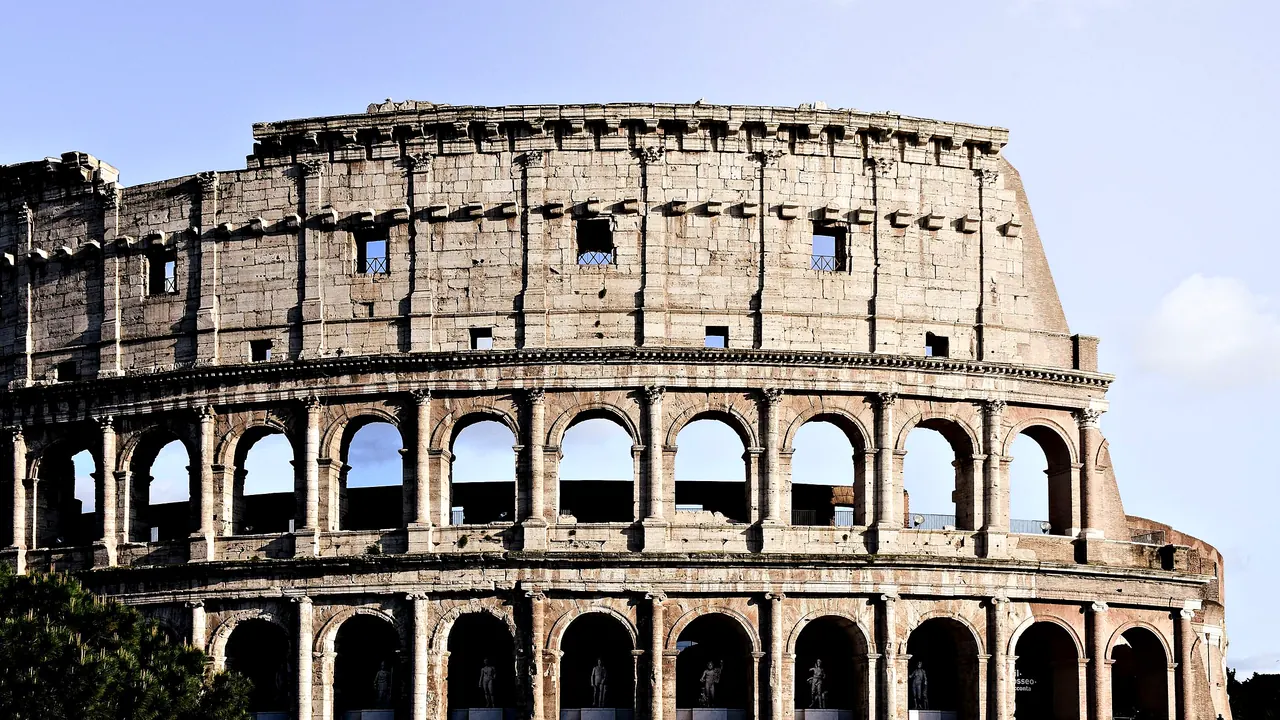
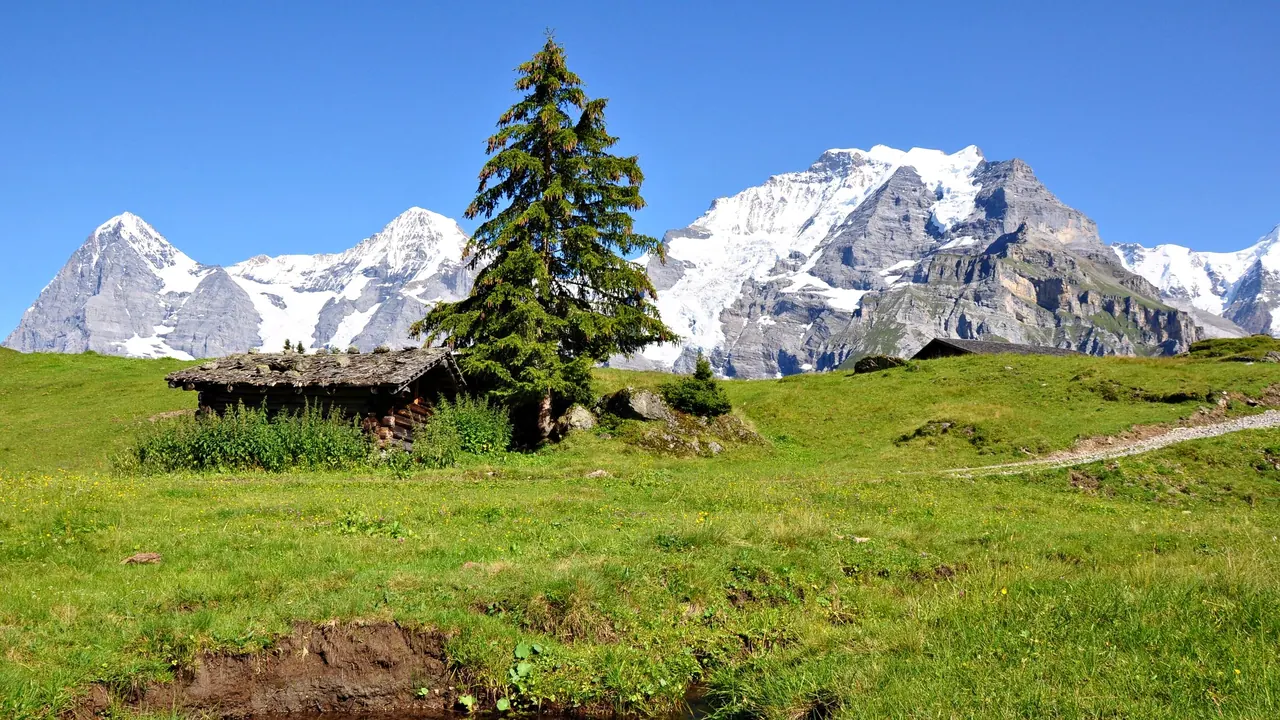
Photos: Italy by AXP Photography, Pexels License; Switzerland by Hansueli Krapf, CC BY-SA 3.0, cropped.
Italy or Switzerland?
Our verdict in twelve categories, each scored against the same fixed benchmark cities, and the climate month by month, so you can choose for your trip.
Choose Italy for
- beaches
- prices
- food and drink
Italy suits travellers who want the richest mix in one trip: world-famous heritage in Rome, Florence and Venice, regional cooking that is worth the journey on its own, and a warm sea in Sardinia, Sicily and Puglia. It also costs a good deal less, especially in the south. The price of that richness is planning, since anything beyond the fast train line between Milan and Naples is far easier with a car.
Choose Switzerland for
- getting around
- families
- nature and the outdoors
Switzerland is the better pick for a mountain vacation that runs like clockwork. The Bernese Oberland, Zermatt and the Engadine give some of Europe's finest Alpine scenery, and trains, postbuses, cable cars and lake steamers connect so smoothly that families and first-time visitors barely need to plan. Expect to pay heavily for the ease, and to trade beaches and long dinners for lakes, lidos and fondue.
Scoreboard
Twelve categories on one fixed scale from 0 to 100. The shaded stretch is the gap between the two.
Your match
Pick a travel style or drag the sliders, and both match scores follow your weighting.
Wins on beaches and prices with your weighting.
Wins on getting around and families with your weighting.
What matters to you?
Category by category
What the scores mean for a trip.
Beaches & swimming
This is Italy's clearest advantage. Sardinia's Costa Smeralda and Maddalena islands, the coves around San Vito Lo Capo in Sicily, the sandy bays of Salento and the clear water of the Tropea coast make a full seaside vacation possible from June to September. The drawbacks are rows of paid lidos on much of the mainland, and the crowds of August.
Switzerland offers swimming rather than beaches. Its pleasures are floating down the Aare in Bern or the Rhine in Basel, the old bathing houses on Zurich's lakeshore, and the warmer water of Lake Lugano and Lake Maggiore in Ticino. Swiss lake swimming is a real pleasure, but it is a few weeks of summer on pebble and grass, not a reason to make the trip.
Where in Italy: Sardinia, Sicily, Salento, Tropea coast
Where in Switzerland: Ticino lakes, Lake Geneva, Zurich, Bern
Food & drink
Italy is one of the main food destinations of the world, and it has a whole set of regional cuisines: fresh egg pasta and Parmigiano in Emilia-Romagna, pizza and fried street food in Naples, carbonara and Jewish-Roman artichokes in Rome, and arancini and the markets of Palermo in Sicily. Its great strength is everyday eating, from the standing espresso bar to the trattoria.
Swiss food is hearty mountain cooking: fondue, raclette and rösti, with excellent chocolate and pastry. The pleasant surprises are the Lavaux and Valais wines, and the grotti of Ticino, which give a gentler version of the Italian table. What Switzerland lacks is cheap, varied food for every day.
Where in Italy: Emilia-Romagna, Naples, Rome, Sicily
Where in Switzerland: Lake Geneva and Lavaux, Ticino, Zurich, Valais
Culture & sights
Italy could fill a lifetime of heritage trips: the Colosseum and the Vatican in Rome, the Uffizi in Florence, Venice on its water, Pompeii under Vesuvius, and in Sicily the Greek temples of Agrigento and the Baroque of Noto. Few countries come close.
Switzerland's heritage is more modest and spread across the country. Its best are the arcades of Bern, the bridges of Lucerne, the Abbey Library of St Gallen and the castle of Chillon. Its real cultural strength is art, led by Basel's group of museums. It makes a rewarding addition to a trip, but nothing in Switzerland matches the weight of Italy's great sights.
Nightlife
Italy has more going on after dark, though most of it is social rather than wild: aperitivo, a late dinner, then drinks in a piazza. Milan's Navigli and Brera, and Trastevere and Pigneto in Rome, are lively year-round, and in summer the big open-air clubs of Rimini and Riccione and the August crowds in Gallipoli add real clubbing.
Switzerland's nights centre on Zurich, where the Langstrasse and the industrial west have a respected electronic club scene that runs until morning at weekends. Beyond Zurich there are student bars in Geneva and Lausanne and après-ski in Verbier. The high cost of drinks keeps most Swiss evenings short.
Where in Italy: Milan, Rome, Adriatic Riviera, Costa Smeralda
Nature & outdoors
Both countries have superb mountains, and Switzerland edges ahead because so much of it is high and easy to reach. The Eiger and the Lauterbrunnen valley, the Matterhorn above Zermatt, the Aletsch glacier and the larch-wooded Engadine are all reached by lifts and cog railways, so even casual walkers get high trails.
Italy's Dolomites stand comparison with any of these, and the Aosta Valley adds Mont Blanc and ibex. Italy also has landscapes Switzerland cannot offer: the sea cliffs of the Cinque Terre and the Path of the Gods, the volcanoes of Etna and the Aeolian islands, and sea kayaking in Sardinia.
Where in Italy: Dolomites, Aosta Valley, Italian Lakes, Amalfi Coast
Where in Switzerland: Bernese Oberland, Zermatt, Engadine, Lake Lucerne
Day trips
Italy wins on the quality of what lies around each base. From Florence you can reach Siena, Lucca and Chianti; from Naples, Pompeii, Capri and the Amalfi Coast; and from Bologna, Ravenna's mosaics and Parma, each within about an hour by train. Many of these would be the main sight of a trip anywhere else.
Switzerland's strength is ease. Lucerne, Bern, Basel and Stein am Rhein are each about an hour from Zurich, and Gruyères and Chillon are close to Lake Geneva. Its most unusual outing is through the Gotthard tunnel to Lugano for an Italian-speaking afternoon. The outings are pleasant and easy to manage, but fewer of them would rank among Europe's great sights.
Good for families
Switzerland is the smoother family trip. Children travel cheaply on calm, punctual trains, and Lucerne's Transport Museum fills a whole day. Zurich has its rainforest zoo, and in the Bernese Oberland cable cars, toboggan runs and short trails with farm animals keep children busy. The catch is cost, and there is no big theme park.
Italy is warmer towards children and has the theme parks: Gardaland on Lake Garda and Mirabilandia near the shallow sandy beaches of the Adriatic Riviera, plus Genoa's large aquarium. The art cities are harder going, with queues, cobbles and summer heat.
Where in Italy: Adriatic Riviera, Lake Garda, Dolomites, Genoa
Where in Switzerland: Lucerne, Bernese Oberland, Zurich, Basel
Getting around
Switzerland sets the standard for travelling without a car. Its trains run on a national timetable built so that connections meet, postbuses climb to remote villages, and one pass covers lake steamers and many mountain railways too. In the Bernese Oberland, the trains from Interlaken to Grindelwald and the car-free villages work like one machine.
Italy is easy along its high-speed line from Milan to Rome and Naples, and its historic centres are best on foot. Away from that line it is a different story: Sicily, Sardinia, Puglia, the Dolomites and the Tuscan hill towns really need a car, and occasional strikes can upset a day.
Where in Italy: Milan, Florence, Rome, Venice
Where in Switzerland: Zurich, Bern, Lucerne, Bernese Oberland
Shopping & style
Italy is the stronger shopping country, and much of what it sells is made there. Milan's Quadrilatero della Moda holds the flagships of the great fashion houses. Florence sells leather from San Lorenzo to the workshops of the Oltrarno, and each region has its own craft, from Murano glass to Vietri ceramics and Capri sandals.
Switzerland's shopping is narrower and more expensive: watches and jewellery on Zurich's Bahnhofstrasse and Geneva's Rue du Rhône, design shops in Zurich's west, and Basel's Christmas market. It suits a buyer who knows what they want, especially a watch, more than someone who likes to browse.
Affordability
Neither is a bargain, but Italy is far easier on the wallet. Venice, Capri, Lake Como and central Rome are dear in summer, while Sicily, Calabria, inland Puglia and the small towns of Umbria cost noticeably less. Coffee, pizza and regional trains are fairly priced everywhere.
Switzerland is among the most expensive countries in the world, and there is nowhere cheap to escape to. Even Ticino is only slightly gentler. Hotels, meals and cable cars all cost far more than elsewhere in Europe, so visitors save with a rail pass, supermarket picnics, hostels and mountain huts.
Live music & performing arts
Opera gives Italy the lead. La Scala in Milan, the San Carlo in Naples and La Fenice in Venice are among the world's most famous houses, and in summer opera moves outdoors to Verona's Roman Arena and the Baths of Caracalla in Rome. Beyond opera the choice is thinner, and spoken theatre is in Italian.
Switzerland's strength is festivals and concert music. The Lucerne summer festival brings leading orchestras to the lake, Montreux has its long-running jazz festival, and Verbier hosts star soloists. Zurich's opera house and the Tonhalle are fine, but outside festival season the offer is modest.
Wellness & relaxation
Both countries are excellent for spas, and the difference is the setting. Italy's thermal waters are Mediterranean: Ischia's terraced pools above the sea, the mud treatments of Abano in the Euganean Hills, and the free open-air cascades at Saturnia in Tuscany, where a country estate stay adds to the slow pace.
Switzerland's baths are Alpine and quiet. Leukerbad's open-air pools face sheer cliffs, the stone baths at Vals are celebrated for their architecture, and Scuol pairs mineral water with Engadine villages. Pick Italy for warm air and sea views, and Switzerland for mountain silence.
Where in Italy: Ischia, Euganean Hills, Tuscany, Merano
Where in Switzerland: Leukerbad, Bad Ragaz, Vals, Scuol and the Engadine
When should you go?
Pick your month, and for a country the place in it. The climate figures are measured averages, not a forecast.
Where in Italy
Where in Switzerland
Rome (Italy) in July
Zurich (Switzerland) in July
Daytime high, °C
Rainfall in the month, mm
Where the figures come from
Rome (Italy)'s sunshine is measured 31 km from the centre, at Vigna Di Valle.
Temperature and rainfall are climate normals, averaged over the years shown. Rome (Italy): 1991-2020 normals, Roma / Ciampino (15.1 km from centre). Zurich (Switzerland): 1991-2020 normals, Zurich Town / Ville. (2.2 km from centre).
Italy has a long warm season, and it moves around the country. Sicily and the coast around Naples are warm enough to swim from June to October, and the sun is reliable from May to September. High summer is hard work in the art cities, though: Florence reaches about 33°C in August, so April, May, September and early October are better for walking Rome, Florence and Venice. The rain arrives in autumn, and in Naples November is the wettest month at about 163mm. Winters in Sicily and Naples stay mild, while Venice is cold and grey.
Switzerland has a shorter, cooler year. Zurich and Interlaken peak at about 24°C in July and August, which is good walking weather, but early summer is also the wettest time on the northern side. In Zermatt it stays at about 14°C even in July and below freezing from December to February, which makes winter ski season and July to September the hiking season. Lugano is the warmest Swiss base and the best for lake swimming from late June to early September, but it gets heavy rain from April to November, often about 170mm a month.
Which traveller are you?
On a family trip with young children, Switzerland asks less of the parents. One base, such as Lucerne or Interlaken, keeps the days short, and safe, orderly towns make outings easy. Italy is the better pick if the children want sandy beaches or a big theme park.
More comparisons
Each shares a side with Italy or Switzerland.
 Austria vs Italy
 Croatia vs Italy
 France vs Italy
 France vs Switzerland
 Germany vs Italy
- Germany vs Switzerland
 Greece vs Italy
 Iceland vs Switzerland
 Italy vs Malta
 Italy vs Portugal
 Italy vs Slovenia
 Italy vs Spain
 Liechtenstein vs Switzerland
 Luxembourg vs Switzerland
 New Zealand vs Switzerland
- Slovenia vs Switzerland
 Sweden vs Switzerland
- Switzerland vs Austria
 Switzerland vs Norway
Where else could you go?
Set Italy or Switzerland against any other country.