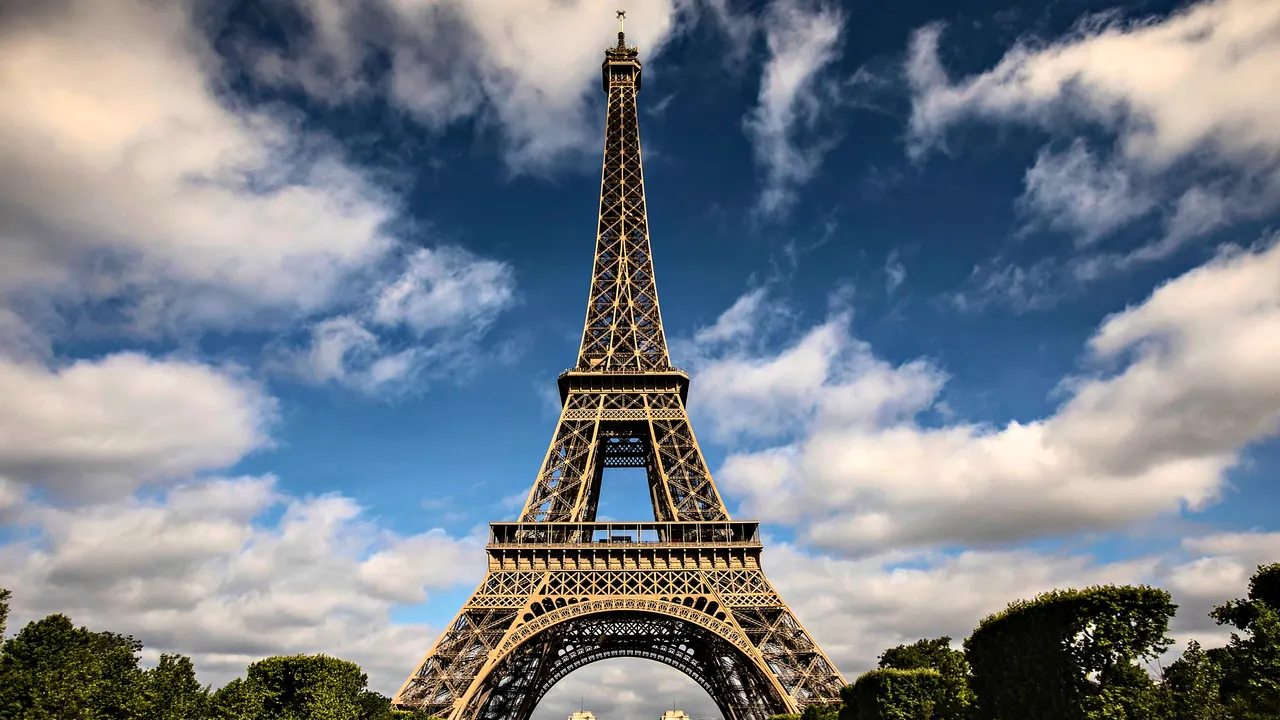
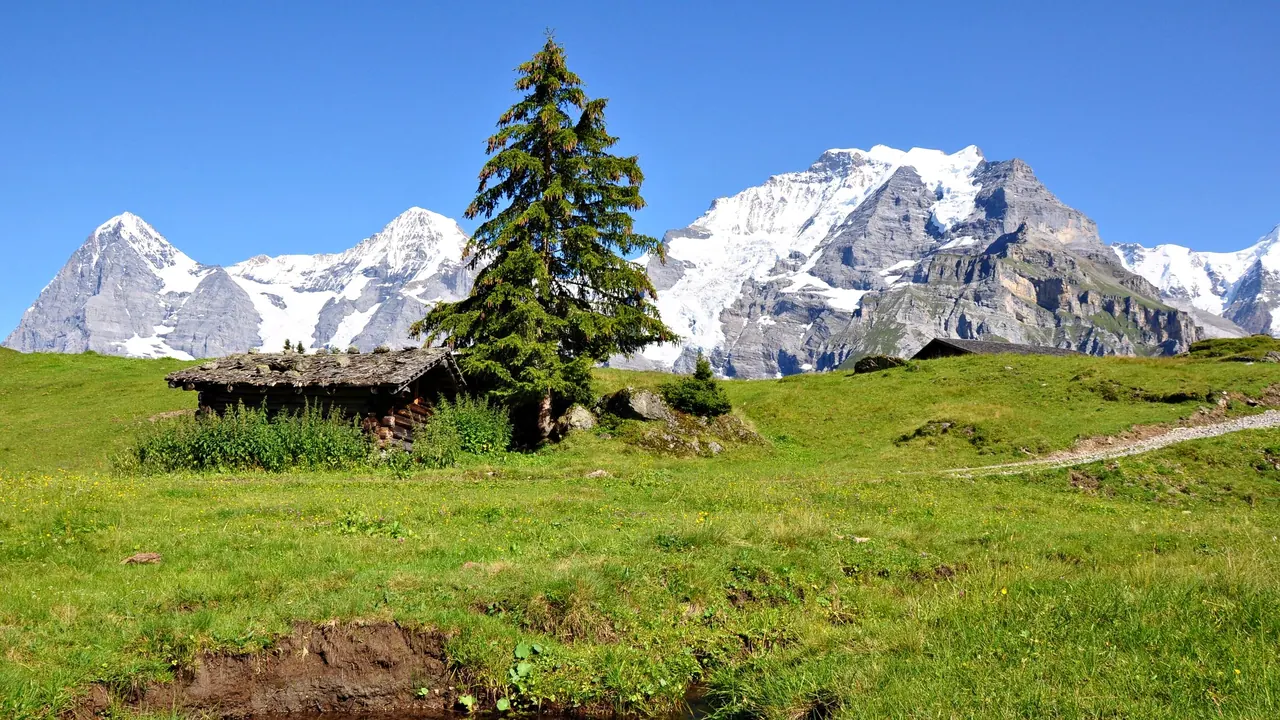
Photos: France by Stephen Leonardi, Pexels License; Switzerland by Hansueli Krapf, CC BY-SA 3.0, cropped.
France or Switzerland?
Our verdict in twelve categories, each scored against the same fixed benchmark cities, and the climate month by month, so you can choose for your trip.
Choose France for
- beaches
- food and drink
- prices
France suits a traveller who wants range and appetite in one trip: the Louvre and the Loire châteaux, a market morning in Provence, a week on Corsican sand and evenings that run late in Paris or Lyon. It is also the gentler bill, especially if you stay in the Languedoc or the Dordogne rather than in Paris or on the Riviera.
Choose Switzerland for
- getting around
- wellness
- nature and the outdoors
Pick Switzerland when the mountains are the point and you want to reach them without a car. Trains, postbuses, cog railways and lake steamers connect Lucerne, the Jungfrau and the Matterhorn on timetables built to meet, and the thermal pools of Leukerbad or Vals round off long days on the trails. Expect to pay heavily for that ease, and to eat simpler food built on cheese.
Scoreboard
Twelve categories on one fixed scale from 0 to 100. The shaded stretch is the gap between the two.
Your match
Pick a travel style or drag the sliders, and both match scores follow your weighting.
Wins on beaches and food and drink with your weighting.
Wins on getting around and wellness with your weighting.
What matters to you?
Category by category
What the scores mean for a trip.
Beaches & swimming
France has real sea beaches and Switzerland has none. Corsica's pale-sand bays around Porto-Vecchio and Bonifacio, the long flat sand of the Languedoc and the surf of the Landes and the Basque coast are enough for a whole beach vacation. The Mediterranean is warm enough for swimming from June into early October.
In Switzerland, swimming means lakes and rivers: the lidos and wooden bathing houses of Zurich, floating down the Aare in Bern, and the warmest water on Lake Lugano and Lake Maggiore. It is lovely for a cool swim on a summer day, but the season is short and there is little sand.
Where in France: Corsica, Côte d'Azur, Languedoc coast, Basque coast
Where in Switzerland: Ticino lakes, Lake Geneva, Zurich, Bern
Food & drink
Food is one of the widest gaps between the two. Nearly every French region has its own cooking, from Lyon's bouchons and the winstubs of Alsace to Breton oysters and Provençal fish soups. Covered market halls and reliable village bakeries make even ordinary meals good.
Swiss cooking is narrower, built on cheese, potatoes and cured meat. Its chocolate, the fine restaurants of Zurich and Geneva and the Lavaux and Valais wines, drunk where they grow, are real pleasures. Outside the cities, though, everyday menus repeat themselves and there is little street food.
Where in France: Paris, Lyon, Burgundy, Basque Country
Where in Switzerland: Lake Geneva and Lavaux, Ticino, Zurich, Valais
Culture & sights
France has much more to see. Paris has the Louvre, the Musée d'Orsay and the Sainte-Chapelle. Beyond it are the Loire châteaux, the Gothic cathedrals of Chartres and Reims, the Roman monuments of Provence and Mont-Saint-Michel, enough to fill a whole trip built around a single theme.
Switzerland's heritage is quieter and spread among well-kept towns: Bern's arcaded old town, Lucerne's wooden bridges and the Abbey Library of St Gallen. Its real strength is art, and Basel's cluster of museums is the best reason to go, but nothing in the country matches Versailles or the Louvre in scale.
Where in France: Paris, Loire Valley, Provence, Normandy
Nightlife
France gives the better night out, above all in Paris, where Oberkampf, Pigalle and the canal have a wide choice of bars and clubs. Lyon, Bordeaux and Montpellier are lively student cities as well.
In Switzerland, nightlife mostly means Zurich's electronic clubs around the Langstrasse and in the old industrial west, plus winter après-ski in Verbier or Zermatt. Elsewhere towns go quiet early, and the cost of drinks keeps most evenings short.
Where in France: Paris, Lyon, Bordeaux, Montpellier
Nature & outdoors
Both are superb for the outdoors, and Switzerland is the more concentrated mountain country. The Bernese Oberland, Zermatt under the Matterhorn and the lakes and wildlife of the Engadine are all served by lifts and cog railways, so high trails are within reach even of casual walkers.
France has a wider spread of landscapes instead: Mont Blanc and the Alps, the quieter Pyrenees, the Verdon gorge, the Calanques near Marseille, Corsica's tough mountain trail and cycling from the Loire to Mont Ventoux. Choose Switzerland for alpine scenery made easy, and France for variety, with the sea close by.
Where in France: French Alps, Pyrenees, Corsica, Provence
Where in Switzerland: Bernese Oberland, Zermatt, Engadine, Lake Lucerne
Day trips
Both make good use of a single base, in different ways. In France the strong bases are far apart: Paris for Versailles, Giverny and Reims, Avignon for the Pont du Gard and the Luberon, and Nice for Èze and Monaco. You pick a region and explore it.
Switzerland is small enough that Lucerne, Bern and the Rhine towns are each about an hour by train from Zurich. Even Lugano, on the far side of the Alps, is an easy day out, with a change of language and climate on the way.
Good for families
The two family trips are built differently. France centres on big attractions and a long summer by the sea, and Switzerland on trains, lakes and mountains. France offers more on both counts, with Disneyland Paris and Parc Astérix near Paris, the huge historical shows of Puy du Fou in the Vendée, and campsites with pools and children's clubs behind the gentle beaches of the Languedoc and the Landes.
Switzerland is calmer and simpler to manage with children. Lucerne's Swiss Museum of Transport fills a day, Zurich's zoo has its rainforest hall, and above Grindelwald there are cog railways and summer toboggan runs. There is no large theme park, though, and the prices weigh on a long family stay.
Where in France: Paris, Vendée, Loire Valley, Languedoc
Where in Switzerland: Lucerne, Bernese Oberland, Zurich, Basel
Getting around
Switzerland is clearly the easier country to travel. Trains, postbuses, lake steamers and mountain railways run as one connected system on a single pass, and they reach car-free resorts such as Zermatt and the high villages of the Bernese Oberland.
France's high-speed lines are good for moving between cities, from Paris to Lyon, Bordeaux or Strasbourg. Journeys across the country often need a change, though, and the hill villages of Provence, the Dordogne and most of Corsica really need a car, with tolls and summer traffic on the roads south.
Where in France: Paris, Lyon, Strasbourg, Bordeaux
Where in Switzerland: Zurich, Bern, Lucerne, Bernese Oberland
Shopping & style
France is the better country both for shopping and for browsing. Paris has the couture houses of Avenue Montaigne, the department stores of Boulevard Haussmann and the flea market at Saint-Ouen. The regions add Provençal markets, the antiques dealers of L'Isle-sur-la-Sorgue and village brocantes.
Switzerland's shopping is narrower and more for buyers with a clear purpose: watches and jewellery on Zurich's Bahnhofstrasse and Geneva's Rue du Rhône, plus chocolate, cheese and pocket knives. Its markets are modest, so it suits shoppers who already know what they want.
Affordability
Neither country is cheap, but in France you can get away from the high prices. Paris, the Riviera and the ski resorts are expensive, while the Languedoc, the Dordogne, Brittany and the Auvergne have gîtes, campsites and set lunches at moderate cost.
Switzerland has no cheaper region. Hotels, meals and mountain lifts cost a lot everywhere, and Ticino only softens the bill slightly. Savings come from rail passes, supermarket picnics, and hostels or mountain huts.
Live music & performing arts
In France the stages are busy all year, so there is more to see whenever you go, while Switzerland's best moments come in its festival seasons. Paris alone has two opera houses, the Philharmonie, the Comédie-Française and jazz in small cellar clubs, and Lyon, Bordeaux and Toulouse have full seasons of opera and ballet. Summer adds the Avignon theatre festival, opera at Aix-en-Provence and the Roman theatre at Orange.
Switzerland is strong in classical music for its size, with Zurich's opera house and the Tonhalle orchestra. Still, the real reasons to plan a trip around music are Lucerne's summer festival of leading orchestras, Montreux Jazz and the soloists at Verbier. Away from those weeks and the main cities, there is much less on.
Where in France: Paris, Avignon, Aix-en-Provence, Lyon
Wellness & relaxation
Switzerland is the better place to unwind. Leukerbad's open-air pools under the cliffs, the stone baths at Vals and Bad Ragaz, a spa since the Middle Ages, all welcome visitors, and the mountain air and quiet pace add to the rest.
France has its own spa tradition in Vichy, Évian and the Pyrenean spa towns, plus seawater treatments in Brittany and Biarritz. Much of it is medical, with treatments prescribed by a doctor, so in France rest is easier to find in a slow week in a Provençal farmhouse.
Where in France: Auvergne, French Alps, Pyrenees, Brittany
Where in Switzerland: Leukerbad, Bad Ragaz, Vals, Scuol and the Engadine
When should you go?
Pick your month, and for a country the place in it. The climate figures are measured averages, not a forecast.
Where in France
Where in Switzerland
Paris (France) in July
Zurich (Switzerland) in July
Daytime high, °C
Rainfall in the month, mm
Temperature and rainfall are climate normals, averaged over the years shown. Paris (France): 1991-2020 (sunshine 1961-1990) normals, Paris-Montsouris (4.6 km from centre). Zurich (Switzerland): 1991-2020 normals, Zurich Town / Ville. (2.2 km from centre).
In France, the best season depends on the region. The Riviera is the warmest part. Around Nice the sea reaches 25°C in August, swimming is good from June to early October, and spring is mild enough for walking. The autumn rain arrives hard there, with 138mm in November. Paris, Lyon and Bordeaux are best for walking the streets in May, June and September. Brittany stays fresh in summer and its sea stays cool, and Chamonix is for summer hiking and winter skiing.
Switzerland is a summer and winter country. Zurich and Interlaken are pleasant from May to September, but that is also their wettest stretch, with about 128mm in Zurich in June. Lugano in Ticino is warm enough for lake swimming, with highs of 27°C in July and August. High in the Alps the climate is different again: Zermatt only reaches 14°C in July, which is good hiking weather, and its daytime highs stay below freezing from December to February, the ski season. Late autumn turns cold sooner in Switzerland than in most of France.
Which traveller are you?
For a relaxing and wellness trip, Switzerland has the edge. The open-air pools at Leukerbad facing the cliffs, the stone baths at Vals and the mineral springs at Scuol come with mountain air and a calm pace. Many of France's spa towns are more medical.
More comparisons
Each shares a side with France or Switzerland.
 Belgium vs France
 England vs France
 France vs Germany
 France vs Greece
 France vs Italy
 France vs Morocco
 France vs Netherlands
 France vs Portugal
 France vs Spain
 Germany vs Switzerland
 Iceland vs Switzerland
- Italy vs Switzerland
 Liechtenstein vs Switzerland
 Luxembourg vs Switzerland
 Monaco vs France
 New Zealand vs Switzerland
 Slovenia vs Switzerland
 Sweden vs Switzerland
 Switzerland vs Austria
 Switzerland vs Norway
Where else could you go?
Set France or Switzerland against any other country.