France
Toulouse
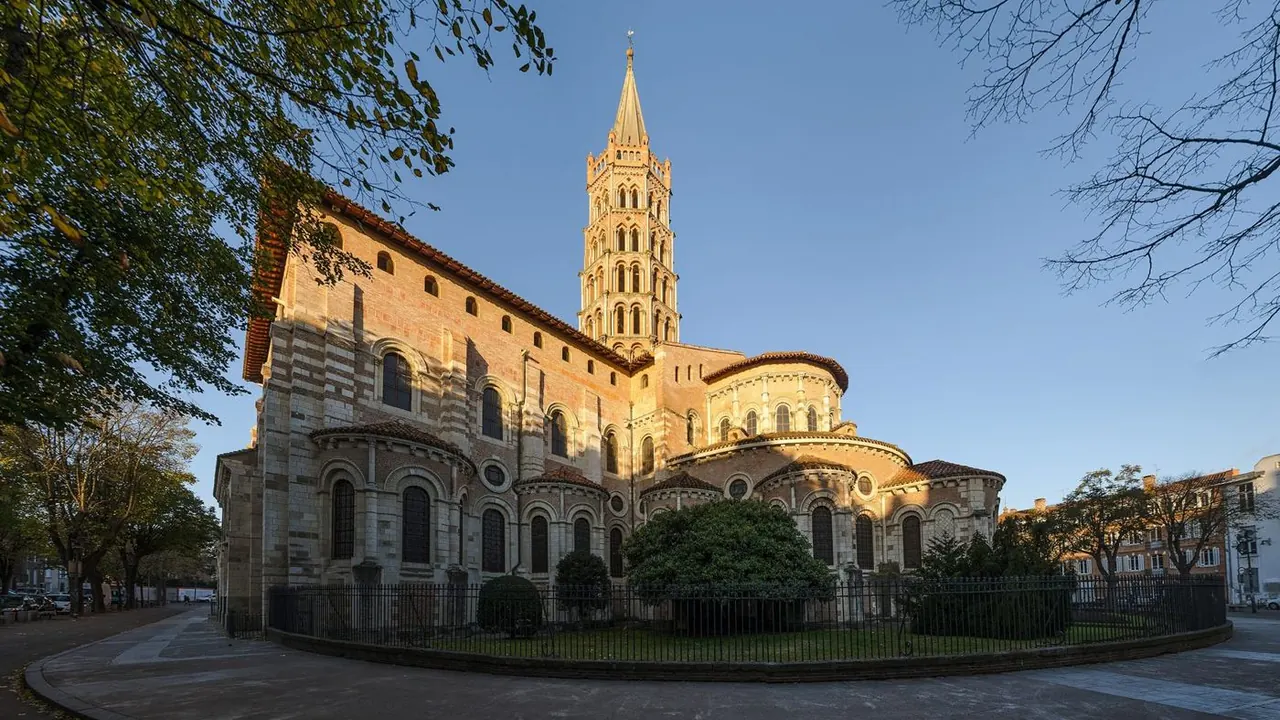
The Basilica of Saint-Sernin
- Day trips72
- Getting around70
- Food & drink66
Photo: ZbebVial, CC BY-SA 3.0, cropped
Match
53
Every category weighted equally
- Beach & sun47
- Culture & arts59
- Food & nightlife56
- Family trip53
- Outdoors54
- Relax & unwind48
- Shopping & style56
- On a budget52
Toulouse in twelve categories
Our verdict on each, scored 0 to 100 against the same fixed benchmark cities, so a score means the same thing on every page.
Beaches & swimming. Scores 10 out of 100.
Food & drink. Scores 66 out of 100.
Culture & sights. Scores 64 out of 100.
Nightlife. Scores 56 out of 100.
Nature & outdoors. Scores 58 out of 100.
Day trips. Scores 72 out of 100.
Good for families. Scores 62 out of 100.
Getting around. Scores 70 out of 100.
Shopping & style. Scores 50 out of 100.
Affordability. Scores 46 out of 100.
Live music & performing arts. Scores 58 out of 100.
Wellness & relaxation. Scores 27 out of 100.
Toulouse category by category
Beaches & swimming
10Toulouse is an inland city on the Garonne, and beaches play no part in a normal stay. The nearest sea is the Mediterranean around Narbonne and Gruissan, about two hours away by car or train and bus. The water there is warm in summer, but it is a long day out, not part of city life. The Atlantic is further still.
Closer to home, locals cool off at the leisure lakes on the edge of the city, such as Sesquières and La Ramée, which have supervised swimming areas in summer. A hotel pool and the shade along the river are how most visitors handle the heat.
Food & drink
66This is the capital of hearty south-western French cooking. Cassoulet with Toulouse sausage and duck confit is the signature dish, with foie gras, magret and garbure close behind, and a candied-violet tradition supplies the sweets. The Victor Hugo covered market is the place to see it all together: stalls of charcuterie, cheese and duck, with small counters upstairs serving a set lunch to market workers. The Carmes market and Saturday stalls along the boulevards add more.
Wines come from close by, with Fronton reds, Gaillac and Armagnac from Gascony. A good-value lunch menu is part of daily life, and the student quarters keep casual eating cheap. The international range and the top tier of fine dining are modest for a city of this size.
Culture & sights
64The old centre is built almost entirely of rose-red brick, which gives Toulouse the name La Ville Rose and a warm, consistent cityscape. Its great monument is the Basilica of Saint-Sernin, one of the largest Romanesque churches in Europe and a stop on the pilgrim route to Santiago. The Jacobins convent, with its palm-tree vault, is nearly as striking. The Capitole, the city hall on its huge square, has painted state rooms open to visitors.
Renaissance merchant mansions such as the Hôtel d'Assézat, built on woad-dye fortunes, house fine collections. The Augustins holds sculpture and painting in a Gothic cloister, and Les Abattoirs shows modern art. The aerospace industry adds something unusual: aircraft museums and the space centre on the outskirts. Two full days covers the essentials.
Nightlife
56With one of the largest student populations in France, Toulouse goes out more than its size suggests. Place Saint-Pierre on the river is the heart of it, with crowded terraces and cheap bars that spill onto the quays on warm nights. The streets around Carmes and the Daurade have wine bars and cocktail spots for an older crowd, and in the evening the terraces fill on Place Saint-Georges and the squares around the Capitole.
Clubs and late bars are spread around the centre and the outskirts, and the electronic scene is solid, but this is a lively regional city rather than a place to travel to for clubbing. Things are quieter in July and August, when the students leave.
Nature & outdoors
58The city sits on a broad, fertile plain, so the countryside nearby is gentle farmland, rolling hills and the Garonne. The Canal du Midi and the Canal de Garonne start here, and their shaded towpaths make long, flat cycling routes towards the Lauragais and the Mediterranean. Within the city, the riverbanks and the Prairie des Filtres are the green spaces people use most.
The real draw is the Pyrenees, visible from the city on clear days. The high valleys around Luchon, the Ariège and the ski stations of the central range are roughly one and a half to two hours away, with serious hiking, cycling climbs and winter skiing. Closer options are the forested Montagne Noire, about an hour away, and the limestone gorges of the Aveyron around Saint-Antonin-Noble-Val, good for canoeing and cliff-top walks.
Day trips
72Two of the best excursions in southern France are each about an hour away by train. Carcassonne's walled medieval Cité, with its double ring of ramparts and towers, is the obvious first choice. Albi, a brick episcopal town around a fortress-like cathedral with painted interiors, also holds the Toulouse-Lautrec museum.
Moissac has one of the finest Romanesque cloisters anywhere, and Montauban, close by, has its arcaded square and the Ingres museum. With a car, the hilltop village of Cordes-sur-Ciel, the Gaillac vineyards, the castle town of Foix and the Roman and medieval site of Saint-Bertrand-de-Comminges are all within reach. Lourdes is about two hours by train.
Good for families
62Toulouse's aerospace identity is a gift for children. The Cité de l'espace has a full-size Ariane rocket, a Mir space station module to walk through, a planetarium and plenty of hands-on exhibits, enough for a full day. Near the airport, the aircraft museum lets families walk inside a Concorde and an Airbus giant. In Montaudran, a hangar of huge mechanical creatures puts on walking demonstrations.
The natural history museum and its gardens, the Jardin des Plantes playgrounds and the riverside meadows fill the gaps, and a drive-through safari park lies on the western edge. The centre is compact and flat enough for pushchairs, and French restaurant culture welcomes children. July and August can be very hot.
Getting around
70Almost everything a visitor wants is inside the ring of boulevards, a flat, compact centre that is easy and pleasant to cover on foot, with pedestrian streets around the Capitole and the river. Two automated metro lines cross the city and meet in the centre, and trams and buses run on the same tickets. A public bike scheme and the riverside paths make cycling easy.
The drawback is the edges: the space centre, the aircraft museum and the leisure lakes take a bus ride or a short drive, and the Pyrenees and most rural day trips are far easier by car. The main station is a short walk from the centre and handles the regional trains.
Shopping & style
50Shopping is solid and mainstream. Rue d'Alsace-Lorraine and the streets around the Capitole carry the French and international chains and a large department store. The narrow lanes of Saint-Étienne and around Rue des Filatiers have independent boutiques, antiques and some designer fashion.
The most memorable buys are edible: violet sweets and liqueur, duck confit and foie gras, cassoulet in jars and Armagnac, best found at the covered markets. Sunday's sprawling market around Saint-Sernin mixes food, clothes and bric-a-brac. There is no luxury district to speak of, and a dedicated shopper will find more in the bigger French cities.
Affordability
46For a French city with this much to see, Toulouse is reasonably priced. Hotels cost far less than in the capital or on the Riviera, except during big trade fairs and aerospace events. The set lunch menu, a fixture of daily life, is the best-value way to eat well. The student quarters keep beers, snacks and simple meals cheap, and public transport costs little.
It is still Western Europe, so dinner in a good restaurant and wine by the bottle add up, and nobody would call it a budget destination. Several municipal museums are free on certain days.
Live music & performing arts
58Classical music is the strength. The Théâtre du Capitole, on the main square, presents a full season of opera and ballet with its own company. The Orchestre National du Capitole, one of the best-regarded orchestras in France, plays in the Halle aux Grains, a former grain market turned into a round concert hall. The Jacobins cloister hosts a long-running piano festival in late summer.
Beyond that, there is a national theatre stage, a busy circuit of small theatres and jazz and live-music bars, and a large arena for touring acts. Rio Loco, a long-standing world-music festival, takes over the riverside in early summer. It is a good programme for a regional city, but not a reason to travel.
Wellness & relaxation
27Toulouse has no bathing tradition of its own. Wellness means hotel spas, a handful of hammam-style day spas and the large municipal open-air pools in summer. What it does offer is an unhurried southern rhythm: long lunches, shaded squares and slow walks or bike rides along the Garonne and the Canal du Midi.
For real thermal bathing, visitors head into the Pyrenees, where old spa towns such as Bagnères-de-Luchon and Ax-les-Thermes have hot springs and modern thermal centres. Each is a trip of up to two hours, so it fits best with an overnight stay.
When should you go?
Pick a month to see what it is like. The climate figures are measured averages, not a forecast.
Toulouse in July
Daytime high, °C
Rainfall in the month, mm
The whole year
Shaded against this city’s own year: the deepest cell is its best month for that figure and the palest its weakest.
Temperature and rainfall are climate normals, averaged over the years shown. Toulouse: 1991-2020 normals, Toulouse / Blagnac (7 km from centre).
Before you go
| Measure | Toulouse |
|---|---|
| Official language | French |
| Currency | Euro (EUR) |
| Sockets | CE230 V, 50 Hz |
| Driving side | Right |
| Time zone | UTC+1, UTC+2 in summer |
| Emergency number | 112 |
| Elevation | 115 m |
| Main airport | Toulouse-Blagnac Airport (TLS)7 km from centre84 non-stop destinations |
| Public holidays this year | 11 days |
By the numbers
| Measure | Toulouse |
|---|---|
| City population | 514,819 |
| People per km² | 4,352 |
| Museums within 10 km | 24 |
| UNESCO World Heritage sites within 50 km | 2 |
Compare Toulouse with
Every comparison with a written verdict behind it.