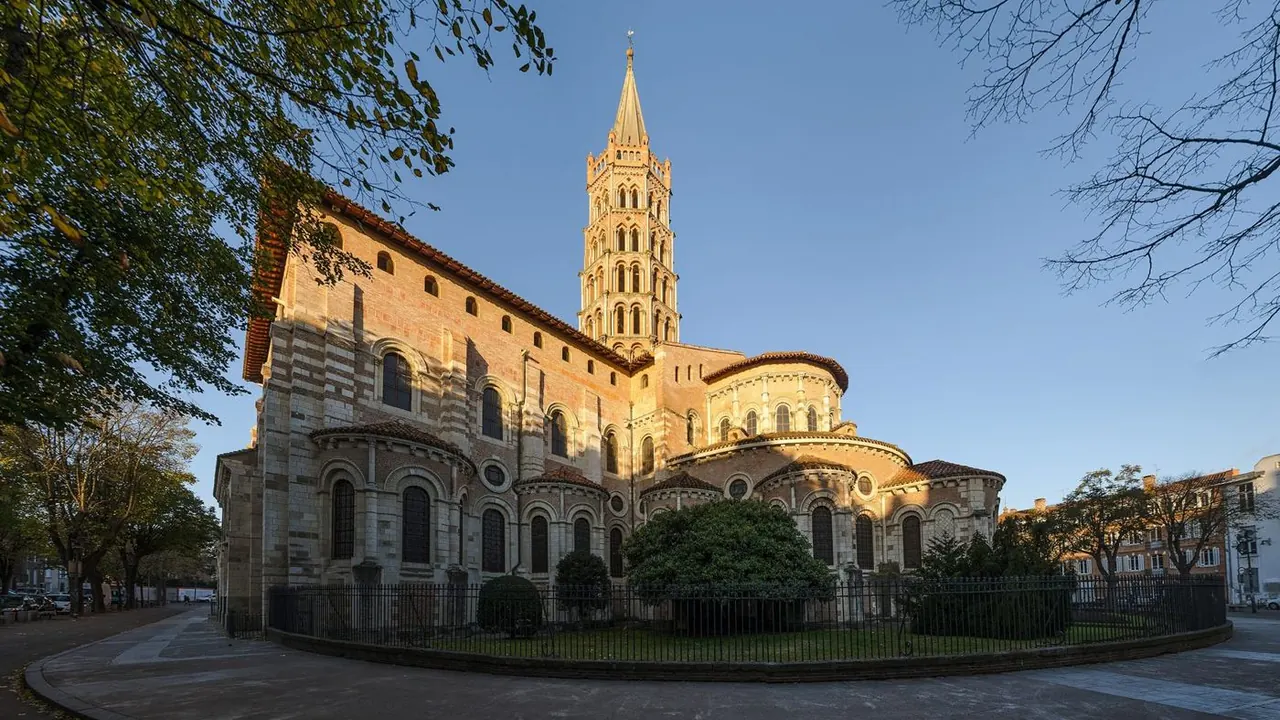
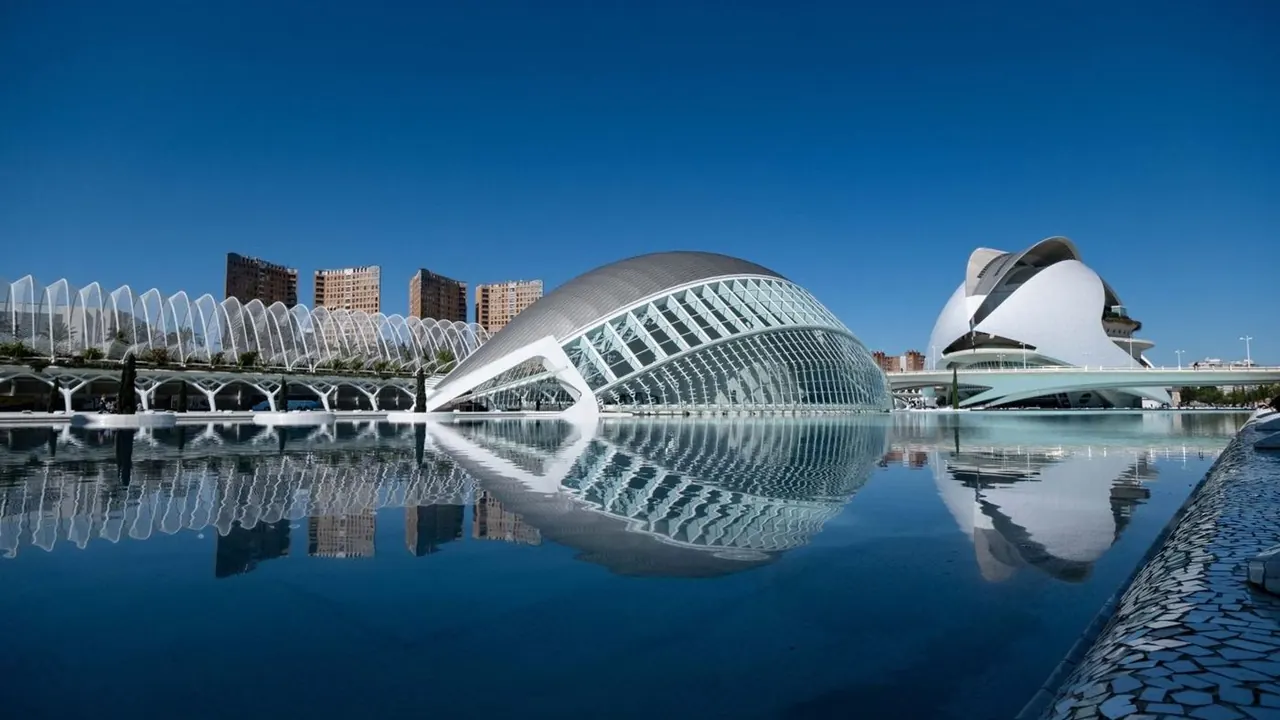
Photos: Toulouse by ZbebVial, CC BY-SA 3.0, cropped; Valencia by Francesco Ungaro, Pexels License.
Toulouse or Valencia?
Our verdict in twelve categories, each scored against the same fixed benchmark cities, and the climate month by month, so you can choose for your trip.
Choose Toulouse for
- live music and the arts
- day trips
Toulouse is for the traveller who wants south-western France at its most typical: a rose-brick city of Romanesque churches, cassoulet and duck and a fine orchestra, with aircraft and space museums as an unusual extra. It works best as a base for exploring the region, since Carcassonne and Albi are an easy train ride away and the Pyrenees are on the horizon. It suits travellers who don't mind that the sea plays no part.
Choose Valencia for
- beaches
- wellness
- families
Valencia makes for a broader and easier trip. Its own sandy beaches are a tram ride from the old town, the evenings run late and the rice cooking is excellent. It is also cheaper day to day and has plenty to keep children busy. Mild, sunny winters make it a good choice outside summer too, so it is the safer pick for a mixed group or anyone who wants sightseeing and swimming in the same week.
Scoreboard
Twelve categories on one fixed scale from 0 to 100. The shaded stretch is the gap between the two.
Your match
Pick a travel style or drag the sliders, and both match scores follow your weighting.
Wins on live music and the arts and day trips with your weighting.
Wins on beaches and wellness with your weighting.
What matters to you?
Category by category
What the scores mean for a trip.
Beaches & swimming
There is no real contest here. Toulouse is inland, and its swimming means the supervised lakes at Sesquières and La Ramée or a hotel pool. The Mediterranean beaches near Narbonne and Gruissan are a full day out, two hours each way.
Valencia has kilometres of fine golden sand on its doorstep. The city beaches at Las Arenas, Malvarrosa and Patacona are reached by tram, and the wilder dunes of El Saler and La Devesa lie behind pine woods to the south. The water is calm and shallow enough for a swim to become part of an ordinary sightseeing day.
Food & drink
Both cities are built around a great covered market and a cheap set lunch, but they eat very differently. Toulouse cooks rich inland food: cassoulet, duck confit, foie gras and garbure, with Fronton reds and Armagnac. It is comforting food, best in the cooler months, and the city has little international cooking or top-end dining.
Valencia has more to offer the eater. Rice dishes come in many forms, from paella valenciana at the beach restaurants to all i pebre in the Albufera villages, and the Mercado Central is among Europe's finest markets. Horchata is a summer ritual, and Ruzafa's creative restaurants and vermouth bars give evenings more range than Toulouse can manage.
Culture & sights
Toulouse's appeal is consistency. Its medieval and Renaissance centre is almost all rose-red brick, and its highlights are Saint-Sernin, one of Europe's largest Romanesque churches, the palm-tree vault of the Jacobins and the mansions built on woad fortunes. The aircraft and space museums on the outskirts are an unusual addition.
Valencia trades on contrast and has slightly more to see. The Gothic silk exchange, the cathedral with its Grail chalice and the massive medieval gates are at one end of the old riverbed, and the white, futuristic City of Arts and Sciences is at the other. Either city fills two or three days of sightseeing.
Nightlife
Toulouse goes out on the strength of its students, filling Place Saint-Pierre and the quays with cheap bars. The Carmes and Daurade streets have quieter wine bars, but the city empties noticeably in July and August.
Valencia stays out longer and later. Ruzafa's terraces and cocktail bars are still busy after midnight, El Carmen keeps its older, rougher bars, and in summer the night moves to the open-air clubs by the port and Malvarrosa, which go on until dawn. Fallas in March turns whole districts into street parties.
Nature & outdoors
Toulouse looks to the mountains, Valencia to the lagoon and the sea. From Toulouse, the Pyrenees valleys around Luchon and the Ariège are within two hours for hiking and cycling climbs. Closer to home, the Canal du Midi towpaths run flat through farmland, and the Aveyron gorges are good for canoeing.
Valencia's countryside is flat and watery. The Albufera lagoon, with its herons, rice fields and sunset boat trips, begins only 10km from the centre, behind pine dunes and the sea. For hills you have to drive to the Sierra Calderona or the climbing gorge at Chulilla.
Day trips
Toulouse's excursions are mostly medieval and close together. Carcassonne's walled Cité and Albi's fortress cathedral are each an hour away by train, and Moissac's cloister and Montauban are nearby. With a car you can also reach Cordes-sur-Ciel, Foix and Saint-Bertrand-de-Comminges.
Valencia's outings cover more ground and more periods of history. Roman Sagunto and the ridge castle at Xàtiva are half an hour away, Cuenca's hanging houses are an hour by high-speed train, and Peñíscola's castle on a rock in the sea is further up the coast.
Good for families
Toulouse's family appeal rests on aerospace. A full day at the Cité de l'espace, walking through a Mir module, and climbing inside a Concorde at the aircraft museum are hard to beat for a child keen on space or planes. Beyond those, it is gardens, the natural history museum and a drive-out safari park.
Valencia simply has more. The Oceanogràfic's sharks and belugas, Bioparc's open habitats, the hands-on science museum and the Gulliver playground keep a week full, and the shallow beaches are ideal for small children. Spanish evenings are also relaxed about children out late at dinner.
Getting around
Both centres are flat and compact enough to see on foot. Toulouse's ring of boulevards contains almost everything, with two automated metro lines meeting in the middle. The space centre, the aircraft museum and the lakes need a bus, and the Pyrenees really need a car.
Valencia is a little easier. The Turia gardens make a car-free cycling route right across the city to the City of Arts and Sciences, bike lanes are everywhere, and metro and tram lines run straight to the airport and the beaches.
Shopping & style
Valencia offers a bit more choice. Around Calle Colón and Poeta Querol, the Ensanche adds luxury boutiques to the chains. El Carmen and Ruzafa have vintage and design shops, and the local crafts, Manises ceramics, hand-painted fans and silk, make proper souvenirs.
Toulouse is mainstream on Rue d'Alsace-Lorraine, with some independents in Saint-Étienne and no luxury quarter. Its best buys are things to eat and drink, such as violet sweets, jarred cassoulet, foie gras and Armagnac, along with the sprawling Sunday market around Saint-Sernin.
Affordability
Valencia is the easier city on a budget. A multi-course lunch menu comes with wine, tapas and beer are cheap away from the tourist squares, and central hotels are reasonably priced except in high summer and during Fallas.
Toulouse is good value by French standards, with cheap student bars and an excellent set lunch. Still, a proper dinner with a bottle of wine adds up faster than in Valencia, and big aerospace fairs push hotel rates up.
Live music & performing arts
The two are evenly matched, and both centre on classical music. Toulouse has the stronger orchestra: the Orchestre National du Capitole plays in the round Halle aux Grains, the Théâtre du Capitole stages its own opera and ballet, and there is a piano festival in the Jacobins cloister in late summer.
Valencia's opera comes in a landmark building, the Palau de les Arts in the City of Arts and Sciences, with the Palau de la Música by the Turia. Its distinctive sound is the village wind bands that play all through Fallas.
Wellness & relaxation
Neither city is a spa destination, but Valencia is the more restful place to unwind. It has a seafront promenade for slow evening walks, shady paths in the Turia gardens, Arab-style bath houses and a mild climate for most of the year.
Toulouse offers long lunches and walks along the Canal du Midi, but little else in town. Its real thermal waters are at Bagnères-de-Luchon and Ax-les-Thermes in the Pyrenees, far enough away to need an overnight stay.
When should you go?
Pick your month. The climate figures are measured averages, not a forecast.
Toulouse in July
Valencia in July
Daytime high, °C
Rainfall in the month, mm
Temperature and rainfall are climate normals, averaged over the years shown. Toulouse: 1991-2020 normals, Toulouse / Blagnac (7 km from centre). Valencia: 1991-2020 normals, Valencia (1.6 km from centre).
Toulouse has a real winter, with daytime highs around 10°C and short, grey days from November to February. Its best months for walking the streets are May, June and September, although May is the wettest month of its year. July and August are hot and the sunniest months, warm enough for a lake swim but tiring in the middle of the day.
Valencia stays mild all winter at about 17°C and gets much more sunshine than Toulouse in every month, which makes it the better choice from late autumn to early spring. The beach season runs from June into October, with the sea reaching 26°C in August. High summer reaches 31°C and is very dry. The rain comes in autumn instead, with September the wettest month at around 70mm, often in short heavy bursts.
Which traveller are you?
For a beach and sun trip, choose Valencia. Inland Toulouse offers lakes and pools, and the coast is too far away for a casual swim. In Valencia the sand fits into the daily routine, and the sea stays warm into October.
On a family trip with children, Toulouse wins over any child who loves rockets and aircraft, but its big attractions fill only a couple of days. Valencia keeps a longer stay going, with an aquarium, a zoo, shallow beaches and relaxed late dinners.
On an outdoors trip, it comes down to terrain. Toulouse suits walkers, road cyclists and skiers who are happy to drive for real mountains. Valencia keeps things close and level, with birdwatching, coastal rides and kitesurfing from the city, but anything steep is a drive away.
Before you go
| Measure | Toulouse | Valencia |
|---|---|---|
| Official language | French | Spanish |
| Currency | Euro (EUR) | Euro (EUR) |
| Sockets | CE230 V, 50 Hz | CF230 V, 50 Hz |
| Driving side | Right | Right |
| Time zone | UTC+1, UTC+2 in summer | UTC+1, UTC+2 in summer |
| Emergency number | 112 | 112 |
| Elevation | 115 m | 15 m |
| Main airport | Toulouse-Blagnac Airport (TLS)7 km from centre84 non-stop destinations | Valencia Airport (VLC)9 km from centre109 non-stop destinations |
| Public holidays this year | 11 days | 13 days |
By the numbers
| Measure | Toulouse | Valencia |
|---|---|---|
| City population | 514,819 | 840,792 |
| People per km² | 4,352 | 6,242 |
| Museums within 10 km | 24 | 45 |
| UNESCO World Heritage sites within 50 km | 2 | 2 |
| Swim season, months above 21 °C | - | 5 months |
Where else could you go?
Every comparison below shares a destination with this one, so you can follow Toulouse or Valencia somewhere new.