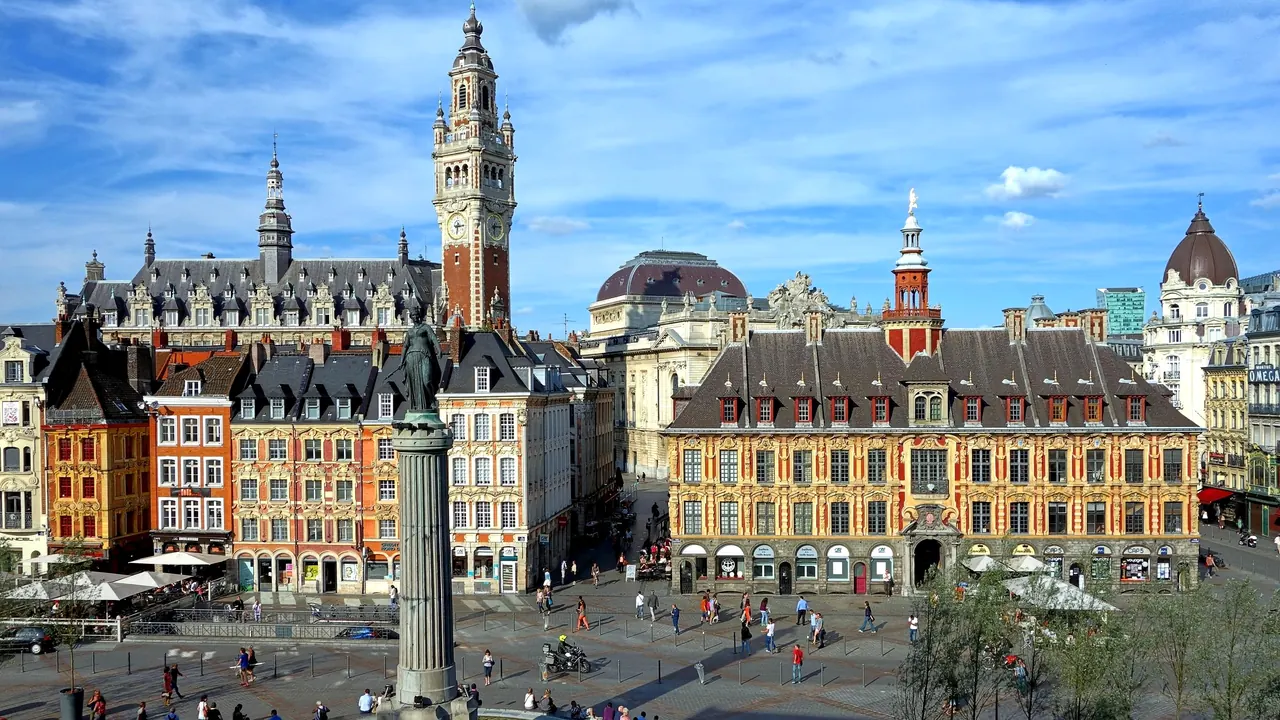
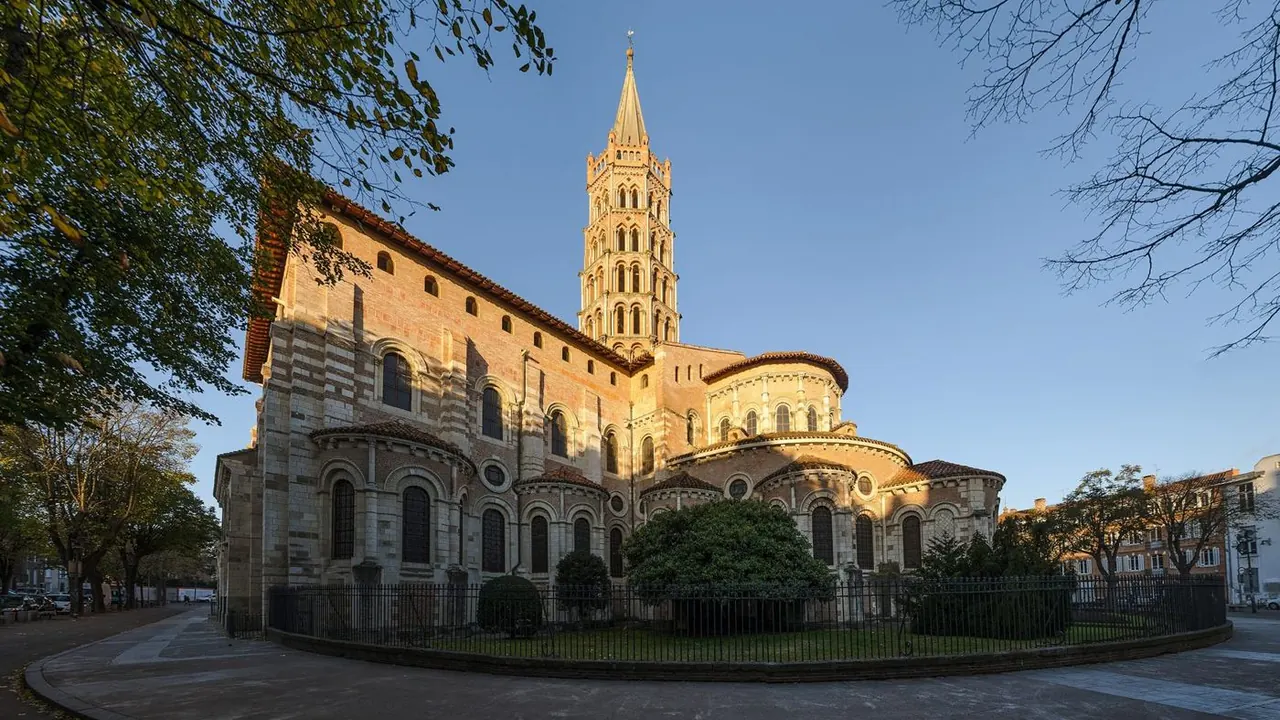
Photos: Lille by Velvet, CC BY-SA 3.0, cropped; Toulouse by ZbebVial, CC BY-SA 3.0, cropped.
Lille or Toulouse?
Our verdict in twelve categories, each scored against the same fixed benchmark cities, and the climate month by month, so you can choose for your trip.
Choose Lille for
- day trips
- getting around
- shopping
Lille suits travellers who want a base as much as a destination. Its two stations sit next to the old town, so Brussels, Ghent, Bruges and Paris are easy day trips, and the compact Flemish centre, the Palais des Beaux-Arts and the estaminets fill the days in between. It works well for a short break by train, and for anyone who likes beer halls, brick cellars and moving between France and Belgium.
Choose Toulouse for
- nature and the outdoors
- families
- food and drink
Toulouse is the better choice if you want southern warmth, a longer table and open country within reach. It has the richer cooking of the south-west, a stronger opera and orchestra season, and the Pyrenees for hiking, cycling and skiing. The space centre and aircraft museums give families a reason to come of their own. Pick it for a slower vacation that mixes a rose-brick city with mountains, canals and walled Carcassonne.
Scoreboard
Twelve categories on one fixed scale from 0 to 100. The shaded stretch is the gap between the two.
Your match
Pick a travel style or drag the sliders, and both match scores follow your weighting.
Too close to call, level with your weighting
Wins on day trips and getting around with your weighting.
Wins on nature and the outdoors and families with your weighting.
What matters to you?
Category by category
What the scores mean for a trip.
Beaches & swimming
Neither city is a beach destination, but Lille keeps the sea closer. Malo-les-Bains at Dunkirk is about an hour by train, a wide North Sea beach for a bracing walk rather than a long swim, and the Opal Coast dunes are within reach for a day.
From Toulouse, the warm Mediterranean at Gruissan and Narbonne is about two hours away, which makes it a long day out. In the city, the supervised lakes at Sesquières and La Ramée are where locals actually swim in summer.
Food & drink
Lille's food is Flemish and built around beer. In the wood-panelled estaminets of Vieux-Lille you get carbonnade, potjevleesch, the welsh and plenty of Maroilles, with ales from both sides of the border and Meert's waffles to follow. The cooking is hearty and full of character, though wine lovers will find less to explore.
Toulouse eats a little better, and more richly. Cassoulet, duck confit, foie gras and magret fill the stalls of the Victor Hugo market and its upstairs lunch counters. Meals come with Fronton reds or Gaillac wines and often end with a glass of Armagnac brandy, so they feel firmly south-western. The set lunch menu is an everyday pleasure.
Culture & sights
The two are evenly matched, but in different ways. Lille's strength is its art: the Palais des Beaux-Arts is a museum worth the journey, with La Piscine in Roubaix and the LaM a metro or tram ride away, all set around the carved Flemish baroque of the Vieille Bourse and the Grand Place.
Toulouse is more about buildings. The rose-red brick streets, the Romanesque Basilica of Saint-Sernin, the palm-tree vault of the Jacobins and the Renaissance mansions such as the Hôtel d'Assézat matter as much as the collections inside them, and the aerospace museums add something Lille cannot offer.
Nightlife
Both are large student cities that go out more than their size suggests, so the difference is in setting. Lille's evenings happen indoors: loud student bars on Rue Masséna and Rue Solférino, beer cafés in brick cellars in Vieux-Lille, and Belgium nearby for a late club night.
Toulouse lives outdoors, with crowded terraces on Place Saint-Pierre spilling onto the river quays and evening drinks on the squares around the Capitole. It also quietens in July and August, when the students leave.
Nature & outdoors
Toulouse has much more to offer outdoors. The Canal du Midi towpaths make long cycling routes from the city centre, and the Pyrenees are visible on clear days and around one and a half to two hours away, with serious hiking, cycling climbs and winter skiing. The Aveyron gorges and the Montagne Noire are closer.
Around Lille, French Flanders is flat farmland. The Citadel park, level rides along the Deûle and short walks on Mont Noir or Mont des Cats are pleasant, and the cliffs of Cap Blanc-Nez make a long day out.
Day trips
Lille is one of the best bases in northern Europe. Brussels is about half an hour by fast train, Ghent and Bruges around an hour, and Paris is close too, so several countries and capitals fit into one stay. Arras, Amiens cathedral, the Louvre-Lens and the First World War battlefields fill the French side.
Toulouse has fine excursions too, especially walled Carcassonne and brick Albi, each about an hour by train, plus Moissac's cloister. Beyond those, many of its best trips, such as Cordes-sur-Ciel and Foix, are far easier with a car.
Good for families
Toulouse is more rewarding with children. The Cité de l'espace, with its full-size Ariane rocket and Mir module, fills a whole day, and families can walk inside a Concorde at the aircraft museum or watch the giant mechanical creatures in Montaudran. The centre is flat enough for pushchairs, though midsummer heat is a factor.
Lille is easy rather than exciting for families: the Citadel park zoo and playgrounds, a natural history museum and a science centre by metro. Its biggest draws, Pairi Daiza and Nausicaá, need a day out, and the cobbles of Vieux-Lille make pushchairs hard work.
Getting around
Both have flat, walkable centres and automated metros, but Lille has the edge. Its two stations sit within walking distance of the old town, so arriving and leaving for day trips by rail takes little effort, and you will not need a car.
In Toulouse, the centre within the boulevards is just as easy on foot or by public bike. The space centre, aircraft museum and lakes need a bus ride, though, and the Pyrenees and the countryside really call for a car.
Shopping & style
Lille is the better place to shop. Alongside the chains on Rue Neuve and the Euralille mall, Vieux-Lille has independent fashion, design shops and a few luxury labels, and the September Braderie fills kilometres of streets with one of Europe's largest flea markets.
Toulouse is more mainstream, with no luxury district, but its edible souvenirs are better: violet sweets, duck confit, cassoulet in jars and Armagnac from the covered markets.
Affordability
Costs are much the same in both, comfortable rather than cheap by Western European standards, with hotels in both getting fuller and dearer during big trade fairs. In Lille, estaminet meals and beer are the fairly priced pleasures, and hotels also fill up for the Braderie.
In Toulouse, the set lunch menu is the cheapest way to eat well, and some municipal museums are free on certain days.
Live music & performing arts
Toulouse has the stronger classical scene. The Théâtre du Capitole runs its own opera and ballet company, the Orchestre National du Capitole plays in the round Halle aux Grains, and the Jacobins piano festival and riverside Rio Loco add summer dates.
Lille has a dependable season of its own, with the grand Opéra on Place du Théâtre, the Orchestre National de Lille, the Théâtre du Nord and contemporary dance in Roubaix and Tourcoing. It is solid, but Toulouse makes the better evening for opera lovers.
Wellness & relaxation
Neither city is a place for a spa vacation, and both rely on hotel spas and a few day spas. Lille's thermal baths at Saint-Amand-les-Eaux are a short train ride away, and its slow moments are spent in Vieux-Lille tea rooms.
Toulouse offers a more relaxed southern pace, with long lunches and canal-side rides, while its hot springs at Luchon and Ax-les-Thermes are deep in the Pyrenees and best done with an overnight stay.
When should you go?
Pick your month. The climate figures are measured averages, not a forecast.
Lille in July
Toulouse in July
Daytime high, °C
Rainfall in the month, mm
Temperature and rainfall are climate normals, averaged over the years shown. Lille: 1991-2020 normals, Lille (7.8 km from centre). Toulouse: 1991-2020 normals, Toulouse / Blagnac (7 km from centre).
Lille is mild and often grey. Late spring and summer are the best months for walking the streets, with July and August reaching about 24°C and getting the most sunshine, and even then it is rarely too hot to be out at midday. Rain falls throughout the year and is heaviest in November and December, at up to 76mm a month. With short, dull days on top of the rain, winter is the least rewarding time to visit.
Toulouse is warmer and sunnier than Lille in every month, and its spring arrives earlier, though May is its wettest month at about 74mm. July and August are dry and hot, around 28°C to 29°C. That is warm enough for a swim at the lakes or a day by the Mediterranean, but it makes sightseeing in the middle of the day tiring. September and early October usually strike the best balance, still warm and bright. Winters are milder than Lille's and noticeably sunnier.
Which traveller are you?
For a short city break, Lille is the easier choice. You arrive by fast train next to the old town, walk everything from the Grand Place to the Palais des Beaux-Arts, and can add Brussels or Bruges without changing hotel.
On an outdoors trip, Toulouse is clearly ahead. The Canal du Midi towpaths start in the city, and the Pyrenees, with high valleys, cycling climbs and ski stations, are under two hours away. Lille offers flat towpaths and low hills.
On a family trip with children, Toulouse gives more to build days around. The Cité de l'espace and the walk-through Concorde can each fill a day, and the centre suits pushchairs. Lille's Citadel park and small zoo are pleasant, but its bigger attractions lie outside the city.
Before you go
| Measure | Lille | Toulouse |
|---|---|---|
| Official language | French | French |
| Currency | Euro (EUR) | Euro (EUR) |
| Sockets | CE230 V, 50 Hz | CE230 V, 50 Hz |
| Driving side | Right | Right |
| Time zone | UTC+1, UTC+2 in summer | UTC+1, UTC+2 in summer |
| Emergency number | 112 | 112 |
| Elevation | 17 m | 115 m |
| Main airport | Lille Airport (LIL)8 km from centre61 non-stop destinations | Toulouse-Blagnac Airport (TLS)7 km from centre84 non-stop destinations |
| Public holidays this year | 11 days | 11 days |
By the numbers
| Measure | Lille | Toulouse |
|---|---|---|
| City population | 238,246 | 514,819 |
| People per km² | 6,846 | 4,352 |
| Museums within 10 km | 23 | 24 |
| UNESCO World Heritage sites within 50 km | 6 | 2 |
Where else could you go?
Every comparison below shares a destination with this one, so you can follow Lille or Toulouse somewhere new.