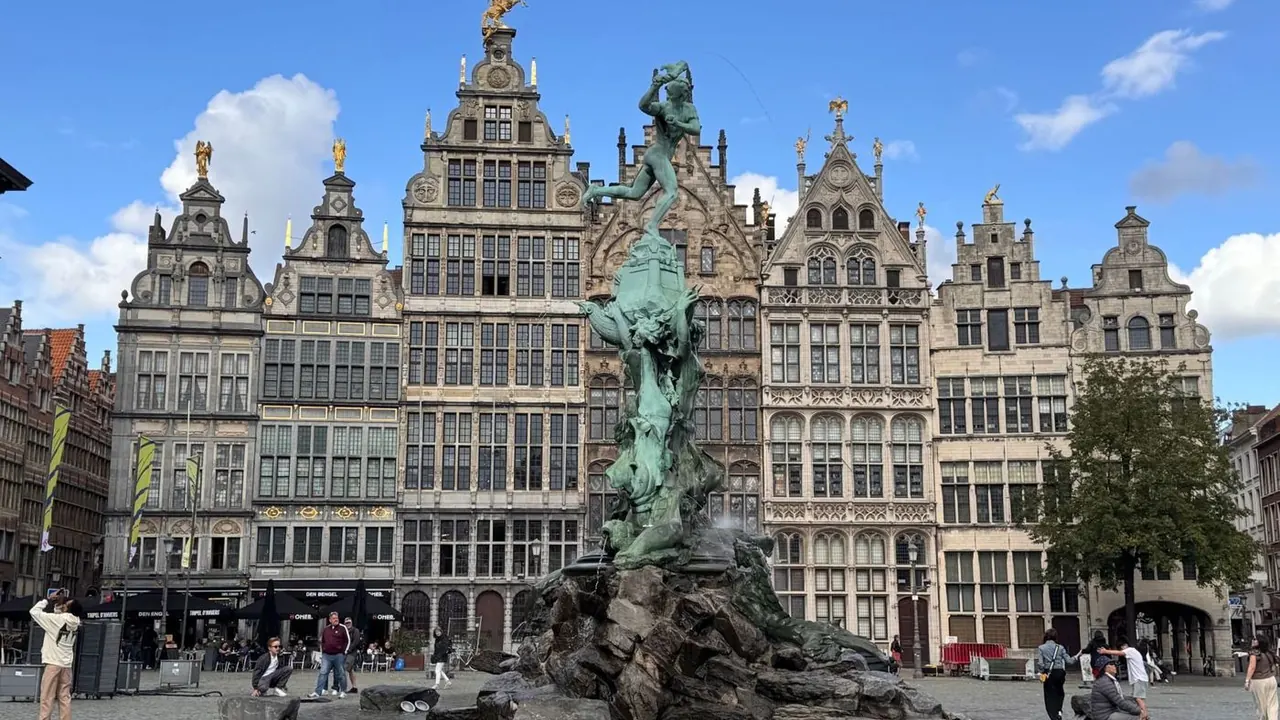
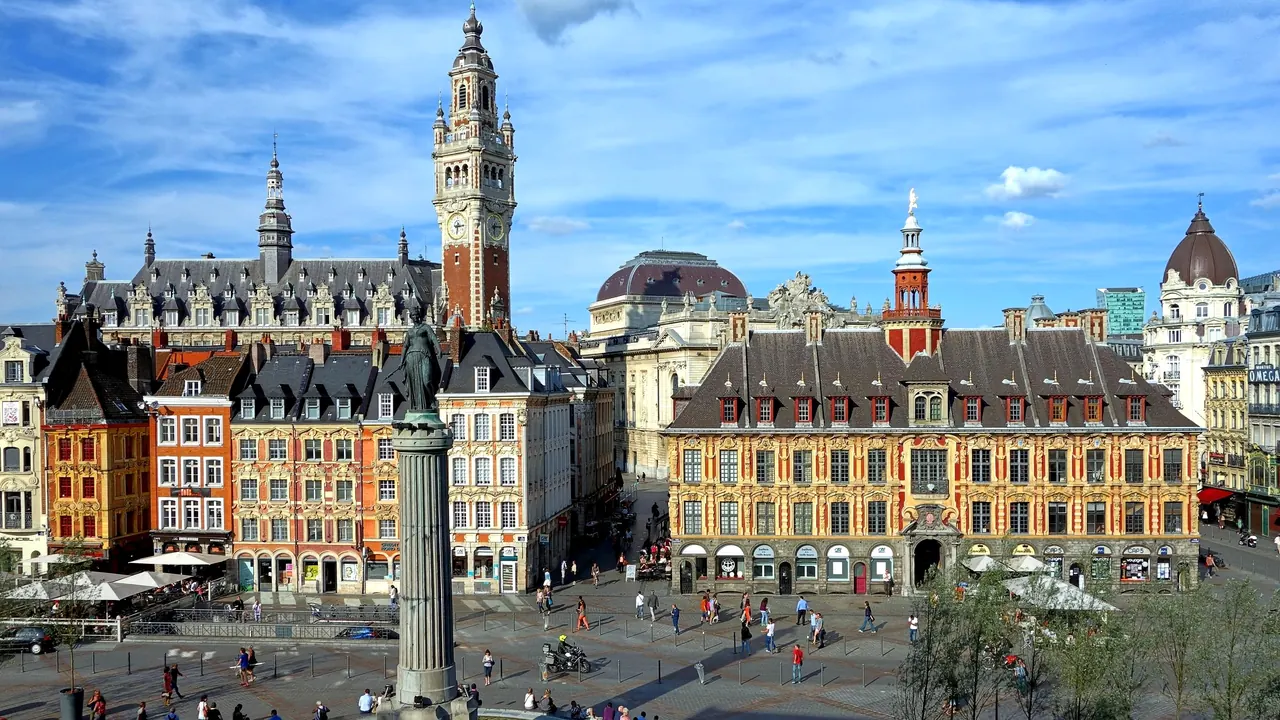
Photos: Antwerp by Norbert Jakab, Pexels License; Lille by Velvet, CC BY-SA 3.0, cropped.
Antwerp or Lille?
Our verdict in twelve categories, each scored against the same fixed benchmark cities, and the climate month by month, so you can choose for your trip.
Choose Antwerp for
- families
- shopping
- culture and sights
Antwerp suits the traveller who wants the city itself to be the trip. It has the richer run of sights, with Rubens in the cathedral, the Plantin-Moretus printing house and a Baroque old town. Its avant-garde fashion boutiques give shopping an identity that Lille's high streets lack, and the zoo by Central Station makes it the easier pick with children. Go there for depth, style and a strong beer culture, and expect to pay a little more for it.
Choose Lille for
- prices
- day trips
- getting around
Lille makes more sense as a base. Its two stations sit side by side next to the old town, so Brussels, Ghent, Bruges, Paris and the First World War battlefields are all easy days out. It is also the gentler city on the wallet. Choose it for estaminet cooking, the Palais des Beaux-Arts and a French way of life with Flanders on the doorstep, and accept that the city itself has a little less to fill the days.
Scoreboard
Twelve categories on one fixed scale from 0 to 100. The shaded stretch is the gap between the two.
Your match
Pick a travel style or drag the sliders, and both match scores follow your weighting.
Too close to call, 2 points apart
Wins on families and shopping with your weighting.
Wins on prices and day trips with your weighting.
What matters to you?
Category by category
What the scores mean for a trip.
Beaches & swimming
Neither city is a place for a beach trip, and the North Sea stays cold even in August. The difference is in how far away the sand is. Lille's nearest beach, the wide, windy strand at Malo-les-Bains in Dunkirk, is about an hour by train. From Antwerp, Blankenberge and Knokke take closer to two hours, although the city does have riverside sand at Sint-Annastrand for sitting on rather than swimming.
Food & drink
The two eat from the same Flemish tradition, stews braised in beer included, but Antwerp's stoofvlees and mussels with frites lean Belgian, while Lille's estaminets add potjevleesch, the welsh and pungent Maroilles cheese. Antwerp has more ambition at the top end, with design-led cooking and a few starred tables in Het Zuid and Het Eilandje.
Lille is stronger on everyday character: the wood-panelled taverns of Vieux-Lille, old pastry shops known for their waffles, and the multi-ethnic Sunday market at Wazemmes. Beer leads in both. Antwerp has its bolleke of local amber ale and Trappist lists in brown cafés, and Lille mixes French and Belgian ales in its beer bars.
Culture & sights
Antwerp has more to see. Rubens's altarpieces in the cathedral, his house and studio, and the Plantin-Moretus printing house, which is on the UNESCO list, make a Baroque core that Lille cannot quite equal. Around them are the domed Central Station, the Art Nouveau streets of Zurenborg and modern museums such as the MAS and MoMu.
Lille's strength is concentrated in a single great museum, the Palais des Beaux-Arts, set among the carved brick of Vieux-Lille and the UNESCO-listed belfry. La Piscine in Roubaix, an art museum inside an old pool, is the memorable extra. Both fill two or three days, but Antwerp's days are fuller.
Nightlife
Both go out harder than their size suggests, but in different ways. Antwerp has the clubs: house and techno in old warehouses and under the railway near the docks, one of the best-known gay scenes in the Low Countries, and bars with no fixed closing time.
Lille is a student town first. Rue Masséna and Rue Solférino fill with cheap, loud bars on Thursdays, and the brick cellar bars of Vieux-Lille are quieter. For a serious late night, people in Lille have traditionally headed over the border into Belgium.
Nature & outdoors
Both sit in flat, crowded Flemish country, and neither is a trip for the outdoors. Antwerp's best escape is the heathland, dunes and pine woods of the Kalmthoutse Heide, plus bike rides along the dykes of the Scheldt polders. Lille has the low Monts de Flandre for short walks with views and the canal towpaths along the Deûle. The chalk cliffs of the Opal Coast are within a long day's reach of Lille.
Day trips
Both are excellent bases, and the difference is in direction. From Antwerp, the trains run to Belgium's historic cities and north into the Netherlands: Mechelen, Ghent, Bruges, then Rotterdam, Delft and the Kinderdijk windmills.
Lille faces Belgium and France at once. Brussels is about half an hour away, Paris around an hour by TGV and London within reach for an ambitious day. Arras, Amiens Cathedral, the Louvre-Lens and the First World War battlefields around Ypres and the Somme add a kind of trip that Antwerp cannot match.
Good for families
Antwerp is easier with children. Its zoo, one of the oldest in the world, sits beside Central Station, and the Steen castle, the trams and the walk through the foot tunnel under the river all keep children busy without any planning. The centre is flat and generally fine with a pushchair.
Lille manages well enough around its Citadel park, with a small zoo, playgrounds and wide paths for scooters, and there is a hands-on science centre a metro ride away. The larger attractions, a big zoo park in Belgium and the aquarium at Boulogne-sur-Mer, mean longer trips, and the cobbles of Vieux-Lille are hard going with a buggy.
Getting around
Both have compact, walkable centres where a car is only a burden. Antwerp's trams and premetro cover the outer districts, and its shared bikes and cycle lanes make it the better city to cycle in, if you watch the tram tracks. Lille has the driverless VAL metro and a tram to Roubaix, and its two stations stand side by side next to the old town, which makes setting off on day trips very easy.
Shopping & style
Antwerp is the place to shop for fashion. The avant-garde designers from its academy shaped the boutiques of the Nationalestraat, Kammenstraat and Het Zuid. Add the diamond quarter, the antique shops of the Kloosterstraat and the Meir high street, and there is more here worth the trip.
Lille covers the basics well, with the chains on Rue Neuve, the Euralille mall and independent shops and delicatessens in Vieux-Lille. Its distinctive moment comes once a year, when the Braderie fills kilometres of streets with flea-market stalls at the start of September.
Affordability
Lille is the cheaper stay. Its hotels are reasonable outside the Braderie and the trade fairs, and estaminet meals, the metro and the museums are all fairly priced. Day to day it costs what any French city does.
Antwerp follows Belgian price levels, which hit hardest at sit-down dinners. Rooms still undercut Brussels, and frites, café beer and lunch menus keep the bill down, so it suits a mid-range budget better than a shoestring one.
Live music & performing arts
Antwerp has the somewhat stronger programme, mainly thanks to contemporary dance. Opera Ballet Vlaanderen performs in the opera house on the Frankrijklei, the deSingel campus is adventurous, and early music has a home in a Baroque church. Much of the theatre is in Dutch, though.
Lille's season is dependable rather than distinctive. There is the grand Opéra on the Place du Théâtre, the Orchestre National de Lille and the Théâtre du Nord, which plays in French and so is easier going for many visitors than Flemish theatre.
Wellness & relaxation
Neither city is a place to come for rest, and both mostly offer hotel spas and slow café afternoons. The options for a proper soak differ. From Antwerp, it means a large sauna complex in the suburbs, usually reached by car. Lille has a real thermal bath at Saint-Amand-les-Eaux, a short train ride away.
When should you go?
Pick your month. The climate figures are measured averages, not a forecast.
Antwerp in July
Lille in July
Daytime high, °C
Rainfall in the month, mm
Where the figures come from
Antwerp has no rain gauge within 25 km of the centre, so its rainfall comes from a gridded climate dataset read at the city rather than from a gauge further away.
Antwerp's sunshine is measured 47 km from the centre, at Uccle.
Temperature and rainfall are climate normals, averaged over the years shown. Antwerp: 1991-2020 normals, Antwerpen / Deurne (5.2 km from centre). Lille: 1991-2020 normals, Lille (7.8 km from centre).
The two cities share almost the same climate, so the season matters more than the choice between them. Late May to September is the time to go, when afternoons reach about 23°C in Antwerp and 24°C in Lille. Both get around 200 hours of sun a month and the weather suits long days on foot. Neither is ever hot enough to make walking hard, and neither is a beach climate. April and October are cool but workable for museums and day trips.
Winter is grey and short of light in both, with highs of about 7°C from December to February. Rain falls all year rather than in one season. Antwerp is the slightly wetter of the two, especially in summer and late autumn, with close to 80mm in July and August against Lille's 69mm, so pack an umbrella for either.
Which traveller are you?
On a shopping trip, Antwerp is the clear choice. The designers from its fashion academy fill the Nationalestraat and Het Zuid with conceptual Belgian labels, and there are antiques on the Kloosterstraat. Lille offers chains, a mall and a pleasant Vieux-Lille, plus its one big Braderie weekend each September.
On a family trip with young children, Antwerp is easier. Its historic zoo stands beside the main station, and the MAS rooftop, the trams and the foot tunnel under the Scheldt all appeal to children. Lille's small Citadel zoo is charming, but its bigger attractions lie well outside town.
For a trip on a tight budget, Lille stretches money further. Rooms are reasonable for most of the year, estaminet meals are fairly priced and the museums cost little. Antwerp's sit-down dinners follow higher Belgian prices, so the savings there come mainly from frites, café beer and lunch menus.
Before you go
| Measure | Antwerp | Lille |
|---|---|---|
| Official language | French, German, Dutch | French |
| Currency | Euro (EUR) | Euro (EUR) |
| Sockets | CE230 V, 50 Hz | CE230 V, 50 Hz |
| Driving side | Right | Right |
| Time zone | UTC+1, UTC+2 in summer | UTC+1, UTC+2 in summer |
| Emergency number | 112 | 112 |
| Elevation | 7 m | 17 m |
| Main airport | Brussels Airport (BRU)36 km from centre191 non-stop destinations | Lille Airport (LIL)8 km from centre61 non-stop destinations |
| Public holidays this year | 14 days | 11 days |
By the numbers
| Measure | Antwerp | Lille |
|---|---|---|
| City population | 529,247 | 238,246 |
| People per km² | 2,542 | 6,846 |
| Museums within 10 km | 37 | 23 |
| UNESCO World Heritage sites within 50 km | 9 | 6 |
Where else could you go?
Every comparison below shares a destination with this one, so you can follow Antwerp or Lille somewhere new.