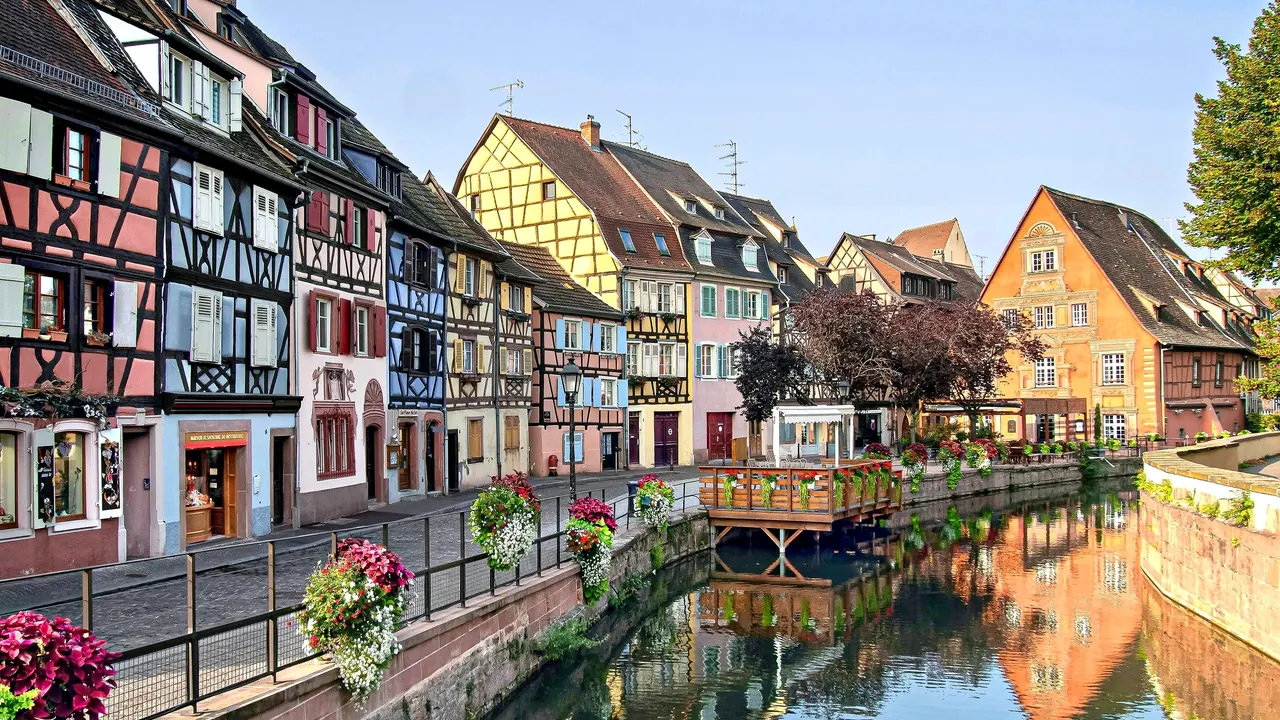
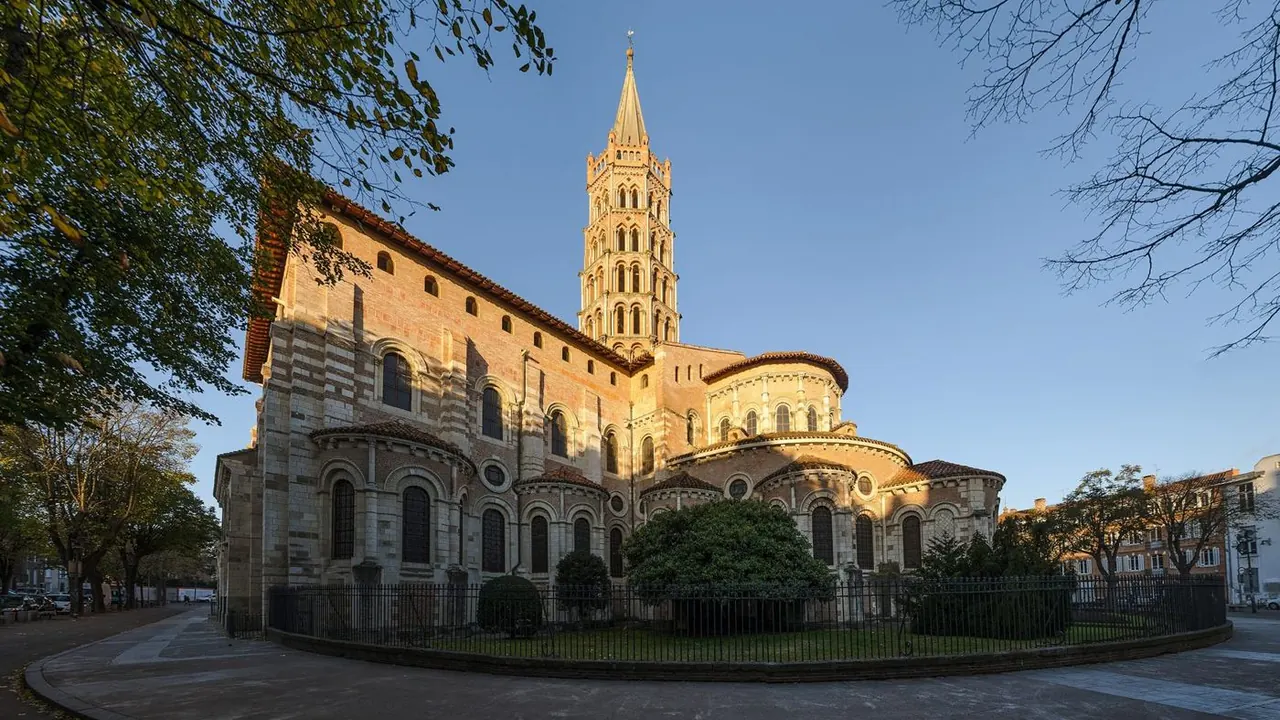
Photos: Colmar by Rolf Kranz, CC BY-SA 4.0, cropped; Toulouse by ZbebVial, CC BY-SA 3.0, cropped.
Colmar or Toulouse?
Our verdict in twelve categories, each scored against the same fixed benchmark cities, and the climate month by month, so you can choose for your trip.
Choose Colmar for
- day trips
- nature and the outdoors
- wellness
Colmar suits travellers who want a small, painted old town as a base and the countryside as the main event. Its strengths lie just outside the town: wine villages a few kilometres apart, walks through the vines, the high ridge road of the Vosges, and Strasbourg, Basel and Freiburg all close enough for a day. It works best for a slow few days of good meals, wine tastings and excursions, ideally with a car, and much less well for anyone who wants their evenings to run late.
Choose Toulouse for
- nightlife
- live music and the arts
- shopping
Toulouse is the choice for a city that keeps going after dinner. A large student population fills the riverside terraces around Place Saint-Pierre, the opera house and the national orchestra give it a proper classical season, and a metro and a compact brick centre make it easy to get around without a car. Carcassonne and Albi are an hour away by train, but the city itself carries more of the trip than Colmar does.
Scoreboard
Twelve categories on one fixed scale from 0 to 100. The shaded stretch is the gap between the two.
Your match
Pick a travel style or drag the sliders, and both match scores follow your weighting.
Wins on day trips and nature and the outdoors with your weighting.
Wins on nightlife and live music and the arts with your weighting.
What matters to you?
Category by category
What the scores mean for a trip.
Beaches & swimming
Neither city is a place to swim in the sea, and the difference is only in how you cool off. Colmar relies on municipal pools and small mountain lakes up in the Vosges valleys. Toulouse has supervised leisure lakes on the edge of town, and the Mediterranean at Gruissan is about two hours away for anyone willing to make a long day of it.
Food & drink
Both are serious regional food towns, and the choice comes down to which kitchen you prefer. Colmar cooks Alsatian, halfway to Germany: choucroute, baeckeoffe and tarte flambée in panelled winstubs, with munster cheese, and Riesling and Gewurztraminer from the slopes just outside town.
Toulouse is duck country, built around cassoulet, confit and foie gras, with Fronton and Gaillac wines and Armagnac. The Victor Hugo market, with its lunch counters upstairs, is a livelier place to eat than Colmar's covered market, and student quarters keep casual meals cheap. Colmar's wine-route restaurants give it a slightly stronger top tier.
Culture & sights
These two are evenly matched but feel very different. Colmar is a near-intact half-timbered town of painted façades and canals, small enough to see as a whole, with one world-class masterpiece in Grünewald's Isenheim Altarpiece at the Unterlinden.
Toulouse works on a larger scale in rose-red brick: Saint-Sernin, one of Europe's biggest Romanesque churches, the palm-tree vault of the Jacobins, the Capitole's state rooms and merchants' mansions turned galleries. Its aircraft museums and space centre add a modern strand that Colmar has nothing to match.
Nightlife
Toulouse is by far the better place for an evening out. Thousands of students crowd the terraces of Place Saint-Pierre and the quays, older drinkers settle into the wine bars around Carmes and the Daurade, and there are clubs and a decent electronic scene, though it goes quieter in high summer.
Colmar's evenings end with dinner and a glass of wine by the canals. A few bars and brasseries stay open, but the town goes to bed early, and locals in search of a night out take the train to Strasbourg.
Nature & outdoors
Colmar has the better countryside on its doorstep. Vineyard paths start within half an hour, and the Munster and Kaysersberg valleys climb to the Route des Crêtes, with views over the Black Forest and sometimes the Alps. Autumn colour on the vines is a highlight.
Around Toulouse the land is flat farmland, with the Canal du Midi towpaths for long, easy rides. The Pyrenees offer far bigger mountains, with high hiking and proper ski stations, but they are a drive of up to two hours, so they make a separate excursion rather than an afternoon out.
Day trips
Colmar is the stronger base. Eguisheim, Riquewihr and Kaysersberg are a few kilometres apart along the wine route, Strasbourg is half an hour by train, and two other countries, with Basel and Freiburg, are about an hour away. The catch is that the villages are hard to reach without a car or bike.
Toulouse has fewer outings, but they are excellent and easy by train: Carcassonne's ramparts and brick Albi with its Toulouse-Lautrec museum are each about an hour away, and Moissac's cloister is close. Most of the rest, such as Cordes-sur-Ciel and Foix, requires a car.
Good for families
Families do equally well in either city, but the outings are spread differently. In Colmar the town itself offers boat rides, storks and a children's Christmas market, while the bigger draws, such as the monkey park at Kintzheim, Hunawihr's otters and Europa-Park, need a car.
Toulouse keeps its star attraction close to town: the Cité de l'espace, with its walk-through Mir module, and the aircraft museum with a Concorde are a bus ride away. Summer heat is the thing to plan around there.
Getting around
Toulouse is easier without a car. Its centre is walkable, and two automated metro lines, trams and a bike scheme cover the rest, though the space centre and Pyrenees still take a bus or a drive.
Colmar is even smaller on foot, with everything a few minutes apart and fast trains to Strasbourg. Beyond town, buses to the wine villages and the Vosges are thin, so most visitors end up hiring a car or bicycle.
Shopping & style
Toulouse is the better shopping city, with chains and a department store on Rue d'Alsace-Lorraine, independent and designer boutiques in Saint-Étienne, and a large Sunday market at Saint-Sernin. Its best buys are edible: violet sweets, Armagnac and cassoulet in jars.
Colmar is about regional souvenirs: wine bought from the grower, Soufflenheim pottery, kougelhopf moulds and Alsatian linen. Its Christmas markets are a high point of the year, but for fashion there is little.
Affordability
Costs are much the same in both, moderate by Western European standards, with good set lunches in each. In Colmar the pressure point is rooms, which get scarce and expensive in summer and during the Christmas markets, though free tastings in the villages help.
Toulouse is a larger city with more hotels, so rooms cost more only around big trade fairs. Cheap student bars and free museum days make it easier on a tight budget.
Live music & performing arts
Toulouse is well ahead. The Théâtre du Capitole runs a full opera and ballet season with its own company, the Orchestre National du Capitole plays in the round Halle aux Grains, and there are small theatres, jazz bars and the Rio Loco festival by the river.
Colmar's small municipal theatre and touring Opéra du Rhin give it a modest season, with the life concentrated in the July classical festival, autumn jazz and wine-fair concerts. For more, people travel to Strasbourg or Basel.
Wellness & relaxation
Neither has a spa culture, so both come down to hotel spas and a slow pace. Colmar's calm is that of a small town after the day-trippers leave, with canal-side evenings and walks among the vines. Toulouse offers shaded squares and Canal du Midi rides, and the thermal towns of Luchon and Ax-les-Thermes in the Pyrenees, which are best visited overnight.
When should you go?
Pick your month. The climate figures are measured averages, not a forecast.
Colmar in July
Toulouse in July
Daytime high, °C
Rainfall in the month, mm
Temperature and rainfall are climate normals, averaged over the years shown. Colmar: 1991-2020 normals, Ihringen (21.1 km from centre). Toulouse: 1991-2020 normals, Toulouse / Blagnac (7 km from centre).
Colmar has a continental pattern: cold, grey winters with highs around 6°C and short days, then a warm summer peaking near 27°C in August. Late spring and summer bring the most rain, with May the wettest month, so walking weather is best from late May to September, and the autumn harvest is pleasant while it stays mild into October. Winter is really for the Christmas markets, dressed for the cold.
Toulouse is milder all year and noticeably sunnier outside summer. Winter highs sit around 10°C, spring and autumn are comfortable for long days on foot, and July and August reach 28°C to 29°C, hot enough that midday sightseeing is best kept short. Its summer is drier than Colmar's, but the heat makes May, June, September and October the easiest months. Neither city has a sea, so summer swimming means lakes and pools.
Which traveller are you?
For an outdoors trip, Colmar is the better base. Marked trails run through the vineyards within half an hour, the Vosges offer forested ridges and glacial lakes, and the wine route is easy cycling. Toulouse's mountains, the Pyrenees, are nearly two hours away.
On a food and nightlife trip, choose Toulouse. Both cities eat heartily, Alsatian choucroute against cassoulet, but only Toulouse keeps going afterwards, with student bars on the quays, wine bars around Carmes and clubs. In Colmar the streets go quiet soon after dinner.
For a culture and arts trip, Toulouse has the edge. Its Romanesque basilica, brick mansions and aerospace museums hold their own against Colmar's old town and the Isenheim Altarpiece, and it adds a resident opera company, a national orchestra and a working theatre scene.
Before you go
| Measure | Colmar | Toulouse |
|---|---|---|
| Official language | French | French |
| Currency | Euro (EUR) | Euro (EUR) |
| Sockets | CE230 V, 50 Hz | CE230 V, 50 Hz |
| Driving side | Right | Right |
| Time zone | UTC+1, UTC+2 in summer | UTC+1, UTC+2 in summer |
| Emergency number | 112 | 112 |
| Elevation | 185 m | 115 m |
| Main airport | EuroAirport Basel–Mulhouse–Freiburg (BSL)55 km from centre112 non-stop destinations | Toulouse-Blagnac Airport (TLS)7 km from centre84 non-stop destinations |
| Public holidays this year | 11 days | 11 days |
By the numbers
| Measure | Colmar | Toulouse |
|---|---|---|
| City population | 66,970 | 514,819 |
| People per km² | 1,006 | 4,352 |
| Museums within 10 km | 9 | 24 |
| UNESCO World Heritage sites within 50 km | 3 | 2 |
Where else could you go?
Every comparison below shares a destination with this one, so you can follow Colmar or Toulouse somewhere new.