Switzerland
Geneva
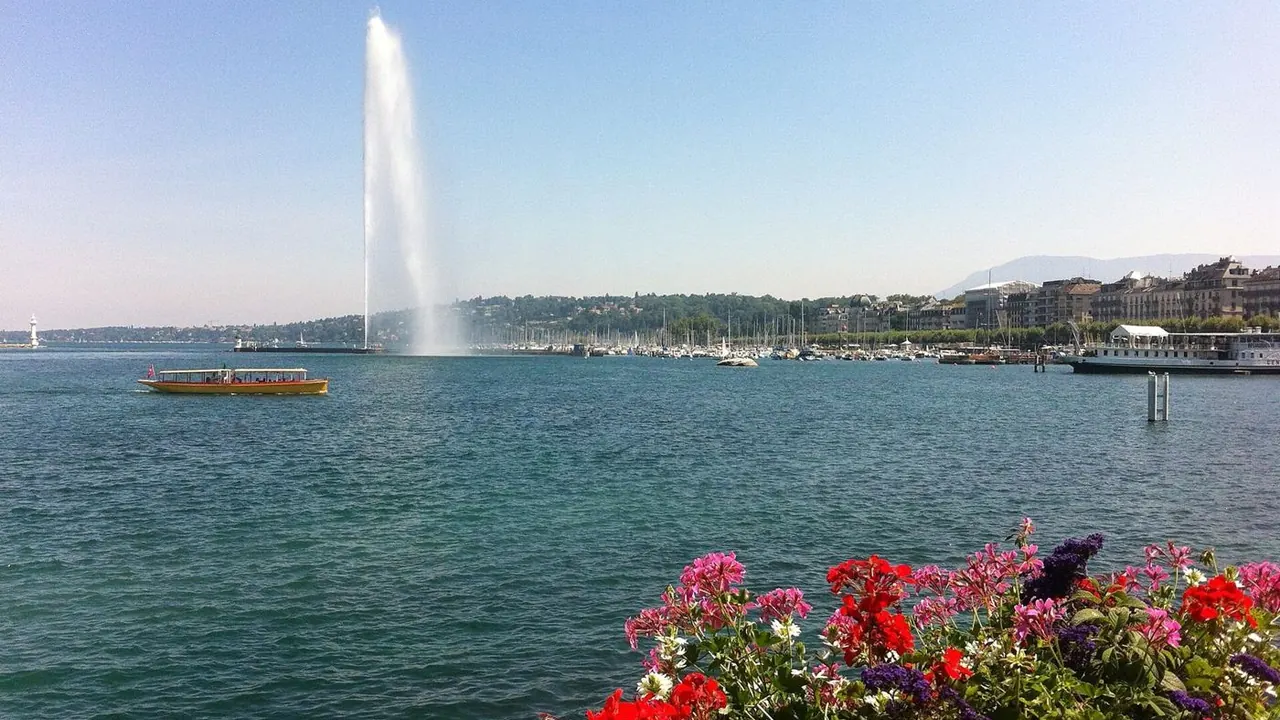
The Jet d'Eau and a lake boat
- Getting around86
- Nature & outdoors82
- Day trips80
Photo: Diviosen, CC BY-SA 3.0, cropped
Match
57
Every category weighted equally
- Beach & sun54
- Culture & arts60
- Food & nightlife56
- Family trip57
- Outdoors61
- Relax & unwind58
- Shopping & style60
- On a budget52
Geneva in twelve categories
Our verdict on each, scored 0 to 100 against the same fixed benchmark cities, so a score means the same thing on every page.
Beaches & swimming. Scores 45 out of 100.
Food & drink. Scores 55 out of 100.
Culture & sights. Scores 58 out of 100.
Nightlife. Scores 38 out of 100.
Nature & outdoors. Scores 82 out of 100.
Day trips. Scores 80 out of 100.
Good for families. Scores 57 out of 100.
Getting around. Scores 86 out of 100.
Shopping & style. Scores 68 out of 100.
Affordability. Scores 5 out of 100.
Live music & performing arts. Scores 60 out of 100.
Wellness & relaxation. Scores 55 out of 100.
Geneva category by category
Beaches & swimming
45Geneva has no sea, but its lake is clean and in summer the whole city swims in it. The classic spot is the Bains des Pâquis, a public bathing jetty reaching out into the harbour, where people dive off the concrete with the Jet d'Eau in view. Across the water, the Eaux-Vives shore and Genève-Plage give you lawns, pebbles and pools, and quieter village shores further along the lake are a short bus or boat ride away.
The water is cold until June and can reach about 23°C by August. The season is short, though, and the shoreline is more lido than beach. It is a pleasant summer extra, not the reason for a stay.
Food & drink
55Eating in Geneva leans heavily on French cooking, with a Swiss accent. Filets de perche from the lake, fondue and raclette in old wood-panelled brasseries, longeole sausage and cardoons in winter are the local signatures. The canton is also a serious wine region, and its vineyards supply most local wine lists with Chasselas and Gamay. The international organisations support a deep spread of cuisines and a polished fine-dining scene, at its best in Carouge and the Old Town.
What it lacks is cheap, casual street food. Prices are high at every level, and the nearest thing to a market culture is the Plainpalais and neighbourhood produce markets and the chocolatiers.
Culture & sights
58Geneva's heritage is that of the Reformation and of international diplomacy. On the hill of the Old Town, St Pierre Cathedral is where Calvin preached, and you can climb its towers or go down into the archaeological site beneath. The Reformation Wall lines the Parc des Bastions below. Across the river, the Palais des Nations, the International Red Cross and Red Crescent Museum and the Broken Chair statue explain the city's world role, and CERN on the edge of town lets visitors see the science.
The Musée d'Art et d'Histoire, the Patek Philippe Museum of watchmaking and the Jet d'Eau round out a solid set. Two or three days is enough.
Nightlife
38Going out in Geneva is low-key and expensive. The liveliest streets are in the Pâquis, a mixed and slightly rough-edged district behind the station where bars stay busy late. Carouge has wine bars and terraces with a village feel, and the old Plainpalais and Jonction areas hold the alternative side: squat-born cultural centres with club nights and a small electronic scene. On summer evenings people drink by the lake and along the Rhône.
Weekends are fine, but weeknights are quiet and the city winds down early. Nobody comes here for the nights out.
Nature & outdoors
82Geneva sits in a basin with mountains on every horizon, and on clear days Mont Blanc shows at the end of the lake. The Salève rises just over the French border, with a cable car up to limestone cliffs, paragliding and walking trails above the city. To the west the long ridge of the Jura gives forest hikes, cross-country skiing and wide views over the Alps. On the lake itself there is sailing, paddleboarding and rowing, and the lakeside paths and Rhône riverbanks are good for cycling.
Chamonix and the high Alps are about an hour or so by road, and ski resorts are within easy reach for a winter day. It is a fine base for the outdoors.
Day trips
80Being on the French border and at the end of a long lake gives Geneva an unusually varied list of outings. Lake steamers and fast trains reach Nyon's Roman ruins, Lausanne's cathedral and steep old town, and Montreux with the Château de Chillon on its rock. The vineyard terraces of Lavaux, a UNESCO site, drop down to the shore in between. On the French side, the medieval village of Yvoire is a boat ride away and Annecy, with its canals and old town, takes under an hour by road.
Further out, Gruyères with its castle and cheese dairies and the arcaded old town of Bern each make a full day, at around two hours away.
Good for families
57Geneva is an easy city to manage with children, but there is not much in it made for them. The streets are safe and orderly, the centre is mostly flat apart from the Old Town hill, and trams take pushchairs without fuss. The Natural History Museum is the main draw. Its floors of large animal dioramas, from Swiss wildlife to the big beasts of other continents, hold young children for hours. The small animal enclosures at the Bois de la Bâtie and the Botanical Garden, with deer, goats and birds, make good short outings.
The lakeside parks along both shores have playgrounds and wide lawns, and a ride across the harbour on the little yellow boats goes down well. CERN's exhibitions suit curious older children. There is no zoo, no aquarium and no theme park, so families who want those will find the city thin after two or three days. A day in the mountains is the usual way to fill the gap.
Getting around
86The centre of Geneva is small enough to walk, from the station across the bridges to the Old Town and down to Carouge. Trams and buses are frequent, clean and punctual, and the yellow harbour boats cross the lake as part of the same network. The airport is a few minutes by train from the main station, and the regional rail system reaches the French suburbs and the rest of Switzerland with ease.
The international district and CERN are a tram ride out but simple to reach. A car is only useful for the mountains, and even then, trains and buses cover more than you would expect. The Old Town hill is the only climb.
Shopping & style
68Geneva is one of the great places in the world to shop for watches and jewellery. The Rue du Rhône and the streets around it are lined with the flagship boutiques of the major Swiss watch houses and international luxury brands, aimed at a wealthy international crowd. Chocolatiers and confectioners in the Old Town and around the station add a more affordable side.
For something less polished, Carouge has small design and craft workshops in its low Sardinian-era streets. The Plainpalais flea market sells antiques and bric-a-brac on the big open plain. Beyond luxury, though, the range is ordinary high-street fare, and plenty of locals cross into France to shop.
Affordability
5Geneva is one of the most expensive cities in the world for a visitor. Hotel rooms are costly all year and climb further during big conferences and trade fairs, and a simple restaurant meal or a glass of wine costs far more than in most of Europe. A few things soften it: many city museums are free, hotel guests usually get free local transport, and the lake lidos cost little. Many budget-minded visitors sleep or eat across the border in France.
Live music & performing arts
60Geneva's formal stage is stronger than its size suggests. The Grand Théâtre, a 19th-century opera house on the Place de Neuve, stages a full season of opera and ballet. The Orchestre de la Suisse Romande plays in the gilded Victoria Hall, which is known for its acoustics. The Comédie and smaller playhouses put on French-language theatre, and the Bâtiment des Forces Motrices, a former pumping station in the middle of the Rhône, hosts concerts and dance.
Live music beyond that comes from small jazz and rock venues and the alternative cultural centres. Summer brings open-air concerts and the Fête de la Musique across the city. The scene is solid rather than famous.
Wellness & relaxation
55Geneva has no thermal springs of its own, but it has a real bathing habit. At the Bains des Pâquis, the public lido turns into a sauna, hammam and Turkish bath in winter, and regulars plunge from the sauna straight into the cold lake. Lakefront luxury hotels have serious spas, and spa towns across the French border, such as Évian and Divonne, are easy to reach.
The city's pace helps. It is orderly and quiet, the lakeside promenades and the botanical garden are good places to slow down, and Sundays are very calm. It is restful rather than a destination built around wellness.
When should you go?
Pick a month to see what it is like. The climate figures are measured averages, not a forecast.
Geneva in July
Daytime high, °C
Rainfall in the month, mm
The whole year
Shaded against this city’s own year: the deepest cell is its best month for that figure and the palest its weakest.
Temperature and rainfall are climate normals, averaged over the years shown. Geneva: 1991-2020 normals, Geneve-Cointrin (5.7 km from centre).
Before you go
| Measure | Geneva |
|---|---|
| Official language | French, German, Italian, Romansh |
| Currency | Swiss Franc (CHF) |
| Sockets | CJ230 V, 50 Hz |
| Driving side | Right |
| Time zone | UTC+1, UTC+2 in summer |
| Emergency number | 112 |
| Elevation | 403 m |
| Main airport | Geneva International Airport (GVA)5 km from centre150 non-stop destinations |
| Public holidays this year | 9 days |
By the numbers
| Measure | Geneva |
|---|---|
| City population | 211,152 |
| People per km² | 13,280 |
| Museums within 10 km | 34 |
| UNESCO World Heritage sites within 50 km | 2 |
Compare Geneva with
Every comparison with a written verdict behind it.