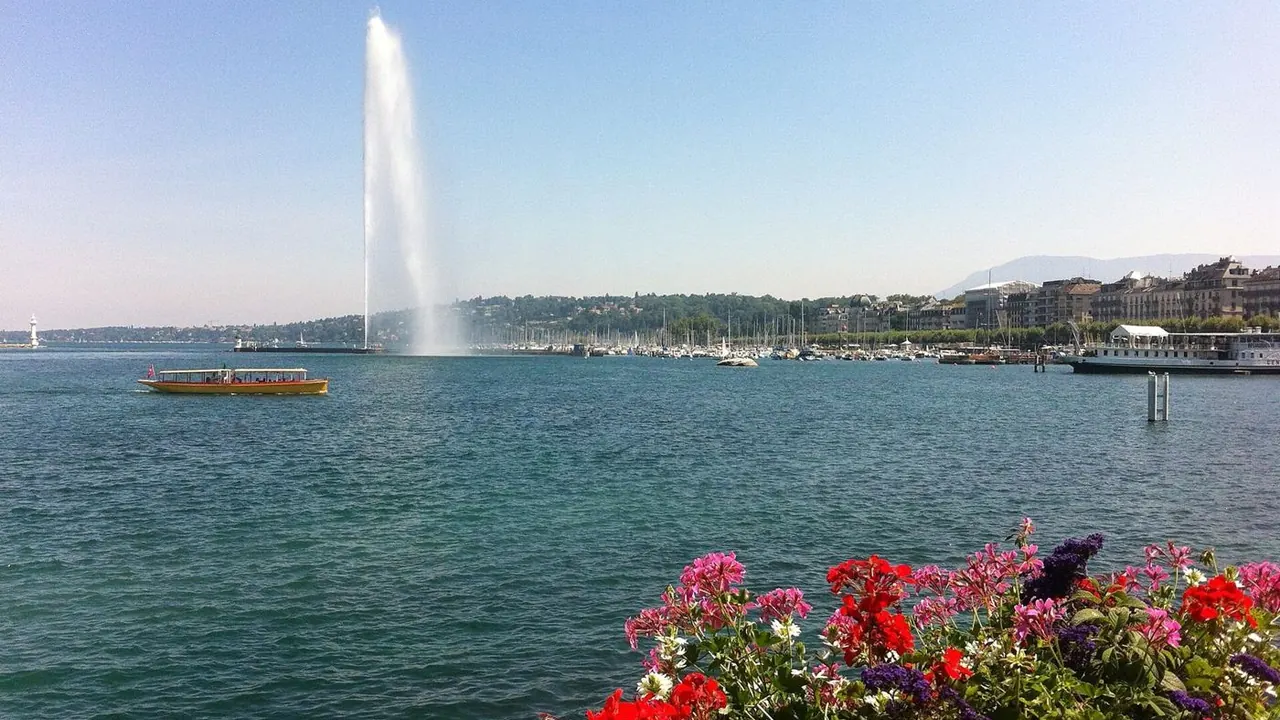
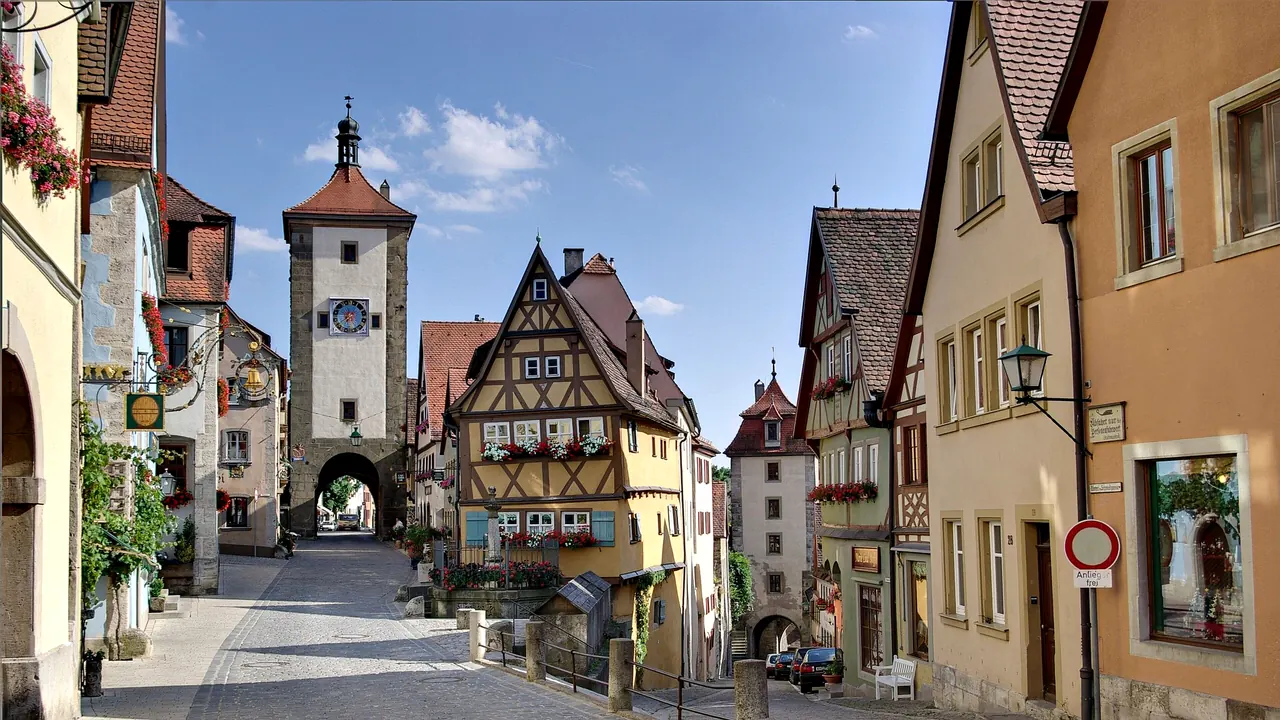
Photos: Geneva by Diviosen, CC BY-SA 3.0, cropped; Rothenburg ob der Tauber by Berthold Werner, Public domain.
Geneva or Rothenburg ob der Tauber?
Our verdict in twelve categories, each scored against the same fixed benchmark cities, and the climate month by month, so you can choose for your trip.
Choose Geneva for
- nature and the outdoors
- live music and the arts
- shopping
Geneva suits travellers who want a city with mountains and water close by. You can swim off a lakeside jetty in the morning and be on the Salève or heading for Chamonix by afternoon, then spend the evening at the opera. It has the wider range: lake steamers, international dining, luxury watch boutiques and trains that reach half of Switzerland. You pay heavily for all of it, so it works best for a well-funded trip that mixes city and outdoors.
Choose Rothenburg ob der Tauber for
- prices
- culture and sights
Rothenburg ob der Tauber is a different kind of trip: a single, intact medieval town that you take in slowly, best enjoyed once the day visitors have left. It suits people who want walls, towers and timbered inns rather than nightlife or shopping, and who are happy to move on by car along the Romantic Road. It costs far less, and it rewards a short, unhurried stay more than a long one.
Scoreboard
Twelve categories on one fixed scale from 0 to 100. The shaded stretch is the gap between the two.
Your match
Pick a travel style or drag the sliders, and both match scores follow your weighting.
Wins on nature and the outdoors and live music and the arts with your weighting.
Wins on prices and culture and sights with your weighting.
What matters to you?
Category by category
What the scores mean for a trip.
Beaches & swimming
Neither has a coast, but Geneva has a real summer swimming life on its lake. People dive off the Bains des Pâquis jetty with the Jet d'Eau in view, and Genève-Plage and the Eaux-Vives shore have lawns and pools. It is more lido than beach, and the water is cold until June.
Rothenburg offers only its outdoor pool or a drive of about an hour to the artificial lakes of the Franconian lake district. If a swim matters to you at all, Geneva is the only one of the two that delivers it.
Food & drink
Geneva eats better and more widely: lake perch, fondue in panelled brasseries, the canton's own Chasselas, and the range of international cooking and fine dining you would expect in a diplomatic city. The catch is cost, and there is little cheap, casual food.
Rothenburg's cooking is narrower and heavier, mostly Franconian roast pork, Schäufele and bratwurst with Silvaner or regional beer. Many places around the Marktplatz cater to coach parties, so the better meals are in family-run guesthouses and wine taverns off the square.
Culture & sights
Both reward a visit, but in different ways. In Geneva the sights are spread across the city, and the story is bigger than the town: Calvin's St Pierre Cathedral with the excavations beneath it, the Reformation Wall in the Parc des Bastions, and across the river the Palais des Nations, the Red Cross museum and CERN. You come away understanding the city's role in the world, and seeing it properly takes two or three days.
In Rothenburg the whole town is the sight: walls you can walk along, the Plönlein between its gate towers, and Riemenschneider's carved Holy Blood Altar in St Jakob's, all inside one small medieval ring. You take it in as a single piece rather than one place at a time, so a day or two is enough.
Nightlife
Geneva is no party city, but it does have nights out: late bars in the slightly rough Pâquis, wine terraces in Carouge, and club nights in the alternative centres around Plainpalais and Jonction. Rothenburg has nothing of the sort. Its evenings are inn dinners and the night watchman's tour, the lanes are silent by eleven, and a real night out means going to Würzburg or Nuremberg.
Nature & outdoors
Geneva has some of the best access to the outdoors of any European city. The Salève's cliffs and paragliding are just over the border, the Jura offers forest hikes and cross-country skiing, the lake is good for sailing and paddleboarding, and the high Alps around Chamonix are about an hour away.
Rothenburg's countryside is soft and pastoral. Paths drop from the walls into the Tauber valley past mills and the Topplerschlösschen, and the valley cycle path is a gentle family ride, lovely in blossom or autumn colour. There are no mountains or large lakes to aim for.
Day trips
Both are good bases, but Geneva's outings are more varied and easier to make. Lake steamers and trains reach Lausanne, Montreux's Château de Chillon and the Lavaux terraces, and Annecy and Yvoire in France are close too, all without a car.
Rothenburg's strength is a chain of similar towns: walled Dinkelsbühl, crater-ringed Nördlingen, Würzburg's Residenz and Nuremberg's castle. They are excellent if you love the medieval, but the themes repeat and the sparse rail links mean you will want a car.
Good for families
Geneva gives children more to do. The Natural History Museum's dioramas can fill hours, there are small animal enclosures at the Bois de la Bâtie, lakeside playgrounds, rides on the yellow harbour boats, and mountain days when the city runs out. Flat streets and pushchair-friendly trams help.
Rothenburg captivates children for a day or so, with the ramparts, the Rathaus tower and the lantern-carrying night watchman. After that there is little made for them, and the cobbles and steep valley paths are hard work with a pushchair or small legs.
Getting around
Inside the centre both are walkable, Geneva across its bridges and Rothenburg in a fifteen-minute crossing of the walls. The real difference is beyond. Geneva's trams, buses and harbour boats run on one punctual network, the airport is minutes by train, and rail reaches the rest of Switzerland easily.
Rothenburg sits at the end of a branch line that usually means a change at Steinach, and regional buses are thin, especially at weekends. Without a car you will be mostly confined to the town.
Shopping & style
Geneva is a world centre for watches and jewellery, with the flagship boutiques of the Swiss watch houses along the Rue du Rhône, as well as Old Town chocolatiers, Carouge's craft workshops and the Plainpalais flea market. Rothenburg's shops focus on Christmas ornaments, nutcrackers, cuckoo clocks and Schneeballen, all aimed at visitors. They are charming if that is what you are after, but there is almost nothing in fashion or everyday shopping.
Affordability
This is Rothenburg's clearest advantage. It has small-town German prices with a tourist premium, reasonably priced beer and wine in the inns, and real savings if you sleep just outside the walls or in a nearby village.
Geneva is among the most expensive cities anywhere for a visitor, from hotel rooms to a single glass of wine. Free museums, free local transport for hotel guests and cheap lidos help a little. Many budget travellers stay or eat across the border in France.
Live music & performing arts
Geneva has a proper formal stage: opera and ballet at the Grand Théâtre, the Orchestre de la Suisse Romande in the gilded Victoria Hall, French-language theatre at the Comédie, and concerts in the old pumping station in the Rhône.
Rothenburg's performances are tied to its history. There is the costumed Meistertrunk play, a small open-air summer theatre and organ concerts in St Jakob's. On most evenings there is no show to see at all.
Wellness & relaxation
Geneva has the more established bathing culture. In winter the Bains des Pâquis become a sauna and hammam where regulars plunge into the cold lake, the lakefront hotels have serious spas, and Évian and Divonne are close by.
Rothenburg's calm comes from its emptiness at dawn and after the coaches leave, when a walk on the walls feels deeply quiet. For thermal bathing you need to drive about an hour to Bad Windsheim's salt-water pool or to Bad Mergentheim.
When should you go?
Pick your month. The climate figures are measured averages, not a forecast.
Geneva in July
Rothenburg ob der Tauber in July
Daytime high, °C
Rainfall in the month, mm
Where the figures come from
Rothenburg ob der Tauber's sunshine is measured 27 km from the centre, at Feuchtwangen-heilbronn.
Temperature and rainfall are climate normals, averaged over the years shown. Geneva: 1991-2020 normals, Geneve-Cointrin (5.7 km from centre). Rothenburg ob der Tauber: 1991-2020 normals, Rothenburg ob der Tauber (0.9 km from centre).
Both are at their warmest from June to August. Geneva peaks around 27°C in July, warm enough for the lake lidos, while Rothenburg tops out a little cooler at about 25°C, which suits walking the walls and cobbles more than swimming. Geneva is also the sunnier of the two in summer. Spring and early autumn are mild in both and probably the best time for long days on foot, with Rothenburg especially dry in April at about 40mm.
The two differ most in autumn and winter. Geneva gets steadily wetter from September, with October the rainiest month at around 94mm, and its winter days are grey and short. Rothenburg is colder, with January highs near 3°C and very little winter sun, so a winter visit there means bundling up and keeping walks short.
Which traveller are you?
On an outdoors trip, Geneva is the clear choice. The Salève cable car, Jura ridge hikes, sailing on the lake and Chamonix within about an hour beat Rothenburg's gentle Tauber valley walks and cycle path, pleasant as they are.
For a shopping trip, Geneva wins easily. The Rue du Rhône is one of the world's great streets for watches and jewellery, and Carouge has its craft workshops. Rothenburg mostly sells Christmas ornaments, nutcrackers and souvenirs to visitors.
On a tight budget, Rothenburg is far kinder. Inn meals, local wine and beer and modest entry fees cost much less than in Geneva, where even a simple dinner adds up, and a room just outside the walls saves even more.
Before you go
| Measure | Geneva | Rothenburg ob der Tauber |
|---|---|---|
| Official language | French, German, Italian, Romansh | German |
| Currency | Swiss Franc (CHF) | Euro (EUR) |
| Sockets | CJ230 V, 50 Hz | CF230 V, 50 Hz |
| Driving side | Right | Right |
| Time zone | UTC+1, UTC+2 in summer | UTC+1, UTC+2 in summer |
| Emergency number | 112 | 112 |
| Elevation | 403 m | 430 m |
| Main airport | Geneva International Airport (GVA)5 km from centre150 non-stop destinations | Nuremberg Airport (NUE)66 km from centre56 non-stop destinations |
| Public holidays this year | 9 days | 12 days |
By the numbers
| Measure | Geneva | Rothenburg ob der Tauber |
|---|---|---|
| City population | 211,152 | 11,331 |
| People per km² | 13,280 | 272 |
| Museums within 10 km | 34 | 6 |
| UNESCO World Heritage sites within 50 km | 2 | 2 |
Where else could you go?
Every comparison below shares a destination with this one, so you can follow Geneva or Rothenburg ob der Tauber somewhere new.
- Annecyvs Geneva
- Lausannevs Geneva
- Chamonixvs Geneva
- Nurembergvs Rothenburg ob der Tauber
- Bambergvs Rothenburg ob der Tauber
- Stuttgartvs Rothenburg ob der Tauber