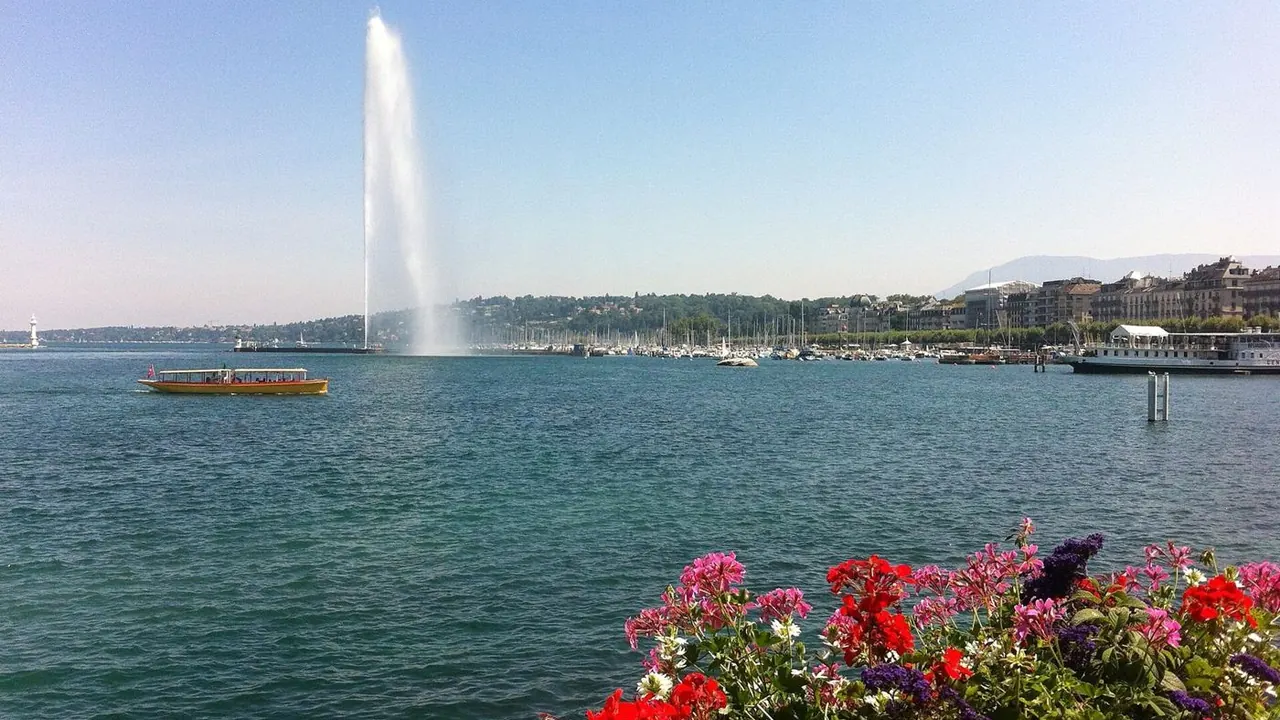
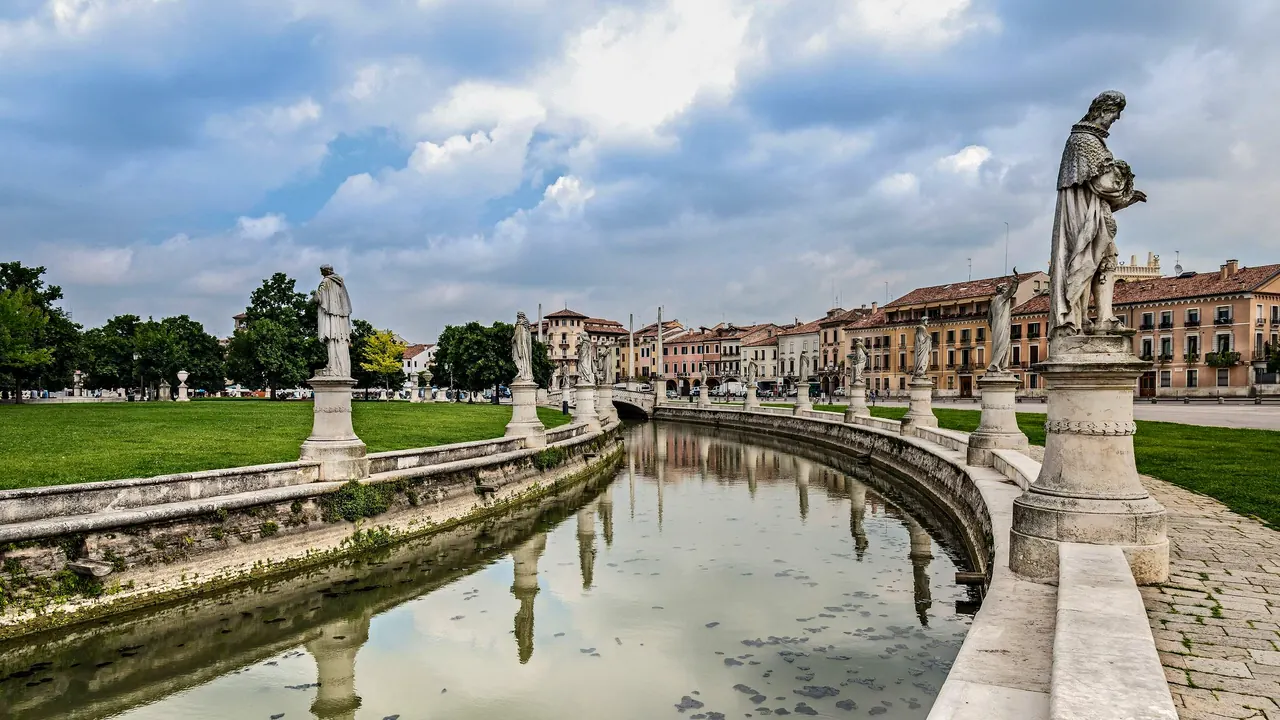
Photos: Geneva by Diviosen, CC BY-SA 3.0, cropped; Padua by Didier Descouens, CC BY-SA 4.0, cropped.
Geneva or Padua?
Our verdict in twelve categories, each scored against the same fixed benchmark cities, and the climate month by month, so you can choose for your trip.
Choose Geneva for
- nature and the outdoors
- shopping
- live music and the arts
Geneva suits travellers who want mountains and water around a well-run city and can accept the cost. The Salève, the Jura and the high Alps are close, there is lake swimming in summer, and trams and boats make getting about effortless. Add the watch boutiques, a proper opera house and an orchestra, and it works well as a polished base for active days and comfortable evenings.
Choose Padua for
- prices
- culture and sights
- day trips
Padua is the better choice for art, food and a strong base for touring, at a far gentler price. Giotto's frescoes and the Basilica of Saint Anthony sit in a compact, arcaded centre with morning markets and spritz in the squares. Venice, Vicenza and Verona are a short train ride away, and the thermal pools of Abano wait just outside town for the end of the day.
Scoreboard
Twelve categories on one fixed scale from 0 to 100. The shaded stretch is the gap between the two.
Your match
Pick a travel style or drag the sliders, and both match scores follow your weighting.
Too close to call, level with your weighting
Wins on nature and the outdoors and shopping with your weighting.
Wins on prices and culture and sights with your weighting.
What matters to you?
Category by category
What the scores mean for a trip.
Beaches & swimming
Neither is a beach destination, but in Geneva you can swim in the city itself. There is the Bains des Pâquis jetty, Genève-Plage and the lawns at Eaux-Vives, all on clean lake water that warms through the summer. It is lido swimming, off concrete and pebbles, and the season is short.
Padua has nowhere to swim in town. The nearest water is the Adriatic at Sottomarina or the Lido of Venice, about an hour away. The sea there is warmer and shallow, which is good for small children, but going means a full day out among rows of umbrellas rather than a quick dip between sights.
Food & drink
Padua eats better for most visitors because so much of its food happens in public. There are the morning markets in Piazza delle Erbe and Piazza della Frutta, the delicatessens under the Palazzo della Ragione, bigoli and baccalà in the trattorias, and the early-evening spritz with small bites in the squares. Euganean wine comes from just outside town.
Geneva's strengths lie elsewhere: lake perch, fondue in wood-panelled brasseries, local Chasselas, a wide international range and polished fine dining in Carouge and the Old Town. What it lacks is the cheap, casual layer that makes Padua so easy to graze through.
Culture & sights
Padua holds art of real European weight. Giotto's frescoes fill the Scrovegni Chapel, other fourteenth-century fresco cycles nearby are UNESCO-listed, and the Basilica of Saint Anthony has Donatello's bronzes. The world's oldest permanent anatomical theatre and the 1545 botanical garden complete the set. Book the chapel's timed visit in advance.
Geneva tells a different story: Calvin's Reformation at St Pierre Cathedral, diplomacy at the Palais des Nations and the Red Cross museum, and science at CERN. It is interesting rather than overwhelming, and in both cities the main sights take two or three days.
Nightlife
Neither city is built for late nights, but Padua's evenings have more life. Students and locals fill Piazza delle Erbe and Piazza dei Signori for the aperitivo. During term the wine bars around the Bo and the old ghetto stay busy on weeknights too.
Geneva is quieter and more expensive. The bars that stay open late are in the Pâquis behind the station, and the alternative centres of Plainpalais and Jonction hold a small electronic scene. Each city has its quiet times: Geneva on weeknights, Padua in high summer and the university breaks.
Nature & outdoors
Geneva has mountains on every horizon and gets you into them quickly. A cable car climbs the Salève just over the French border, the Jura ridge offers hiking and cross-country skiing, and the lake is good for sailing and paddleboarding. Chamonix and the ski resorts are about an hour away.
Padua sits on a flat plain, so its outdoors starts a short way out. The Euganean Hills, about 15km away, have vineyard trails and good cycling roads, and the Brenta towpaths make level rides. For real mountain walking in the pre-Alps you need about an hour and a half by car.
Day trips
Both make good bases, but Padua's list is hard to beat. Venice is under half an hour by train, close enough to visit several times, and Vicenza, Verona, Treviso, Bologna and Ferrara are all about an hour or less away. The Brenta villas and the walled towns of Este and Montagnana are closer still.
Geneva has fewer outings, but the scenery changes more from one to the next. Lake steamers run to Lausanne, Montreux and Chillon, past the Lavaux vineyard terraces. Yvoire and Annecy are across the French border, and Gruyères or Bern make a longer day.
Good for families
Geneva has the edge with children. The main draw is the Natural History Museum and its floors of animal dioramas, backed up by the small animal enclosures at the Bois de la Bâtie, lakeside playgrounds and the little yellow harbour boats. CERN suits older children, and a day in the mountains fills any gaps.
Padua is safe, flat and largely pedestrianised, and trattorias welcome children, but the sights are mostly frescoes and churches. Apart from Prato della Valle and the botanical glasshouses, families rely on day trips to Gardaland, Lake Garda or the Adriatic.
Getting around
Geneva's public transport is a step above. Trams and buses are frequent and punctual, the yellow harbour boats belong to the same network, and the airport is only a few minutes by train from the main station. Regional trains run on into the French suburbs and the rest of Switzerland, and the Old Town hill is the only climb.
Padua's centre is just as easy on foot: flat, mostly closed to traffic and lined with arcades that keep off the rain and sun. A tram runs from the station through the centre to Prato della Valle, buses and bicycles cover the rest, and the station's main-line connections make a car unnecessary for most outings.
Shopping & style
Geneva is the place for watches and jewellery, with the flagship boutiques of the Swiss watch houses along the Rue du Rhône. Chocolatiers, Carouge's craft workshops and the Plainpalais flea market add a less formal side, though beyond luxury the high street is ordinary.
Padua has Italian fashion and shoe shops under its arcades and bookshops serving the university, but its best buys are edible. Cheeses, cured meats and Euganean wine come from the markets and the delicatessens below the Palazzo della Ragione, and a large antiques market fills Prato della Valle one Sunday a month.
Affordability
This is the widest gap between the two. Geneva is among the most expensive cities anywhere, with costly hotel rooms all year and even simple meals far dearer than in most of Europe. Free museums, free local transport for hotel guests and cheap lidos help, and many visitors sleep or eat across the border in France.
Padua costs what a northern Italian city usually does, which is moderate by Western European standards. Its reasonably priced hotels make it a sensible base for Venice, and a standing spritz or a market lunch costs little.
Live music & performing arts
Geneva has the stronger stage. The Grand Théâtre runs a full season of opera and ballet, and the Orchestre de la Suisse Romande plays in Victoria Hall, known for its acoustics. There is also French-language theatre, and concerts and dance at the Bâtiment des Forces Motrices in the middle of the Rhône.
Padua's programme is smaller: prose theatre and some opera at Teatro Verdi, and chamber concerts in the Sala dei Giganti and the Basilica of Saint Anthony. For grand opera, visitors take the train to the Fenice in Venice or the Arena in Verona.
Wellness & relaxation
Padua's advantage lies about 12km away at Abano Terme and Montegrotto Terme, one of Europe's largest thermal districts. Hot mineral pools and mud treatments have been used there since Roman times, and many spa hotels take day visitors, so a soak after a morning of frescoes is easy to arrange.
Geneva has no springs. In winter, though, the Bains des Pâquis offers a sauna, a hammam and cold plunges in the lake, and Évian and Divonne are just across the border. Calm Sundays and the lakeside promenades make it restful in a quieter, more orderly way.
When should you go?
Pick your month. The climate figures are measured averages, not a forecast.
Geneva in July
Padua in July
Daytime high, °C
Rainfall in the month, mm
Where the figures come from
Padua's temperatures are measured 35 km from the centre, at Treviso / Istrana.
Padua has no rain gauge within 25 km of the centre, so its rainfall comes from a gridded climate dataset read at the city rather than from a gauge further away.
Padua's sunshine is measured 36 km from the centre, at Treviso / S. Angelo.
Temperature and rainfall are climate normals, averaged over the years shown. Geneva: 1991-2020 normals, Geneve-Cointrin (5.7 km from centre). Padua: 1991-2020 normals, Treviso / Istrana (35.4 km from centre).
Geneva is the cooler of the two. July highs reach about 27°C and the long, sunny days from May to August are the time for swimming in the lake and walking in the mountains. Winters are cold and grey, with very little sun by December. Rain falls steadily all year and is heaviest in autumn.
Padua is warmer every month. In July and August highs of around 31°C and humid air make midday sightseeing hard work. That is also when the Adriatic, an hour away, is warmest at about 26°C. May, June, September and October are the comfortable months for walking the city. November is the wettest month at 97mm, and winter brings fog over the plain, though Padua still gets more sunshine than Geneva at that time of year.
Which traveller are you?
On an outdoors trip, Geneva is the clear pick. The Salève, the Jura ridges and lake sailing start at the edge of the city, and Chamonix and the ski slopes are about an hour away. Padua's flat plain offers only gentle hills and towpaths.
For a trip on a tight budget, choose Padua. Hotels, trattoria meals and a standing spritz are fairly priced, and the walkable centre costs almost nothing to get around. Geneva is among the dearest cities in the world even before you sit down to dinner.
For a culture and arts trip, Padua has more to see: Giotto's Scrovegni frescoes, Donatello at the Basilica of Saint Anthony and the old anatomical theatre, with Venice and Vicenza close by train. Geneva's answer is a fuller season of opera, ballet and orchestral concerts.
Before you go
| Measure | Geneva | Padua |
|---|---|---|
| Official language | French, German, Italian, Romansh | Italian |
| Currency | Swiss Franc (CHF) | Euro (EUR) |
| Sockets | CJ230 V, 50 Hz | CFL230 V, 50 Hz |
| Driving side | Right | Right |
| Time zone | UTC+1, UTC+2 in summer | UTC+1, UTC+2 in summer |
| Emergency number | 112 | 112 |
| Elevation | 403 m | 12 m |
| Main airport | Geneva International Airport (GVA)5 km from centre150 non-stop destinations | Venice Marco Polo Airport (VCE)39 km from centre103 non-stop destinations |
| Public holidays this year | 9 days | 13 days |
By the numbers
| Measure | Geneva | Padua |
|---|---|---|
| City population | 211,152 | 206,496 |
| People per km² | 13,280 | 2,220 |
| Museums within 10 km | 34 | 29 |
| UNESCO World Heritage sites within 50 km | 2 | 5 |
| Swim season, months above 21 °C | - | 4 months |
Where else could you go?
Every comparison below shares a destination with this one, so you can follow Geneva or Padua somewhere new.