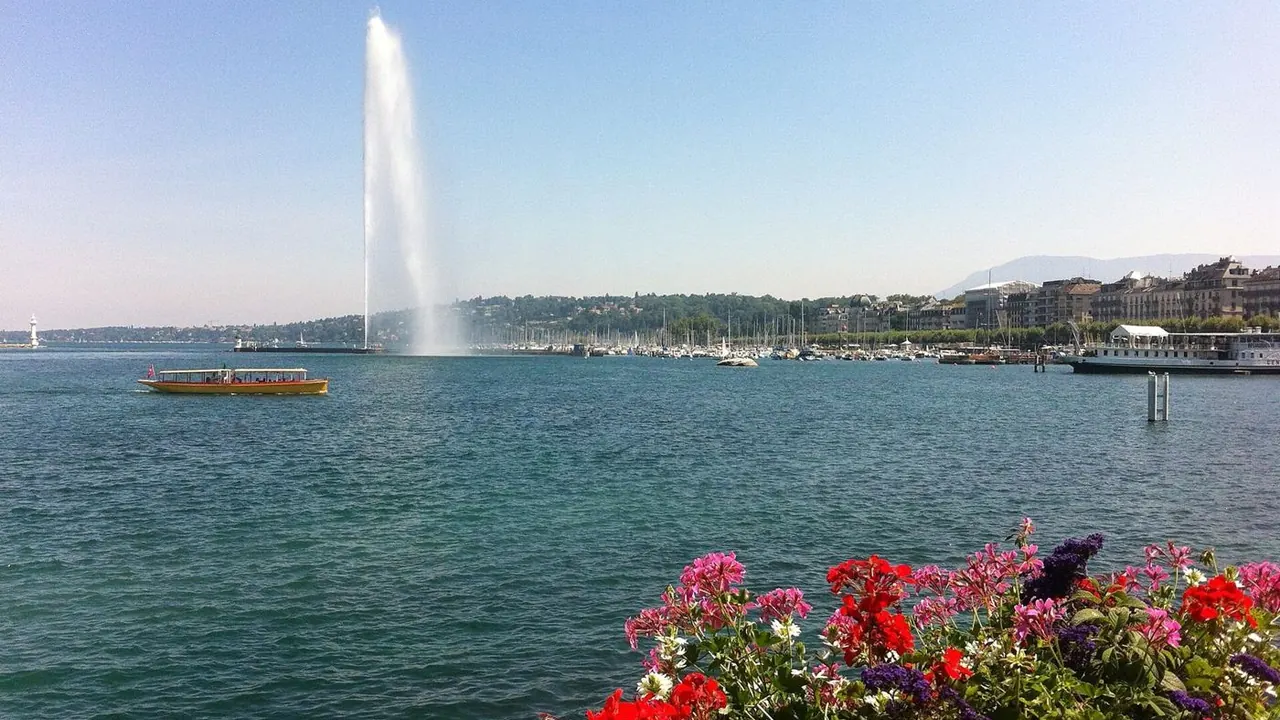
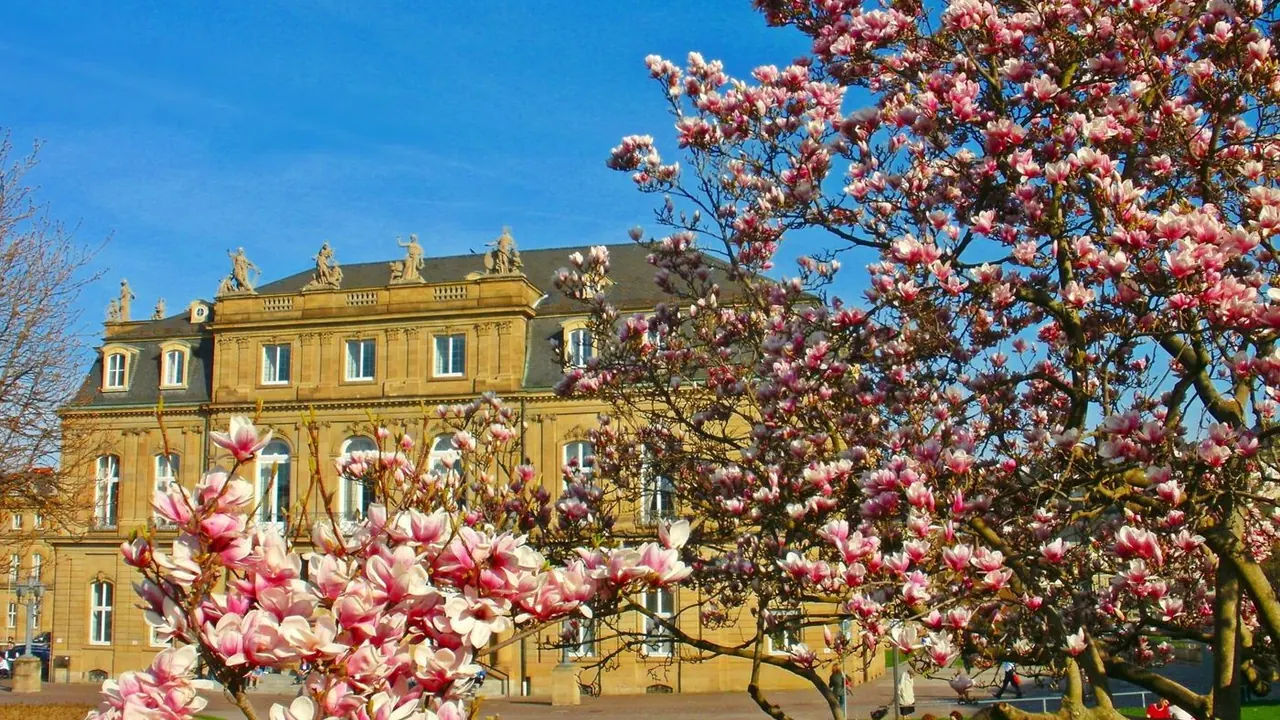
Photos: Geneva by Diviosen, CC BY-SA 3.0, cropped; Stuttgart by Baden de, CC BY 3.0, cropped.
Geneva or Stuttgart?
Our verdict in twelve categories, each scored against the same fixed benchmark cities, and the climate month by month, so you can choose for your trip.
Choose Geneva for
- beaches
- nature and the outdoors
- getting around
Geneva is the pick for travellers who want mountains, a lake and polish in one place. Mont Blanc on the horizon, the Salève and the Jura on the doorstep and summer swimming off the Bains des Pâquis make it a fine outdoor base. Its compact centre, with trams and harbour boats, is effortless to get around. It suits a well-funded trip, because almost everything costs a great deal.
Choose Stuttgart for
- prices
- live music and the arts
- families
Stuttgart rewards those who want more for their money and an evening at the ballet or opera. Staying and eating there cost far less, the Stuttgart Ballet and Staatsoper give it the stronger stage, and Wilhelma and the mineral baths of Bad Cannstatt make it better with children and for an unhurried soak. Its countryside is wooded hills and vineyards rather than Alps, and in summer the only outdoor swimming is in pools.
Scoreboard
Twelve categories on one fixed scale from 0 to 100. The shaded stretch is the gap between the two.
Your match
Pick a travel style or drag the sliders, and both match scores follow your weighting.
Too close to call, level with your weighting
Wins on beaches and nature and the outdoors with your weighting.
Wins on prices and live music and the arts with your weighting.
What matters to you?
Category by category
What the scores mean for a trip.
Beaches & swimming
Geneva at least has somewhere to swim. In summer the city takes to its clean lake, diving off the Bains des Pâquis jetty or spreading out on the lawns and pebbles of Genève-Plage. It is lido bathing over a short season rather than a beach, but it is real open water in the middle of town.
Stuttgart has nothing like it. The Neckar is a working river of locks and barges and Max-Eyth-See is not for bathing, so a hot day means the outdoor pools, some of them fed by mineral springs, or a drive of more than two hours to Lake Constance.
Food & drink
Both cities eat well at the top end and offer little cheap street food, but the cooking differs in character. Geneva's table is French with a Swiss accent: perch fillets from the lake, fondue and raclette in panelled brasseries, Chasselas from the canton's own vineyards, and a wide international spread that serves the diplomatic crowd.
Stuttgart is heartier and more firmly regional, with Maultaschen, Käsespätzle and Zwiebelrostbraten in wine taverns, Trollinger from vineyards inside the city and the seasonal Besen that growers open in their own homes. Its Art Nouveau Markthalle gives it one handsome place to browse produce, where Geneva relies on neighbourhood markets and chocolatiers.
Culture & sights
Geneva's sights tell the story of faith and diplomacy, while Stuttgart's tell one of engineering and modern design. In Geneva you climb the towers of St Pierre Cathedral, where Calvin preached, pass the Reformation Wall in the Parc des Bastions, then cross the river to the Palais des Nations and the Red Cross museum, with CERN adding the science.
In Stuttgart the Mercedes-Benz and Porsche museums are the big draws, backed by the Staatsgalerie's European painting and the Le Corbusier houses of the Weissenhof Estate. Wartime bombing left its older heritage in pockets around Schlossplatz. The two run to about the same depth, and either one fills two or three days.
Nightlife
Neither city is a place to go out in, and both quieten early on weeknights. Geneva's late bars cluster in the rough-edged Pâquis behind the station. It also has an alternative club scene in Plainpalais and Jonction, and summer drinks by the lake, all at a steep price.
Stuttgart's evenings are more tied to the calendar. Theodor-Heuss-Strasse fills with bar crowds at weekends, but the city really lets go at the Cannstatter Volksfest beer tents in autumn and the late-summer wine village in the old centre.
Nature & outdoors
Geneva has the grander setting by some distance. Mont Blanc closes the view down the lake, and the Salève and the Jura offer cliffs, paragliding and cross-country skiing just outside town. Chamonix and the ski resorts make easy day outings.
Stuttgart's outdoors is gentler: vineyard trails above the Neckar, deer in the Rotwildpark, and the Swabian Jura and northern Black Forest about an hour away. It is good walking and cycling country, but it has no high peaks and no lake for sailing.
Day trips
Both are excellent bases, and the difference lies in the kind of outing. From Geneva, the days revolve around the lake and the French border: steamers to Lausanne, Montreux and the Château de Chillon, the Lavaux vineyard terraces, Yvoire by boat and Annecy by road.
Stuttgart's list is a run of German towns and monuments by train: Ludwigsburg's palace, half-timbered Esslingen, Tübingen's punts, Heidelberg's castle, the abbey at Maulbronn and Hohenzollern on its hilltop. Geneva's scenery is more dramatic, while Stuttgart packs more historic towns into the first hour.
Good for families
Stuttgart is the better city for children. Wilhelma, a zoo and botanical garden among Moorish-style pavilions, fills a day on its own. Killesberg park, the rack railway and the fairy-tale garden at Ludwigsburg add more, though the hills make pushchairs harder work.
Geneva is flatter and just as safe, and its Natural History Museum dioramas and yellow harbour boats go down well. With no zoo or aquarium, though, families tend to run out of things after a few days.
Getting around
Geneva is the easier city to move around. Its centre is small and mostly flat, so you can walk from the station over the bridges to the Old Town and on to Carouge. Trams, buses and the harbour boats share one network, and the airport is a few minutes away by train.
Stuttgart's flat core around Königstrasse and Schlossplatz is walkable too, but the city climbs steeply up the sides of its basin. Beyond the core, more journeys need the Stadtbahn, the S-Bahn or the Stäffele stairways. The integrated network is good and reaches the car museums and Wilhelma, but there is more climbing in between.
Shopping & style
For watches and jewellery, Geneva is in a different league. The Rue du Rhône is lined with the flagships of the great Swiss houses, and Carouge's craft workshops and the Plainpalais flea market give it some browsing as well.
Stuttgart is a city for brand shoppers: the long pedestrian Königstrasse, the Breuninger department store and the outlet village at Metzingen, half an hour away. The outlets give it a bargain side Geneva lacks, but nothing there comes close to Geneva's luxury.
Affordability
Stuttgart is far easier on a budget. It is not cheap, and trade fairs push up hotel rooms, but rates fall at weekends and in quieter months. Tavern meals are fair for the portions, and public transport is reasonably priced.
Geneva is among the most expensive places in the world to visit, from the hotel room to a glass of wine. Free museums, free local transport for hotel guests and cheap lidos help a little, and many visitors save by sleeping or eating across the border in France.
Live music & performing arts
Stuttgart has the more distinguished stage. The Stuttgart Ballet, famous since John Cranko's time, is one of Europe's most respected companies, and the Staatsoper is known for bold productions. The Liederhalle, the musical theatres at Möhringen and a jazz scene keep the rest of the week busy.
Geneva puts on a solid season of its own, with opera and ballet at the Grand Théâtre, the Orchestre de la Suisse Romande in Victoria Hall and concerts at the Bâtiment des Forces Motrices on the Rhône. It has no company with the reputation of Stuttgart's ballet.
Wellness & relaxation
Stuttgart has real mineral water, which Geneva does not. The springs of Bad Cannstatt and Berg feed public baths such as the Mineralbad Leuze, where you soak in warm, naturally carbonated pools indoors and out and finish in the sauna.
Geneva's bathing habit is colder. In winter the Bains des Pâquis runs a sauna and hammam, with a plunge into the lake, and there are hotel spas, plus Évian or Divonne across the border. Its quiet Sundays and lakeside promenades make it the calmer city, but not the better one for a day of bathing.
When should you go?
Pick your month. The climate figures are measured averages, not a forecast.
Geneva in July
Stuttgart in July
Daytime high, °C
Rainfall in the month, mm
Temperature and rainfall are climate normals, averaged over the years shown. Geneva: 1991-2020 normals, Geneve-Cointrin (5.7 km from centre). Stuttgart: 1991-2020 normals, Stuttgart / Neckartal (2.8 km from centre).
The two cities have almost the same temperatures through the year. Both are cold from December to February and pleasant for walking in April, May, September and October. Both peak at about 27°C in July, which is warm but rarely too hot for the streets. Only Geneva offers outdoor swimming, and its lake is comfortable only from late June to August.
The real difference is rain and sun. Geneva is damp all year and wettest in autumn, with around 94mm in October. Stuttgart's winters and early springs are notably dry, at about 33mm in February, and its wettest stretch is early summer. Geneva also gets clearly more sunshine from May to August, which tips the high summer further in its favour, while Stuttgart is the drier choice for a cold-season city break.
Which traveller are you?
On an outdoors trip, Geneva is the clear choice. The Salève cable car, the Jura ridge hikes, sailing on the lake and Chamonix about an hour away put real mountains within a day. Stuttgart's wooded hills suit gentler walking and cycling.
On a trip on a tight budget, Stuttgart is far easier on the wallet. Tavern meals come in generous portions, day tickets are fairly priced and hotel rooms drop at weekends. Geneva is among the dearest cities anywhere and sends thrifty visitors over into France.
On a family trip with children, Stuttgart has more that is built for them. Wilhelma fills a whole day, Killesberg park has its little railway and animal enclosures, and the rack railway is a ride in itself. Geneva is calm and safe, but it has no zoo or aquarium.
Before you go
| Measure | Geneva | Stuttgart |
|---|---|---|
| Official language | French, German, Italian, Romansh | German |
| Currency | Swiss Franc (CHF) | Euro (EUR) |
| Sockets | CJ230 V, 50 Hz | CF230 V, 50 Hz |
| Driving side | Right | Right |
| Time zone | UTC+1, UTC+2 in summer | UTC+1, UTC+2 in summer |
| Emergency number | 112 | 112 |
| Elevation | 403 m | 245 m |
| Main airport | Geneva International Airport (GVA)5 km from centre150 non-stop destinations | Stuttgart Airport (STR)10 km from centre124 non-stop destinations |
| Public holidays this year | 9 days | 12 days |
By the numbers
| Measure | Geneva | Stuttgart |
|---|---|---|
| City population | 211,152 | 609,365 |
| People per km² | 13,280 | 2,938 |
| Museums within 10 km | 34 | 42 |
| UNESCO World Heritage sites within 50 km | 2 | 3 |
Where else could you go?
Every comparison below shares a destination with this one, so you can follow Geneva or Stuttgart somewhere new.