Photos: Colmar by Rolf Kranz, CC BY-SA 4.0, cropped; Geneva by Diviosen, CC BY-SA 3.0, cropped.
Colmar or Geneva?
Our verdict in twelve categories, each scored against the same fixed benchmark cities, and the climate month by month, so you can choose for your trip.
Choose Colmar for
- prices
- food and drink
- culture and sights
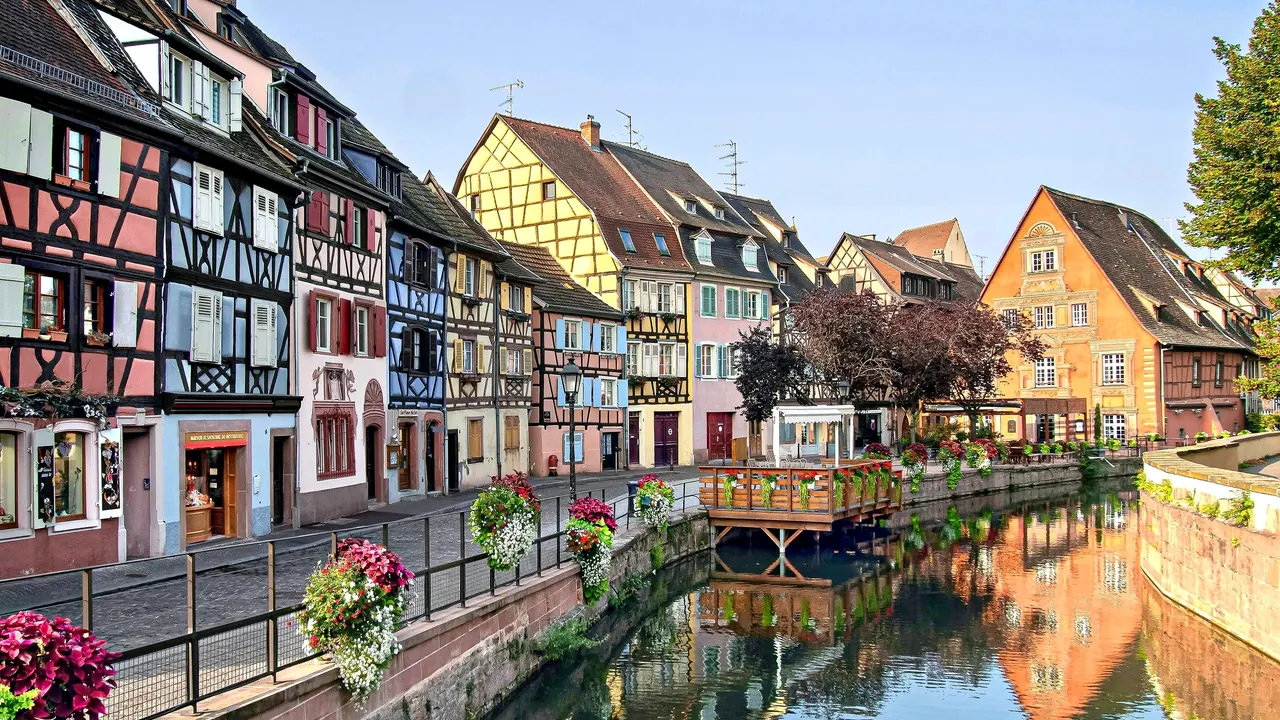
Colmar suits travellers who want a slow, small-town vacation built around food, wine and old streets. Its painted half-timbered centre is unusually intact, the Isenheim Altarpiece alone repays the journey, and the wine villages of the Route des Vins sit a short drive or bike ride away. It costs far less than Geneva, works well for families with a car, and rewards anyone happy to trade city life for long lunches in a winstub and quiet evenings by the canals.
Choose Geneva for
- beaches
- live music and the arts
- shopping
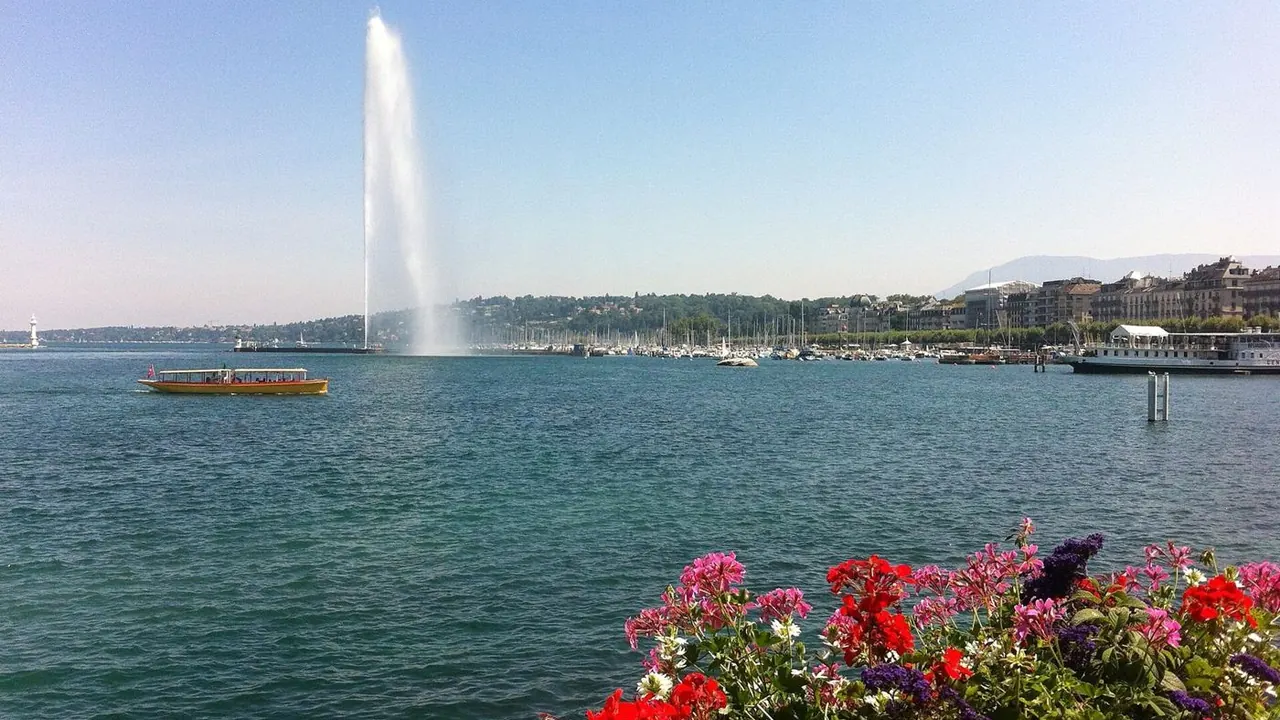
Pick Geneva if you want a proper city with a lake at its door and mountains on every horizon. Trams, trains and harbour boats make it effortless to get about without a car, the Salève, the Jura and Chamonix are close, and the evenings offer opera, an orchestra and late bars in the Pâquis that Colmar cannot match. It is for travellers with a generous budget, especially those drawn by the watch boutiques, summer lake swimming or a base for exploring Lake Geneva by steamer.
Scoreboard
Twelve categories on one fixed scale from 0 to 100. The shaded stretch is the gap between the two.
Your match
Pick a travel style or drag the sliders, and both match scores follow your weighting.
Wins on prices and food and drink with your weighting.
Wins on beaches and live music and the arts with your weighting.
What matters to you?
Category by category
What the scores mean for a trip.
Beaches & swimming
Colmar has nothing to offer here: it sits deep in the Alsace plain, and swimming means a municipal pool or a small lake up in the Vosges valleys.
Geneva at least has its lake, clean enough for the whole city to swim in through the summer. You can jump off the jetty at the Bains des Pâquis with the Jet d'Eau in view or spread out on the lawns of Genève-Plage. The season is short and the shore is more lido than beach, but it is a real summer pleasure that Colmar cannot offer.
Food & drink
Colmar has the stronger table, and it is a regional one. Wood-panelled winstubs serve choucroute garnie, baeckeoffe and tarte flambée, munster comes from the valleys above town, and Riesling and Gewurztraminer from the surrounding slopes are poured everywhere, with cellar tastings a few minutes' drive away. Step outside Alsatian cooking and the choice narrows quickly, and the busiest tourist lanes have weak menus.
Geneva offers more variety but less character. Lake perch, fondue and Chasselas give it a local identity, and the international crowd supports a wide spread of cuisines and polished fine dining in Carouge and the Old Town. Every meal is expensive, though, and casual street food is scarce.
Culture & sights
Colmar edges ahead because its old town works as a whole, a run of painted half-timbered houses, the Maison Pfister and the canals of Petite Venise, crowned by Grünewald's Isenheim Altarpiece in the Unterlinden Museum. It is a place for medieval and Renaissance art and townscape.
Geneva's story is a different one, of Calvin's Reformation and modern diplomacy: St Pierre Cathedral and its excavations, the Reformation Wall, the Palais des Nations and the Red Cross museum, plus CERN for the science-minded. Both are well covered in two or three days.
Nightlife
Neither city is a nightlife destination, but Geneva at least has somewhere to go after midnight. The Pâquis behind the station keeps its bars busy late, Carouge has wine bars with terraces, and the alternative centres around Plainpalais and Jonction run club nights with a small electronic scene.
In Colmar the evening is the dinner itself, perhaps followed by a glass of wine near Petite Venise before the streets empty early. Anyone after clubs takes the train to Strasbourg.
Nature & outdoors
Geneva has the bigger outdoors on its doorstep. A cable car climbs the Salève for cliff walks and paragliding, the Jura ridge offers forest hikes and cross-country skiing, the lake is good for sailing and paddleboarding, and Chamonix and the high Alps are about an hour away.
Colmar's landscape is gentler but close and varied: waymarked paths through the vineyards between wine villages, then the rounded, forested Vosges and the Route des Crêtes past the Grand Ballon. It is fine cycling country, best in autumn, though you really need a car to reach the hills.
Day trips
Both make excellent bases, but the outings work differently. From Colmar the highlights are tightly packed: Eguisheim, Riquewihr and Kaysersberg lie a few kilometres apart, Strasbourg is half an hour by train, and Basel and Freiburg put Switzerland and Germany within an hour. A car or bicycle is almost essential for the villages.
Geneva's trips spread along the lake and into France, and they are easy without a car. Steamers and trains reach Nyon, Lausanne, the Lavaux terraces and the Château de Chillon at Montreux, a boat goes to medieval Yvoire, and Annecy is under an hour by road. Gruyères and Bern make longer days out.
Good for families
Colmar is the better family base, as long as you have a car. The town itself is small and gentle, with boat rides, a little tourist train and storks on the rooftops. Beyond it lie the otter and stork park at Hunawihr, the macaques of the Montagne des Singes, the Mulhouse zoo and train museum, and Europa-Park about an hour across the Rhine.
Geneva is safe and easy with a pushchair, and the Natural History Museum, the lakeside playgrounds and the yellow harbour boats fill a couple of days. After that the lack of a zoo or theme park shows, and a trip to the mountains usually fills the gap.
Getting around
Geneva is far easier to get around. Trams, buses and harbour boats run on one punctual network, the airport is a few minutes from the main station by train, and regional rail reaches France and the rest of Switzerland, so a car only helps for the mountains.
Colmar's centre is just as walkable and its station is close, with quick trains to Strasbourg and Mulhouse. The catch is the countryside, where thin bus services leave most visitors hiring a car or a bicycle to reach the wine villages and the Vosges.
Shopping & style
Geneva is the serious shopping city. The Rue du Rhône is lined with the flagship stores of the great Swiss watch and jewellery houses, chocolatiers add affordable treats, and Carouge's workshops and the Plainpalais flea market offer something less polished.
Colmar's shopping is about regional goods to take home: wine bought from the producer, Soufflenheim pottery and kougelhopf moulds, printed table linen and gingerbread. December's Christmas markets are its high point, but fashion and big names are scarce.
Affordability
The gap here is wide. Colmar is priced like a typical French provincial town, with reasonable set lunches and wine and often-free village tastings. Its weak point is rooms, which become expensive and scarce in summer and during the Christmas markets, though staying in a nearby village helps.
Geneva is among the costliest cities in the world, with expensive hotels year round and meals and drinks priced well above most of Europe. Free museums, free transport for hotel guests and cheap lidos soften it a little, and many visitors cross into France to sleep or eat.
Live music & performing arts
Geneva has a proper formal stage. The Grand Théâtre runs a full season of opera and ballet, the Orchestre de la Suisse Romande plays in the acoustically admired Victoria Hall, and the Bâtiment des Forces Motrices in the middle of the Rhône hosts concerts and dance.
Colmar's small Italian-style theatre and touring visits from the Opéra national du Rhin are pleasant, but its calendar really comes alive only with the July classical festival, the autumn jazz festival and the wine fair concerts. For anything more ambitious, people go to Strasbourg or Basel.
Wellness & relaxation
For a spa break, Colmar offers little beyond the spas in its hotels and in the nearby wine villages. What it gives you instead is calm: long lunches, evenings by the canals once the day-trippers have gone, and slow walks through the vines. That is enough for a restful few days, though not for a spa break.
Geneva goes further because it has a real bathing habit. In winter the Bains des Pâquis lido turns into a sauna and hammam, and regulars plunge straight from the heat into the cold lake. The lakefront hotels have serious spas, and the spa towns of Évian and Divonne are just across the French border.
When should you go?
Pick your month. The climate figures are measured averages, not a forecast.
Colmar in July
Geneva in July
Daytime high, °C
Rainfall in the month, mm
Temperature and rainfall are climate normals, averaged over the years shown. Colmar: 1991-2020 normals, Ihringen (21.1 km from centre). Geneva: 1991-2020 normals, Geneve-Cointrin (5.7 km from centre).
The two cities share almost the same temperatures through the year. High summer reaches about 27°C in both, May and September are mild and ideal for walking, and winter highs sit around 6°C, cold but fine for Christmas markets in Colmar or snow days in the mountains near Geneva. June to August is the only stretch warm enough for swimming, which matters only in Geneva, where July and August bring the lake lidos to life.
Rain is where they part. Colmar lies in the rain shadow of the Vosges, so its winters and early spring are notably dry, with about 32mm in January, and its wettest spell comes in late spring, peaking at 87mm in May. Geneva gets steady rain all year and is wettest from autumn into winter, with 94mm in October, so a September or October trip is drier in Colmar for the grape harvest. Geneva sees slightly more sun in spring and high summer.
Which traveller are you?
On a trip on a tight budget, Colmar is the clear choice. Set lunch menus, regional wine and free village tastings keep costs moderate, while Geneva is among the world's priciest cities, where even a simple meal or hotel room strains a modest budget.
For a shopping trip, Geneva wins comfortably. The Rue du Rhône holds the flagship boutiques of the great Swiss watch houses, Carouge has craft workshops and Plainpalais a flea market, whereas Colmar offers mainly Alsatian pottery, linen, wine and Christmas market stalls.
On a family trip with children, Colmar has more to fill the days. Boat rides through Petite Venise and rooftop storks charm in town, and the otter park, macaque reserve and Europa-Park lie within driving distance. Geneva has no zoo or theme park.
Before you go
| Measure | Colmar | Geneva |
|---|---|---|
| Official language | French | French, German, Italian, Romansh |
| Currency | Euro (EUR) | Swiss Franc (CHF) |
| Sockets | CE230 V, 50 Hz | CJ230 V, 50 Hz |
| Driving side | Right | Right |
| Time zone | UTC+1, UTC+2 in summer | UTC+1, UTC+2 in summer |
| Emergency number | 112 | 112 |
| Elevation | 185 m | 403 m |
| Main airport | EuroAirport Basel–Mulhouse–Freiburg (BSL)55 km from centre112 non-stop destinations | Geneva International Airport (GVA)5 km from centre150 non-stop destinations |
| Public holidays this year | 11 days | 9 days |
By the numbers
| Measure | Colmar | Geneva |
|---|---|---|
| City population | 66,970 | 211,152 |
| People per km² | 1,006 | 13,280 |
| Museums within 10 km | 9 | 34 |
| UNESCO World Heritage sites within 50 km | 3 | 2 |
Where else could you go?
Every comparison below shares a destination with this one, so you can follow Colmar or Geneva somewhere new.
- Annecyvs Geneva
- Lausannevs Geneva
- Baselvs Colmar
- Strasbourgvs Colmar
- Chamonixvs Geneva
- Baden-Badenvs Colmar