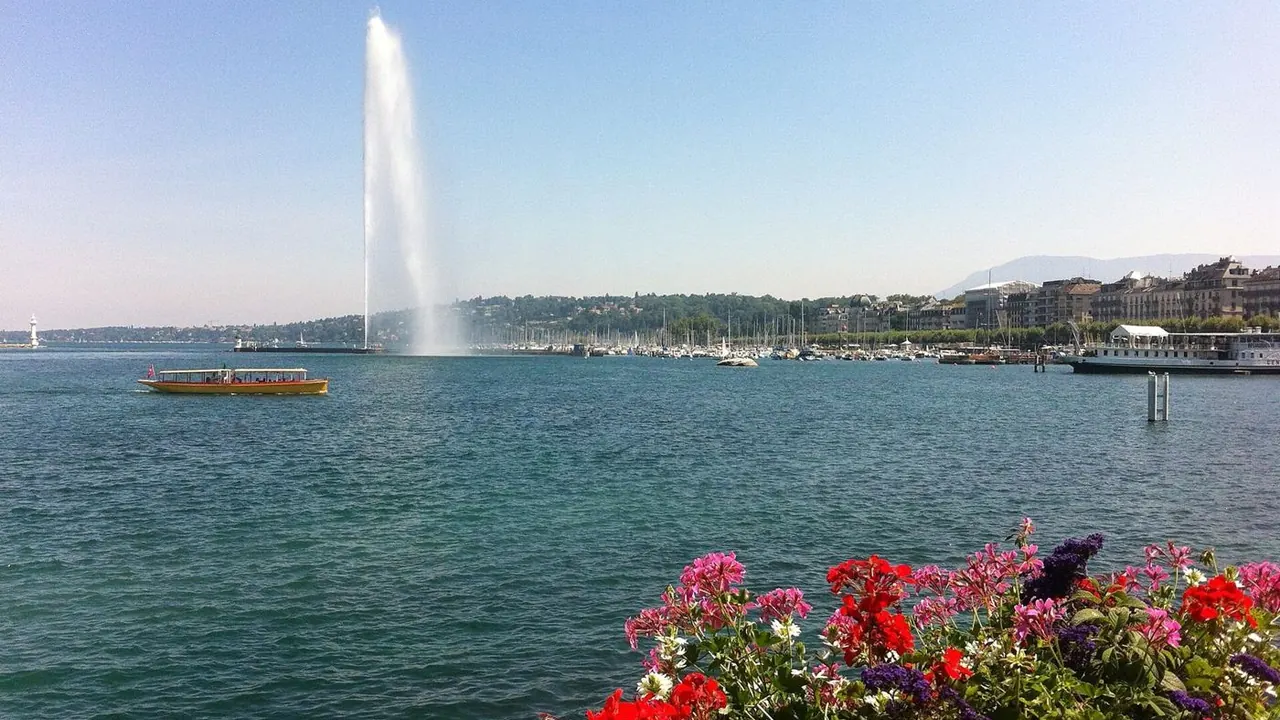
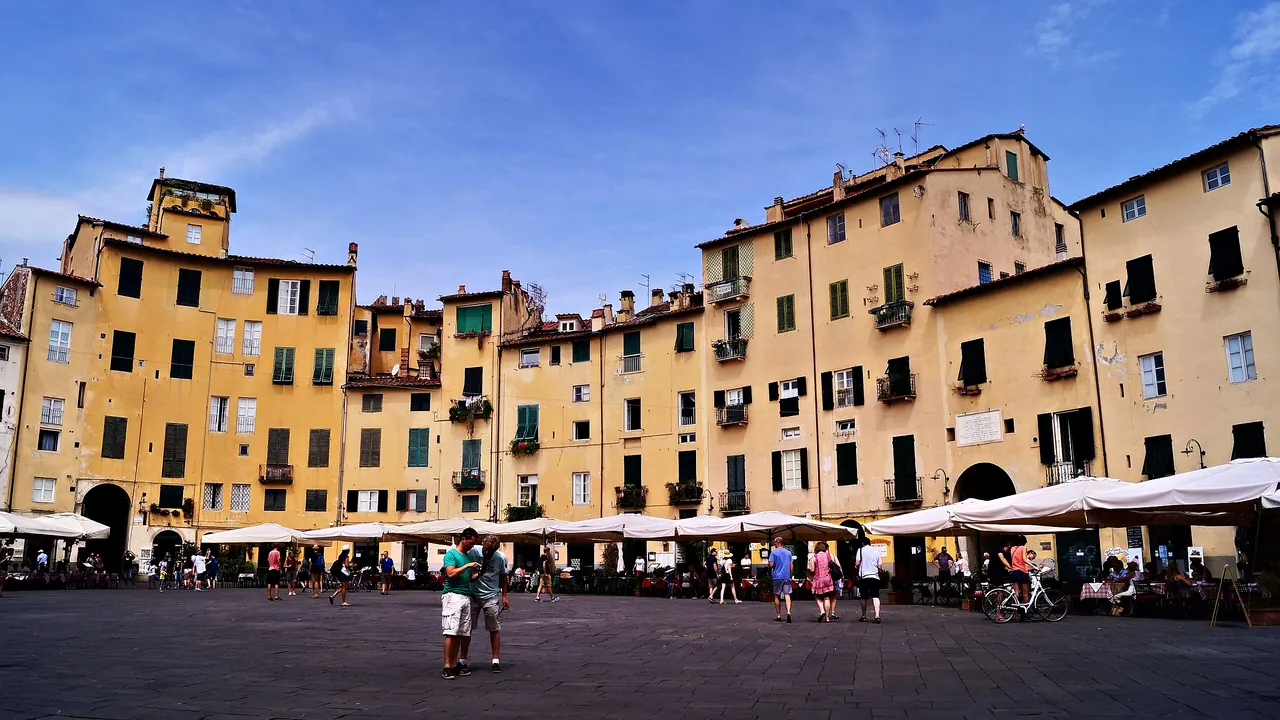
Photos: Geneva by Diviosen, CC BY-SA 3.0, cropped; Lucca by Stefano Sansavini, CC BY-SA 4.0, cropped.
Geneva or Lucca?
Our verdict in twelve categories, each scored against the same fixed benchmark cities, and the climate month by month, so you can choose for your trip.
Choose Geneva for
- shopping
- nightlife
- nature and the outdoors
Geneva suits travellers who want mountains, lake and polish, and who can absorb very high costs. It is the better base for hiking, skiing and getting onto the water, its transport is excellent, and Rue du Rhône draws people shopping for watches and jewellery. The evenings out are also somewhat livelier. It works best for a short, well-funded stay, or as a gateway to the Alps.
Choose Lucca for
- prices
- day trips
- beaches
Lucca is for the traveller who wants a walled Tuscan town at an easy pace, with good trattorias, Romanesque churches and Puccini in the evening. It costs far less than Geneva, the Versilia sand is close by, and Pisa, Florence and the Tuscan villas are all within reach. That makes it a strong place to base yourself for a week in central Italy. Expect quiet nights and small-town shops, though.
Scoreboard
Twelve categories on one fixed scale from 0 to 100. The shaded stretch is the gap between the two.
Your match
Pick a travel style or drag the sliders, and both match scores follow your weighting.
Too close to call, level with your weighting
Wins on shopping and nightlife with your weighting.
Wins on prices and day trips with your weighting.
What matters to you?
Category by category
What the scores mean for a trip.
Beaches & swimming
Neither city is on the sea, but Lucca comes out ahead because the sand is real. Geneva's swimming happens at lake lidos such as the Bains des Pâquis and Genève-Plage, with concrete jetties, lawns and pebbles. The water is cool and the season short.
From Lucca, the train reaches Viareggio in about 25 minutes. From there, long, gently shelving beaches run up to Forte dei Marmi, and the warmer sea is good for swimming from June to September. If you want the beach every afternoon, Lucca is the better bet.
Food & drink
The two eat about equally well, but in different ways. Geneva cooks French food with a Swiss accent: lake perch, fondue, Chasselas from the canton's vineyards, a wide international range and polished fine dining in Carouge, all at high prices.
Lucca keeps to a plain, rustic menu of farro soup, tordelli, cecina and buccellato, served in fairly priced family trattorias. Its range is far narrower, so after a few days the menus start to repeat, which is less of a problem in Geneva.
Culture & sights
Lucca has the richer heritage, and the town itself is the main sight. Its complete Renaissance walls enclose the carved façade of San Michele, the mosaic on San Frediano, the cathedral's Ilaria tomb and the oval piazza that follows the Roman amphitheatre.
Geneva's sights tell a different story: Calvin's cathedral and the Reformation Wall, then the Palais des Nations, the Red Cross Museum and CERN. These are institutions to visit rather than streets to wander. Both cities are covered in two or three days.
Nightlife
Neither is a place for big nights out, but Geneva has more going on after dark. The Pâquis bars stay busy late, Carouge has wine terraces, and the alternative centres in Jonction and Plainpalais hold club nights.
Lucca's evening is an aperitivo in Piazza San Michele, dinner and a stroll on the walls, and the centre is quiet by midnight. In summer, anyone who wants to dance has to go out to the Versilia discos.
Nature & outdoors
Geneva has the stronger outdoors, with mountains on every side. The Salève is reached by cable car and is good for paragliding, the Jura has forest hikes and cross-country skiing, Mont Blanc shows on clear days, and the lake has sailing and rowing.
Lucca's countryside is gentler: olive groves, villa gardens and the 4km ring of the walls for cycling. Real drama means a drive of about an hour to the marble peaks of the Apuan Alps or the Garfagnana forests.
Day trips
Both are fine bases, but Lucca has more famous places within a short trip. Pisa is half an hour by train and Florence a little over an hour, and Pistoia, Pietrasanta and the gardens of Villa Reale di Marlia are close too. With an early start, the Cinque Terre and San Gimignano are also possible.
Geneva's outings lean towards the lake and the mountains. Steamers run to Lausanne, Montreux's Château de Chillon and the Lavaux terraces, and Annecy and Yvoire are just over the French border. It is an excellent list, but shorter on great art cities than Tuscany.
Good for families
Both are easy with children and neither has much made for them, but the outings differ. In Geneva the big draw is the Natural History Museum's animal dioramas, along with the little yellow harbour boats and the animal enclosures at Bois de la Bâtie. A day in the mountains fills the gaps.
In Lucca, children ride the walls on a family quadricycle and climb the tree-topped Torre Guinigi. Pinocchio Park and the beaches are both close.
Getting around
Geneva is the easier city to move around in once you leave the centre. Trams, buses and the harbour boats share one punctual network, the airport is a few minutes by train, and regional rail even covers trips into the mountains.
Lucca is a joy on foot or by bike inside its flat, mostly car-free walls, and trains run often to Pisa and Florence. The villas and hill villages are another matter: buses are sparse, so you need a car for those days.
Shopping & style
Geneva is far stronger for shopping, mainly for the flagship watch and jewellery houses along Rue du Rhône. Carouge's craft workshops and the Plainpalais flea market add something less polished.
Lucca has Via Fillungo, with its Liberty shopfronts, and delicatessens selling olive oil and buccellato. It is pleasant but small-town, and its best moment is the monthly antiques market around the cathedral.
Affordability
The gap is wide. Geneva is among the most expensive cities anywhere for hotels, meals and drinks, and many visitors save by sleeping or eating across the border in France. Free museums and the free transport given to hotel guests help a little.
Lucca costs what central Italy usually does, which is less than Florence. Trattoria meals and trains are fairly priced, and the walls and many churches cost nothing. The main expense is a room, especially in summer.
Live music & performing arts
Geneva has a slightly deeper formal stage, with a full opera and ballet season at the Grand Théâtre and the Orchestre de la Suisse Romande in Victoria Hall.
Lucca's music revolves around Puccini. Short recitals of his arias run through much of the year, the Teatro del Giglio holds a season, and in summer there is open-air opera by the lake at Torre del Lago, alongside big concerts in Piazza Napoleone.
Wellness & relaxation
The real difference is where you go to unwind. In Geneva, bathing is part of city life. In winter the Bains des Pâquis jetty becomes a sauna and hammam, and regulars plunge straight into the cold lake. The lakefront hotels have serious spas, and Évian is easy to reach across the French border.
In Lucca, a proper soak takes a day out. Montecatini Terme's belle époque spa halls are half an hour away by train, Monsummano has warm pools inside a cave, and Bagni di Lucca has steam grottoes up the Serchio valley. Back in town, you relax through traffic-free streets, long lunches and an evening walk on the shaded walls.
When should you go?
Pick your month. The climate figures are measured averages, not a forecast.
Geneva in July
Lucca in July
Daytime high, °C
Rainfall in the month, mm
Temperature and rainfall are climate normals, averaged over the years shown. Geneva: 1991-2020 normals, Geneve-Cointrin (5.7 km from centre). Lucca: 1991-2020 normals, Pisa / S. Giusto (21.4 km from centre).
Geneva is a summer city. July and August reach about 27°C, the lake is at its warmest and the long sunny evenings make it easy to stay outdoors. Winter is grey and cold, with the least sun in December, so it suits skiing more than strolling. Rain falls in every month, and autumn is a little wetter than the rest of the year.
Lucca runs warmer at both ends of the year. Its July and August are dry, sunny and hot, around 30°C, which is fine for the beach with a sea near 25°C but heavy for sightseeing at midday. The best months for walking are May, June and September. Autumn brings the heaviest rain, peaking at about 132mm in November, while Lucca's winter is mild next to Geneva's.
Which traveller are you?
On an outdoors trip, Geneva is the clear choice. The cable car up the Salève, the Jura ridges, the ski resorts and Chamonix all lie close by, and there is sailing on the lake, so there is far more to do here than in Lucca's gentle hills.
For a trip on a tight budget, choose Lucca. Trattorias, regional trains and the walls cost little, and many churches are free, whereas Geneva is one of the most expensive cities in Europe even for a basic meal or a room.
On a beach and sun trip, Lucca has the edge. A short train ride takes you to the long sandy Versilia shore with sea warm enough to swim in all summer, and the summers are hotter and sunnier than in Geneva, where swimming means a short season at the lake lidos.
Before you go
| Measure | Geneva | Lucca |
|---|---|---|
| Official language | French, German, Italian, Romansh | Italian |
| Currency | Swiss Franc (CHF) | Euro (EUR) |
| Sockets | CJ230 V, 50 Hz | CFL230 V, 50 Hz |
| Driving side | Right | Right |
| Time zone | UTC+1, UTC+2 in summer | UTC+1, UTC+2 in summer |
| Emergency number | 112 | 112 |
| Elevation | 403 m | 19 m |
| Main airport | Geneva International Airport (GVA)5 km from centre150 non-stop destinations | Pisa International Airport (PSA)21 km from centre82 non-stop destinations |
| Public holidays this year | 9 days | 13 days |
By the numbers
| Measure | Geneva | Lucca |
|---|---|---|
| City population | 211,152 | 88,798 |
| People per km² | 13,280 | 478 |
| Museums within 10 km | 34 | 20 |
| UNESCO World Heritage sites within 50 km | 2 | 4 |
| Swim season, months above 21 °C | - | 4 months |
Where else could you go?
Every comparison below shares a destination with this one, so you can follow Geneva or Lucca somewhere new.