Slovenia
Ljubljana
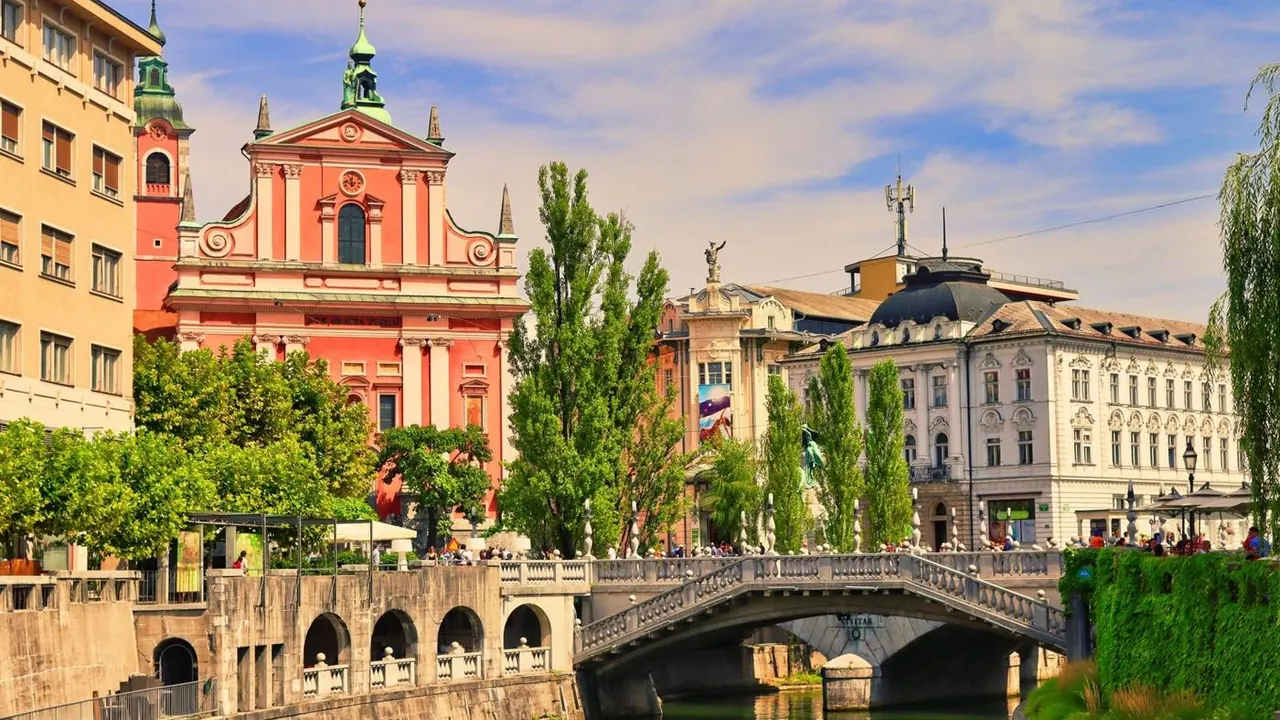
The Triple Bridge and the Franciscan Church
- Nature & outdoors80
- Day trips78
- Getting around74
Photo: detait, Pexels License
Match
53
Every category weighted equally
- Beach & sun50
- Culture & arts56
- Food & nightlife52
- Family trip55
- Outdoors59
- Relax & unwind52
- Shopping & style52
- On a budget53
Ljubljana in twelve categories
Our verdict on each, scored 0 to 100 against the same fixed benchmark cities, so a score means the same thing on every page.
Beaches & swimming. Scores 22 out of 100.
Food & drink. Scores 55 out of 100.
Culture & sights. Scores 55 out of 100.
Nightlife. Scores 40 out of 100.
Nature & outdoors. Scores 80 out of 100.
Day trips. Scores 78 out of 100.
Good for families. Scores 54 out of 100.
Getting around. Scores 74 out of 100.
Shopping & style. Scores 33 out of 100.
Affordability. Scores 54 out of 100.
Live music & performing arts. Scores 50 out of 100.
Wellness & relaxation. Scores 42 out of 100.
Ljubljana category by category
Beaches & swimming
22Ljubljana is an inland capital, and nothing about a stay here revolves around the water. In high summer locals swim in the Sava on the city's northern edge or head to the Alpine lakes. Bled, about an hour away, warms to around 24°C in July and August. Bohinj, further on, is clearer and noticeably colder.
Slovenia's short Adriatic coast at Piran, Izola and Koper is roughly an hour and a half by car or bus. The sea there is warm in summer, but the shore is mostly concrete platforms and small pebble strips rather than sandy beaches. Treat a swim as a day trip and not a reason to base yourself in the city.
Food & drink
55Eating here is pleasant and unpretentious, and it is rooted in the country around it. The open-air Central Market by the river, laid out beside Plečnik's colonnades, sells cheeses, cured meats, pumpkin-seed oil and Alpine produce. In the warm months a weekly street-food gathering fills the market square. Traditional dishes are filling and regional: Carniolan sausage, štruklji dumplings, buckwheat žganci and jota bean stew. Gostilna inns serve them all around the city.
Wine is the stronger suit. Bottles from the Vipava valley, Goriška Brda and the Styrian hills are poured by the glass in riverside wine bars, and the orange wines of the west are a speciality. A handful of ambitious kitchens cook modern Slovenian food. Café life along the Ljubljanica is a real part of the day, but the range is narrow and you will run through it within a week.
Culture & sights
55The city's character comes from one architect. Between the wars Jože Plečnik reshaped the centre with the Triple Bridge, the market colonnades, the riverside embankments and the National and University Library, and these works are UNESCO-listed. Around them is a compact old town of baroque churches and Secession façades, rebuilt after the earthquake of 1895. Above it all, the castle sits on its wooded hill, reached by funicular.
The National Gallery, the Museum of Modern Art and the City Museum are good, but none is of international rank. The Metelkova former barracks, covered in murals and sculpture, add an alternative streak. Two or three days cover it comfortably, and the charm lies in the whole cityscape rather than in individual must-sees.
Nightlife
40Most evenings happen outdoors along the Ljubljanica, where bars and terraces line both embankments and stay busy on warm nights. Students give the city more life than its size suggests, especially during term. Metelkova, a squat-turned-autonomous zone in former army barracks, is the one place of real reputation, with small, scruffy clubs and bars running late at weekends.
Beyond that there are a few clubs and cocktail bars, and the riverside quietens after midnight on weekdays. It suits a relaxed drink by the water more than a big night out.
Nature & outdoors
80Few capitals have this much landscape so close. In town, Tivoli Park runs into forested hills, and Šmarna Gora on the northern edge is a short climb that locals do before work. The Ljubljana Marshes to the south are flat and good for cycling. The Kamnik-Savinja Alps start about 40 minutes away, with Velika Planina's herders' huts on a high pasture.
The Julian Alps and Triglav National Park are about an hour away, with serious hiking, the Vintgar gorge, and rafting and kayaking on the emerald Soča further west. The karst country to the south-west holds the Postojna and Škocjan caves. Winter brings skiing at small resorts within reach, and autumn is a fine time for walking.
Day trips
78Slovenia is small, and the city sits in the middle of it, so much of the country is within reach. Bled, with its island church and clifftop castle, is about an hour away. Medieval Škofja Loka and Radovljica, with its painted façades, are closer. To the south-west, Predjama Castle is built into a cliff face, and Lipica is the original home of the Lipizzaner horse. The old mercury-mining town of Idrija is a UNESCO site.
The Venetian-style coast town of Piran is about an hour and a half away. Goriška Brda's hilltop wine villages also make a good day out. Across the borders, Trieste and Zagreb are each roughly two hours away, which adds variety. A car helps for the smaller places, but buses and trains reach the main ones.
Good for families
54Ljubljana is easy with children rather than exciting for them. The centre is small, flat and largely closed to cars, so pushchairs and small legs manage well, and it feels calm and safe. The funicular up to the castle and the dragon statues on the Dragon Bridge are what younger children remember. Tivoli Park has playgrounds and open lawns, and the zoo is a modest one on the wooded slopes of Rožnik hill.
There is also a small hands-on science centre for school-age children, and the long-established puppet theatre by the castle hill puts on shows young children can follow without the language. There is no aquarium, theme park or big museum built for children, though, and most families will have seen the city's attractions for children in two or three days.
Getting around
74In practice you will walk everywhere. The old town, the riverbanks, the market, the museums and Tivoli Park are all within about 20 minutes of each other on foot. Most of the centre is pedestrianised, and electric shuttles run there for anyone who needs them. A city bike-share scheme covers the flatter districts well.
The city has buses but no metro or tram. You will rarely need them as a visitor, apart from the airport run. For trips into the country, intercity buses are usually quicker than the slow rail network, and a hired car makes the more remote mountain valleys much easier to reach.
Shopping & style
33Shopping is low-key and small in scale. The best of it is local: honey, pumpkin-seed oil and salt from the coastal pans at the Central Market, and lace from Idrija. Gingerbread hearts and wooden crafts make good gifts. On Sunday mornings an antiques and flea market sets up on the embankment. The lanes of the old town and Trubarjeva street hold some small design and fashion boutiques.
There is no luxury quarter and little international fashion. The big malls sit on the edge of the city. Nobody plans a stay here around shopping.
Affordability
54Prices sit in the middle for Europe. Eating out is reasonable, especially at lunchtime, when many inns serve a set daily menu. Local wine and beer are fairly priced, and because the centre is so walkable you will spend little on transport. Most sights cost little to enter.
Accommodation is where the money goes. The city has a small stock of central hotels, and summer rooms in the old town are priced like those in Western Europe. Staying a little further out or coming outside July and August makes a clear difference.
Live music & performing arts
50For a city of this size the formal arts are solid. The Slovenian Philharmonic traces its roots to a music society founded in 1701. The Slovenian National Opera and Ballet performs in a neo-Renaissance house in the centre. Cankarjev dom, the big cultural centre, programmes concerts, dance and visiting productions all year. In summer the long-running Ljubljana Festival brings orchestras and stars to the open-air Križanke courtyard, which Plečnik remodelled.
Most theatre is in Slovene, which limits it for visitors. Live rock, jazz and alternative music play in smaller venues and at Metelkova. There is enough here for a concert or an opera night, but not enough to plan a trip around.
Wellness & relaxation
42The city itself has no bathing tradition. Wellness here means a large indoor water park with a sauna complex on the eastern edge, plus a few hotel spas. What it does offer is pace. The centre is quiet, green and largely free of cars, and long afternoons at riverside cafés are part of local life.
For real bathing, Slovenia has a long line of thermal spa towns with mineral pools and saunas, several of them within about an hour's drive. Combined with the calm of the city, they make a restful stay, even if the spas are a short trip out of town.
When should you go?
Pick a month to see what it is like. The climate figures are measured averages, not a forecast.
Ljubljana in July
Daytime high, °C
Rainfall in the month, mm
The whole year
Shaded against this city’s own year: the deepest cell is its best month for that figure and the palest its weakest.
Temperature and rainfall are climate normals, averaged over the years shown. Ljubljana: 1991-2020 normals, Ljubljana / Bezigrad (1.9 km from centre).
Before you go
| Measure | Ljubljana |
|---|---|
| Official language | Slovene |
| Currency | Euro (EUR) |
| Sockets | CF230 V, 50 Hz |
| Driving side | Right |
| Time zone | UTC+1, UTC+2 in summer |
| Emergency number | 112 |
| Elevation | 309 m |
| Main airport | Ljubljana Jože Pučnik Airport (LJU)20 km from centre32 non-stop destinations |
| Public holidays this year | 21 days |
By the numbers
| Measure | Ljubljana |
|---|---|
| City population | 284,293 |
| People per km² | 1,736 |
| Museums within 10 km | 14 |
| UNESCO World Heritage sites within 50 km | 3 |
Compare Ljubljana with
Every comparison with a written verdict behind it.