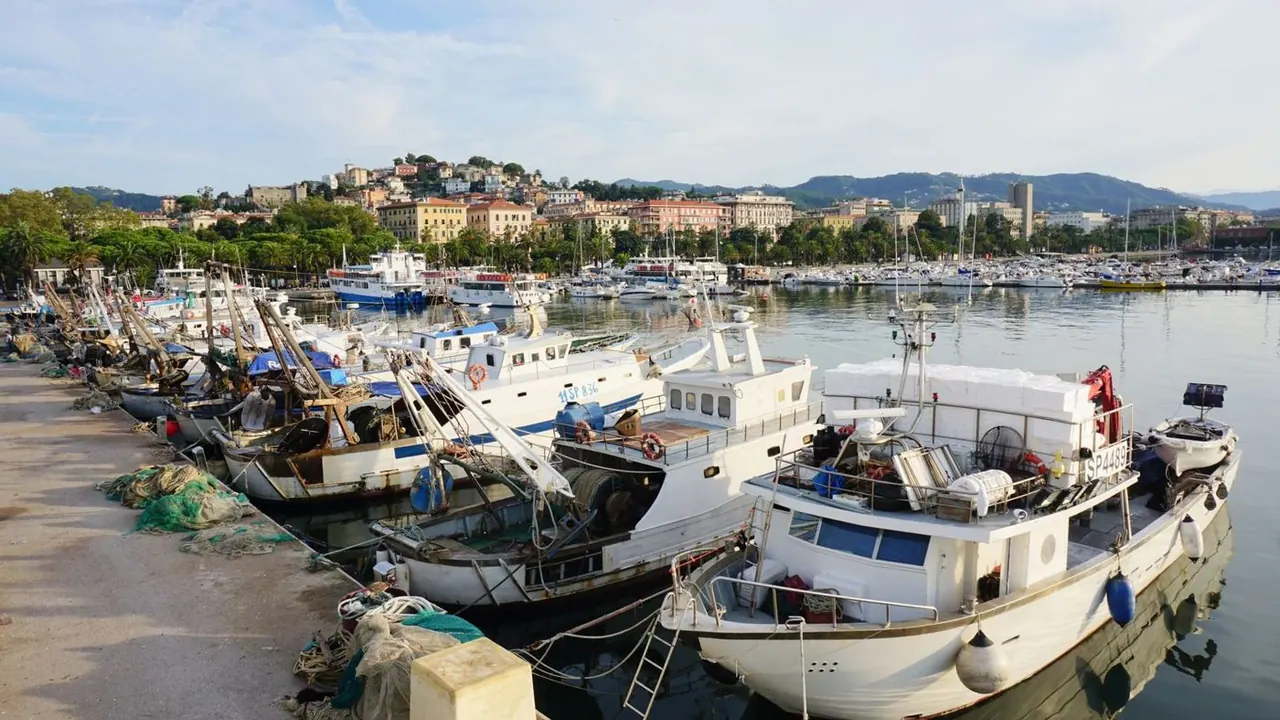
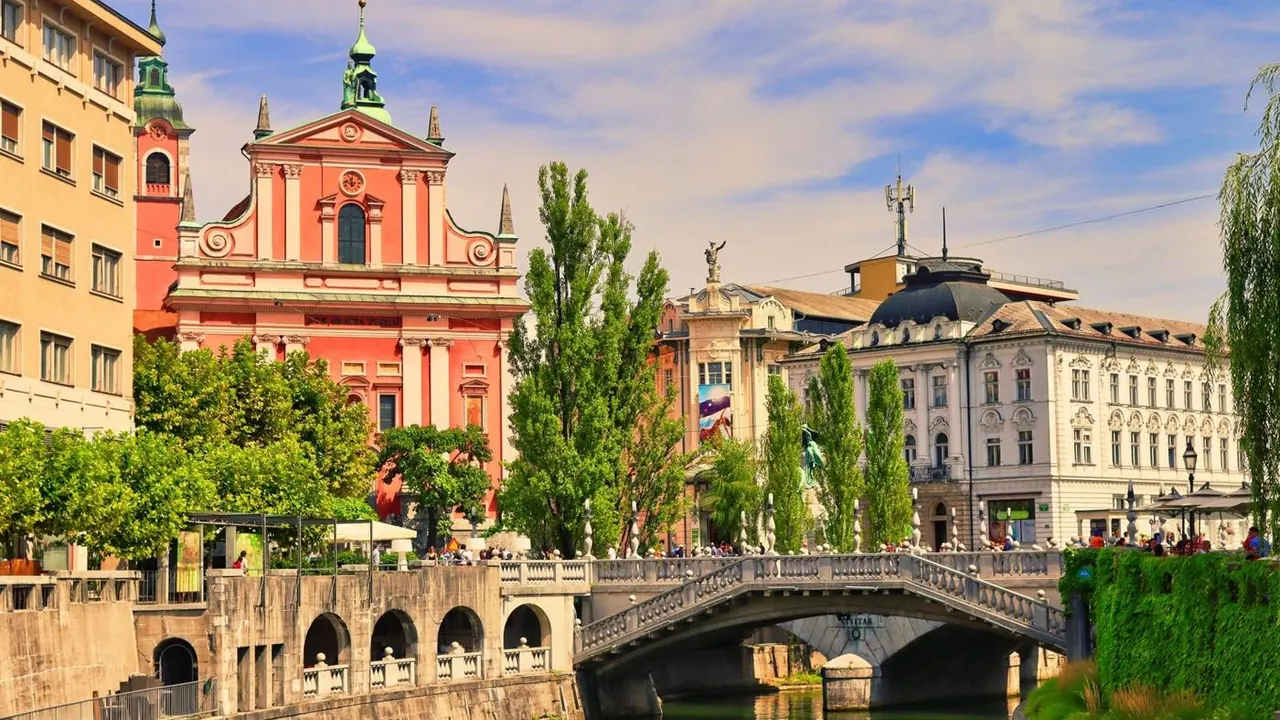
Photos: La Spezia by Irina Balashova, Pexels License; Ljubljana by detait, Pexels License.
La Spezia or Ljubljana?
Our verdict in twelve categories, each scored against the same fixed benchmark cities, and the climate month by month, so you can choose for your trip.
Choose La Spezia for
- beaches
- day trips
- food and drink
La Spezia is the better pick for a trip built around the coast. It is a working port rather than a showpiece, but it puts the Cinque Terre, Portovenere and the beaches of Lerici within minutes by train, bus or boat. It suits walkers, swimmers and anyone who wants a different seaside village every day while sleeping somewhere calmer and cheaper than the villages themselves.
Choose Ljubljana for
- live music and the arts
- culture and sights
- nightlife
Choose Ljubljana if you want the city itself to be part of the pleasure. Plečnik's bridges and riverside, a proper opera house and philharmonic, and livelier evenings along the Ljubljanica and at Metelkova give it more to do between outings and after dark. Bled, the Julian Alps and the karst caves are within reach for days in the mountains rather than by the sea.
Scoreboard
Twelve categories on one fixed scale from 0 to 100. The shaded stretch is the gap between the two.
Your match
Pick a travel style or drag the sliders, and both match scores follow your weighting.
Too close to call, 2 points apart
Wins on beaches and day trips with your weighting.
Wins on live music and the arts and culture and sights with your weighting.
What matters to you?
Category by category
What the scores mean for a trip.
Beaches & swimming
La Spezia wins easily, even though its own waterfront is a port and a promenade. Swimming lies a short ride away in every direction: sheltered sand and pebble at San Terenzo and Lerici, small coves under the olive terraces at Fiascherino and Tellaro, clear rocky water round Portovenere and Palmaria, and Monterosso's sandy beach a few stops up the line.
Ljubljana has nothing to compare. A summer swim there means the Sava on the city's edge, Lake Bled about an hour away or the colder Bohinj. The Adriatic at Piran is roughly an hour and a half off and edged mostly with concrete platforms. La Spezia's beaches are small, often pebbly and crowded in August, but a swim is a simple half-day outing by bus, train or boat. From Ljubljana it takes a full day trip.
Food & drink
The two eat about equally well, in very different styles. La Spezia's table is coastal: farinata from wood ovens, mussels farmed off Portovenere, Monterosso anchovies and pesto on trofie or testaroli, with Cinque Terre whites and sweet Sciacchetrà to drink.
Ljubljana cooks for the hills, with Carniolan sausage, štruklji and jota in gostilna inns, and its real strength is the wine, from orange wines to Vipava and Brda bottles in riverside bars. Each has a good central market, and neither has much fine dining or international food.
Culture & sights
Ljubljana has the more rewarding townscape. Plečnik's bridges, colonnades, embankments and library give the centre a single, UNESCO-listed character, with the castle above and Metelkova's murals as a rougher counterpoint, and the pleasure is in wandering the whole.
La Spezia is a nineteenth-century naval town of arcaded grids and Liberty facades with no medieval core. The early Italian paintings of the Museo Amedeo Lia and the Lunigiana stele in Castello San Giorgio deserve a morning each, but the region's real history lies out at Portovenere, Sarzana and Luni.
Nightlife
Neither is a party town, but Ljubljana stays up later. Students fill the terraces on both banks of the Ljubljanica, and Metelkova's scruffy clubs run late at weekends.
In La Spezia the evening is an aperitivo on Via del Prione or around Piazza Verdi, which moves to the Lerici waterfront in summer. After that the town goes quiet, and most visitors turn in early ahead of a morning on the trails.
Nature & outdoors
Both are superb bases for the outdoors, and the choice is sea against mountain. La Spezia gives terraced cliffs dropping into the water, the Cinque Terre paths from the Sentiero Azzurro up to the quieter ridge, the Palmaria loop, and kayaking and diving in the gulf, with the marble peaks of the Apuan Alps an hour inland.
Ljubljana looks to the high Alps: Triglav National Park, the Vintgar gorge, Velika Planina's herders' pasture and rafting on the Soča, plus the Postojna and Škocjan caves and winter skiing. Closer in, Tivoli Park runs straight into forested hills and Šmarna Gora, so a walk needs no transport at all.
Day trips
La Spezia has more outings packed close together. All five Cinque Terre villages are minutes away by train, Portovenere and Lerici are a short boat or bus ride, and Pisa and Lucca are about an hour off, so most days need no car and little planning.
Ljubljana covers a whole small country instead: Bled, Škofja Loka, Predjama, Idrija and the Lipica stud, with Piran, Trieste and Zagreb further out. The range runs from caves to coast, but the distances are longer and a car helps for the smaller places.
Good for families
Ljubljana is a little easier with young children. Its small, largely car-free centre suits pushchairs, and the castle funicular, the Dragon Bridge, Tivoli's playgrounds, the zoo on Rožnik and the puppet theatre add up to a few gentle days.
La Spezia is flat and safe in town, and boat trips and the shallow beaches at San Terenzo and Lerici give it days on the water that Ljubljana lacks. The catch is that its real sights are hillside villages reached on full summer trains or by long coastal paths, which works for children old enough to hike. Ljubljana's attractions are compact and level enough for toddlers.
Getting around
Both are easy, in different ways. Ljubljana is a walking city first: everything a visitor needs lies within about 20 minutes on foot, with electric shuttles and bike-share in the centre, though intercity buses beat the slow trains for trips out.
La Spezia works as a transport hub, with coastal trains through the Cinque Terre, buses round the gulf and seasonal ferries, and its flat centre is easy on foot too. Its weak spot is crowding on the summer trains, while Ljubljana's is the remote valleys that need a hire car.
Shopping & style
Neither is a shopping destination, and in both the best buys are things to eat or drink. La Spezia means pesto, olive oil, anchovies and Sciacchetrà, with chain stores on Via del Prione and Carrara marble nearby, while Ljubljana offers honey, pumpkin-seed oil, coastal salt and Idrija lace, a Sunday flea market on the embankment and a few design boutiques around Trubarjeva.
Affordability
Costs are much the same, and in both the room is the main expense, priced at a Western European level in July and August. Staying in La Spezia saves money against the Cinque Terre villages, but trail passes, boat trips and bathing establishments mount up.
Ljubljana's extras are lighter: set lunch menus at the inns, cheap sights and a centre you cross on foot. In either city, coming outside high summer makes the clearest difference.
Live music & performing arts
Ljubljana is far better for a night of music or theatre. The Slovenian National Opera and Ballet, a philharmonic with roots in 1701, Cankarjev dom's year-round programme and the summer festival in Plečnik's Križanke courtyard give real choice, though most theatre is in Slovene.
La Spezia has the Teatro Civico's season and a long-established summer jazz festival with concerts in piazzas and castle courtyards, but little the rest of the year. Opera there means a trip to Genoa or Pisa.
Wellness & relaxation
Neither city has a bathing tradition of its own, but Ljubljana comes closer. It has a large water park with a sauna complex on its eastern edge, and Slovenia's thermal spa towns are within about an hour's drive, all set against a quiet, green, car-free centre.
La Spezia's nearest equivalent is the small thermal baths at Equi Terme, an hour inland, plus a few hotel spas. Its restful side is in off-season evenings on the seafront, a long lunch in Tellaro or a quiet day on Palmaria.
When should you go?
Pick your month. The climate figures are measured averages, not a forecast.
La Spezia in July
Ljubljana in July
Daytime high, °C
Rainfall in the month, mm
Where the figures come from
La Spezia's temperatures are measured 65 km from the centre, at Pisa / S. Giusto.
La Spezia has no rain gauge within 25 km of the centre, so its rainfall comes from a gridded climate dataset read at the city rather than from a gauge further away.
Temperature and rainfall are climate normals, averaged over the years shown. La Spezia: 1991-2020 normals, Pisa / S. Giusto (64.8 km from centre). Ljubljana: 1991-2020 normals, Ljubljana / Bezigrad (1.9 km from centre).
La Spezia has the longer warm season. The sea is pleasant from June to early October and peaks around 25°C in August. Summer is dry and very sunny, though highs near 30°C in July and August make the coastal paths hard going in the middle of the day, so May and late September are the best months for walking. Autumn turns wet, with October and November the rainiest months at well over 150mm, and winters are mild but grey.
Ljubljana is colder and wetter for most of the year. Winter days hover around 4°C, and rain falls in every season, heaviest in September at about 159mm, with the summer months far from dry. June to August bring comfortable highs in the high twenties for the riverbanks and the Alps, and spring and early autumn suit walking. It gets less sunshine than La Spezia in every month, and the gap is widest in its dark winter.
Which traveller are you?
On a beach and sun trip, La Spezia is the clear choice. Sheltered sand at Lerici, clear rocky water off Palmaria and Monterosso's long beach are all close, while Ljubljana's nearest swims are Alpine lakes or a concrete-edged Adriatic shore.
For a culture and arts trip, Ljubljana offers more. Plečnik's UNESCO-listed works shape the whole centre, and the opera, the philharmonic and the summer festival at Križanke make real evenings out, where La Spezia has one fine museum and a thin stage calendar.
On a relaxing and wellness trip, Ljubljana comes out ahead. Its car-free centre and riverside cafés set a slow pace, and Slovenia's thermal spa towns lie within about an hour, whereas La Spezia's nearest baths are small and its summer coast is crowded.
Before you go
| Measure | La Spezia | Ljubljana |
|---|---|---|
| Official language | Italian | Slovene |
| Currency | Euro (EUR) | Euro (EUR) |
| Sockets | CFL230 V, 50 Hz | CF230 V, 50 Hz |
| Driving side | Right | Right |
| Time zone | UTC+1, UTC+2 in summer | UTC+1, UTC+2 in summer |
| Emergency number | 112 | 112 |
| Elevation | 3 m | 309 m |
| Main airport | Pisa International Airport (PSA)65 km from centre82 non-stop destinations | Ljubljana Jože Pučnik Airport (LJU)20 km from centre32 non-stop destinations |
| Public holidays this year | 13 days | 21 days |
By the numbers
| Measure | La Spezia | Ljubljana |
|---|---|---|
| City population | 92,119 | 284,293 |
| People per km² | 1,792 | 1,736 |
| Museums within 10 km | 12 | 14 |
| UNESCO World Heritage sites within 50 km | 2 | 3 |
| Swim season, months above 21 °C | 4 months | - |
Where else could you go?
Every comparison below shares a destination with this one, so you can follow La Spezia or Ljubljana somewhere new.