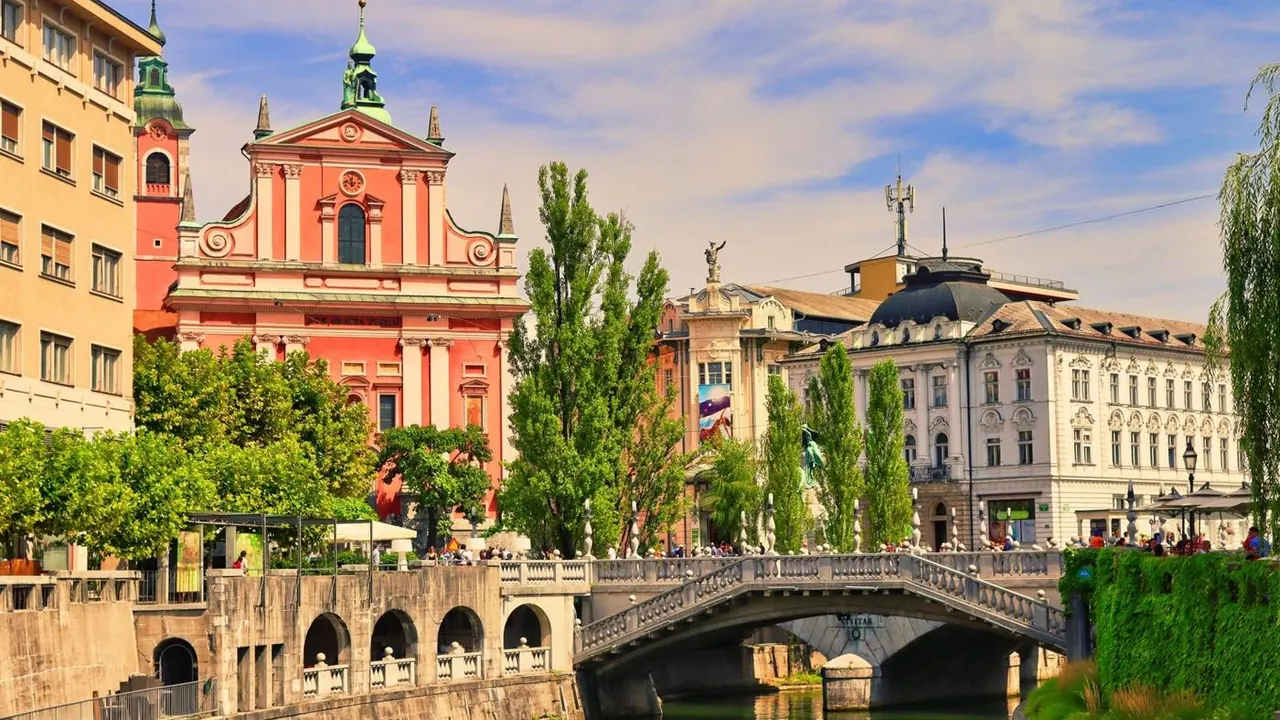
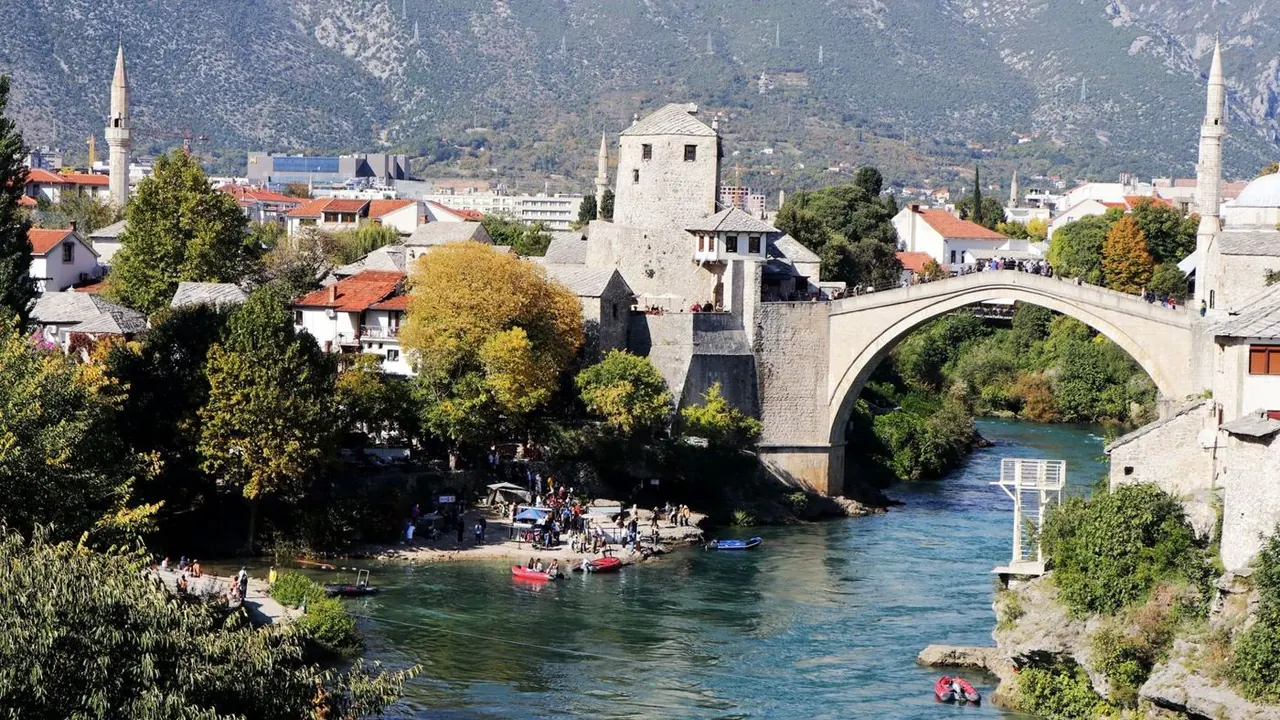
Photos: Ljubljana by detait, Pexels License; Mostar by Alan Wang, Pexels License.
Ljubljana or Mostar?
Our verdict in twelve categories, each scored against the same fixed benchmark cities, and the climate month by month, so you can choose for your trip.
Choose Ljubljana for
- live music and the arts
- getting around
- wellness
Ljubljana suits travellers who want a calm, easy base with plenty within reach. The centre is walkable and mostly free of cars, the food and wine are more varied, and there are concerts and opera in the evenings. The Julian Alps, Bled and the karst caves are all close enough for a day out. It is the better choice for families, for active travellers and for anyone who would rather not depend on a car.
Choose Mostar for
- prices
- beaches
Mostar is better for a shorter, cheaper and more focused stop. The heart of it is the Ottoman bridge and the old town around it, with Blagaj, Počitelj and the Kravica falls in the valleys nearby. Your money goes noticeably further, and the city's history is harder and more striking. On the other hand, evenings are quiet, there is less for children to do and most excursions need a car or a tour.
Scoreboard
Twelve categories on one fixed scale from 0 to 100. The shaded stretch is the gap between the two.
Your match
Pick a travel style or drag the sliders, and both match scores follow your weighting.
Wins on live music and the arts and getting around with your weighting.
Wins on prices and beaches with your weighting.
What matters to you?
Category by category
What the scores mean for a trip.
Beaches & swimming
Both cities are inland, so neither is a swimming base, but the swims they offer are different. From Ljubljana you swim in the Sava or an Alpine lake: Bled is the warmer lake and Bohinj the clearer one. The Slovenian coast at Piran is mostly concrete platforms and pebbles.
The Neretva in Mostar is too cold for more than a quick plunge from the rocks. The pool under the Kravica waterfalls, though, is a proper summer outing, and the Adriatic at Neum is a little closer to Mostar than Piran is to Ljubljana.
Food & drink
Ljubljana gives you more to eat and drink. There is the Central Market under Plečnik's colonnades, gostilna inns serving štruklji and jota, and a handful of modern Slovenian kitchens. Above all there is wine by the glass from Vipava, Brda and Styria, including the orange wines of the west.
Mostar's cooking is narrower: charcoal-grilled ćevapi in somun, burek and slow-cooked stews, with Žilavka and Blatina to drink and Bosnian coffee as a slow ritual. It satisfies for a few days, but there is little beyond Bosnian home cooking.
Culture & sights
The two are evenly matched, but their appeal is different. Ljubljana's comes from a whole townscape shaped by Plečnik: the bridges, the embankments, the library and the castle on its hill. Galleries and the murals of Metelkova add to it.
Mostar is built around one dramatic monument, the rebuilt Ottoman bridge. Around it are the bazaar street, a minaret you can climb, carpeted Ottoman houses and war-scarred façades along the old front line, which give it a rawer history than Ljubljana's.
Nightlife
Ljubljana has more going on after dark. Terraces line both banks of the Ljubljanica and stay full on warm evenings, students keep the city livelier during term, and Metelkova's scruffy clubs stay open late at weekends.
In Mostar a night out usually means a long dinner with a view of the lit bridge, after which the old town goes quiet. A few cocktail bars and student clubs stay open later on summer weekends, and that is about all.
Nature & outdoors
Ljubljana has true Alpine country on its doorstep, and the green starts inside the city. Tivoli Park climbs into forested hills, locals walk up Šmarna Gora before work, and the Kamnik-Savinja Alps and Triglav National Park are each within about an hour. Add rafting on the Soča, the Postojna and Škocjan caves and skiing at small resorts in winter, and there is something to do outdoors in every season.
Mostar's surroundings are wilder and barer: a hot karst basin under the limestone ranges of Velež and Prenj, with rafting in the Neretva canyons, the Buna spring at Blagaj and migrating birds at Hutovo Blato. The trails are rugged and the valley summers are fierce, so walking there is mostly for spring and autumn.
Day trips
Ljubljana sits in the middle of Slovenia, so most of the country is within reach. Bled, Škofja Loka, Radovljica, Predjama Castle, Lipica, Idrija and Piran all make easy day trips, buses and trains reach the main ones, and Trieste and Zagreb add two more countries.
Mostar's excursions are fewer and smaller: the dervish house at Blagaj, Počitelj on its hillside, the stećci tombstones at Stolac and the wartime sites at Jablanica and Konjic. Sarajevo is the one big name and makes a long day by train. Most of the other trips need a car or a tour.
Good for families
Ljubljana is the easier city with children. The centre is flat and calm, so pushchairs cope well, and the dragons on Dragon Bridge, the science centre and the lawns and playgrounds of Tivoli keep young children busy for two or three days.
Mostar works for a day or two. Restaurants welcome children warmly, and the bridge divers are a highlight. Against that, the steep, polished lanes defeat pushchairs, and the summer heat in the valley is hard on small children.
Getting around
You can walk both centres, but Ljubljana's is flatter and mostly pedestrianised, with electric shuttles and a bike-share scheme as backup. Intercity buses also make trips into the country simple without a car.
In Mostar the old town and the bridge are a short stroll apart on worn, slippery cobbles. Beyond them, the city buses are of little use to visitors, so Blagaj, Počitelj and Kravica mean a car, taxi or tour. The train to Sarajevo is the main link beyond the city.
Shopping & style
Neither city is a shopping destination, and both are small in scale. Ljubljana's best buys are food or crafts: honey, pumpkin-seed oil, salt from the coast and Idrija lace, plus a Sunday flea market on the embankment and a few design boutiques.
Mostar's shopping is one bazaar street, the Kujundžiluk. Hand-hammered copper coffee sets and kilims are sold there among a lot of imported souvenirs, so look for a craftsman working in a doorway.
Affordability
Mostar is noticeably cheaper. Guesthouses, grilled meals, local wine and coffee all cost little. Only the terraces with bridge views and old-town rooms in midsummer push prices up, and a few streets away they come back down.
Ljubljana is middling for Europe. Set lunch menus and the short walking distances help, but central rooms in summer cost as much as in Western Europe, so you will spend more on accommodation there.
Live music & performing arts
Ljubljana is far stronger for live performance. The Slovenian Philharmonic, the national opera and ballet, the year-round programme at Cankarjev dom and the summer festival in Plečnik's Križanke courtyard give you a real chance of a good concert or an opera night.
Mostar has a national theatre and a youth theatre, both performing mostly in local languages, and some open-air concerts in summer. For much of the year, live music there means the odd band in a café bar.
Wellness & relaxation
Neither city has a bathing tradition, but Ljubljana offers more. There is a large water park with a sauna complex and a few hotel spas in the city, and real thermal bathing is about an hour's drive away in Slovenia's spa towns.
Mostar's Ottoman hammam is a historic building rather than a working bath, and spa treatments are limited to a few hotels. Its restful side is unhurried coffee in the shade and the quiet by the river once the coach groups have left.
When should you go?
Pick your month. The climate figures are measured averages, not a forecast.
Ljubljana in July
Mostar in July
Daytime high, °C
Rainfall in the month, mm
Temperature and rainfall are climate normals, averaged over the years shown. Ljubljana: 1991-2020 normals, Ljubljana / Bezigrad (1.9 km from centre). Mostar: 1991-2020 normals, Mostar (0.9 km from centre).
Ljubljana is at its best from May to September, when the days are long and warm. July and August peak at about 28°C, the season for swimming in the Sava or at Bled. Winters are cold and grey. The wettest stretch runs from September into November, with rain peaking at about 159mm in September, so autumn walks need a waterproof.
Mostar is hotter, and its rain comes at the opposite end of the year. July and August reach about 33°C in the valley, which is too hot for comfortable sightseeing but good for a dip at Kravica. April, May and early October are the months for walking the old town and the hills. Winter is milder than in Ljubljana but very wet, with about 198mm in December. Mostar is also the sunnier of the two in every month.
Which traveller are you?
On a trip on a tight budget, Mostar is the clear choice. Guesthouses and family apartments are cheap, and so are ćevapi and local wine. The old town and the bridge are all on foot, though Kravica or Blagaj add the cost of a car or a tour.
On a family trip with young children, Ljubljana is far less tiring. The centre is small, flat and mostly car-free, and the funicular, zoo and puppet shows fill several days. Mostar has little built for children apart from the bridge divers and Kravica.
For a relaxing and wellness trip, Ljubljana is the better base. It is green and quiet, and Slovenia's thermal spa towns are a short drive away for mineral pools and saunas. Mostar's restful side is mostly its early mornings, and the summer heat in the valley can be tiring.
Before you go
| Measure | Ljubljana | Mostar |
|---|---|---|
| Official language | Slovene | Croatian, Serbian, Bosnian |
| Currency | Euro (EUR) | Convertible Mark (BAM) |
| Sockets | CF230 V, 50 Hz | CF230 V, 50 Hz |
| Driving side | Right | Right |
| Time zone | UTC+1, UTC+2 in summer | UTC+1, UTC+2 in summer |
| Emergency number | 112 | 112 |
| Elevation | 309 m | 60 m |
| Main airport | Ljubljana Jože Pučnik Airport (LJU)20 km from centre32 non-stop destinations | Sarajevo International Airport (SJJ)68 km from centre38 non-stop destinations |
| Public holidays this year | 21 days | 8 days |
By the numbers
| Measure | Ljubljana | Mostar |
|---|---|---|
| City population | 284,293 | 105,448 |
| People per km² | 1,736 | 90 |
| Museums within 10 km | 14 | 3 |
| UNESCO World Heritage sites within 50 km | 3 | 1 |
Where else could you go?
Every comparison below shares a destination with this one, so you can follow Ljubljana or Mostar somewhere new.