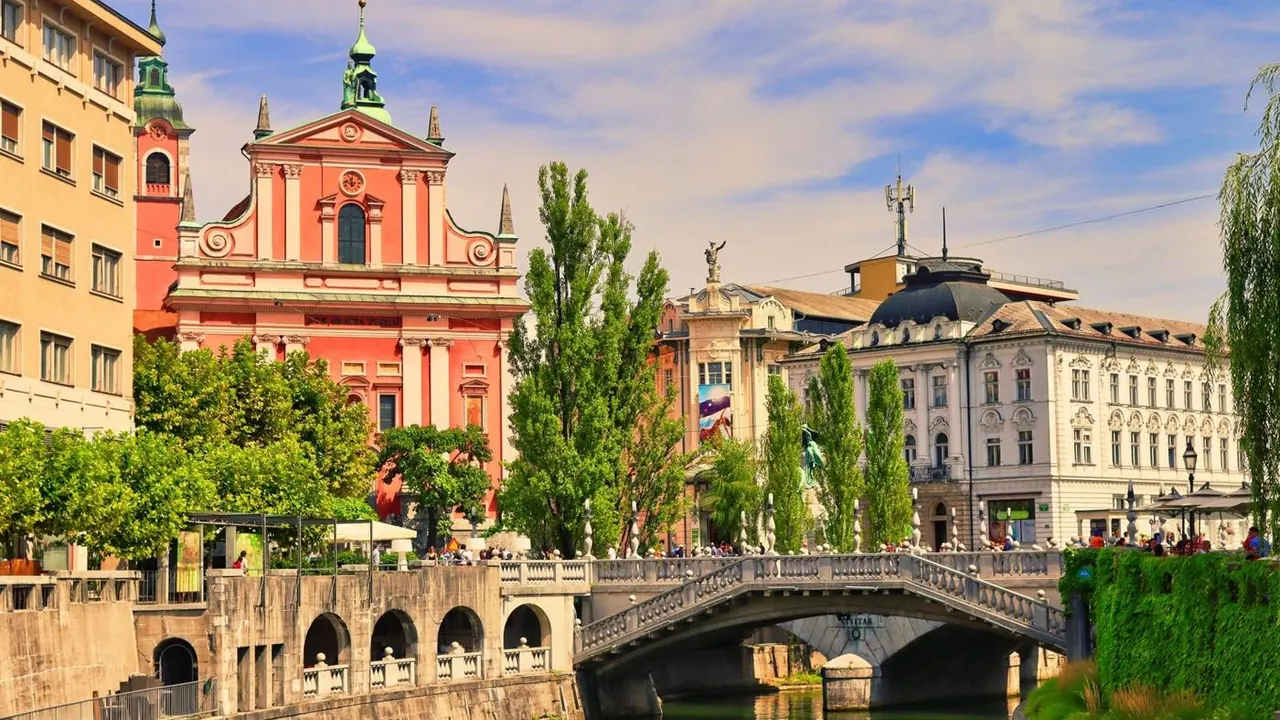
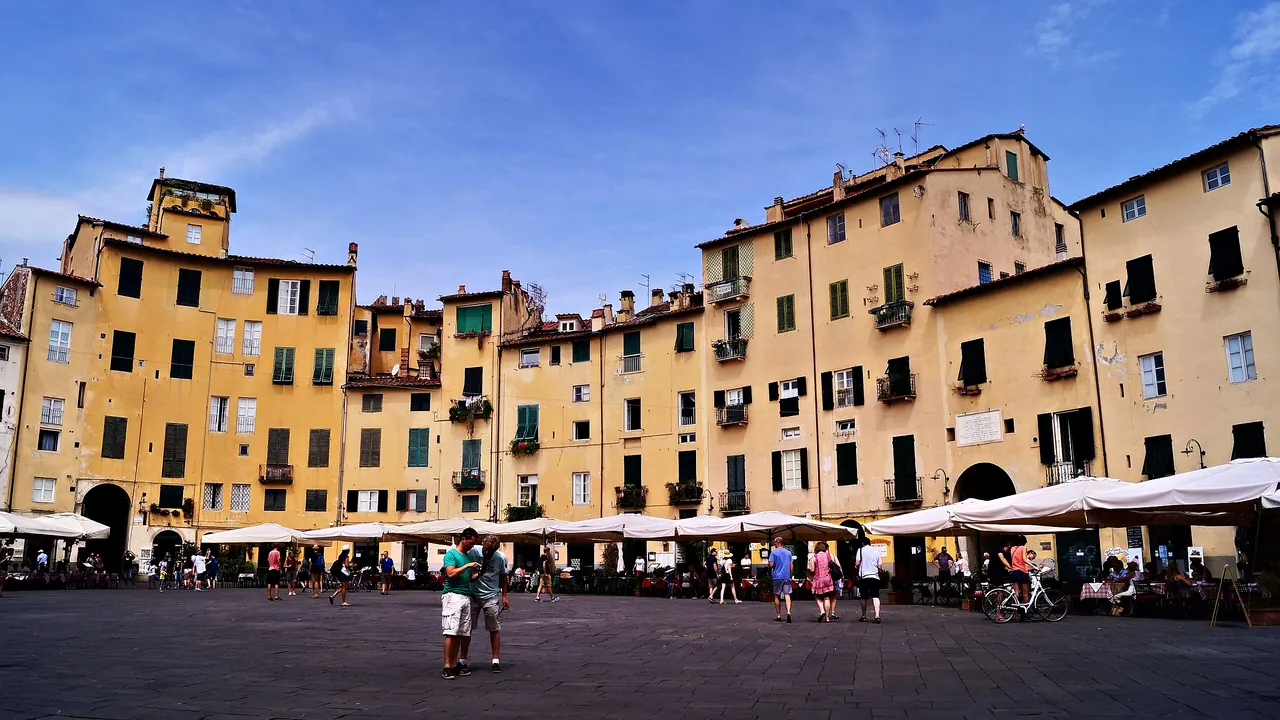
Photos: Ljubljana by detait, Pexels License; Lucca by Stefano Sansavini, CC BY-SA 4.0, cropped.
Ljubljana or Lucca?
Our verdict in twelve categories, each scored against the same fixed benchmark cities, and the climate month by month, so you can choose for your trip.
Choose Ljubljana for
- nightlife
- nature and the outdoors
- prices
Ljubljana suits travellers who want mountains, lakes and gorges within easy reach of a small, calm capital. The Julian Alps, Bled and the Soča valley are all close enough to visit and still be back for an evening drink by the river, and the riverside bars and Metelkova give the nights a bit more life. It also costs a little less, which helps on a longer stay.
Choose Lucca for
- beaches
- day trips
- culture and sights
Lucca is the better pick for a classic Italian trip that mixes old streets, Romanesque churches and Puccini with afternoons on the sand. Its walled centre has the stronger sights, the Versilia beaches are a short train ride away, and Pisa, Florence and the Tuscan villas make it one of the best bases in the region. Choose it for art, the sea and day trips rather than late nights.
Scoreboard
Twelve categories on one fixed scale from 0 to 100. The shaded stretch is the gap between the two.
Your match
Pick a travel style or drag the sliders, and both match scores follow your weighting.
Wins on nightlife and nature and the outdoors with your weighting.
Wins on beaches and day trips with your weighting.
What matters to you?
Category by category
What the scores mean for a trip.
Beaches & swimming
Neither city is on the sea, but Lucca gets you onto real sand far more easily. Viareggio is about 25 minutes by train, and from there wide, gently shelving beaches with organised beach clubs run up to Forte dei Marmi, with wilder dunes at the Lecciona. A morning in town and an afternoon swim is easy.
From Ljubljana, swimming means the Sava, the lakes at Bled and Bohinj, or a trip of about an hour and a half to Piran and Izola, where you swim from concrete and pebbles. That is a day out rather than part of the daily rhythm.
Food & drink
The two eat about equally well, with plain regional cooking and a fairly narrow range in both. Ljubljana's strength is wine: Vipava, Brda and Styrian bottles by the glass along the river, orange wines in particular, plus the Central Market and gostilna classics such as štruklji and jota.
Lucca is more rooted in rustic Tuscan dishes, such as farro soup, tordelli, chestnut flour and cecina from the bakeries, eaten in family trattorias inside the walls with mild local olive oil. Ljubljana has a few more ambitious modern kitchens, while Lucca's menus are more uniform but very reliable.
Culture & sights
Lucca has the richer sights. Its complete Renaissance walls, the carved Romanesque façades of San Michele and San Frediano, the cathedral with Ilaria del Carretto's tomb and the oval amphitheatre piazza give it more to stop and look at.
Ljubljana's appeal lies in its overall look. Plečnik's bridges, colonnades and library, the Secession streets and the castle on its hill form a handsome whole. Its museums are no stronger than Lucca's modest ones, and both cities take about two days.
Nightlife
Ljubljana is the livelier of the two, though neither is a party city. The bars along the Ljubljanica stay busy on warm nights, students fill them in term time, and Metelkova's scruffy clubs run late at weekends.
Lucca winds down after an aperitivo in Piazza San Michele and a long dinner, and the centre is quiet by midnight. Dancing means a late drive to the Versilia beach clubs in summer.
Nature & outdoors
Ljubljana has more serious landscape close at hand. Within about an hour you reach the Julian Alps and Triglav National Park, the Vintgar gorge and Velika Planina's high pasture, with the Soča's rafting water and the Postojna and Škocjan caves a little further. Tivoli Park and Šmarna Gora give you green space without leaving town.
Lucca's outdoors starts gently, with the tree-lined walls, the Serchio cycle paths and olive-covered hills. The Apuan Alps' marble peaks and the Garfagnana's chestnut woods are worthwhile, but there is less variety and you need more time on the road.
Day trips
Both are good bases, but Lucca's options are richer. Pisa is half an hour by train and Florence a little over an hour. Pistoia, Montecatini, the great villas at Marlia and Collodi, Pietrasanta and Carrara are all close, and with an early start you can reach the Cinque Terre and San Gimignano.
From Ljubljana you can see most of Slovenia instead: Bled, Škofja Loka, Predjama Castle, Lipica, Idrija and Piran, with Trieste and Zagreb about two hours away. These are lovely places, but they are mostly small towns and single sights, and none of them pulls in visitors the way Pisa or Florence does.
Good for families
Both are calm, flat and largely car-free, and both are easy rather than thrilling for children. Ljubljana has the castle funicular, the Dragon Bridge, a small zoo, a science centre and a puppet theatre that needs no language.
Lucca has cycling the walls on a family quadricycle and climbing the tree-topped Torre Guinigi. Pinocchio Park at Collodi and the beaches are close by, which makes summer days with children easier to fill.
Getting around
You will walk in both, since each centre is compact, flat and mostly closed to traffic. The difference is what comes next. Ljubljana relies on intercity buses and a slow rail network, so a car helps for the mountain valleys.
Lucca is a cycling town inside the walls, and its station just outside them has regular trains to Pisa, Florence and the coast. Buses to the villas and hill villages are sparse, though.
Shopping & style
Lucca has a little more to browse. Via Fillungo has fashion and jewellery behind old Liberty shopfronts, there are delicatessens with olive oil and buccellato, and its monthly antiques market around the cathedral is one of Italy's oldest.
Ljubljana's shopping is smaller still: honey, pumpkin-seed oil, Piran salt and Idrija lace from the market, a Sunday flea market on the embankment and a few design boutiques. Neither has any luxury depth.
Affordability
Ljubljana is the somewhat cheaper stay. Lunchtime set menus at the inns, fairly priced local wine and low entry fees keep daily costs down, although central summer rooms are expensive.
Lucca is cheaper than Florence but costs more overall. Rooms inside the walls are scarce and fill up in summer and during festivals, so staying outside the walls is the usual way to save.
Live music & performing arts
Both offer a concert or an opera night rather than a reason to travel. Lucca's appeal is Puccini, with recitals of his arias most evenings, the Teatro del Giglio, and open-air opera by the lake at Torre del Lago in summer.
Ljubljana has broader institutions: a Philharmonic with roots in 1701, the National Opera and Ballet, Cankarjev dom, and the summer festival in Plečnik's Križanke courtyard. Most of its theatre is in Slovene, though.
Wellness & relaxation
Neither city has its own bathing tradition, but Lucca has better spa days within easy reach. Montecatini's belle époque baths are half an hour by train, Monsummano has its warm cave pools, and Bagni di Lucca has steam grottoes. Add the slow, shaded evenings on the walls and it makes a gentler stay.
Ljubljana offers a quiet, green centre and a large water park with saunas on the edge of town. Slovenia's thermal spa towns are about an hour's drive away.
When should you go?
Pick your month. The climate figures are measured averages, not a forecast.
Ljubljana in July
Lucca in July
Daytime high, °C
Rainfall in the month, mm
Temperature and rainfall are climate normals, averaged over the years shown. Ljubljana: 1991-2020 (sunshine 1981-2010, rainfall 1981-2010) normals, Ljubljana / Bezigrad (1.9 km from centre). Lucca: 1991-2020 normals, Pisa / S. Giusto (21.4 km from centre).
Ljubljana has proper winters. From December to February the days only reach about 4 to 7°C, which is cold for long walks. Spring and summer are the time to come. From May to September the days are warm, reaching about 28°C in July and August, and June to August is the sunniest stretch. Rain falls all year, and summer gets more of it than winter, usually in showers and storms. The wettest month is October, when the days also turn cool and grey.
Lucca is milder and sunnier for most of the year. Its winter days are several degrees warmer than Ljubljana's, and its summers are dry. July and August reach about 30°C, which is too hot for walking the walls at midday but ideal for an afternoon at the beach, with the sea at 25°C. June and September are also good for swimming, and in those months sightseeing is more comfortable. Rain arrives in earnest from September to November.
Which traveller are you?
On a beach and sun trip, Lucca is the clear choice. The long sandy Versilia beaches are under half an hour away by train, and the summers are hotter and drier. Ljubljana's coast is further away, and its shore is mostly concrete platforms and pebbles.
For an outdoors trip, Ljubljana wins. Triglav National Park, the Vintgar gorge, rafting on the Soča and the Kamnik-Savinja Alps are all within about an hour, and Šmarna Gora rises at the edge of town. Lucca's Apuan Alps are fine, but the choice around it is smaller.
On a food and nightlife trip, Ljubljana has the edge. The food is about as good in both cities, but the riverside wine bars pour Slovenian orange wines late, and Metelkova's clubs keep weekends going. Lucca's evenings end with dinner and a quiet walk.
Before you go
| Measure | Ljubljana | Lucca |
|---|---|---|
| Official language | Slovene | Italian |
| Currency | Euro (EUR) | Euro (EUR) |
| Sockets | CF230 V, 50 Hz | CFL230 V, 50 Hz |
| Driving side | Right | Right |
| Time zone | UTC+1, UTC+2 in summer | UTC+1, UTC+2 in summer |
| Emergency number | 112 | 112 |
| Elevation | 309 m | 19 m |
| Main airport | Ljubljana Jože Pučnik Airport (LJU)20 km from centre32 non-stop destinations | Pisa International Airport (PSA)21 km from centre82 non-stop destinations |
| Public holidays this year | 21 days | 13 days |
By the numbers
| Measure | Ljubljana | Lucca |
|---|---|---|
| City population | 284,293 | 88,798 |
| People per km² | 1,736 | 478 |
| Museums within 10 km | 14 | 20 |
| UNESCO World Heritage sites within 50 km | 3 | 4 |
| Swim season, months above 21 °C | - | 4 months |
Where else could you go?
Every comparison below shares a destination with this one, so you can follow Ljubljana or Lucca somewhere new.