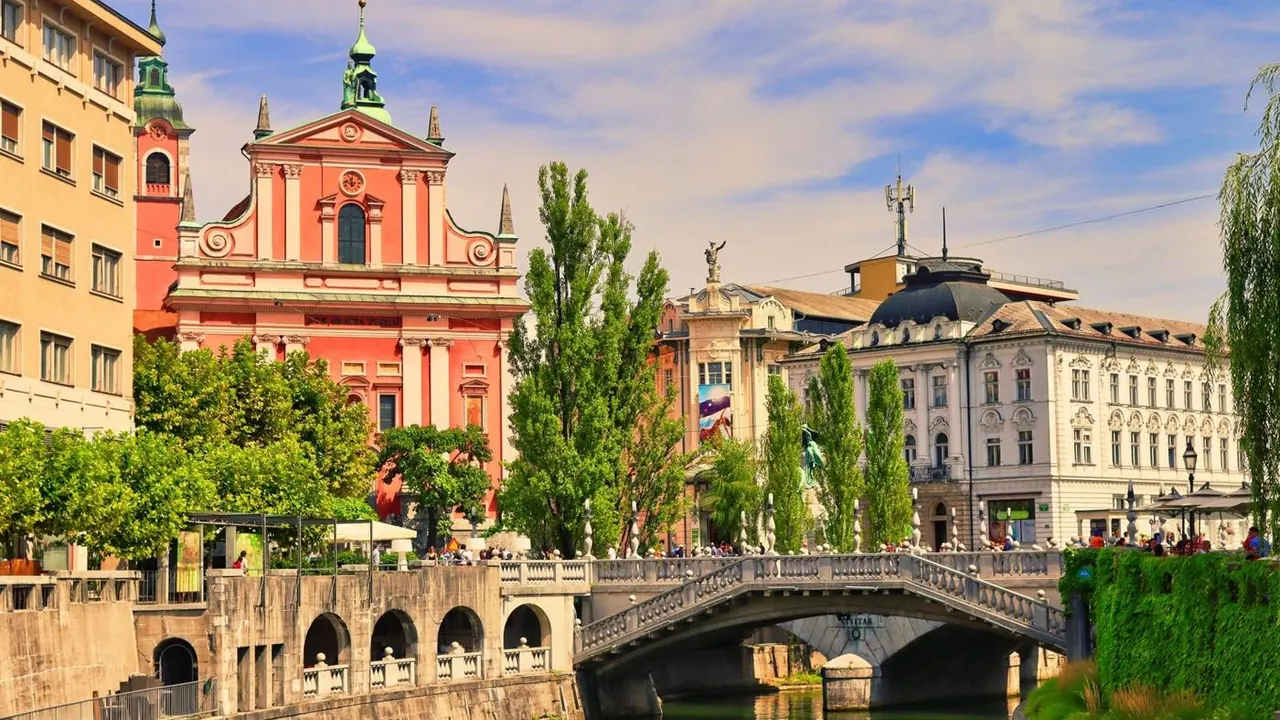
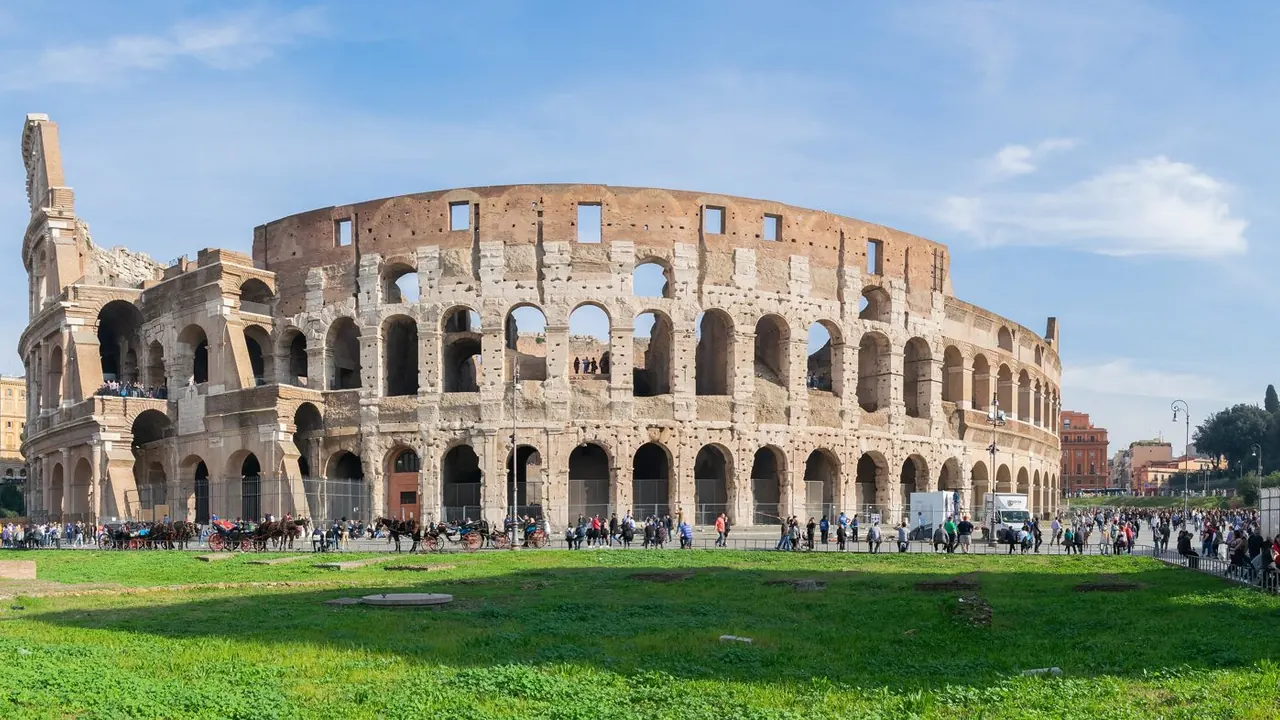
Photos: Ljubljana by detait, Pexels License; Rome by Tournasol7, CC BY-SA 4.0, cropped.
Ljubljana or Rome?
Our verdict in twelve categories, each scored against the same fixed benchmark cities, and the climate month by month, so you can choose for your trip.
Choose Ljubljana for
- nature and the outdoors
- prices
- getting around
Ljubljana suits travellers who want a small, calm capital as a base for mountains, lakes and caves. You can walk across its centre in minutes, the Julian Alps and Bled are about an hour away, and a stay costs noticeably less than in Rome. It is a good choice for hikers, cyclists and couples who would rather sit in a riverside wine bar than stand in a queue, though the city itself is seen in a few days.
Choose Rome for
- culture and sights
- shopping
- beaches
Rome is the pick when the trip is about history, art and eating. Ancient ruins, the Vatican, Baroque churches and the Borghese easily fill a week. The trattorias of Trastevere and Testaccio are worth the journey on their own, and fast trains reach Florence and Naples. The price is heat, crowds and bigger bills for a room.
Scoreboard
Twelve categories on one fixed scale from 0 to 100. The shaded stretch is the gap between the two.
Your match
Pick a travel style or drag the sliders, and both match scores follow your weighting.
Wins on nature and the outdoors and prices with your weighting.
Wins on culture and sights and shopping with your weighting.
What matters to you?
Category by category
What the scores mean for a trip.
Beaches & swimming
Neither city is a beach destination, but Rome has the sea much closer. Ostia's dark volcanic sand is about half an hour away by suburban train, and the water reaches 25°C in high summer. Fregene is a quieter alternative. Both are lined with paid lidos, though, and the water is rarely clear.
From Ljubljana, the coast at Piran and Izola is about an hour and a half away, and the shore there is concrete platforms and pebbles rather than sand. The lakes are the local answer. Bled is the warmer one for a summer swim, Bohinj is clearer and colder, and locals swim in the Sava on the city's edge.
Food & drink
Rome is the far stronger place to eat. It has a cuisine all its own: carbonara and cacio e pepe, Jewish-style artichokes in the Ghetto and the offal dishes of Testaccio, with pizza al taglio and supplì on the street. The catch is the area around the big sights, so it pays to walk to Trastevere, Monti or Testaccio.
Ljubljana's food is plainer and more rural: Carniolan sausage, štruklji and jota in gostilna inns, and the Central Market for cheese and pumpkin-seed oil. Wine is where it beats Rome. Orange wines and bottles from Brda and Vipava are poured by the glass beside the river, while Rome's own wines are modest.
Culture & sights
Ljubljana's appeal is a single, coherent townscape. There is Plečnik's work, with the Triple Bridge, the colonnades and the library, along with baroque churches, Secession façades and the castle on its hill, and the murals of Metelkova for contrast. Its museums are good rather than great, and a couple of days covers the city.
Rome is in another league. The Colosseum, the Forum and the Pantheon stand in the middle of town, surrounded by basilicas lined with mosaics, Bernini's piazzas and Caravaggios in side chapels. The Vatican Museums, the Sistine Chapel and the Borghese Gallery would each justify the trip, and a week still leaves plenty unseen.
Nightlife
In both cities people drink outdoors rather than dance, but Rome has far more places to go. Aperitivo leads into late nights in the lanes of Trastevere, and there are small cocktail bars in Monti, cheap student bars in San Lorenzo and an arty crowd in Pigneto. The clubs are around Testaccio and Ostiense.
Evenings in Ljubljana centre on the terraces along the Ljubljanica, which are livelier in term time thanks to the students. At weekends the scruffy clubs of Metelkova stay open late, but on weekdays the riverside goes quiet after midnight.
Nature & outdoors
Here Ljubljana has the clear edge. Tivoli Park rises into forest, Šmarna Gora is a hike locals do before work, and the Kamnik-Savinja Alps are about 40 minutes away. Within roughly an hour you reach Triglav National Park and the Vintgar gorge, with rafting on the Soča further west and the caves of Postojna and Škocjan to the south-west.
Rome's outdoors is gentler and more tamed. There are the villa parks, a superb bike ride along the Appian Way past tombs and aqueducts, and the crater lakes of the Alban Hills. The Apennines are about ninety minutes away, and the summer heat rules out activity at midday.
Day trips
Both cities make excellent bases, but Rome offers a wider choice. Ostia Antica, Villa d'Este and Hadrian's Villa at Tivoli are close by, while the Etruscan tombs, Orvieto and Civita di Bagnoregio lie to the north. Fast trains reach Florence and Naples in about ninety minutes.
Ljubljana's day trips are more about landscape and small towns: Bled's island church, the painted houses of Radovljica, Predjama Castle in its cliff, mining Idrija and the Lipizzaners at Lipica. Trieste and Zagreb take you across a border, and a car helps for the smaller places.
Good for families
Neither city is built around children and the two are roughly level, but they work differently. Ljubljana is the easier one: a small, flat, mostly car-free centre, the castle funicular, the dragons on the Dragon Bridge and a puppet theatre whose shows need no language. It runs out of things for children within a few days.
Rome has more to catch a child's imagination, with gladiators, catacombs, the Bioparco and rowing boats in Villa Borghese. Its cobbles, traffic, queues and summer heat make each day harder work, though.
Getting around
Ljubljana is the easier city to get around. Everything a visitor needs is within about 20 minutes' walk, the centre is mostly pedestrianised, electric shuttles run there for anyone who needs them, and bike-share covers the flatter districts. You will rarely need a bus except to the airport.
Rome is a walking city too, but a more tiring one, with cobbles, scooters and heat. Its metro skirts the historic core rather than crossing it, and buses and trams get stuck in traffic. For trips further out, Rome has fast trains, while in Slovenia the intercity buses usually beat the slow railway.
Shopping & style
Rome is the city for shopping. The big fashion houses line Via Condotti and the streets around the Spanish Steps, Monti has independent designers and vintage, and Via Margutta and Via dei Coronari keep their artisans and antique dealers. Porta Portese holds a vast flea market on Sundays.
Shopping in Ljubljana is small in scale and mostly local: honey, pumpkin-seed oil, salt from the coast and Idrija lace. There is a Sunday antiques market on the embankment and a few boutiques on Trubarjeva, but no luxury quarter.
Affordability
Ljubljana is easier on the wallet. Set lunch menus, fairly priced local wine and cheap entry to most sights keep the days modest. Old-town rooms in July and August, though, cost about as much as in Western Europe.
Rome is dearer, mainly because of small central rooms that are scarce in spring and autumn and the entry fees at the Vatican, the Colosseum and the Borghese. Espresso standing at the bar, pizza al taglio, free water from the fountains and churches open to all keep the daily spend down.
Live music & performing arts
Rome has the fuller programme. The Teatro dell'Opera performs through the winter and moves outdoors to the Baths of Caracalla in summer, and the Santa Cecilia orchestra plays at the Auditorium Parco della Musica. Church concerts and jazz clubs fill the other nights.
Ljubljana is solid for its size, with the Philharmonic, the National Opera and Ballet, Cankarjev dom and the summer festival in Plečnik's Križanke courtyard. It is good for a concert or two, not a reason to go. In both cities, theatre is mostly in the local language.
Wellness & relaxation
Neither city has a living bathing culture, so the difference lies in pace and in what is nearby. Ljubljana's quiet, car-free centre and its riverside cafés are restful in themselves. The city has an indoor water park with saunas, and Slovenia's thermal spa towns are within about an hour's drive.
Rome is louder, but the long lunch, the evening passeggiata, the Aventine and the villa gardens all offer calm. Outside the city, the sulphur springs at Bagni di Tivoli and the open-air hot pools around Viterbo are within reach.
When should you go?
Pick your month. The climate figures are measured averages, not a forecast.
Ljubljana in July
Rome in July
Daytime high, °C
Rainfall in the month, mm
Where the figures come from
Rome's sunshine is measured 31 km from the centre, at Vigna Di Valle.
Temperature and rainfall are climate normals, averaged over the years shown. Ljubljana: 1991-2020 normals, Ljubljana / Bezigrad (1.9 km from centre). Rome: 1991-2020 normals, Roma / Ciampino (15.1 km from centre).
Ljubljana has a proper continental year. Winters are cold, with highs of around 4°C in December and January and short, grey days, so the city is at its best from May to early October. July and August reach about 28°C, warm enough for a swim in the lakes at Bled, though summer showers are frequent. The wettest spell comes in September and October, at around 159mm in September. Late spring and early summer bring long, sunny days, which makes them the best time for the mountains.
Rome is warmer and much drier in summer. July and August climb to about 31°C, too hot for long walks at midday, but almost no rain falls, and the sea at Ostia is warm enough to swim in from June to September. Spring and autumn are the best seasons for sightseeing on foot. Rain returns from October and is heaviest in November, but winter stays mild enough for walking, so in midwinter Rome is by far the more comfortable of the two.
Which traveller are you?
On a culture and arts trip, Rome wins easily. The Colosseum, the Forum, the Pantheon, the Vatican Museums and the Borghese Gallery are all in one city, and opera at the Baths of Caracalla makes an evening to match. Ljubljana's Plečnik townscape is charming but fills only a couple of days.
For an outdoors trip, Ljubljana is the better base. Šmarna Gora and Tivoli's forested hills start in town, the Julian Alps are about an hour away with the Soča further west, and the karst caves lie to the south-west. Rome's villa parks and the Appian Way are pleasant, but tame.
On a trip on a tight budget, Ljubljana makes money go further. Set lunch menus at the inns, fairly priced local wine and a centre you cross on foot keep daily costs down. In Rome, small and expensive central rooms and the entry fees at the major sights soon add up.
Before you go
| Measure | Ljubljana | Rome |
|---|---|---|
| Official language | Slovene | Italian |
| Currency | Euro (EUR) | Euro (EUR) |
| Sockets | CF230 V, 50 Hz | CFL230 V, 50 Hz |
| Driving side | Right | Right |
| Time zone | UTC+1, UTC+2 in summer | UTC+1, UTC+2 in summer |
| Emergency number | 112 | 112 |
| Elevation | 309 m | 21 m |
| Main airport | Ljubljana Jože Pučnik Airport (LJU)20 km from centre32 non-stop destinations | Rome–Fiumicino Leonardo da Vinci International Airport (FCO)23 km from centre242 non-stop destinations |
| Public holidays this year | 21 days | 13 days |
By the numbers
| Measure | Ljubljana | Rome |
|---|---|---|
| City population | 284,293 | 2,748,109 |
| People per km² | 1,736 | 2,135 |
| Museums within 10 km | 14 | 178 |
| UNESCO World Heritage sites within 50 km | 3 | 7 |
| Swim season, months above 21 °C | - | 5 months |
Where else could you go?
Every comparison below shares a destination with this one, so you can follow Ljubljana or Rome somewhere new.