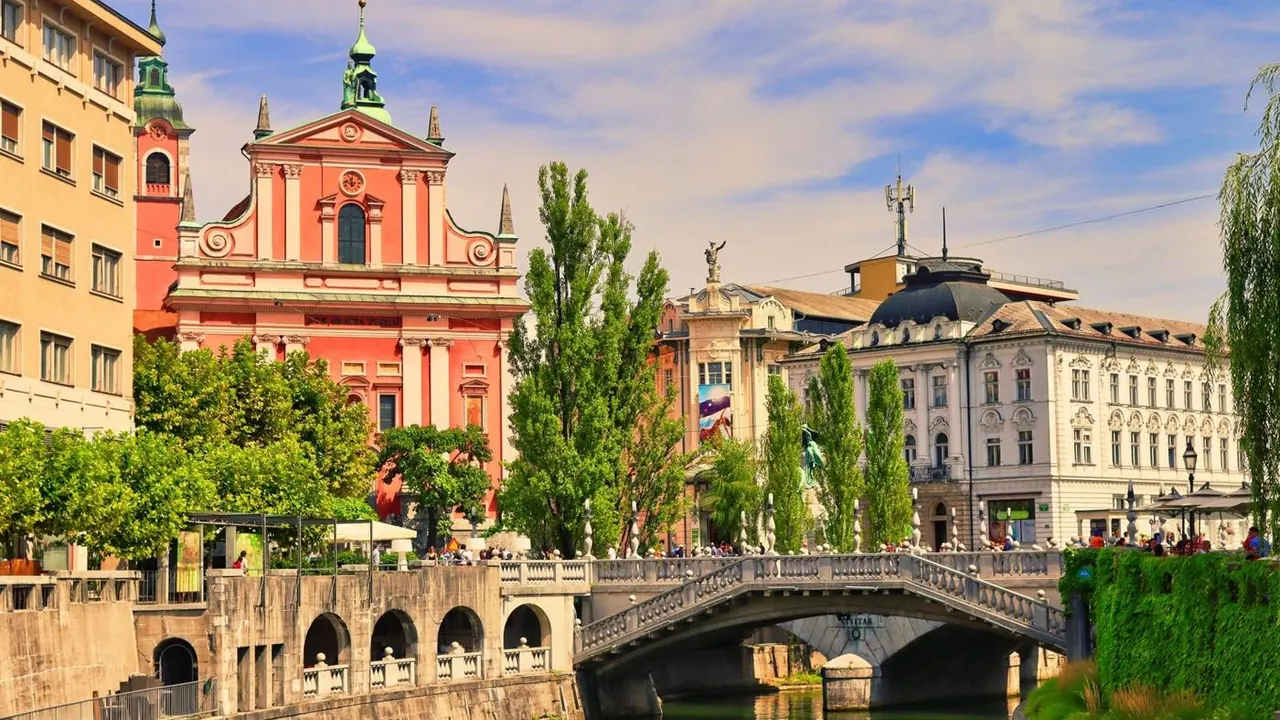
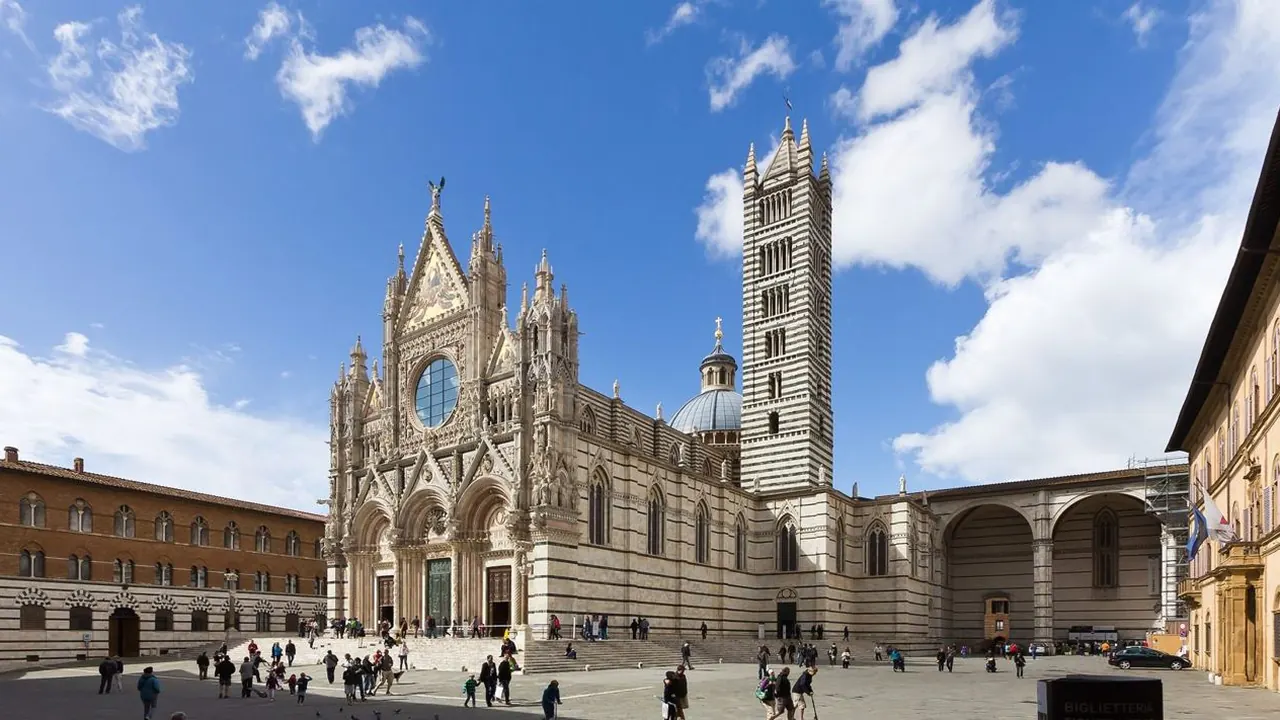
Photos: Ljubljana by detait, Pexels License; Siena by Raimond Spekking, CC BY-SA 4.0, cropped.
Ljubljana or Siena?
Our verdict in twelve categories, each scored against the same fixed benchmark cities, and the climate month by month, so you can choose for your trip.
Choose Ljubljana for
- families
- nature and the outdoors
- getting around
Ljubljana suits travellers who want a small, easy capital as a base for the outdoors. The Julian Alps, Lake Bled, the Soča valley and the karst caves are all within reach. The flat, car-free centre is simple to manage with children, and evenings by the river, a night at the opera or a late one at Metelkova give it more after dark than Siena has. It is also the cheaper of the two.
Choose Siena for
- culture and sights
- day trips
- wellness
Siena is the better pick if art, architecture and Tuscan country are the point of the trip. The Campo, the Duomo and the Sienese painters make it the richer city to look at. It is also a base for Florence, San Gimignano, the Val d'Orcia and the Brunello cellars, with hot springs to soak in at the end of the day. Expect steep streets, quiet nights and a hired car.
Scoreboard
Twelve categories on one fixed scale from 0 to 100. The shaded stretch is the gap between the two.
Your match
Pick a travel style or drag the sliders, and both match scores follow your weighting.
Too close to call, 2 points apart
Wins on families and nature and the outdoors with your weighting.
Wins on culture and sights and day trips with your weighting.
What matters to you?
Category by category
What the scores mean for a trip.
Beaches & swimming
Neither city is a place for a beach trip, but Ljubljana has more water within easy reach. Locals swim in the Sava on the edge of town, and Lake Bled is about an hour away and warm enough in midsummer. The Slovenian coast is an hour and a half away, though it has concrete platforms and pebbles rather than sand.
In Siena, a swim usually means the pool at your hotel or agriturismo. The Maremma beaches around Castiglione della Pescaia are well over an hour away by car and take up a whole day.
Food & drink
Siena eats a little better. Hand-rolled pici, cinta senese pork, wild boar stews and an old baking tradition of panforte and ricciarelli give it more depth. Chianti Classico, Brunello and Vino Nobile are all grown within a short drive. The best meals are in family osterie in the contrade, away from the Campo.
Ljubljana's strengths are its Central Market under Plečnik's colonnades, hearty gostilna dishes such as štruklji and jota, and orange wines from the west of the country. Neither city offers much beyond its own regional cooking.
Culture & sights
Siena is in another league here. The Campo and the Palazzo Pubblico, Lorenzetti's Good and Bad Government, and the Duomo with its library and pulpit are major works of European art. Duccio's Maestà, Santa Maria della Scala and the Pinacoteca add more. The seventeen contrade give each district a living identity of its own.
Ljubljana's appeal is its townscape as a whole: Plečnik's bridges, embankments and library, the baroque old town and the castle on its hill. Its museums are pleasant but not famous, and its best surprise is the murals at Metelkova rather than any single masterpiece.
Nightlife
Ljubljana has more going on after dinner. Its students fill the terraces on both banks of the Ljubljanica on warm nights, and Metelkova's scruffy clubs keep going late at weekends.
Siena's evenings are a long meal, a glass of wine on the Campo and a quiet walk home, with the streets largely still before midnight. Only the Palio nights, with their open-air contrada dinners, turn it into a late town.
Nature & outdoors
Ljubljana has real mountains on its doorstep. Šmarna Gora is a climb before breakfast, and the Kamnik-Savinja Alps and Triglav National Park are under an hour away. Add the Vintgar gorge, the emerald Soča and the caves of the karst, and the range is far wider than anything around Siena.
Siena's countryside is gentler and more pastoral. The bare clay hills of the Crete Senesi, the cypress lanes of the Val d'Orcia and the strade bianche gravel roads make it excellent for cycling and easy walking. It has no high peaks and no wild country.
Day trips
Both cities sit at the centre of rewarding country, but Siena has more to choose from. Florence, San Gimignano, Monteriggioni, Volterra, the Chianti villages, Pienza, Montalcino and Montepulciano are all close. The abbeys of Sant'Antimo and San Galgano fill further days. Most of the smaller places need a car.
From Ljubljana the highlights are Bled, Škofja Loka, Predjama Castle, Lipica and Piran on the coast. Trieste and Zagreb across the borders are each about two hours away. The list is good, but shorter and more spread out.
Good for families
Ljubljana is the gentler choice with small children. The centre is flat and largely free of cars. The funicular, the dragons on the bridge, Tivoli's playgrounds, the hillside zoo and the puppet theatre fill two or three easy days.
Siena is safe and welcoming in its trattorias, and older children may enjoy climbing the Torre del Mangia or watching the contrada drummers. But the streets climb steeply, there is nothing built for children, and most families are happier at a farmhouse with a pool.
Getting around
Both are towns you explore on foot, and neither has a metro, but Ljubljana is far less tiring. Its centre is flat and pedestrianised, nothing is more than about 20 minutes' walk away, and bike-share and electric shuttles fill the gaps.
Siena stands on three ridges, so walking means stepped lanes and steep climbs, and escalators carry you up from the station in the valley. Regional trains are slow, so buses are the better link to Florence. To reach the wine country, most visitors hire a car and park it outside the walls.
Shopping & style
Neither city is a shopping destination, and what differs is mostly the kind of thing you bring home. In Ljubljana that means pumpkin-seed oil, salt from the coastal pans and honey from the Central Market, Idrija lace, and a browse at the Sunday flea market on the embankment or the small design boutiques of Trubarjeva.
Siena is better for Italian shoes, leather and stationery along Banchi di Sopra. Its local specialities are majolica ceramics, contrada scarves, panforte and pecorino, and there is a large weekly market around the Fortezza Medicea.
Affordability
Ljubljana is easier on the wallet. Set lunch menus at the inns, cheap entry to most sights and a centre you can walk across keep daily spending down, although central hotels in July and August cost as much as in Western Europe.
Siena has few rooms inside its walls and they are in demand, so prices climb in summer and around the Palio. Separate entry charges for the cathedral and the civic museums add up over a visit. A simple osteria lunch or a base in the countryside helps.
Live music & performing arts
Ljubljana has the fuller programme. It has a national opera and ballet company, the Slovenian Philharmonic with its roots in 1701, and a year-round mix of concerts and dance at Cankarjev dom. In summer the Ljubljana Festival brings orchestras to Plečnik's Križanke courtyard.
Siena's music is more specialised. It has summer concerts and masterclasses from the Accademia Chigiana in its palaces and churches, performances from the Siena Jazz school, and winter seasons at the Rinnovati and Rozzi theatres. For opera or a major orchestra you have to go to Florence.
Wellness & relaxation
Siena has the hot springs. Rapolano Terme's travertine pools are about half an hour away. Further south are the steaming medieval bath at Bagno Vignoni, the free limestone pools of Bagni San Filippo and Petriolo's sulphur river, and a farmhouse stay makes the most of all of them.
Ljubljana is the calmer city day to day, with its green, car-free centre and long café afternoons by the river. For proper bathing, though, you rely on a water park on the edge of town or Slovenia's spa towns about an hour's drive away.
When should you go?
Pick your month. The climate figures are measured averages, not a forecast.
Ljubljana in July
Siena in July
Daytime high, °C
Rainfall in the month, mm
Where the figures come from
Siena's temperatures are measured 45 km from the centre, at Arezzo.
Siena has no rain gauge within 25 km of the centre, so its rainfall comes from a gridded climate dataset read at the city rather than from a gauge further away.
Temperature and rainfall are climate normals, averaged over the years shown. Ljubljana: 1991-2020 normals, Ljubljana / Bezigrad (1.9 km from centre). Siena: 2006-2017 (rainfall 1991-2020) normals, Arezzo (45 km from centre).
Ljubljana has a proper continental year, with cold winters at around 4°C in December and January. Its best stretch runs from late May through August. The days are long and sunny, July and August reach about 28°C, and that is the time for swimming at Bled or in the Sava. From September the rain sets in hard, and September and October are the wettest months, at up to 159mm, so autumn is a gamble for city walks.
Siena is milder in winter but much hotter in summer. July and August reach about 31°C, which makes the steep lanes hard going in the afternoon, though they are also its driest months, at about 29mm in August. May, and late September into October, are the best times for walking the town and the Crete Senesi, and November is the wettest month. So the two peak at different times: Ljubljana is at its best in high summer, and Siena either side of it.
Which traveller are you?
For an outdoors trip, Ljubljana is the base to pick. You can hike in the Julian Alps or explore the karst caves and still be back in town each night. Siena offers fine cycling and gentle walking, but no high mountains.
On a family trip with young children, Ljubljana is the easier city. It is level, calm and gentle on small legs, with enough to fill a few unhurried days. Siena's steep streets wear out pushchairs and toddlers, so families often stay in the countryside.
On a culture and arts trip, Siena is the stronger choice. Ljubljana's charm is its architecture taken as a whole. Siena holds medieval painting of the first rank, and the hill towns and abbeys nearby carry the art into every day out.
Before you go
| Measure | Ljubljana | Siena |
|---|---|---|
| Official language | Slovene | Italian |
| Currency | Euro (EUR) | Euro (EUR) |
| Sockets | CF230 V, 50 Hz | CFL230 V, 50 Hz |
| Driving side | Right | Right |
| Time zone | UTC+1, UTC+2 in summer | UTC+1, UTC+2 in summer |
| Emergency number | 112 | 112 |
| Elevation | 309 m | 322 m |
| Main airport | Ljubljana Jože Pučnik Airport (LJU)20 km from centre32 non-stop destinations | Florence Airport, Peretola (FLR)55 km from centre46 non-stop destinations |
| Public holidays this year | 21 days | 13 days |
By the numbers
| Measure | Ljubljana | Siena |
|---|---|---|
| City population | 284,293 | 52,812 |
| People per km² | 1,736 | 446 |
| Museums within 10 km | 14 | 30 |
| UNESCO World Heritage sites within 50 km | 3 | 5 |
Where else could you go?
Every comparison below shares a destination with this one, so you can follow Ljubljana or Siena somewhere new.