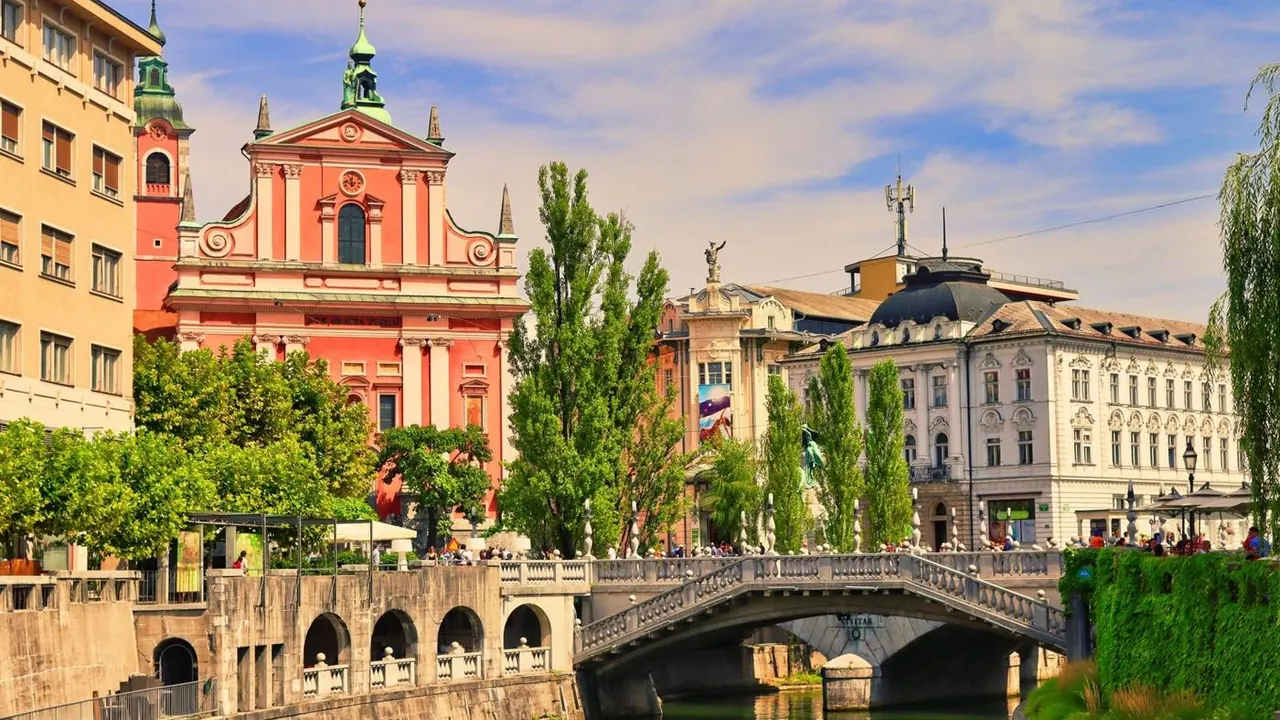
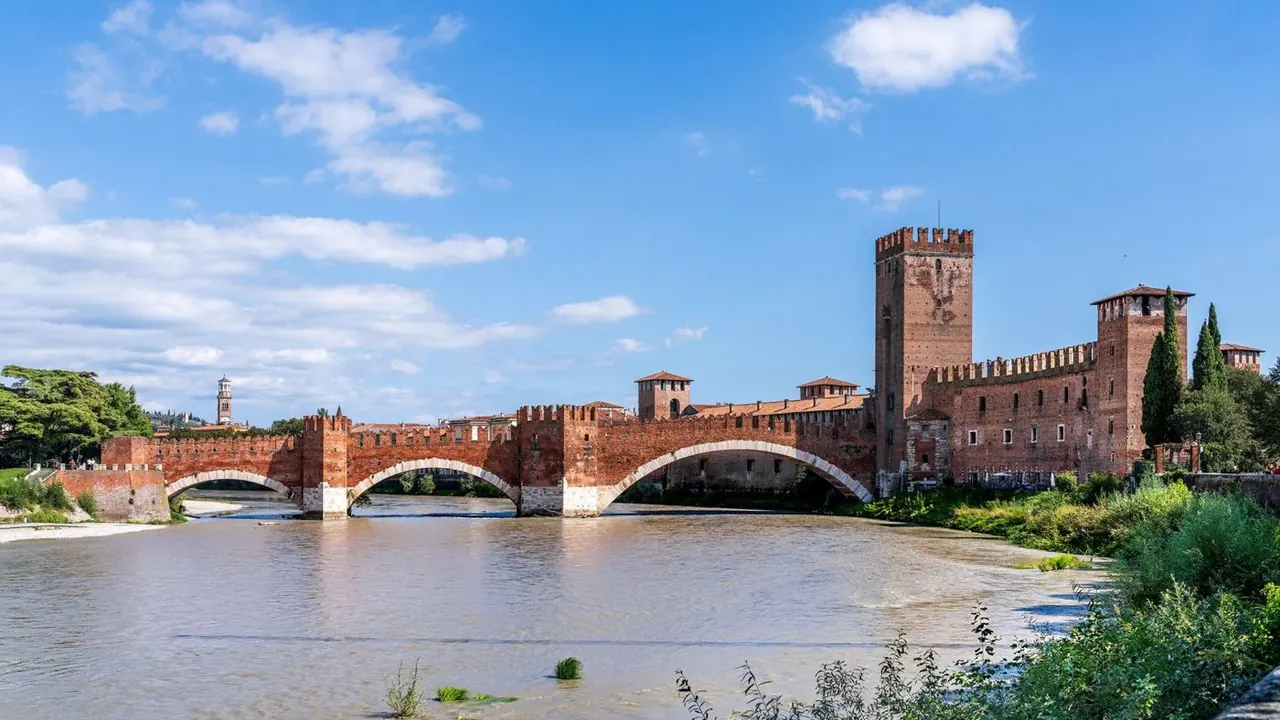
Photos: Ljubljana by detait, Pexels License; Verona by NorbertNagel, CC BY-SA 4.0, cropped.
Ljubljana or Verona?
Our verdict in twelve categories, each scored against the same fixed benchmark cities, and the climate month by month, so you can choose for your trip.
Choose Ljubljana for
- nature and the outdoors
- prices
- getting around
Ljubljana suits travellers who want a calm, small capital as a base for the outdoors. The Julian Alps, the Soča valley, Lake Bled and the karst caves are all close, so the city works best for walkers, cyclists and anyone who prefers mountains and forest to monuments. It is also slightly easier on the budget and very relaxed in the evenings.
Choose Verona for
- beaches
- culture and sights
- shopping
Verona is the better choice for a trip built around history, wine and the arts. The Roman Arena and San Zeno sit within a UNESCO-listed loop of the Adige, and a summer night at the opera is like nothing else in Europe. It is also the stronger base for travel, with Venice, Padua, Vicenza and Lake Garda all an easy trip away.
Scoreboard
Twelve categories on one fixed scale from 0 to 100. The shaded stretch is the gap between the two.
Your match
Pick a travel style or drag the sliders, and both match scores follow your weighting.
Wins on nature and the outdoors and prices with your weighting.
Wins on beaches and culture and sights with your weighting.
What matters to you?
Category by category
What the scores mean for a trip.
Beaches & swimming
Neither city has a shore, but Verona has better swimming within reach. Lake Garda's southern shore is about half an hour away, with lidos, lawns that run down to the water and Sirmione's flat limestone shelves, so a summer swim fits easily into an afternoon.
From Ljubljana a swim takes more effort. The options are the Sava on the city's edge, Lake Bled about an hour away, or the Adriatic at Piran, around an hour and a half away. On that coast the shore is mostly concrete platforms and small pebble strips rather than sand.
Food & drink
Both cities serve hearty regional food, and both are at their best over a glass of local wine. Verona has more depth. Its menus include Amarone risotto, bigoli with duck and bollito with peppery pearà, served in old osterie around Piazza delle Erbe and in Veronetta, and Valpolicella and Soave are made a short drive away.
Ljubljana's cooking is plainer: štruklji, Carniolan sausage and jota in gostilna inns. Its Central Market under Plečnik's colonnades is a pleasure, though, and the orange wines from Brda and Vipava are worth seeking out. You will work through the range sooner here.
Culture & sights
Verona has much more history to show. It has a Roman amphitheatre still in use, a Roman theatre on the hillside, the Romanesque Basilica of San Zeno and Castelvecchio in its Scarpa setting, all inside one UNESCO-listed loop of the Adige.
Ljubljana's appeal belongs mostly to the twentieth century. It lies in Plečnik's bridges, embankments and library and the baroque old town below the castle, and its museums are good rather than great. Each city fills two or three days, but you will see more in Verona's.
Nightlife
Neither city is for a big night out, and in both, evenings mostly mean a drink outdoors. In Ljubljana that means the terraces along the Ljubljanica. At weekends Metelkova's scruffy clubs in the old barracks stay open late and give the city an alternative edge that Verona lacks.
Verona's evenings are built around aperitivo in Piazza delle Erbe, with cheaper student bars across the river in Veronetta. In summer the opera crowd leaving the Arena near midnight keeps the centre busy late.
Nature & outdoors
This is where Ljubljana is strongest. Tivoli Park runs straight into forest from the centre, and Šmarna Gora is a climb locals do before work. Triglav National Park, the emerald Soča and the Škocjan caves are all close enough for a day out.
Verona's surroundings are gentler. There are vineyard walks in Valpolicella, the long cycle route up the Adige valley and the beech woods of the Lessinia. Monte Baldo and the reliable sailing winds on Garda are about an hour away. The Dolomites are too far for a comfortable day trip, while Ljubljana has real Alps close by.
Day trips
Both cities are good bases, but Verona's list of outings is hard to match. Venice, Padua with Giotto's chapel, Palladio's Vicenza and Gonzaga Mantua can each be reached by train in about an hour or less. The lake towns on Garda and the Valpolicella and Soave cellars are closer still.
Ljubljana's outings are smaller in scale: Bled's island church, Škofja Loka, Predjama Castle in its cliff face, Piran and the wine villages of Brda. Trieste and Zagreb are about two hours away. Together they cover much of Slovenia, but a car is useful more often than it is from Verona.
Good for families
Verona has the bigger attractions for children, though they are outside the city. Gardaland, the water parks on Garda's southern shore and the drive-through safari at Parco Natura Viva are each about half an hour away, and the lake has calm, shallow swimming. You will usually need a car, and summer afternoons are very hot.
Ljubljana is quieter and easier. The centre is calm and largely car-free, and there are the castle funicular, the dragons on the Dragon Bridge and a puppet theatre that small children can follow without the language. Its zoo and science centre are modest, though, and families run out of things to do after a few days.
Getting around
Both centres are flat, compact and largely closed to traffic, and neither city has a metro or tram. Ljubljana has a slight edge. The old town, the market, the museums and Tivoli Park are all within about twenty minutes' walk, and electric shuttles and bike-share fill the gaps.
Verona's centre is just as easy on foot, though the station is a longer walk from Piazza Bra. Its trains are much better for leaving town, with fast links to Venice, Milan and the lake. Ljubljana relies on intercity buses and a slow rail network.
Shopping & style
Ljubljana's buys are small and local: pumpkin-seed oil, honey, salt from the coastal pans, Idrija lace and finds from the Sunday antiques market on the embankment. A few design boutiques sit in the old town lanes and on Trubarjeva, but there is no luxury quarter and the big malls are out on the edge of the city.
Verona has proper shopping street by street. Via Mazzini, marble-paved and lined with Italian fashion labels, and the boutiques and jewellers along Corso Porta Borsari make for a smart, provincial browse. Amarone, Garda olive oil and the star-shaped pandoro are the things to take home, and serious shoppers make the trip on to Milan.
Affordability
Ljubljana is the somewhat cheaper stay. Set lunch menus at the inns, fairly priced local wine and low entry charges at sights keep daily costs moderate. Rooms in the old town are the main expense and cost as much as in Western Europe in summer.
In Verona, everyday eating is also reasonable, especially in Veronetta's student osterie. Hotels in the historic centre are expensive, though, and on opera nights and during trade fairs they become scarce. In both cities, staying a little outside the centre saves the most.
Live music & performing arts
Verona has an experience Ljubljana cannot match: summer opera in the Roman Arena, with grand productions of Verdi and Puccini for thousands of people and candles lit as darkness falls. The Roman theatre adds Shakespeare, dance and jazz, and in the cooler months the Teatro Filarmonico takes over with a quieter season.
Ljubljana's programme is steadier through the year. It has the Philharmonic, the national opera house and Cankarjev dom, and in summer its festival fills Plečnik's Križanke courtyard. It is good for a concert night, but not a reason to plan a trip.
Wellness & relaxation
Neither city has its own bathing tradition, so both send you out of town for warm water. Verona has the better springs, and they are closer. Sirmione's thermal pools face the lake, a spring-fed lake sits in an old villa garden near Lazise, and the springs at Caldiero, used since Roman times, are just east of the city.
Ljubljana has a large water park with saunas on its eastern edge, and Slovenia's spa towns are about an hour away. The quiet, car-free riverside is restful in itself.
When should you go?
Pick your month. The climate figures are measured averages, not a forecast.
Ljubljana in July
Verona in July
Daytime high, °C
Rainfall in the month, mm
Temperature and rainfall are climate normals, averaged over the years shown. Ljubljana: 1991-2020 normals, Ljubljana / Bezigrad (1.9 km from centre). Verona: 1991-2020 normals, Verona / Villafranca (11.6 km from centre).
Ljubljana is at its best from May to September. July and August reach about 28°C, which is warm enough for long days in the city and good weather for walking in the mountains. Rain is its weak point. It is wetter than Verona in every month, and autumn is the wettest season, with about 159mm in September. Winters are cold and grey, with highs near 4°C, short days and little sunshine.
Verona is warmer all year and sunnier in most months. By July and August it climbs to about 30°C, and afternoons in its stone streets become tiring for sightseeing. That makes May, June and September its best months for the city, while high summer is the time for swimming in Lake Garda. Its winters are milder, at around 7°C, and noticeably drier than Ljubljana's.
Which traveller are you?
On an outdoors trip, Ljubljana makes the better base. You can cycle the marshes south of town, reach the Vintgar gorge or Velika Planina's high pasture within a morning, and ski at small resorts in winter. Bring waterproofs.
For a culture and arts trip, Verona is the stronger choice. Its centre fills two or three days, and fast trains add Venice and Mantua as easy outings. Come in May, June or September, when the stone streets are cooler.
On a beach and sun trip, Verona comes closer. Its summers are drier and sunnier, and a short train ride to Peschiera puts you on the lake. Ljubljana's summers are wetter, and a swim there means the river Sava or a mountain lake.
Before you go
| Measure | Ljubljana | Verona |
|---|---|---|
| Official language | Slovene | Italian |
| Currency | Euro (EUR) | Euro (EUR) |
| Sockets | CF230 V, 50 Hz | CFL230 V, 50 Hz |
| Driving side | Right | Right |
| Time zone | UTC+1, UTC+2 in summer | UTC+1, UTC+2 in summer |
| Emergency number | 112 | 112 |
| Elevation | 309 m | 59 m |
| Main airport | Ljubljana Jože Pučnik Airport (LJU)20 km from centre32 non-stop destinations | Verona Villafranca Valerio Catullo Airport (VRN)10 km from centre96 non-stop destinations |
| Public holidays this year | 21 days | 13 days |
By the numbers
| Measure | Ljubljana | Verona |
|---|---|---|
| City population | 284,293 | 255,588 |
| People per km² | 1,736 | 1,285 |
| Museums within 10 km | 14 | 18 |
| UNESCO World Heritage sites within 50 km | 3 | 5 |
Where else could you go?
Every comparison below shares a destination with this one, so you can follow Ljubljana or Verona somewhere new.