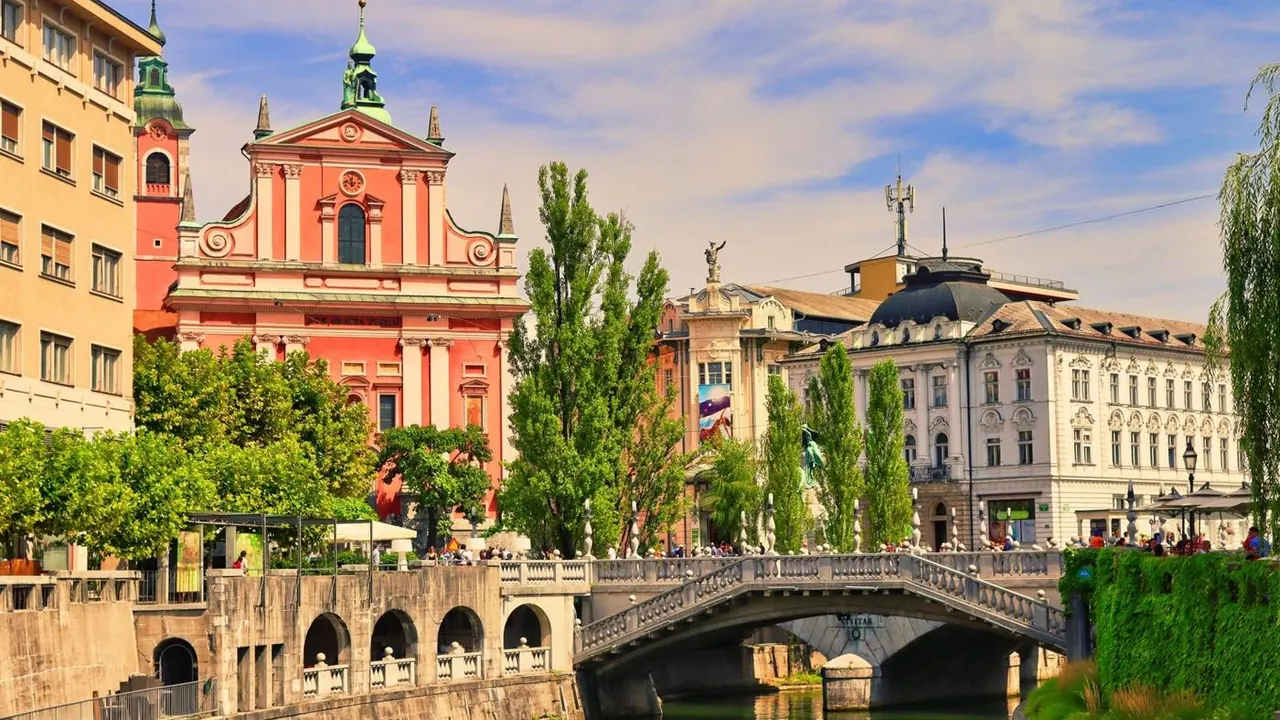
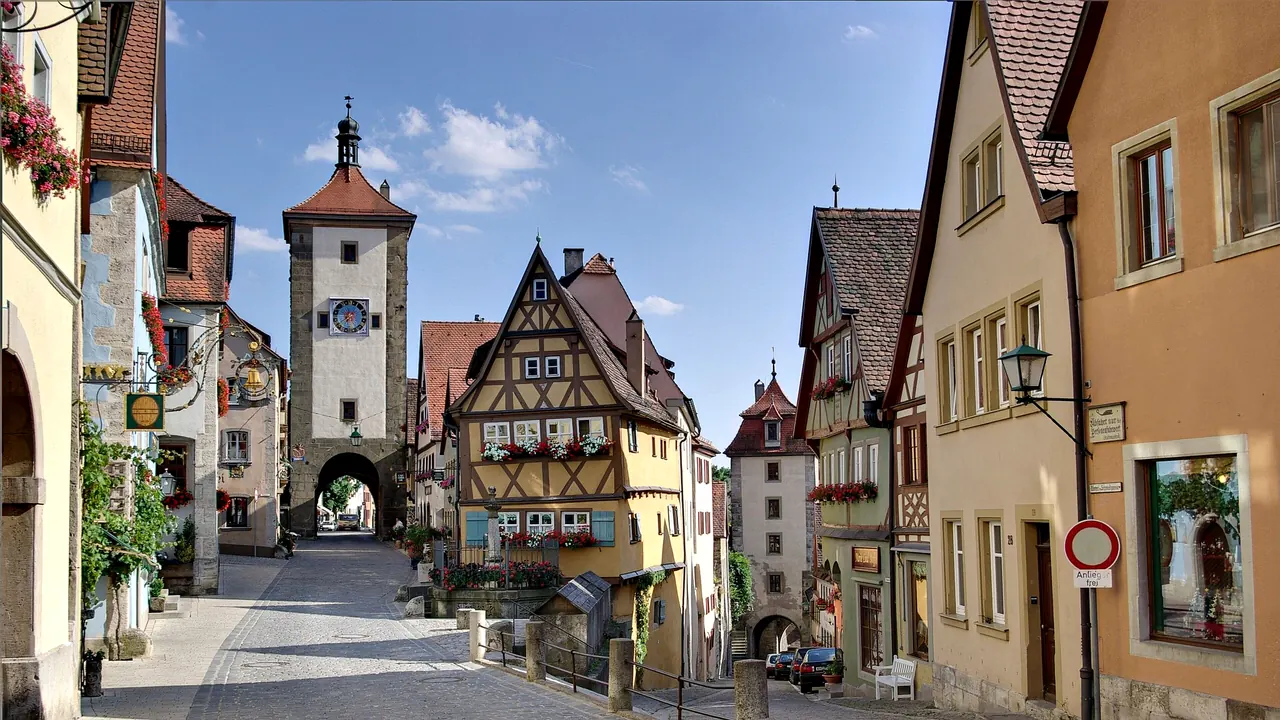
Photos: Ljubljana by detait, Pexels License; Rothenburg ob der Tauber by Berthold Werner, Public domain.
Ljubljana or Rothenburg ob der Tauber?
Our verdict in twelve categories, each scored against the same fixed benchmark cities, and the climate month by month, so you can choose for your trip.
Choose Ljubljana for
- nature and the outdoors
- nightlife
- live music and the arts
Ljubljana is the better base for an active, varied trip of a week or so. The Julian Alps, the Soča valley, the karst caves and the coast are all within reach, and when you get back there are riverside wine bars, an opera house and the late clubs of Metelkova. It suits travellers who want a calm, walkable capital to return to after full days out.
Choose Rothenburg ob der Tauber for
- culture and sights
Rothenburg suits a shorter trip with one clear purpose. Few places in Europe have kept a medieval walled town this intact, and walking its ramparts at dusk, once the coach groups have gone, is the reason to come. Choose it for atmosphere, for the Romantic Road towns around it and for the December market, and accept that the food is plain and the evenings quiet.
Scoreboard
Twelve categories on one fixed scale from 0 to 100. The shaded stretch is the gap between the two.
Your match
Pick a travel style or drag the sliders, and both match scores follow your weighting.
Wins on nature and the outdoors and nightlife with your weighting.
Wins on culture and sights with your weighting.
What matters to you?
Category by category
What the scores mean for a trip.
Beaches & swimming
Neither is a beach destination, but Ljubljana has more swimming within reach. Locals swim in the Sava on the northern edge of the city, and Lake Bled, about an hour away, warms to around 24°C in high summer. The Slovenian coast at Piran is an hour and a half away, though the shore there is mostly concrete and pebble.
Rothenburg, deep in Franconia, has its outdoor pool and, about an hour's drive away, the grassy lawns of the Altmühlsee and other artificial lakes. That is a hot afternoon's swim, not a reason to choose the town.
Food & drink
Ljubljana eats noticeably better. You get the Central Market under Plečnik's colonnades, gostilna inns serving štruklji and jota, and above all the wines of Vipava, Brda and Styria, including the orange wines of the west. That is enough for a week of varied meals.
Rothenburg cooks hearty Franconian food, such as Schäufele, bratwurst and dumplings with Silvaner from the round Bocksbeutel bottle, and many places on the Marktplatz cater for coach parties. The better meals are in family guesthouses and wine taverns away from the square, and there is little beyond them.
Culture & sights
Rothenburg has the stronger pull for sightseeing, because the whole walled town is the sight. There are ramparts with a covered walkway, the Plönlein between its gate towers, the view from the Rathaus tower, and Riemenschneider's Holy Blood Altar in St Jakob's, a late Gothic carving of real weight. The visit is short but concentrated.
Ljubljana's appeal is quieter. Plečnik shaped much of the cityscape, from the Triple Bridge to the National and University Library, and around it are baroque and Secession streets, the castle on its hill and the murals of Metelkova. Its museums are good rather than great, and the city's charm comes from the whole place rather than from single landmarks.
Nightlife
Ljubljana is much livelier, though still modest. On warm evenings the terraces along both banks of the Ljubljanica fill up, students keep things going in term, and Metelkova's scruffy clubs stay open late at weekends.
Rothenburg goes to bed early. After dinner in a wine tavern, the night watchman's tour is the main event, the lanes are quiet by eleven, and a real night out means driving to Würzburg or Nuremberg.
Nature & outdoors
Ljubljana pulls furthest ahead here, because it has real mountains close by. Wooded hills rise straight out of Tivoli Park, and in under an hour you are in the Kamnik-Savinja Alps or the Julian Alps. That means proper hiking, high pastures like Velika Planina in summer and small ski resorts in winter, all within a day's outing from a capital.
Rothenburg's countryside is on a much smaller scale. Paths drop from the walls into the Tauber valley, past mills, meadows and the little Topplerschlösschen, and the riverside cycle path runs on through vineyards and villages. It is gentle country for an easy afternoon, at its prettiest in spring blossom and autumn colour, with no mountains or wild land within reach.
Day trips
Both are good bases, and Ljubljana has the edge in variety. From the middle of a small country you can reach Bled, Škofja Loka, Predjama Castle in its cliff, the Lipizzaner stud at Lipica, Idrija and Piran. Trieste and Zagreb are each about two hours away, and buses or trains serve the main places.
Rothenburg's outings mostly follow one theme. There are walled towns along the Romantic Road such as Dinkelsbühl and crater-ringed Nördlingen, Weikersheim's palace gardens, and Würzburg's Residenz and Nuremberg's castle about an hour away. They are excellent, but the branch-line railway makes a car close to essential.
Good for families
Ljubljana is the easier choice with small children. The flat, mostly car-free centre is good for pushchairs, the castle funicular and the Dragon Bridge go down well, and Tivoli's playgrounds, the small zoo, a science centre and the puppet theatre fill two or three days.
Rothenburg is a hit for a day. Children can walk the ramparts, climb the Rathaus tower and follow the night watchman's lantern, and older ones are often fascinated by the torture devices in the Crime Museum. Beyond that there is little for them, and the cobbles and steep valley paths are hard on pushchairs and small legs.
Getting around
On foot, both centres are a pleasure. In Ljubljana the old town, the riverbanks and Tivoli lie within about 20 minutes of each other on flat, largely pedestrianised streets, with a bike-share for longer hops. Rothenburg's walled town takes fifteen minutes to cross, over cobbles, with a steep climb back from the valley.
The difference shows once you leave town. Intercity buses link Ljubljana with most of Slovenia, and you only need a car for the remote valleys. Rothenburg sits at the end of a branch line, most journeys mean changing trains at Steinach, and regional buses are sparse.
Shopping & style
Ljubljana's shopping comes from the countryside around it, and Rothenburg's comes from Christmas. In Ljubljana the best buys are honey, pumpkin-seed oil and coastal salt from the Central Market, plus Idrija lace and gingerbread hearts. There is also a Sunday flea market on the embankment and a few design boutiques around Trubarjeva.
Rothenburg sells Christmas all year round, with glass baubles, nutcrackers and Erzgebirge carvings along the Herrngasse, alongside teddy bears, cuckoo clocks and pewter. It is a shop window for visitors rather than a place to buy clothes, and neither town will hold a keen shopper for more than an afternoon.
Affordability
Your money goes a little further in Ljubljana. Set lunch menus at the inns, fairly priced local wine and a centre you can walk keep daily costs down, though central rooms in July and August cost as much as in Western Europe.
Rothenburg charges extra for its looks, in guesthouses inside the walls and in meals around the Marktplatz, and prices are highest in December and on summer weekends. In both places, sleeping just outside the old centre is the easiest way to save.
Live music & performing arts
Ljubljana has a real programme. The Slovenian Philharmonic, the National Opera and Ballet and Cankarjev dom perform through the year, and in summer the Ljubljana Festival fills Plečnik's Križanke courtyard. Spoken theatre is in Slovene, but concerts, opera and dance need no translation.
Rothenburg's stage is its own history. There is the costumed Meistertrunk play about the Thirty Years' War, a small open-air summer theatre and organ concerts in St Jakob's. On most evenings there is no performance to go to.
Wellness & relaxation
Neither town has a bathing tradition of its own, and both send you about an hour out for real thermal water. From Ljubljana that means Slovenia's line of spa towns. From Rothenburg it means the salt-water floating pool at Bad Windsheim or the older spa at Bad Mergentheim. Ljubljana also has a large water park with saunas on its eastern edge.
The calm feels different in each. In Ljubljana it comes from the car-free centre and long afternoons in riverside cafés. In Rothenburg it comes at the start and end of the day, when the coach groups have gone and the walls and valley paths fall silent.
When should you go?
Pick your month. The climate figures are measured averages, not a forecast.
Ljubljana in July
Rothenburg ob der Tauber in July
Daytime high, °C
Rainfall in the month, mm
Where the figures come from
Rothenburg ob der Tauber's sunshine is measured 27 km from the centre, at Feuchtwangen-heilbronn.
Temperature and rainfall are climate normals, averaged over the years shown. Ljubljana: 1991-2020 (sunshine 1981-2010, rainfall 1981-2010) normals, Ljubljana / Bezigrad (1.9 km from centre). Rothenburg ob der Tauber: 1991-2020 normals, Rothenburg ob der Tauber (0.9 km from centre).
Ljubljana is the warmer and sunnier of the two in summer, reaching 28°C in July and August, warm enough for swimming in the Sava and the Alpine lakes. It is also much wetter. June is heavy with rain, and so are the months from August to October, with October the wettest at 176mm. May and the drier weeks of July are the most reliable times for both city walks and mountain days.
Rothenburg stays milder, around 25°C at the height of summer, and its rain is light and evenly spread, never much above 66mm in any month. From late spring to early autumn it is comfortable on the cobbles and valley paths. Winters in both places are cold, with daytime highs only a few degrees above freezing and little sunshine, so street walking is a chillier business from November to February.
Which traveller are you?
For an outdoors trip, Ljubljana is the clear choice. Triglav National Park, the Vintgar gorge, rafting on the Soča and the Postojna caves are all within easy reach. Rothenburg offers gentle Tauber valley walks and a riverside cycle path, but no mountains.
On a food and nightlife trip, Ljubljana wins comfortably again. Glasses of Vipava or Brda wine by the river, market produce and gostilna cooking lead on to busy terraces and late weekends at Metelkova. Rothenburg serves plain Franconian food, and its lanes are silent by eleven.
For a Christmas market vacation, Rothenburg is the one to pick. Its December market on the Marktplatz is one of Germany's most atmospheric, set inside intact medieval walls, and shops sell baubles and nutcrackers all year. Ljubljana's appeal lies elsewhere, in its river, its wine and its mountains.
Before you go
| Measure | Ljubljana | Rothenburg ob der Tauber |
|---|---|---|
| Official language | Slovene | German |
| Currency | Euro (EUR) | Euro (EUR) |
| Sockets | CF230 V, 50 Hz | CF230 V, 50 Hz |
| Driving side | Right | Right |
| Time zone | UTC+1, UTC+2 in summer | UTC+1, UTC+2 in summer |
| Emergency number | 112 | 112 |
| Elevation | 309 m | 430 m |
| Main airport | Ljubljana Jože Pučnik Airport (LJU)20 km from centre32 non-stop destinations | Nuremberg Airport (NUE)66 km from centre56 non-stop destinations |
| Public holidays this year | 21 days | 12 days |
By the numbers
| Measure | Ljubljana | Rothenburg ob der Tauber |
|---|---|---|
| City population | 284,293 | 11,331 |
| People per km² | 1,736 | 272 |
| Museums within 10 km | 14 | 6 |
| UNESCO World Heritage sites within 50 km | 3 | 2 |
Where else could you go?
Every comparison below shares a destination with this one, so you can follow Ljubljana or Rothenburg ob der Tauber somewhere new.
- Bledvs Ljubljana
- Nurembergvs Rothenburg ob der Tauber
- Triestevs Ljubljana
- Bambergvs Rothenburg ob der Tauber
- Piranvs Ljubljana
- Stuttgartvs Rothenburg ob der Tauber